The candlelight in the East Palace flickered, and Li Chengqian's fingertips traced the cold blade, and there was no hesitation in his eyes. The secret guard quietly handed over the secret report, the sudden movements of the Turks, the connection between aristocratic families... The corners of his mouth curled up in a cold arc. Father, the emperor, in this game of chess, I will have no regrets if I lose! Blood-stained hands will eventually hold the supreme authority!
The opening chapter of "The Princess and the Sword Immortal" slowly unfolds like a picture of a solitary smoke in the desert. It was snowing in the wind and the sky was freezing. Princess Zhao Jin of Zhaoyang and her maid Bi He quietly escaped from the cage in the palace and plunged into the vast rivers and lakes. This situation is quite similar to the time when Guo Jing and Huang Rong met in the wind and snow in Zhangjiakou for the first time. However, it is not Huang Rong's ingenuity that Zhao Jin escapes. Instead, Zhao Jin has a tenacious mind, broad vision, and nobility. In this dangerous world, he is like a bright pearl secretly casting a shadow, which attracts people's suspense. The "Lone Shadow Sword Immortal" Xiao Jianqiu has a thunderous reputation, and his martial arts has reached an advanced level. When the "Autumn Water Ancient Sword" is unsheathed, no one can take three moves, and the heroes are at a loss. He is a cold, aloof person with erratic movements, but he is not a heartless person. The princess and the swordsman, one noble, one hidden, one hot, one cold, their fates intersect in this harsh winter, and there will be earth-shattering changes. The beginning of the story is well laid out, the characters are vividly drawn, the suspense is high, and the swords and swords are hidden in the wind and snow. It is truly a fascinating masterpiece.
"If you come with the original memorial, you will retreat without the original." In the Fengtian Hall, the majestic voice made all the civil and military officials lower their heads. "Father, I have something to say!" The slightly lazy voice made everyone glance at the young man wearing a black cloud-patterned robe and walking in front of the officials. Emperor Wu opened his slightly drooped eyes and stopped tapping the handrail with his fingers. "Speak." "My son wants to marry Ye Liyan, the daughter of General Ye Fen of Zhenbei. Please grant me the marriage!" The loud voice of King Chu Shen Yian continued to echo in the hall until it fell into deathly silence. On the right, the sleepy Duke Ye Tiance suddenly opened his sleepy eyes after hearing the names of his son and granddaughter. The quiet Fengtian Temple suddenly became lively with whispers. "His Royal Highness the King of Chu actually wants to marry that ominous person..." "The other highnesses are trying to avoid it..." "I really don't know what His Highness the King of Chu has experienced in the five years he has been away..." "Could it be that His Highness the King of Chu wants to use the power of the Ye family..." "Be careful with your words, be careful with your words..." "Who cares so much about my granddaughter? How about talking to me?" Ye Tiance turned sideways, and his sullen and hoarse voice instantly depressed the atmosphere. "Quiet." Emperor Wu said, and the entire hall suddenly became quiet. Emperor Wu looked at Shen Yian, who was still saluting: "Sixth." "My son is here!" "Yes!" Emperor Wu glanced at the old eunuch beside him. The old eunuch immediately bowed and said, "Old servant, go get ready now." "Yes." Emperor Wu nodded and waved his hand to retreat. "Retreat!!!" The old eunuch flicked his fly whisk and shouted in a drake's voice. "Wow!" All civil and military officials raised their heads in shock. Your Majesty actually allowed that ominous girl to enter the royal family? !
The Mythical Arena is restarted, let's see how the Chinese Gods counterattack🔥The Mythic Arena has arrived, and the gods from all over the world have gathered together. Amaterasu, Shiva, and Odin have appeared one after another. Only the Chinese Gods are missing, and China has been defeated miserably... The gears of fate are reversed, and Su Ming is reborn, holding the complete Chinese divine genealogy! This time, watch him unblock the Chinese pantheon and let the gods witness the majestic power of Eastern mythology💥
🔥"Folk Feng Shui Master's Notes" is shockingly online! The corpse ascends to the sky, the corpse is raised in the cave, and the mystery of the thousand-year-old Feng Shui forbidden technique is revealed! 🔥] ✍️ The secret technique of Feng Shui that emperors and generals have been obsessed with for thousands of years is superstition or an unsolved scientific mystery? A notebook banned by Feng Shui masters of all generations unexpectedly appeared in the world, recording the heaven-defying method of "raising a corpse to become an immortal" - dragon veins hidden in a corpse can be transformed into feathers and ascended, and evil spirits raised in evil holes can be used to change fate! 🌑 The protagonist Li Sanshui was originally a bone picker in a mountain village, until an "ancient corpse with a sinister smile" was dug up in a mass grave. He held half a yellowed notebook in his palm: seven-star lanterns to extend life, five ghosts to bring wealth, and living piles to suppress dragon veins... Those Feng Shui killing tactics that have been erased by official history are quietly reviving in modern cities! ⚡ When city landmarks turn into zombies, and when rich celebrities compete for the "Ascension Point", you never know - why does the last subway train have an extra stop in the middle of the night? Why can't office mirrors be used at midnight? Is what is written in this notebook a shortcut to becoming an immortal, or is it an eternal trap? 💀[Adapted from real events] The plots in the book, such as "The Corpse Well in Qixinggang Town, Chongqing" and "The Locking Dragon Pillar at Hong Kong Polytechnic University", are highly consistent with supernatural files from many places! Readers exclaimed: "I dare not look directly at my own Feng Shui ornaments after reading this!" 👇 Click to enter this Feng Shui killing game that spans six hundred years! Remember: once you know some secrets, you will become a player... (Real Feng Shui tips for avoiding evil are attached at the end of the page)
This is a fast-travel novel with two male protagonists. Only one chapter is in line with the book recommendation topic, but the other units are also very interesting [making faces][making faces][making faces]
The protagonist Li Zhen becomes the deposed prime minister as soon as he travels through time. This start is simply hell mode, but he is not a soft persimmon who can be manipulated by others! There is no golden finger, all relying on one's own brain to circle crazily in the maelstrom of intrigues. Scenarios such as "Emperor's Jealousy" and "Going South to Capture the Dragon" make people's adrenaline soar. Every step is a thrilling challenge, and it is even more satisfying when they slap the villain in the face. It is simply the ceiling of "pretending to be a pig to eat a tiger" and "Jedi's counterattack". The author's portrayal of the group portraits is really amazing! Each supporting character has a distinct personality, a hero with great ambitions, a thoughtful counselor and a beautiful woman. Everyone has flesh and blood, and they are interpreting their own stories in this troubled world. Moreover, the book also incorporates original poems, which instantly fills the book with a rich sense of history. The protagonist's pursuit of "yellow robe" and the righteousness of his family and country displayed really make people's blood boil! The battle of wits in the court and various conspiracies emerge in endlessly, which is more enjoyable than watching a palace fighting drama; the conquests on the battlefield are majestic and majestic, as if you can see the hero leading the army to charge into battle. The plot is fast-paced, with exciting points coming one after another, and it doesn't feel draggy at all. If you also like historical fictional themes, like to watch power struggles, and pursue novels with depth and emotion, then this book "Who puts the yellow robe on me when it's cold" is definitely your cup of tea! Believe me, once you get into it, you will be completely fascinated by it just like me!
① The sixth prince of the dynasty, resourceful and powerful in martial arts. He chose the future female devil at the beginning and was respected by everyone in the world. ② The villain family leader was the prime minister in the court and was very powerful. He later killed the empress and became the emperor himself, becoming famous in the world.
Are you often faced with the embarrassment of having no books to read? Then you might as well read the first of these two books, "I Learned to Kill Gods in a Mental Hospital." When the mental hospital becomes the domain of God: the madness and redemption of "I Learned to Kill Gods in a Mental Hospital" In an era dominated by conventional urban supernatural novel routines, "I Learned to Kill Gods in a Mental Hospital" is like a bolt of lightning that cuts through the mediocre, transforming the stigmatized space of "mental hospital" into a divine field full of possibilities. This work, which triggered a reading frenzy on the Tomato novel platform, reconstructs our understanding of "madness" with its amazing imagination - when the whole world falls into madness, perhaps only those labeled as "mentally ill" truly hold the key to salvation. The setting of the novel itself is a wonderful irony: a seemingly ordinary mental hospital is actually a secret base for cultivating "god-killers". The protagonist Lin Qiye awakens here as a "mental patient". This identity setting itself deconstructs the cliché narrative of "the chosen one" in traditional supernatural novels. The author cleverly uses the closed space of the mental hospital to create a micro-universe that is both absurd and solemn - those marginalized people who have been exiled from society have become the last line of defense for mankind against the divine power. This subversive setting makes the novel exude unique literary charm from the beginning. The most amazing thing about "I Learned to Kill Gods in a Mental Hospital" is its philosophical reconstruction of "madness". The seemingly absurd "diseases" in the novel are actually special ability systems beyond ordinary people's cognition. The fantasies of patients with paranoia may create parallel realities, the emotional black holes of patients with depression can swallow the attacks of gods, and the ritual behaviors of patients with obsessive-compulsive disorder constitute mysterious formations... This kind of creativity that transforms psychopathology into a superpower system not only satisfies the pursuit of fresh power systems by online readers, but also implies a profound reflection on the binary opposition of "normal/abnormal". As Lin Qiye gradually masters these "morbid abilities", readers can't help but ask: What is real madness? In terms of character creation, the novel breaks the stereotype of mentally ill patients. Lin Qiye and his fellow patients - everyone has a heartbreaking past and a shining soul. The old man who firmly believes that he is an alien observer is actually a dimensional traveler whose memory has been erased; the girl who talks to rag dolls all day long has an ancient war spirit sealed in her doll. These characters not only bring us laughter, but also tear the readers' hearts. What is particularly worth mentioning is the novel's reinterpretation of the doctor-patient relationship. Doctor An Qingyu is both the healer and the treated. This ambiguity of identity makes the story full of tension. As a novel with the theme of "killing gods", its deconstruction of the concept of "gods" is equally wonderful. The gods in the novel are not supreme beings in the traditional sense, but distorted products bred by human collective consciousness. They are both powerful and fragile, sacred and corrupt. The journey of Lin Qiye and his companions to kill gods is not only a confrontation of power, but also a discussion on the nature of faith. When a psychopath raises the god-slaying blade, this in itself is the greatest mockery of the inherent power structure. The narrative rhythm of "I Learned to Kill Gods in a Mental Hospital" is at the textbook level - tense battle scenes alternate with delicate emotional descriptions, and the perfect blend of absurd comedy and profound philosophy. The mental hospital described by the author is not only a surreal battlefield with supernatural powers, but also a funny mirror that reflects the real society. Amid laughter and tears, readers will unconsciously think: Is the "normal world" we define the biggest lunatic asylum? The reason why this novel has gained so much popularity on the Tomato novel platform is that it satisfies the desire of contemporary young readers for "differentiated stimulation." While most supernatural novels are still repeating the old path of campus awakening and secret realm exploration, "I Learn to Kill Gods in a Mental Hospital" chooses a more difficult and brighter path - it makes the abandoned by society become heroes, makes madness a weapon, and makes the mental hospital the birthplace of new myths. If you are tired of the same stereotypes of urban superpowers, if you long for a novel that can stimulate adrenaline and brain cells at the same time, if you are willing to rethink the boundary between "normal" and "crazy", then Lin Qiye and his patients are waiting for your arrival in that mysterious mental hospital. Here, every illness may be an awakening, every crazy word may be a prophecy, and every treatment may be a prelude to killing gods. The second "The Strange House" is a completely different novel from the first one## **"The Strange House": Behind the Bloody Door, a glimpse into the abyss and redemption of human nature** If you long for a suspense thriller novel that is both spine-chilling and thought-provoking, then Tomato Novels' "The Strange House" is definitely worth embarking on this journey of no return. This **infinite flow+supernatural survival** work created by **** has become a dark horse in the online literary world in recent years with its high-energy reversal, brain-burning wits, and social metaphors, causing countless readers to experience "pupil earthquakes" while reading late at night. ### **🚌 Driverless bus, an invitation to hell** The beginning of the story is full of weirdness - **A bus** without a driver, carrying a group of cursed "tricksters", heading towards the **black hut** deep in the mist. There is a "blood door" soaked in blood. Every once in a while, the tricksters will be forced into the terrifying world behind the door to complete the mission of narrow escape. From the pursuit of the skinned female ghost, to the truth about the blood sacrifice in the Rain Prayer Village, to the psychological game in the dungeon of The Man Who Raised His Head, every dungeon is like a well-designed nightmare that not only tests survival wisdom, but also tortures the bottom line of human nature. The protagonist, Ning Qiu Shui, is a "veterinarian" (homophoned as "shroud") who is calm on the surface but is actually "crazy". Through life and death experiences, he has transformed from a passive survivor to an active game-breaker, and even gradually revealed the truth about the "Pangu Project" hidden behind the treacherous house. ### **🔪 Horror is just an appearance, human nature is the ultimate copy** The horror of "The House" is not a simple jump scare, but a **social metaphor that is extremely scary if you think about it**. For example: - **"Praying for Rain Village"** copy reveals the evil of human nature under feudal superstition, and **parents who favor boys over girls** are the real "ghosts". - In the copy of **"Send the Letter"**, the abused girl resists in an extreme way, but behind the "goodwill"** of the doctors and nurses, there is a deeper conspiracy hidden. - **"Bright Psychiatric Rehabilitation Center"** alludes to mental control and power corruption in reality, **The game between the Ninth Bureau and Rashomon** makes readers wonder: **Who is the real madman? ** As the book review said: "**When survival becomes the only goal, where is the bottom line of human nature?**" This novel not only makes people **creepy**, but also makes people **reflect on reality** in fear. ### **🌳 Magnificent world view: From "dirty soil" to "building wood", the shock of Cthulhu in the East** The world view setting of "The House" is extremely ambitious: - **The "Blood Gate World"** is a real world that has been polluted, and the "World of House" where humans live is just the last pure land. - **"Jianmu"** - a sky-reaching bronze tree, which is both the source of pollution and the hope of redemption. Its setting combines **Eastern mythology and Cthulhu elements**. - **"Pangu Project"** runs through the overall situation, and finally reveals that the treacherous house is not a curse, but the last line of defense for mankind against the doomsday. This layer-by-layer narrative allows readers to gradually piece together the truth about the entire world in an exciting copy, and the experience is comparable to an immersive escape room. ### **🔥 Reader comments: The stamina is so strong that I dare not turn off the light after watching it! ** - ** "I almost threw the book out in the middle of the night! The author's imagination is so outrageous!" ** - ** "Behind every bloody door, there is an unbearable past." ** - ** "This is not an ordinary horror novel, but a highly intelligent psychological warfare." ** If you like unlimited masterpieces such as **"Thriller Paradise" and "Hell Apartment"**, or are obsessed with **brain-burning reversals, human games, and Chinese horror**, then "The House" is definitely your **must-see movie of the year**! 📖 **"Welcome to the Shelter, wish you good luck."** ——Are you ready to open the door?
Are you often faced with the embarrassment of having no books to read? Then you might as well read the first of these two books, "I Learned to Kill Gods in a Mental Hospital." When the mental hospital becomes the domain of God: the madness and redemption of "I Learned to Kill Gods in a Mental Hospital" In an era dominated by conventional urban supernatural novel routines, "I Learned to Kill Gods in a Mental Hospital" is like a bolt of lightning that cuts through the mediocre, transforming the stigmatized space of "mental hospital" into a divine field full of possibilities. This work, which triggered a reading frenzy on the Tomato novel platform, reconstructs our understanding of "madness" with its amazing imagination - when the whole world falls into madness, perhaps only those labeled as "mentally ill" truly hold the key to salvation. The setting of the novel itself is a wonderful irony: a seemingly ordinary mental hospital is actually a secret base for cultivating "god-killers". The protagonist Lin Qiye awakens here as a "mental patient". This identity setting itself deconstructs the cliché narrative of "the chosen one" in traditional supernatural novels. The author cleverly uses the closed space of the mental hospital to create a micro-universe that is both absurd and solemn - those marginalized people who have been exiled from society have become the last line of defense for mankind against the divine power. This subversive setting makes the novel exude unique literary charm from the beginning. The most amazing thing about "I Learned to Kill Gods in a Mental Hospital" is its philosophical reconstruction of "madness". The seemingly absurd "diseases" in the novel are actually special ability systems beyond ordinary people's cognition. The fantasies of patients with paranoia may create parallel realities, the emotional black holes of patients with depression can swallow the attacks of gods, and the ritual behaviors of patients with obsessive-compulsive disorder constitute mysterious formations... This kind of creativity that transforms psychopathology into a superpower system not only satisfies the pursuit of fresh power systems by online readers, but also implies a profound reflection on the binary opposition of "normal/abnormal". As Lin Qiye gradually masters these "morbid abilities", readers can't help but ask: What is real madness? In terms of characterization, the novel breaks the stereotype of mentally ill patients. Lin Qiye and his fellow patients - everyone has a heartbreaking past and a shining soul. The old man who firmly believes that he is an alien observer is actually a dimensional traveler whose memory has been erased; the girl who talks to rag dolls all day long has an ancient war spirit sealed in her doll. These characters not only bring us laughter, but also tear the readers' hearts. What is particularly worth mentioning is the novel's reinterpretation of the doctor-patient relationship. Doctor An Qingyu is both the healer and the treated. This ambiguity of identity makes the story full of tension. As a novel with the theme of "killing gods", its deconstruction of the concept of "gods" is equally wonderful. The gods in the novel are not supreme beings in the traditional sense, but distorted products bred by human collective consciousness. They are both powerful and fragile, sacred and corrupt. The journey of Lin Qiye and his companions to kill gods is not only a confrontation of power, but also a discussion on the nature of faith. When a psychopath raises the god-slaying blade, this in itself is the greatest mockery of the inherent power structure. The narrative rhythm of "I Learned to Kill Gods in a Mental Hospital" is at the textbook level - tense battle scenes alternate with delicate emotional descriptions, and the perfect blend of absurd comedy and profound philosophy. The mental hospital described by the author is not only a surreal battlefield with supernatural powers, but also a funny mirror that reflects the real society. Amid laughter and tears, readers will unconsciously think: Is the "normal world" we define the biggest lunatic asylum? The reason why this novel has gained so much popularity on the Tomato novel platform is that it satisfies the desire of contemporary young readers for "differentiated stimulation." While most supernatural novels are still repeating the old path of campus awakening and secret realm exploration, "I Learn to Kill Gods in a Mental Hospital" chooses a more difficult and brighter path - it makes the abandoned by society become heroes, makes madness a weapon, and makes the mental hospital the birthplace of new myths. If you are tired of the same stereotypes of urban superpowers, if you long for a novel that can stimulate adrenaline and brain cells at the same time, if you are willing to rethink the boundary between "normal" and "crazy", then Lin Qiye and his patients are waiting for your arrival in that mysterious mental hospital. Here, every illness may be an awakening, every crazy word may be a prophecy, and every treatment may be a prelude to killing gods. The second "The Strange House" is a completely different novel from the first one## **"The Strange House": Behind the Bloody Door, a glimpse into the abyss and redemption of human nature** If you long for a suspense thriller novel that is both spine-chilling and thought-provoking, then Tomato Novels' "The Strange House" is definitely worth embarking on this journey of no return. This **infinite flow+supernatural survival** work created by **** has become a dark horse in the online literary world in recent years with its high-energy reversal, brain-burning wits, and social metaphors, causing countless readers to experience "pupil earthquakes" while reading late at night. ### **🚌 Driverless bus, an invitation to hell** The beginning of the story is full of weirdness - **A bus** without a driver, carrying a group of cursed "tricksters", heading towards the **black hut** deep in the mist. There is a "blood door" soaked in blood. Every once in a while, the tricksters will be forced into the terrifying world behind the door to complete the mission of narrow escape. From the pursuit of the skinned female ghost, to the truth about the blood sacrifice in the Rain Prayer Village, to the psychological game in the dungeon of The Man Who Raised His Head, every dungeon is like a well-designed nightmare that not only tests survival wisdom, but also tortures the bottom line of human nature. The protagonist, Ning Qiu Shui, is a "veterinarian" (homophoned as "shroud") who is calm on the surface but is actually "crazy". Through life and death experiences, he has transformed from a passive survivor to an active game-breaker, and even gradually revealed the truth about the "Pangu Project" hidden behind the treacherous house. ### **🔪 Horror is just an appearance, human nature is the ultimate copy** The horror of "The House" is not a simple jump scare, but a **social metaphor that is extremely scary if you think about it**. For example: - **"Praying Rain Village"** copy reveals the evil of human nature under feudal superstition, and **parents who favor boys over girls** are the real "ghosts". - In the copy of **"Send the Letter"**, the abused girl resists in an extreme way, but behind the "goodwill"** of the doctors and nurses, there is a deeper conspiracy hidden. - **"Bright Psychiatric Rehabilitation Center"** alludes to mental control and power corruption in reality, **The game between the Ninth Bureau and Rashomon** makes readers wonder: **Who is the real madman? ** As the book review said: "**When survival becomes the only goal, where is the bottom line of human nature?**" This novel not only makes people **creepy**, but also makes people **reflect on reality** in fear. ### **🌳 Magnificent world view: From "dirty soil" to "building wood", the shock of Cthulhu in the East** The world view setting of "The House" is extremely ambitious: - **The "Blood Gate World"** is a real world that has been polluted, and the "World of House" where humans live is just the last pure land. - **"Jianmu"** - a sky-reaching bronze tree, which is both the source of pollution and the hope of redemption. Its setting combines **Eastern mythology and Cthulhu elements**. - **"Pangu Project"** runs through the overall situation, and finally reveals that the treacherous house is not a curse, but the last line of defense for mankind against the doomsday. This layer-by-layer narrative allows readers to gradually piece together the truth about the entire world in an exciting copy, and the experience is comparable to an immersive escape room. ### **🔥 Reader comments: The stamina is so strong that I dare not turn off the light after watching it! ** - ** "I almost threw the book out in the middle of the night! The author's imagination is so outrageous!" ** - ** "Behind every bloody door, there is an unbearable past." ** - ** "This is not an ordinary horror novel, but a highly intelligent psychological warfare." ** If you like unlimited masterpieces such as **"Thriller Paradise" and "Hell Apartment"**, or are obsessed with **brain-burning reversals, human games, and Chinese horror**, then "The House" is definitely your **must-see movie of the year**! 📖 **"Welcome to the Shelter, wish you good luck."** ——Are you ready to open the door?
What is Zhang Sanfeng's "demon"? "Jiuzi Dao Demon" wiped out all the demons from all directions? Uncover the unknown and prosperous years of martial arts masters!
Princess, sword fairy, young white horse, open the gate of heaven with one sword, kill the martial saint with one palm. Winter. Can snow. Her sword is moonlight. Her poison is honey. Her name is a secret. Purple clothes are like electricity. People are like poetry. The world only knows that Princess Jinning, Zhao Qingli, is a walking lady in the palace. Little did he know that she was also the only descendant of the Sword God, a rare talent that the Tang Sect had not seen in a century. Her sword is called "Purple Lightning". When the sword comes out, it's like the shadow of a startled tiger. No one in the world can match his three moves. Because everyone who has seen the third move has become a dead man who cannot speak. Her palm is called "Chasing Soul". Her finger is called "Split Wind". Chu Yueyao and Wen Yunshu were not maids, but two shadows threatening their lives. Three women, a winter game. Jianghu is originally a glass of strong wine. But they want to taste the elegance of tea. Until someone overturned this cup of tea... Opening the Heavenly Gate with one sword, killing the Martial Saint with one palm...
Family members, are you still worried about the shortage of books? Quickly open Tomato Novels and read "Good Son-in-law, I also want to grow up", I guarantee you will enjoy it! The male protagonist, Su Changan, was originally an ordinary little person, but because he married into the Su family, he started a path of spiritual practice with ups and downs. At first, his cultivation was mediocre, and he was looked down upon and ridiculed by everyone in the Su family. Even his mother-in-law often sneered at him. But the turning point of fate always happens inadvertently. A mysterious inheritance was obtained by chance, and his cultivation began to advance by leaps and bounds.
Others traveled through the Conferred Gods to kill decisively, but Li Shan was tricked by the beautiful master to guard the gate! Li Shan, a seven-foot man with extraordinary heroic spirit, a handsome disciple even praised by the leader of Tongtian Sect! Traveling through time and joining the sect of Jin Ling Shen Shen of Jie Jiao, he is worthy of fellow disciple Wen Zhong. Will he be the best at the start? No! The master walked forward, but the beautiful master stepped back and said: "My teacher sent me, your teacher, why can't I send you? Go! Keep an eye on the gate of Jin'ao Island!" Li Shan:? ? ? What about the promised Xiantu Xiaoyao? Why did you become a security guard? He was forced to take up his post and became the most handsome gatekeeper in the field. This ancient painting style became strange! See how Li Shan performs an alternative prehistoric legend on the guard post!
The 33-year-old who opened a consignment shop in the middle of the night is not a human being, and the works of Jin Scale are all based on the imagination of people actually engaged in the industry in the real world [Thinking] Read it, and give your opinions by the way.
There is a difference of 10,000 bloody battles between the Jianghu in your mind and the Jianghu experienced by Northeasterners. Is the Jianghu in your heart the happy grudges in martial arts movies? Is it the love between sons and daughters in the novel? Don't be stupid! The real rivers and lakes are the bloody streets of the Northeast, and the human nature Shura field written thoroughly in "The Past of the Northeast Underworld" - some people stabbed their brothers in the ribs, but they turned around and were stabbed in the back; From a street gangster to a mafia tycoon, the protagonist is filled with blood and tears every step of the way: He goes into trouble for his brother, only to find out that his brother has slept with his woman; He relies on ruthless means to gain power, but is forced into a desperate situation by an even more ruthless opponent; He thinks that he can control everything by seizing power, but in the blink of an eye he can't even control his own life...
 The Red Cloud in the Prehistoric Times Became a Saint
15Reads5.8Score—Shelves
The Red Cloud in the Prehistoric Times Became a Saint
15Reads5.8Score—Shelves
 Prehistoric: God-Level Choice, My Cowherd Can Defy the Heavens
275Reads6.6Score—Shelves
Prehistoric: God-Level Choice, My Cowherd Can Defy the Heavens
275Reads6.6Score—Shelves
 Sanctuary: I Have a Sanqing Palace in the Wasteland World
2.5kReads7.4Score138Shelves
Sanctuary: I Have a Sanqing Palace in the Wasteland World
2.5kReads7.4Score138Shelves
 Jiuyou Douluo: I Am the Emperor of the Underworld! Taking His Wife Qian Renxue
49Reads5.8Score—Shelves
Jiuyou Douluo: I Am the Emperor of the Underworld! Taking His Wife Qian Renxue
49Reads5.8Score—Shelves
 Lord of All: Awakening God-Level Incense Talent
1Reads—Score—Shelves
Lord of All: Awakening God-Level Incense Talent
1Reads—Score—Shelves
 Recruiting Troops and Buying Horses for Eighteen Years, Once the Mind Wanders Around, It Will Shock the World
6Reads5.8Score—Shelves
Recruiting Troops and Buying Horses for Eighteen Years, Once the Mind Wanders Around, It Will Shock the World
6Reads5.8Score—Shelves
 Honghuang: I, Calabash Vine, Refuse to Be Dismembered!
4.3kReads7.0Score162Shelves
Honghuang: I, Calabash Vine, Refuse to Be Dismembered!
4.3kReads7.0Score162Shelves
 Prehistoric: Against the Heavenly Understanding, I Created the Holy Way in the Prehistoric Times
1.1kReads6.1Score—Shelves
Prehistoric: Against the Heavenly Understanding, I Created the Holy Way in the Prehistoric Times
1.1kReads6.1Score—Shelves
 Prehistoric Programmer: Start a BUG-Level Life
—Reads5.8Score—Shelves
Prehistoric Programmer: Start a BUG-Level Life
—Reads5.8Score—Shelves
 Family Cultivation: Create the Strongest Clan of Demon Cultivation
75Reads—Score—Shelves
Family Cultivation: Create the Strongest Clan of Demon Cultivation
75Reads—Score—Shelves
 Tomb Robbery: People in Yingzong Create the Supreme Immortal Sect
409Reads7.1Score—Shelves
Tomb Robbery: People in Yingzong Create the Supreme Immortal Sect
409Reads7.1Score—Shelves
 Traveling Through the Weird and Conferred Gods: I Ate the Weird Ancestor
287Reads7.2Score—Shelves
Traveling Through the Weird and Conferred Gods: I Ate the Weird Ancestor
287Reads7.2Score—Shelves
 Will You Get a Wife When You Join the Army? I Angrily Married an Eighteenth-Room Wife
28.9kReads8.6Score3.2kShelves
Will You Get a Wife When You Join the Army? I Angrily Married an Eighteenth-Room Wife
28.9kReads8.6Score3.2kShelves
 I Traveled Through Time and Became a Prince, and I Confronted My Father.
43.6kReads8.2Score7.6kShelves
I Traveled Through Time and Became a Prince, and I Confronted My Father.
43.6kReads8.2Score7.6kShelves
 The Princess and the Sword Fairy
1.6kReads5.8Score117Shelves
The Princess and the Sword Fairy
1.6kReads5.8Score117Shelves
 Are You All After the Heroine? I Married That Female Devil
134.8kReads9.3Score11.5kShelves
Are You All After the Heroine? I Married That Female Devil
134.8kReads9.3Score11.5kShelves
 I Became a Saint Through My Merits, but You Said My Wife Is a Monster
14.8kReads8.0Score1.2kShelves
I Became a Saint Through My Merits, but You Said My Wife Is a Monster
14.8kReads8.0Score1.2kShelves
 Lord of Night
24.8kReads8.6Score2.3kShelves
Lord of Night
24.8kReads8.6Score2.3kShelves
 It's Not as Fun to Be an Emperor as It Is to Be a Hero If You Want to Kill the Prince.
6.6kReads6.9Score471Shelves
It's Not as Fun to Be an Emperor as It Is to Be a Hero If You Want to Kill the Prince.
6.6kReads6.9Score471Shelves
 Ming Dynasty: the Strongest Royal Guards, Slaughtering Hundreds of Officials
58.2kReads8.9Score6kShelves
Ming Dynasty: the Strongest Royal Guards, Slaughtering Hundreds of Officials
58.2kReads8.9Score6kShelves
 Jin Yiwei at the Beginning: Angry at His Boss
10.3kReads9.3Score600Shelves
Jin Yiwei at the Beginning: Angry at His Boss
10.3kReads9.3Score600Shelves
 An Idle Official in Jinyiwei
18.8kReads9.1Score2kShelves
An Idle Official in Jinyiwei
18.8kReads9.1Score2kShelves
 Mythical Arena: Ying Zheng at the Beginning, Both Longevity and Longevity
9.5kReads8.7Score1.9kShelves
Mythical Arena: Ying Zheng at the Beginning, Both Longevity and Longevity
9.5kReads8.7Score1.9kShelves
 Notes of Folk Feng Shui Masters
252.1kReads9.1Score39.9kShelves
Notes of Folk Feng Shui Masters
252.1kReads9.1Score39.9kShelves
 Kuai Chuan: You Call Yourself a Cheap Gong? !
24.5kReads9.3Score2.8kShelves
Kuai Chuan: You Call Yourself a Cheap Gong? !
24.5kReads9.3Score2.8kShelves
 The Most Precious Pearl of Life and Death, Aspire to Be the Supreme Emperor
18.2kReads8.6Score1.7kShelves
The Most Precious Pearl of Life and Death, Aspire to Be the Supreme Emperor
18.2kReads8.6Score1.7kShelves
 The Return of the Invincible God of War
16Reads—Score—Shelves
The Return of the Invincible God of War
16Reads—Score—Shelves
 The Start Was Ruined, and the Dandy Prince Ruled the World.
6kReads8.6Score816Shelves
The Start Was Ruined, and the Dandy Prince Ruled the World.
6kReads8.6Score816Shelves
 My Eyes Were Destroyed at the Beginning, and I Reached the Pinnacle of Immortality.
65.6kReads8.8Score2.3kShelves
My Eyes Were Destroyed at the Beginning, and I Reached the Pinnacle of Immortality.
65.6kReads8.8Score2.3kShelves
 Who Puts the Yellow Robe on Me When It's Cold?
45.7kReads8.9Score4.2kShelves
Who Puts the Yellow Robe on Me When It's Cold?
45.7kReads8.9Score4.2kShelves
 Extremely Evil Owner
2.4kReads5.8Score368Shelves
Extremely Evil Owner
2.4kReads5.8Score368Shelves
 I Learned to Kill Gods in a Mental Hospital
1.5MReads9.9Score190.9kShelves
I Learned to Kill Gods in a Mental Hospital
1.5MReads9.9Score190.9kShelves
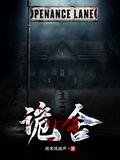 Treacherous House
946.4kReads9.6Score115.7kShelves
Treacherous House
946.4kReads9.6Score115.7kShelves
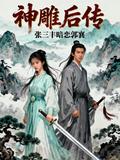 The Prequel of Yitian: Lord Xiang Fengyun Lu 2
23.1kReads8.7Score1.6kShelves
The Prequel of Yitian: Lord Xiang Fengyun Lu 2
23.1kReads8.7Score1.6kShelves
 From a Small Soldier to the Most Powerful General in Daxia
2.2kReads8.4Score137Shelves
From a Small Soldier to the Most Powerful General in Daxia
2.2kReads8.4Score137Shelves
 Use Force to Prove: Me! Grand Governor of the Human Race
10.5kReads8.8Score593Shelves
Use Force to Prove: Me! Grand Governor of the Human Race
10.5kReads8.8Score593Shelves
 Tibet Jiao Yin
50Reads5.8Score—Shelves
Tibet Jiao Yin
50Reads5.8Score—Shelves
 Little Policeman, Big Use
104.3kReads9.6Score14.3kShelves
Little Policeman, Big Use
104.3kReads9.6Score14.3kShelves
 What a Great Son-In-Law! I Also Want to Improve My Cultivation Level
4.9kReads7.9Score509Shelves
What a Great Son-In-Law! I Also Want to Improve My Cultivation Level
4.9kReads7.9Score509Shelves
 The Killing Order Has Been Issued
7.3kReads7.1Score409Shelves
The Killing Order Has Been Issued
7.3kReads7.1Score409Shelves
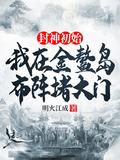 Beginning of the Conferred God: I Set up a Formation on Jin'ao Island to Block the Gate
58.5kReads7.9Score7kShelves
Beginning of the Conferred God: I Set up a Formation on Jin'ao Island to Block the Gate
58.5kReads7.9Score7kShelves
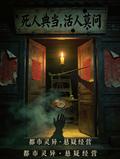 Opening a Consignment Shop at the Age of 33, the Person Who Comes in the Middle of the Night Is Not a Human Being
4Reads5.8Score—Shelves
Opening a Consignment Shop at the Age of 33, the Person Who Comes in the Middle of the Night Is Not a Human Being
4Reads5.8Score—Shelves
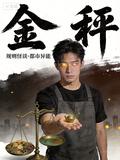 Gold Scale
2Reads—Score—Shelves
Gold Scale
2Reads—Score—Shelves
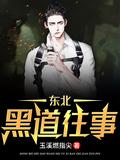 Past Events of Northeastern Underworld
307.5kReads9.5Score21.2kShelves
Past Events of Northeastern Underworld
307.5kReads9.5Score21.2kShelves
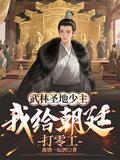 I Obviously Want to Live in the World, but You Have to Force Me to Become a Marquis
336Reads6.8Score—Shelves
I Obviously Want to Live in the World, but You Have to Force Me to Become a Marquis
336Reads6.8Score—Shelves
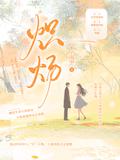 Don't Mess with His Little Pity
54.4kReads9.5Score8.7kShelves
Don't Mess with His Little Pity
54.4kReads9.5Score8.7kShelves
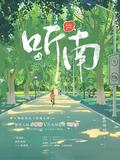 Tingnan
44kReads9.6Score7.4kShelves
Tingnan
44kReads9.6Score7.4kShelves
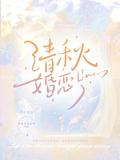 Married First and Then Fell in Love with My Crush
38.1kReads9.1Score5.1kShelves
Married First and Then Fell in Love with My Crush
38.1kReads9.1Score5.1kShelves
 Falling in Love, the Sinister CEO Loves Him so Much
6.2kReads9.3Score714Shelves
Falling in Love, the Sinister CEO Loves Him so Much
6.2kReads9.3Score714Shelves
 Greedy for Your Summer
62.4kReads9.1Score7.8kShelves
Greedy for Your Summer
62.4kReads9.1Score7.8kShelves