Huang's Dan Niang, a female doctor who was born in the countryside of Henan Province but became famous in Chang'an for her diligent study of medicine (an honorific title given to those who specialize in a certain knowledge in the Tang Dynasty), was currently trying to lift her weak body from the hospital bed. Her pale face turned a sickly flush due to exertion, and her eyes fell on her son.
You were asked to teach the prince the sage's book, but you taught him to rebel? The contrast is so overwhelming! With the assistance of the resourceful Qin Yi, Li Chengqian turned to the green tea track! Li Shimin just watched the prince go from being as gentle as jade to turning into a black man and seizing the heir. He was frightened and couldn't stop. The intrigues and intrigues are thrilling, and the relationship between father and son is repeatedly rubbed on the edge of imperial power. The sentence asking Your Majesty to call him the prince is even more nerve-wracking! It was so exciting, my blood was pumping throughout the whole process, I had to stay up late and kneel to watch it!
"The First Disaster of the Tang Dynasty" has been completed. The book I wrote is 2 million+. I feel that it is not bad. I will try to recommend [send my heart][send my heart][laugh][laugh][send my heart][send my heart]
How can we miss out on these high-scoring novels of the Tang Dynasty? Recommended by a bookworm of more than 30 years, it has strategies for solving crimes, exciting fighting scenes, interesting stories, good views, humor, and is super comprehensive.
Time Travel, Hilarious, Relaxing, Ancient Prose. Travel through the Tang Dynasty and become the son of Cheng Yaojin three years ago. He coincides with the selection of the censor, Li Shimin's funny entertainment, love and hatred.
Hong Wen rubbed her little head and said, "Of course. When Si Zi grows up, can Brother Hong teach you how to control a hot air balloon?" "It's a deal!" Si Zi stretched out her little finger and said seriously. Princess Changle made a formal salute to Hongwen: "Mr. Hong fulfilled Si Zi's dream. Changle will remember this kindness in his heart." Hongwen looked up at the sky, where there were still a few birds flying freely. He remembered a modern poem - "There are no traces of wings in the sky, but I have flown through." Today, he gave Xiaosizi a pair of invisible
Bring it on! I recommend this novel. This book was reviewed by Shangshu Sheng, Zhongshu Sheng, and Menxia Sheng, and was confirmed to be a good book of the Tang Dynasty. The prime ministers of the three provinces all said that this book is rare and can be read at a glance.
Traveling back to the Tang Dynasty, I witnessed the wonderful game between the Japanese prince and Gu Shiyan. Gu Shiyan's "Suppressing God's Head" move, which can solve two problems with one man, will be famous throughout the ages!
Tomato is the only novel about the late Tang Dynasty written by Emperor Wenzong, Emperor Wuzong and Emperor Xuanzong of Tang Dynasty. It is unsystematic, the writing style is lighthearted and funny, entertaining, the war is real, the struggle in the court is bizarre, and the brain is refreshing. [Sinister smile]
It is not a novel about Xiaobai. The protagonist travels through time and becomes a prince. He experiences problems such as the collapse of the Tang Dynasty's rent-meeting system, the unsustainability of the imperial military system, financial waste, and the excessive military power of the military governors in border towns, which led to the inevitable outbreak of the Anshi Rebellion. The protagonist uses thousands of years of historical knowledge to reshape land distribution from the bottom up, take back military power, etc., So that the Tang Dynasty can regain its glory!
"While others are writing about "proclaiming emperor", he is writing about "establishing people" - a northern epic that reconstructs China with potatoes and laws." If you open this work and expect to see the protagonist fighting for three years and proclaiming himself emperor for three years, please close the page. But if you are willing to witness a revolution that does not wash away the palace gates with blood, but completely reshapes the world; if you believe that the true kingship does not lie in burning books and harassing Confucian scholars, but in opening women's colleges, abolishing slave registration, and setting up orphanages; then, please enter this world where the sun hangs in the sky - there are no cool writing routines here, only how a potato can influence the national destiny for three hundred years. With amazing writing power, the author transforms the darkest moment after the Anshi Rebellion into an experimental field for the reconstruction of civilization. Li Qingtian did not rely on the system to defy heaven, but used the peace he had gained in exchange for the lives of four thousand soldiers to fulfill a promise: "Under my rule, the old will not be left homeless, and the young will not be left without food." So we see: Others write about war, but he writes about collecting the souls after the war: the corpses of the Yan army were burned to prevent plague, and the bones of the common people were wrapped in brocade and buried together in the "Anmin Tomb"; others wrote about power and strategy, but he wrote about establishing trust in the system: detailed public trials, dissemination of the "Edict of Loyal Ministers", and shaking up the scholarly community with "the commoner Yang family"; Others write about farming, but he writes about the recovery of people's hearts: children burying seeds beside graves, Hu Shang shouting "Peace in the north is better than Chang'an", old farmers kneeling with earth in front of them and saying "the spirit of the earth is not dead". The most shocking thing was not that the Red Flame Dragon Cavalry defeated the enemy, but that the 50,000-strong army circled the field ridge without stepping on a single spring wheat seedling. The character creation is even more unforgettable: Guo Ziyi is loyal but not stupid, and would rather borrow soldiers from the north than let He enter the pass; Pugu is gracious and sad but refuses to rebel, raising troops to clear the emperor's side but refusing to surrender to the north; Yang Mi writes in the name of "the common people of the world", and an edict can be written faster than a knife; Daizong abdicated on his deathbed, not because of coercion, but because he could not bear to shed another drop of blood in Chang'an. This book also hides a grand vision: from the Yingzhou Rebellion to the Anshi War, from Longyou and Tubo to the eastward expansion of food, the author reveals that the decline of the Tang Dynasty was not due to one thief, but because the entire system lost the ability to "make the people dare to believe in tomorrow." Li Qingtian's new policy was a response to this: opening women's colleges, abolishing slave registration, imposing potato taxes, setting up Changping free warehouses... Each policy directly targeted the root causes of the old world. Fantasy elements? The Buddha lotus in the left eye, the demon pattern in the right eye, the light sword hiding the devil's whisper - but these have never taken over the spotlight. They are just mirrors that reflect human nature: the greatest devil is never in the abyss, but in the human heart's despair for order. Finally, when Li Qingtian ascended the throne, he did not sit on the dragon throne. Instead, he stood under the jade steps and announced the five new policies. But the devil asked for a blood sacrifice, so he pushed open the palace door - outside the door was not a mountain of corpses and a sea of blood, but the lights of the Wenhua Academy, the music of the night market, and the fresh green of the potato fields. "This is my blood sacrifice - to sacrifice the death of the old world in order for all people to live in peace." This is not a cool article, this is a tragic epic about mortals remaking China. It tells us: The real destiny does not lie in the prophecies of Tui Meibi, but in the moment when children dare to bury the seeds beside the grave; the real Great Wall does not lie in the bricks and stones, but in the people's aspiration that "the northern border is the Great Wall". If you long for a work that has the coldness of "Zi Zhi Tong Jian" and the warmth of "The people are tired, but they can be well-off" in the Book of Songs; if you believe that the turning point in history often begins with a bowl of hot porridge, a new seedling, and the sentence "The north is here, the people have no worries" - then, please open this book. Because here, the gods and demons will eventually exit, but the human heart will never die! ! !
My own book, I really like those things about the Ming Dynasty, I have always wanted to use this style of writing to write about the Tang Dynasty, I wrote it blindly, I hope you readers will like it~ Please point out any shortcomings, it's just cute~
The posthumous title is: "The saint Zhou Wen said Xuan". It emphasizes that the monarch is famous for his benevolence and good governance, but even Xuanzong in history cannot escape the historical cycle at the beginning of his decline. When a small transparent person in the modern system time travels to Tang Xuanzong, who is about to be supported by the eunuchs as the "Government of Dazhong". How will he save the declining Tang Empire, and how will he escape from the historical cycle at the beginning of its decline. (Recommended by the author)
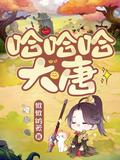 Xitang
149kReads9.4Score16.5kShelves
Xitang
149kReads9.4Score16.5kShelves
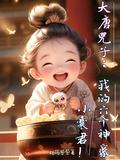 Sizi of the Tang Dynasty: My Six Powerful Xiao Nangjun!
81Reads5.8Score—Shelves
Sizi of the Tang Dynasty: My Six Powerful Xiao Nangjun!
81Reads5.8Score—Shelves
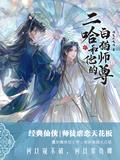 Erha and His White Cat Master
154.2kReads9.7Score31.9kShelves
Erha and His White Cat Master
154.2kReads9.7Score31.9kShelves
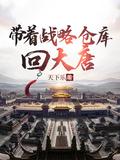 Return to Datang with Strategic Warehouse
187.5kReads9.5Score24kShelves
Return to Datang with Strategic Warehouse
187.5kReads9.5Score24kShelves
 Traveling Through the Tang Dynasty: It's so Difficult to Be an Idle King
139.2kReads9.2Score9.8kShelves
Traveling Through the Tang Dynasty: It's so Difficult to Be an Idle King
139.2kReads9.2Score9.8kShelves
 God-Level Prodigal Son of the Tang Dynasty
5.6kReads8.3Score513Shelves
God-Level Prodigal Son of the Tang Dynasty
5.6kReads8.3Score513Shelves
 Datang: Grandpa Huang, I Really Don't Have Any Private Money
12.6kReads8.7Score1.9kShelves
Datang: Grandpa Huang, I Really Don't Have Any Private Money
12.6kReads8.7Score1.9kShelves
 The Good and Wise King of the Tang Dynasty
90.3kReads9.4Score9.2kShelves
The Good and Wise King of the Tang Dynasty
90.3kReads9.4Score9.2kShelves
 I Asked You to Teach the Prince, but I Didn't Ask You to Teach the Prince to Rebel.
48.3kReads7.4Score2.6kShelves
I Asked You to Teach the Prince, but I Didn't Ask You to Teach the Prince to Rebel.
48.3kReads7.4Score2.6kShelves
 Datang: Millions of Private Soldiers, Li Er, Do You Regret It?
19.6kReads8.5Score1.5kShelves
Datang: Millions of Private Soldiers, Li Er, Do You Regret It?
19.6kReads8.5Score1.5kShelves
 Food: in the Tang Dynasty, Officials Lined up to Beg for Food
2.1kReads6.4Score120Shelves
Food: in the Tang Dynasty, Officials Lined up to Beg for Food
2.1kReads6.4Score120Shelves
 Nine Sons Seize the Heir: the Useless Prince Was Demoted to Beiliang at the Beginning
31.4kReads8.6Score2.7kShelves
Nine Sons Seize the Heir: the Useless Prince Was Demoted to Beiliang at the Beginning
31.4kReads8.6Score2.7kShelves
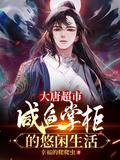 Datang Supermarket: the Leisurely Life of a Salted Fish Shopkeeper
36.2kReads8.4Score3.8kShelves
Datang Supermarket: the Leisurely Life of a Salted Fish Shopkeeper
36.2kReads8.4Score3.8kShelves
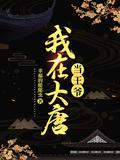 I Am a Prince in the Tang Dynasty
13.1kReads8.5Score929Shelves
I Am a Prince in the Tang Dynasty
13.1kReads8.5Score929Shelves
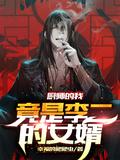 I, the Chef, Am Actually Li Er's Son-In-Law
15.4kReads8.9Score1.7kShelves
I, the Chef, Am Actually Li Er's Son-In-Law
15.4kReads8.9Score1.7kShelves
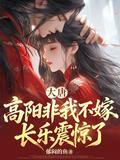 Datang: Gao Yang Will Not Marry Me but Changle Is Shocked
20.2kReads7.2Score1.8kShelves
Datang: Gao Yang Will Not Marry Me but Changle Is Shocked
20.2kReads7.2Score1.8kShelves
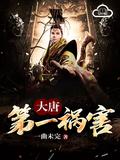 The Greatest Scourge of the Tang Dynasty
57.3kReads8.4Score4.7kShelves
The Greatest Scourge of the Tang Dynasty
57.3kReads8.4Score4.7kShelves
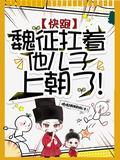 Run Quickly, Wei Zheng Is Carrying His Son to Court!
40.9kReads9.0Score4.9kShelves
Run Quickly, Wei Zheng Is Carrying His Son to Court!
40.9kReads9.0Score4.9kShelves
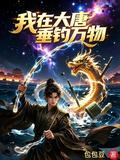 I Am Fishing for All Things in the Tang Dynasty
50.4kReads7.3Score5.1kShelves
I Am Fishing for All Things in the Tang Dynasty
50.4kReads7.3Score5.1kShelves
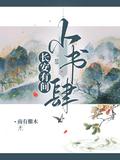 Zhanchun
29.6kReads9.5Score5.2kShelves
Zhanchun
29.6kReads9.5Score5.2kShelves
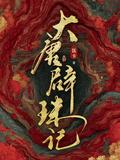 The Story of Pizhu in the Tang Dynasty
210.9kReads9.7Score37.2kShelves
The Story of Pizhu in the Tang Dynasty
210.9kReads9.7Score37.2kShelves
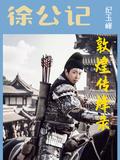 Xu Gongji's Dunhuang Biography
89Reads8.2Score—Shelves
Xu Gongji's Dunhuang Biography
89Reads8.2Score—Shelves
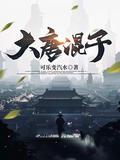 Tang Bastard
22.9kReads7.7Score1.8kShelves
Tang Bastard
22.9kReads7.7Score1.8kShelves
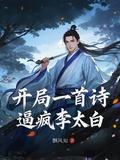 A Poem at the Beginning That Drove Li Taibai Crazy
751Reads8.1Score—Shelves
A Poem at the Beginning That Drove Li Taibai Crazy
751Reads8.1Score—Shelves
 Unexpected Tang Dynasty
86Reads—Score—Shelves
Unexpected Tang Dynasty
86Reads—Score—Shelves
 I Told Li Shimin That He Was in a Hurry and Wanted to Trade with Me.
63.7kReads9.0Score5.3kShelves
I Told Li Shimin That He Was in a Hurry and Wanted to Trade with Me.
63.7kReads9.0Score5.3kShelves
 Datang Wanjie Mall: Pick up the Little Sizi at the Beginning
101Reads5.8Score—Shelves
Datang Wanjie Mall: Pick up the Little Sizi at the Beginning
101Reads5.8Score—Shelves
 Datang: Start with a Grocery Store
101Reads5.8Score—Shelves
Datang: Start with a Grocery Store
101Reads5.8Score—Shelves
 Tang Guihun
1.7kReads7.6Score118Shelves
Tang Guihun
1.7kReads7.6Score118Shelves
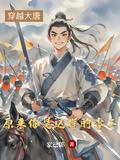 Traveling Through the Tang Dynasty, It Turns Out You Are Like This Li Er
2.1kReads9.2Score103Shelves
Traveling Through the Tang Dynasty, It Turns Out You Are Like This Li Er
2.1kReads9.2Score103Shelves
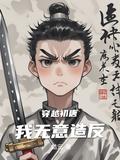 Travel Through the Early Tang Dynasty to Create an Alternative Prosperous Age
126Reads5.8Score—Shelves
Travel Through the Early Tang Dynasty to Create an Alternative Prosperous Age
126Reads5.8Score—Shelves
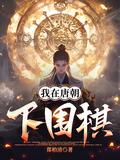 I Played Go in the Tang Dynasty
66Reads—Score—Shelves
I Played Go in the Tang Dynasty
66Reads—Score—Shelves
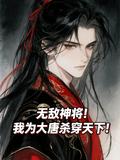 Invincible General! I Will Kill All over the World for the Tang Dynasty!
3Reads—Score—Shelves
Invincible General! I Will Kill All over the World for the Tang Dynasty!
3Reads—Score—Shelves
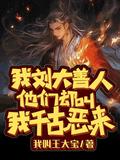 A Stick from the Tang Dynasty
2.6kReads8.8Score190Shelves
A Stick from the Tang Dynasty
2.6kReads8.8Score190Shelves
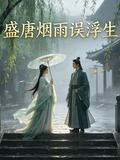 Wandering into the Prosperous Tang Dynasty, Drunken Life
5.8kReads5.7Score473Shelves
Wandering into the Prosperous Tang Dynasty, Drunken Life
5.8kReads5.7Score473Shelves
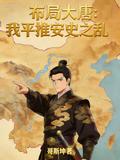 Laying Out the Tang Dynasty: I Promoted the Anshi Rebellion
1.2kReads5.8Score—Shelves
Laying Out the Tang Dynasty: I Promoted the Anshi Rebellion
1.2kReads5.8Score—Shelves
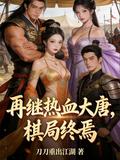 Following the Bloody Tang Dynasty, the Chess Game Comes to an End
3Reads5.8Score—Shelves
Following the Bloody Tang Dynasty, the Chess Game Comes to an End
3Reads5.8Score—Shelves
 Tang Dynasty: If Your Military Exploits Change Your Fate, You Will Have to Spend Four Years in Prison
2.6kReads8.5Score107Shelves
Tang Dynasty: If Your Military Exploits Change Your Fate, You Will Have to Spend Four Years in Prison
2.6kReads8.5Score107Shelves
 Li Shimin: Duzi, How Many Daughters-In-Law Do I Have?
39.3kReads8.8Score3.9kShelves
Li Shimin: Duzi, How Many Daughters-In-Law Do I Have?
39.3kReads8.8Score3.9kShelves
 Live Streaming, the Customer Is Actually Li Shimin
5.1kReads8.9Score566Shelves
Live Streaming, the Customer Is Actually Li Shimin
5.1kReads8.9Score566Shelves
 Datang: My Unique Talents Have Been Exposed
30.3kReads8.7Score2.7kShelves
Datang: My Unique Talents Have Been Exposed
30.3kReads8.7Score2.7kShelves
 Talking About the Tang Dynasty Like Nacai
1Reads—Score—Shelves
Talking About the Tang Dynasty Like Nacai
1Reads—Score—Shelves
 Sui and Tang Dynasties: I, Mr. Xiaoyao, Am Invincible Even If My Wife Dies.
9Reads—Score—Shelves
Sui and Tang Dynasties: I, Mr. Xiaoyao, Am Invincible Even If My Wife Dies.
9Reads—Score—Shelves
 Xiao Sizi's Journey to Two Worlds
3.8kReads7.6Score265Shelves
Xiao Sizi's Journey to Two Worlds
3.8kReads7.6Score265Shelves
 Datang: Soul Exchange, Two Li Chengqian
48Reads—Score—Shelves
Datang: Soul Exchange, Two Li Chengqian
48Reads—Score—Shelves
 Living in the Tang Dynasty
9.8kReads7.0Score668Shelves
Living in the Tang Dynasty
9.8kReads7.0Score668Shelves
 I! the Great Uncle of the Emperor of the Tang Dynasty Became an Emperor Through the Ages!
130Reads6.9Score—Shelves
I! the Great Uncle of the Emperor of the Tang Dynasty Became an Emperor Through the Ages!
130Reads6.9Score—Shelves
 Datang: Only by Resisting the Will Can One Become Stronger
34.8kReads8.8Score5.3kShelves
Datang: Only by Resisting the Will Can One Become Stronger
34.8kReads8.8Score5.3kShelves
 Tang Dynasty: from a Young Pawn to King Zhao of Xifu
8.8kReads8.4Score604Shelves
Tang Dynasty: from a Young Pawn to King Zhao of Xifu
8.8kReads8.4Score604Shelves
 Datang: Combining Triple Lu Bu's Combat Power at the Beginning
18.8kReads8.8Score1.4kShelves
Datang: Combining Triple Lu Bu's Combat Power at the Beginning
18.8kReads8.8Score1.4kShelves