Help! This Siheyuan article is so stress-relieving! I've seen enough plots where the protagonist feels frustrated and frustrated. This book will directly make the protagonist unparalleled! Cao Jianjun awakens the memory of the King of Soldiers at the beginning and conquers all the beasts in the hospital. Later, he relies on his system and strength to counterattack, defeating Fool Zhu, cheating Xu Damao, and rectifying Yi Zhonghai. Every chapter is a slap in the face, and every chapter is escalating. The career line is from the security department officer to the deputy factory director, and the emotional line (family line) is warm and healing. The pace is so fast that you can't stop at all. I have given this book to all my friends who like refreshing articles!
The system flows Siheyuan, and the protagonist automatically generates a country. He is the heir of the country. The protagonist lives in Siheyuan and uses his country's materials to support China. This identity is awesome enough [laughing]
When I returned to the United States, my family had money. I donated 8 million US dollars from the beginning and met Mr. Zhou. Many women, Siheyuan + Zhengyang Gate + people are iron
Old guys, 🔥Tingfeng's new book "Siheyuan: I Don't Want to Be a Fool!" The update is officially launched! It still has a familiar taste, no Holy Mother, no procrastination, toughness and the best in the whole hospital, full of sophistication, decisiveness in killing, and full of strategic layout! There are new ways to start blind box streaming, 🔥the paths are wilder and more dense, and there are also new settings for multi-film and television linkage. The whole book is carefully polished and the quality is assured. Every day at 12 noon, there are two stable updates, unbeatable! Click on the new book link below to get there directly. You can also find the book title by searching on Tomato. Please support me, readers. See you in the new story!
① Siheyuan has a great status, but it has to be built by itself! ! After having the past life memory + awakening system at the beginning, the protagonist frantically completes tasks to get rewards. In the end, he has younger brothers around him who are proficient in all aspects. From then on, the protagonist truly becomes a big brother! !
💥① Perfectly fits [Send Heart]. The protagonist travels through the Siheyuan period and becomes He Yuzhu's uncle. He has a great background. He starts as the regiment commander, updates to the army commander, and takes He Yuzhu to join the top ace army.
"Siheyuan: Chief Designer of the Nantianmen Project" uses an imaginative setting to inject a modern soul into the body of a boy in a Siheyuan in 1958, allowing an orphan who should have been struggling to make ends meet to find a way to change his life in the quagmire of the "Siheyuan" with the help of technological knowledge and systems that transcend the times. This is not only a refreshing novel about a courtyard house, but also a technological rhapsody that uses modern wisdom to overcome the limitations of the times. Time-travel Beginning: The Hungry Chief Designer Zhang Jianhua's time-travel start is full of the reality of a period drama - No. 95 Nanluoguxiang in 1958, the family is bare, the meal is full of corn, the father died young, and the mother can barely make ends meet with a meager salary. But the author cleverly lays the groundwork: he is not only a time traveler, but also the chief architect of the future "Nantianmen Project". The awakening of the mystery in the womb and the looming "fishing system of the heavens" imply that this young man is by no means a thing in the pond. Different from other Siheyuan novels, the protagonist's golden finger is not a talent for martial arts or business, but the ability to light up the technology tree. When he is chewing on steamed buns and thinking about the future, readers can feel the strong contrast - this big boss who can design space carriers in the future, his biggest wish at this moment is actually to "eat enough to eat." Although the system was silent in the early stage, the name of "Zhutian Fishing" hinted that the follow-up may involve the acquisition of technology across time and space, laying down key clues for the main line of "using technology to change the destiny of the country". Group portraits in the Siheyuan: A battle of wits and courage in the courtyard full of birds. The author's creation of the classic characters in the courtyard adds dramatic conflicts while retaining the characteristics of "Qinman": - Yan Bugui: He is portrayed as a "door god"-like existence. The plot of blocking the door and asking for "wine for entering a higher education" fully exposes his "scheming" nature. However, he is silenced by Zhang Jianhua's irony of "selling blood to serve wine", which shows the protagonist's nascent intellectual battle. - Yi Zhonghai: The mask of the "moral god" was peeled off layer by layer. Zhang Jianhua's excuse when he asked for donations, and his subsequent attempts to maintain his reputation by supporting a deaf old lady, portrayed his hypocrisy and utilitarianism to the core. - Jia Zhang and Qin Huairu: Jia Zhang's behavior and Qin Huairu's forbearance (actually undercurrents) constitute a typical example of family conflicts in a courtyard house. Zhang Jianhua has always been vigilant about their attitudes and avoided falling into the emotional entanglements of traditional courtyard novels. Zhang Jianhua's response strategy is textbook level: Faced with Yan Bugui's calculations, he used the moral accusation of "human blood steamed buns" to make it difficult for the opponent to get off; faced with Yi Zhonghai's PUA, he turned Yijun to ask for donations and exposed his hypocrisy in public. This kind of battle of wits of "repaying the other person with his own way" not only conforms to the protagonist's modern soul's way of thinking, but also avoids the routine of mindless and cool writing. Background of the era: The technological fire of the hungry age. The novel restores the details of the era in 1958, and the sense of hunger runs through the first few chapters: - Material scarcity: corn glutinous rice and cornbread are the norm. Jia Dongxu's monthly salary of 38.6 Yuan is difficult to support his family. Zhang Jianhua's family has exhausted their savings to treat the elderly. These details allow readers to intuitively feel the dilemma of the times. - Social Scene: The restructuring background of the Red Star Rolling Mill, the high school entrance examination as the only way to change destiny, and the false reputation of the "Excellent Courtyard" selection all reflect the social characteristics of a specific historical period. - Technological foreshadowing: Zhang Jianhua's memory fragments of the "Nantianmen Project" are in sharp contrast to the current hunger, implying that technological power will be the key to breaking the situation. The author cleverly integrates historical events such as the "Three Major Transformations" and "Difficult Periods" into the plot, making the main line of technological counterattack more realistic and tense. System settings: Fishing Zhutian's technology tree The setting of "Zhutian Fishing System" breaks away from the traditional check-in and lottery routines: - Acquisition method: Obtain technology blueprints or materials across time and space through "fishing", which is in line with the career setting of a "chief designer" and avoids the sense of suspension of a universal system. - Growth path: The system was silent in the early stage, forcing Zhang Jianhua to solve survival problems (high school entrance examination, employment) first, and then gradually light up the technology tree after the foundation is solid. This rhythm of "succumbing first and then exploding" is more reasonable. - Functional outlook: From the basic industrial technology that may be obtained in the early stage to the aerospace and energy technology that will be gradually unlocked in the later stage, the system provides a feasible path for the main line of "changing the national destiny". Zhang Jianhua's call for the system after the high school entrance examination and the potential of the "fishing" function have laid a rich suspense for the subsequent plot. Plot tension: The parallel parallel between the high school entrance examination and technology. The novel cleverly combines the "survival line" and the "technological line": - Survival line: The high school entrance examination is the top priority at the moment. Zhang Jianhua is ranked first in the grade with modern learning methods and aims at technical secondary school to reduce the burden on his family. This line is full of the struggle texture of a period novel. - Technology line: After the mystery of the womb awakens, Zhang Jianhua's memory fragments of future technology (such as the Nantianmen Project) flash from time to time, contrasting with the current hunger, implying that technology will be the ultimate means to break the situation. The two lines are intertwined in scenes such as hospital meetings - when Silly Zhu and Xu Damao fight over trivial matters, Zhang Jianhua watches with cold eyes, but what he is thinking about is how to use the system to change the status quo. This perspective of "everyone is drunk and I am alone" makes the plot full of tension. Language style: humorous comments and period texture coexist. The language of the novel has both the characteristics of the times and a modern sense of humor: - Vocabulary of the era: "kai laoer", "stick noodle steamed buns", "seven-level fitter" and other words restore the atmosphere of the old Beijing city, and terms such as "excellent courtyard house" and "security department" strengthen the mark of the times. - Modern complaints: Zhang Jianhua's inner ridicule of Yi Zhonghai's "moral emperor" and his complaints about the system's "hungry" form a comedy effect across time and space. - Detailed description: The detailed descriptions of Jia Zhang's action of slamming the table, Yi Zhonghai's changing expression, Zhang Jianhua's psychological activities while eating steamed buns, etc., Make the characters and scenes vivid on the page. This language style not only ensures the heaviness of the historical novel, but also injects relaxed elements through the protagonist's modern soul perspective, making it suitable for the reading habits of different readers. "Siheyuan: Chief Designer of the Nantianmen Project" uses the creative setting of the chief designer's soul to travel through the Siheyuan, perfectly combining technological counterattacks with survival in the era. Zhang Jianhua did not choose to be tough on the "Qinman" people in the courtyard. Instead, he first gained a foothold through the high school entrance examination, and then relied on the system to gradually light up the science and technology tree, with the ultimate goal of "changing the destiny of the country." When he watched the fight between stupid pillars at the hospital meeting, readers could feel the forbearance and ambition of a future technology boss in a period drama. This novel is not only a brilliant story about the counterattack of the courtyard house, but also a hymn about using the power of science and technology to fight against the limitations of the times. It is worth looking forward to the shocking plot after the subsequent technology tree is fully developed.
In 1960, the enemy agents had not yet been cleared out, and there were still bad guys hidden among the masses. Xu Huai traveled to a street kid at No. 95 Nanluogu Lane, but was framed as a murderer by enemy agents and was about to be shot.
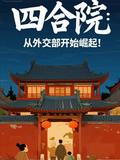 Siheyuan Starts with Learning Foreign Languages
57.4kReads7.6Score3kShelves
Siheyuan Starts with Learning Foreign Languages
57.4kReads7.6Score3kShelves
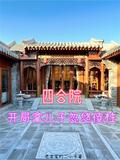 Siheyuan: at the Beginning, You Used Your Son to Fool Silly Zhu
3.8kReads6.6Score—Shelves
Siheyuan: at the Beginning, You Used Your Son to Fool Silly Zhu
3.8kReads6.6Score—Shelves
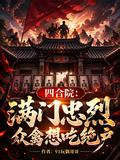 Siheyuan: the Whole Family Is Loyal and Loyal, and All the Birds Want to Eat It.
2.7kReads5.4Score168Shelves
Siheyuan: the Whole Family Is Loyal and Loyal, and All the Birds Want to Eat It.
2.7kReads5.4Score168Shelves
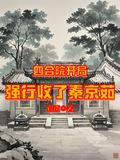 Siheyuan Forcibly Accepted Qin Jingru at the Beginning
9.9kReads6.9Score566Shelves
Siheyuan Forcibly Accepted Qin Jingru at the Beginning
9.9kReads6.9Score566Shelves
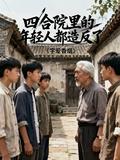 The Young People in the Courtyard Revolted
15kReads6.0Score439Shelves
The Young People in the Courtyard Revolted
15kReads6.0Score439Shelves
 Siheyuan: a Grumpy Street Kid Who Is Cruel and Talkative.
4.3kReads5.3Score—Shelves
Siheyuan: a Grumpy Street Kid Who Is Cruel and Talkative.
4.3kReads5.3Score—Shelves
 Siheyuan: Abolish the Silly Pillars and Destroy All the Birds
22.1kReads6.1Score870Shelves
Siheyuan: Abolish the Silly Pillars and Destroy All the Birds
22.1kReads6.1Score870Shelves
 A Ruthless Person in the Courtyard
9.4kReads7.1Score363Shelves
A Ruthless Person in the Courtyard
9.4kReads7.1Score363Shelves
 Siheyuan: Insulting Martyrs' Families? at the Beginning, the Fool Went to Jail
31.7kReads6.4Score1.1kShelves
Siheyuan: Insulting Martyrs' Families? at the Beginning, the Fool Went to Jail
31.7kReads6.4Score1.1kShelves
 Siheyuan: Invincible at the Start, Giving Away Countless Resources to the Country
16.9kReads7.4Score658Shelves
Siheyuan: Invincible at the Start, Giving Away Countless Resources to the Country
16.9kReads7.4Score658Shelves
 In the Beginning of the Courtyard, Qin Huai Was Advised to Leave. She Wanted to Follow Me
29.5kReads6.3Score3kShelves
In the Beginning of the Courtyard, Qin Huai Was Advised to Leave. She Wanted to Follow Me
29.5kReads6.3Score3kShelves
 Siheyuan, I Work as a Secretary in an Agricultural Machinery Factory
15kReads6.1Score568Shelves
Siheyuan, I Work as a Secretary in an Agricultural Machinery Factory
15kReads6.1Score568Shelves
 Siheyuan, I Have the Final Say over This Canteen
17.9kReads7.6Score780Shelves
Siheyuan, I Have the Final Say over This Canteen
17.9kReads7.6Score780Shelves
 Siheyuan, I Know Too Much, Right?
11.8kReads7.3Score464Shelves
Siheyuan, I Know Too Much, Right?
11.8kReads7.3Score464Shelves
 Siheyuan: My Sister Was Sold and I Went Crazy.
2.8kReads5.8Score120Shelves
Siheyuan: My Sister Was Sold and I Went Crazy.
2.8kReads5.8Score120Shelves
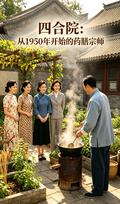 Siheyuan: Master of Medicinal Diet Since 1950
4.2kReads5.8Score306Shelves
Siheyuan: Master of Medicinal Diet Since 1950
4.2kReads5.8Score306Shelves
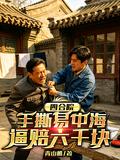 Siheyuan: Yi Zhonghai Was Torn Apart and Forced to Pay 6,000 Yuan
43.4kReads5.1Score2kShelves
Siheyuan: Yi Zhonghai Was Torn Apart and Forced to Pay 6,000 Yuan
43.4kReads5.1Score2kShelves
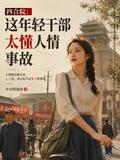 Siheyuan: This Young Cadre Is Too Understanding of Human Affairs and Accidents
131.6kReads6.4Score10.8kShelves
Siheyuan: This Young Cadre Is Too Understanding of Human Affairs and Accidents
131.6kReads6.4Score10.8kShelves
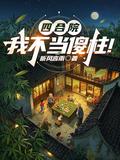 Siheyuan: I Don't Want to Be a Fool!
13.6kReads5.4Score689Shelves
Siheyuan: I Don't Want to Be a Fool!
13.6kReads5.4Score689Shelves
 Siheyuan: on the Eve of Liberation? Just Feel Good and That's It
39.5kReads6.8Score1.7kShelves
Siheyuan: on the Eve of Liberation? Just Feel Good and That's It
39.5kReads6.8Score1.7kShelves
 Siheyuan: Explode Old People to Get Gold Coins, Chew on Old People Without Shame
9.8kReads6.8Score381Shelves
Siheyuan: Explode Old People to Get Gold Coins, Chew on Old People Without Shame
9.8kReads6.8Score381Shelves
 Siheyuan: If There Are Too Many Younger Brothers, the Older Brother Will Win.
17Reads5.8Score—Shelves
Siheyuan: If There Are Too Many Younger Brothers, the Older Brother Will Win.
17Reads5.8Score—Shelves
 Siheyuan: I Am Yi Zhonghai's Biological Son
41.9kReads9.2Score1.9kShelves
Siheyuan: I Am Yi Zhonghai's Biological Son
41.9kReads9.2Score1.9kShelves
 Travel Through the Courtyard, Live an Upright Life and Don't Take the Blame
370Reads5.8Score—Shelves
Travel Through the Courtyard, Live an Upright Life and Don't Take the Blame
370Reads5.8Score—Shelves
 Siheyuan: I Came, but the System Ran Away
13.7kReads6.5Score415Shelves
Siheyuan: I Came, but the System Ran Away
13.7kReads6.5Score415Shelves
 What's Wrong with All the Zhonglie in My Courtyard Eating Meat?
4.6kReads6.1Score222Shelves
What's Wrong with All the Zhonglie in My Courtyard Eating Meat?
4.6kReads6.1Score222Shelves
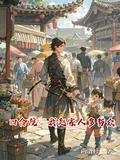 Siheyuan: My Zhao Family Has a Large Number of People
46.2kReads6.1Score4.1kShelves
Siheyuan: My Zhao Family Has a Large Number of People
46.2kReads6.1Score4.1kShelves
 Siheyuan: Starting from the Beginning and Changing Careers, Holding First-Class Merit
7.8kReads6.3Score255Shelves
Siheyuan: Starting from the Beginning and Changing Careers, Holding First-Class Merit
7.8kReads6.3Score255Shelves
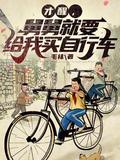 I Just Woke up and My Uncle Wants to Buy Me a Bicycle.
24.6kReads8.4Score1.3kShelves
I Just Woke up and My Uncle Wants to Buy Me a Bicycle.
24.6kReads8.4Score1.3kShelves
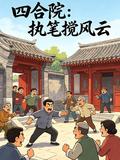 Siheyuan: Writing a Book That Stirs up Troubles
23.2kReads5.5Score1.2kShelves
Siheyuan: Writing a Book That Stirs up Troubles
23.2kReads5.5Score1.2kShelves
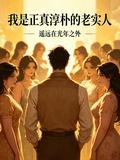 I Am an Upright and Honest Person
64Reads5.8Score—Shelves
I Am an Upright and Honest Person
64Reads5.8Score—Shelves
 Siheyuan: Become the Deputy Factory Director at the Beginning
139Reads5.8Score—Shelves
Siheyuan: Become the Deputy Factory Director at the Beginning
139Reads5.8Score—Shelves
 The 1960S, the History of the Time Traveler's Fortune
15.9kReads7.4Score982Shelves
The 1960S, the History of the Time Traveler's Fortune
15.9kReads7.4Score982Shelves
 Siheyuan: Heavy Industry to Rejuvenate the Country
10.4kReads7.7Score318Shelves
Siheyuan: Heavy Industry to Rejuvenate the Country
10.4kReads7.7Score318Shelves
 Siheyuan from 1958 to Modern Times
73kReads7.7Score4.8kShelves
Siheyuan from 1958 to Modern Times
73kReads7.7Score4.8kShelves
 Siheyuan: Full of Loyalty
8.1kReads6.5Score267Shelves
Siheyuan: Full of Loyalty
8.1kReads6.5Score267Shelves
 Siheyuan, My Will Is Not so Strong
15.9kReads6.8Score913Shelves
Siheyuan, My Will Is Not so Strong
15.9kReads6.8Score913Shelves
 Siheyuan: in 1948 There Were No Silly Pillars, Only
191Reads5.8Score—Shelves
Siheyuan: in 1948 There Were No Silly Pillars, Only
191Reads5.8Score—Shelves
 Siheyuan: Obtain the Power of Dragon and Elephant at the Beginning
29.7kReads7.9Score1.6kShelves
Siheyuan: Obtain the Power of Dragon and Elephant at the Beginning
29.7kReads7.9Score1.6kShelves
 You Don't Understand My Happiness in the Courtyard
28.5kReads6.9Score1.9kShelves
You Don't Understand My Happiness in the Courtyard
28.5kReads6.9Score1.9kShelves
 Complete the Courtyard Mission and Return to Modern Times to Make Salted Fish
74Reads5.8Score—Shelves
Complete the Courtyard Mission and Return to Modern Times to Make Salted Fish
74Reads5.8Score—Shelves
 Siheyuan: I Use National Law to Suppress All Dissent
33.7kReads8.7Score1.6kShelves
Siheyuan: I Use National Law to Suppress All Dissent
33.7kReads8.7Score1.6kShelves
 1938, Purification
1.6kReads5.8Score146Shelves
1938, Purification
1.6kReads5.8Score146Shelves
 Siheyuan: I Can Accurately Find Enemy Agents
11.7kReads7.9Score562Shelves
Siheyuan: I Can Accurately Find Enemy Agents
11.7kReads7.9Score562Shelves
 He. She. Window Paper
46Reads8.6Score—Shelves
He. She. Window Paper
46Reads8.6Score—Shelves
 Deceive, Catch Adultery
62Reads8.4Score—Shelves
Deceive, Catch Adultery
62Reads8.4Score—Shelves
 Travel Through 43, Kill Enemies with Space
374Reads5.8Score—Shelves
Travel Through 43, Kill Enemies with Space
374Reads5.8Score—Shelves
 Siheyuan: Graduated from the Police Academy, Detained at the Beginning of the Game
1.5kReads7.0Score—Shelves
Siheyuan: Graduated from the Police Academy, Detained at the Beginning of the Game
1.5kReads7.0Score—Shelves
 Poison
40Reads8.4Score—Shelves
Poison
40Reads8.4Score—Shelves
 The Jizhou Ding That Aspires to Be the Best in the World
66Reads8.6Score—Shelves
The Jizhou Ding That Aspires to Be the Best in the World
66Reads8.6Score—Shelves