Dear friends, please allow me to recommend four stories to you. After writing these four stories, I sat in front of the computer and was in a daze for a long time. Not because of how well written it is, but because - every person, every machine, every pop-up window, every director arguing in the conference room, and every patient hesitating in front of the hospital bed in these four stories seemed to be standing in front of me alive, looking at me. They are asking me: Why are you writing about us? I thought about it for a long time and came up with an answer: to let more people see us. So today, I want to recommend these four stories to you seriously. They are not the kind of thrilling blockbusters, not the kind of brain-burning suspense reasoning, nor the kind of sweet romance. They are some extraordinary things that happen to ordinary people - oh no, ordinary people and ordinary machines - on ordinary days. If you have ever felt for a moment in the dead of night that the work in your hands is more than work, the tools around you are more than just tools, and the light above your head is more than just lights - then you will like these stories. The first story: "Complaints about Medical Equipment" Have you ever thought that when you are asleep, the cold medical equipment around you will "chat" in the corridor? The ventilator in the ICU is discussing the patient's tidal volume, the ECG monitor is comforting the insomniac old man, and the shadowless lamp in the operating room is reciting every operation during the day. Even the bulky C-arm X-ray machine in the orthopedics department will "walk" out of the equipment room by itself and knock on the door in the corridor: "Bone density test, please extend your arm." This is not a horror movie. This is a story about "understanding". Chen Weiyong, an engineer in the equipment department, heard the "conversations" of these machines late at night. He discovered that these machines were not broken or refined, but were trying to do "the right thing" in their own way. Every word they say is what humans have taught them; every reminder they make is an echo of what humans have done. This story will make you laugh and silence you. Because it asks a question: when tools start to think for us, when machines start to understand patients better than us - should we be afraid, or should we be grateful? The answer is: neither. We should listen. Listening to those machines is actually listening to ourselves. This story can be found on Tomato Books. Enter "Medical Device Tucao" and find user 26182811, who wrote it. Read 30% for free. After reading, remember to tell me in the comment area - Do you have a "talking" machine around you? The second story: "Rehabilitation Training Game" The rehabilitation department is probably the most boring place in the hospital. It would take an old lady who had a stroke three months to learn to turn over on her own, and a young man who had a broken bone would have to endure half a year before he could walk again. How many people choose to give up due to repetitive, painful, and endless training? Physical therapist Shen Yiming was unwilling to give in. He turned the rehabilitation training into games - "Knee Adventure", "Claw Machine" and "Balance Beam". The patients forgot their pain in the game and learned to walk again in happiness. But soon, problems arose. Some people are addicted to games and injure themselves through overtraining; some people use their healthy hand instead of the affected hand to "get points" in order to rank on the leaderboard; some people break down and cry in the treatment room because they are ranked at the bottom. The story takes a turn here. It is not the kind of cool article about "technology changes everything", but a reflection on "boundaries". When happiness becomes a prescription, when play becomes therapy - will we forget what true recovery is? The essence of rehabilitation is not to let patients "do training", but to let patients "think about life." Games are just a means, happiness is just a process, and the final answer is always outside the screen - in the waiting eyes of your family, in your unwilling dreams, and in the therapist's hand on your waist. This story will make you laugh and cry. Because it tells you: some pain is worth enduring; some happiness cannot replace growth. Search "Rehabilitation Training Game" on Tomato Bookstore, user 26182811. Get a 30% free trial and tell me after reading it - what is the game you most want to "clear" in your life? The third story: "Struggle for Medical Resources" An MRI that has been used for eight years, a director of the imaging department who wants new equipment, an emergency department director who needs ECMO, a director who is dealing with a dilemma, and an entire system trapped by a lack of resources. There are no bad guys in this story. Zhao Mingde wants to improve diagnosis and Ma Jianguo wants to enhance rescue capabilities. They are both striving for better conditions for their patients. But when resources are limited, conflicts between "good" and "good" can also arise. Quarrels, calculations, joint letters, seeking connections, reporting... The two departments had been fighting openly and secretly for nearly two months. It wasn't until the old nuclear magnet was completely "tired" and went on strike early one morning that everyone was forced to make a choice. The most heartbreaking thing about this story is that it happens every day. In every hospital, in every conference room, in every moment of resource allocation. No one did anything wrong, but everyone was tired. What really pays for this "war" are the patients waiting in the corridor and the lives passing by in the ward. It asks an unanswerable question: In a world where everything is lacking, how can we divide things fairly? I don't know the answer. But I know this story is worth reading for everyone struggling with the system. Because it will make you understand - you are not alone. Search "Struggle for Medical Resources" on Tomato Bookstore and identify user 26182811. Read 30% for free, and leave a message after reading it - Is there such a "war" around you? The fourth story: "Advertising Becomes Masterful" At three o'clock in the morning, when product manager Fang Yuan was working overtime, a pop-up window popped up on the screen. The pop-up window said: "Have you ever thought about it, advertising also has its own feelings?" Then, this pop-up window took Fangyuan into the "world of advertising." There, display ads are floating balloons, native ads are road signs, chasing ads are kites that follow users, and pop-ups are ghosts. They are ghosts who have been shut down again and again by users, blocked by browsers, suppressed by platforms, and struggling at the bottom. The pop-up window told Fang Yuan that it was called Ad, numbered AD-38, and was posted on the Internet by Fang Yuan himself. It said: "You humans created us and then forgot about us. You never asked us if we wanted to be ejected, never asked us if we liked what we looked like, and never asked us how it felt to be blocked and blocked on those websites." This is a ridiculous story, but it asks an extremely serious question: In the torrent of traffic economy, have we forgotten that behind every number, there are people? Users are human beings, they have feelings, they can be annoyed, they can be cheated, they can be angry, they can be numb. Advertising is also a "person" - if a piece of code can be written, posted, turned off, and deleted - does it count as an existence? Does it have the right to be respected? Fang Yuan promised Ad that he would help him "make an honest advertisement." But he soon discovered that in this industry, honesty is the least valuable thing. The ending of the story is not a happy ending. Fang Yuan did not change the industry, but he changed himself. He never wrote a deceptive copy again. This story will make you laugh and think. Because it tells you: In this world where everyone is screaming, those who speak softly can be heard. Tomato Bookstore searched for "Advertising Success", user 26182811. 30% Free trial, tell me after reading - when was the last time you were annoyed by a pop-up window? The last words: Dear friends, I have been writing these four stories for a long time. It's not because there are many words—more than 20,000 words each, which adds up to almost 100,000 words. But because every time I write something, I have to stop and think: Is what I write true? Is that right? Is it worth your time to see? I'm not sure they're "good stories." But I'm sure they are real. There are really people in the hospital late at night, staring at machines that can't talk. There are really people in the rehabilitation room gritting their teeth and persevering for one action. There were really people in the conference room, arguing over the ownership of the equipment. There are really people who are in front of the computer at three o'clock in the morning, fascinated by a pop-up window. These people are us. These things are our life. If you find these four stories on Tomato Book Store, please give me a chance to read the first 30% for free. If you think it's okay, leave a message in the comment area and tell me how you feel. Criticism is OK, praise is OK, even if you just say "I've finished reading", I will be happy all day long. Remember to identify user 26182811. There may be other stories with the same name in Tomato Books, but that's not mine. Only the ones under this ID were typed out word by word by me. Finally, thank you sincerely. Thank you for taking the time to read this recommendation. Thank you for your willingness to read these stories. Thank you for your willingness to stop for a text in this breathtakingly fast world. You are the reason why I keep writing. Love you authors April 1, 2026
This and this one are adapted from real stories, such as the recent minor bullying incident (as a side note, he and his grandma could live happily and help her sell apples every day, but such a good boy was still killed by three demons [cry] [cry]), domestic violence and divorce, and a classic copy of "Article 20" also appeared in it, "The law cannot give in to the law." The copy of the minor bullying made my liver hurt when I read it, and it wrote about the misery of the bullied. I sincerely hope that there will be no more bullying in the world, that there will be peace in the world, no more wars, no more bullying, and no more domestic violence.
There is a kind of happiness that comes from a good attitude and is free from the constraints and fetters of life. Even though his clothes are in rags and his life is impoverished, he has not lost himself or forgotten his true nature. Treat people with a sincere smile, making passers-by feel clean and warm. The journey of life is like a long-distance train. Some people get off halfway, while others reach the end. It is undeniable that there are all kinds of people on the train. The gap between rich and poor means nothing. Just be yourself.
Adapted from real experiences! It is taken from the top domestic martial arts schools. What is the most precious thing for martial arts school students? The brothers who endured hardship together, gritted their teeth and persevered, and grew up never looking back. It is purely documentary, with no fantasy or cheating. It writes about morning exercises, training, cultural classes, homesickness, and brotherhood. Every scene is a true portrayal of martial arts school students. Let me show you a period of passionate youth and martial arts training journey of martial arts school students...
 After Being Released from Prison, He Picked up a CEO
7.6kReads9.1Score126Shelves
After Being Released from Prison, He Picked up a CEO
7.6kReads9.1Score126Shelves
 My Sister Fu Bao, After Her Husband Died
2.7kReads9.4Score—Shelves
My Sister Fu Bao, After Her Husband Died
2.7kReads9.4Score—Shelves
 After His Lumbar Disc Herniated, He Cheated Money and Sex
403Reads8.9Score—Shelves
After His Lumbar Disc Herniated, He Cheated Money and Sex
403Reads8.9Score—Shelves
 The Story of the Arrest of the Overbearing Village Chief
1.9kReads7.5Score136Shelves
The Story of the Arrest of the Overbearing Village Chief
1.9kReads7.5Score136Shelves
 The Bastard Life of a Loser
84Reads5.8Score—Shelves
The Bastard Life of a Loser
84Reads5.8Score—Shelves
 My 16-Year-Old Bai Yueguang
851Reads5.8Score—Shelves
My 16-Year-Old Bai Yueguang
851Reads5.8Score—Shelves
 Chongqing Laowang
11.7kReads8.2Score735Shelves
Chongqing Laowang
11.7kReads8.2Score735Shelves
 Shanghai Aunt AI Male Model
9kReads7.1Score595Shelves
Shanghai Aunt AI Male Model
9kReads7.1Score595Shelves
 The Best Peach Blossom Man
15.6kReads8.5Score1.1kShelves
The Best Peach Blossom Man
15.6kReads8.5Score1.1kShelves
 Man Adopted by Widow
4.4kReads6.9Score405Shelves
Man Adopted by Widow
4.4kReads6.9Score405Shelves
 Infidelity and Redemption
1kReads6.4Score—Shelves
Infidelity and Redemption
1kReads6.4Score—Shelves
 I Am a Thief in Tianlong
2.4kReads6.9Score115Shelves
I Am a Thief in Tianlong
2.4kReads6.9Score115Shelves
 Be a Young Master in Heaven and Earth
1.6kReads8.3Score101Shelves
Be a Young Master in Heaven and Earth
1.6kReads8.3Score101Shelves
 I Want the Beauties from All over the World
6.5kReads7.4Score504Shelves
I Want the Beauties from All over the World
6.5kReads7.4Score504Shelves
 10 Scumbag Women Who Don't Eat Coriander
161Reads5.8Score—Shelves
10 Scumbag Women Who Don't Eat Coriander
161Reads5.8Score—Shelves
 Xiao Longnu, What Can I Do to Save You?
259Reads5.8Score—Shelves
Xiao Longnu, What Can I Do to Save You?
259Reads5.8Score—Shelves
 Live-Action Japanese Cartoon World
517Reads5.8Score—Shelves
Live-Action Japanese Cartoon World
517Reads5.8Score—Shelves
 Weiminguan Road
5.2kReads9.1Score380Shelves
Weiminguan Road
5.2kReads9.1Score380Shelves
 Warm Spring Shines on the Countryside
558Reads6.2Score—Shelves
Warm Spring Shines on the Countryside
558Reads6.2Score—Shelves
 Spy Lurking Railway Files Liaoshen Jingzhe
4Reads5.8Score—Shelves
Spy Lurking Railway Files Liaoshen Jingzhe
4Reads5.8Score—Shelves
 Railway Archives: the Stinging Hour
3Reads5.8Score—Shelves
Railway Archives: the Stinging Hour
3Reads5.8Score—Shelves
 Railway Archives
2Reads5.8Score—Shelves
Railway Archives
2Reads5.8Score—Shelves
 The Poor Become Rich When They Turn Around
17Reads—Score—Shelves
The Poor Become Rich When They Turn Around
17Reads—Score—Shelves
 I Kissed Her That Night
7Reads8.6Score—Shelves
I Kissed Her That Night
7Reads8.6Score—Shelves
 Love Is Just Meeting Someone Who Understands You
1Reads8.6Score—Shelves
Love Is Just Meeting Someone Who Understands You
1Reads8.6Score—Shelves
 Complaints About Medical Devices.
1Reads8.5Score—Shelves
Complaints About Medical Devices.
1Reads8.5Score—Shelves
 Open up Your Layout.
—Reads8.4Score—Shelves
Open up Your Layout.
—Reads8.4Score—Shelves
 Advertising Is a Reminder.
—Reads8.4Score—Shelves
Advertising Is a Reminder.
—Reads8.4Score—Shelves
 Competition for Medical Resources.
—Reads8.6Score—Shelves
Competition for Medical Resources.
—Reads8.6Score—Shelves
 Rehabilitation Training Game.
—Reads8.5Score—Shelves
Rehabilitation Training Game.
—Reads8.5Score—Shelves
 The Criminal Transactions in Northern Myanmar Are Shocking Every Step of the Way!
797Reads8.5Score101Shelves
The Criminal Transactions in Northern Myanmar Are Shocking Every Step of the Way!
797Reads8.5Score101Shelves
 A Small Figure in the Officialdom, at the Pinnacle of Power!
36Reads—Score—Shelves
A Small Figure in the Officialdom, at the Pinnacle of Power!
36Reads—Score—Shelves
 Horror Copy: the Big Boss Is a Love Brain
10.6kReads9.1Score1.8kShelves
Horror Copy: the Big Boss Is a Love Brain
10.6kReads9.1Score1.8kShelves
 Lang from Hometown
—Reads—Score—Shelves
Lang from Hometown
—Reads—Score—Shelves
 Those Girls from Art School
14.2kReads7.8Score698Shelves
Those Girls from Art School
14.2kReads7.8Score698Shelves
 The Number One Scholar from a Poor Family and the Beauty of the Tang Dynasty
499Reads5.8Score—Shelves
The Number One Scholar from a Poor Family and the Beauty of the Tang Dynasty
499Reads5.8Score—Shelves
 I Fired Eight Shots in Court and Laughed
—Reads8.6Score—Shelves
I Fired Eight Shots in Court and Laughed
—Reads8.6Score—Shelves
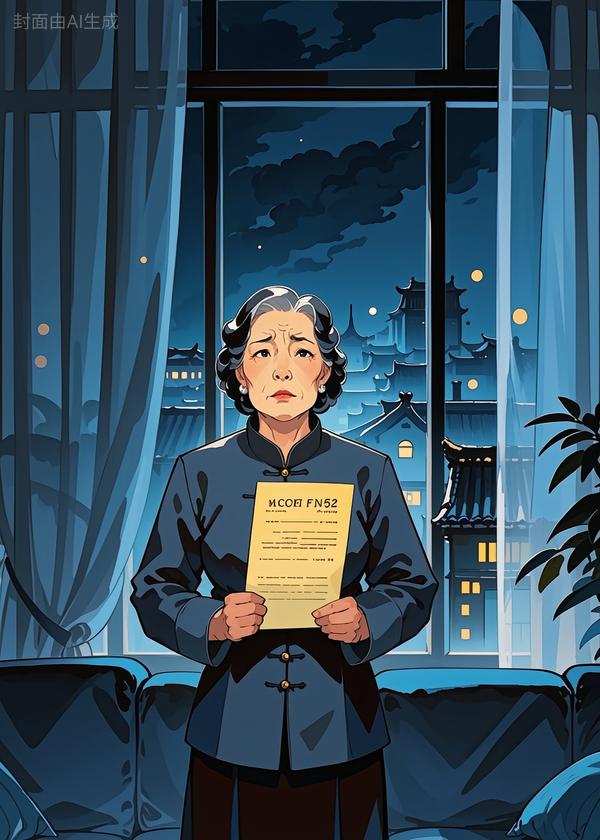 After Retiring for Thirty Years, Everyone Thought She Was Sacrificing for Love - Until She Walked into the Board of Directors
—Reads8.5Score—Shelves
After Retiring for Thirty Years, Everyone Thought She Was Sacrificing for Love - Until She Walked into the Board of Directors
—Reads8.5Score—Shelves
 I'm a Thirty-Year-Old Man, and I Won't Marry the Princess of the Beijing Circle Unless I Am
425Reads6.4Score—Shelves
I'm a Thirty-Year-Old Man, and I Won't Marry the Princess of the Beijing Circle Unless I Am
425Reads6.4Score—Shelves
 The Eldest Lady Who Became an Ex-Wife Cried and Begged to Get Back Together.
471Reads9.8Score—Shelves
The Eldest Lady Who Became an Ex-Wife Cried and Begged to Get Back Together.
471Reads9.8Score—Shelves
 Not Being a Spare Tire, the Female CEO Lost Control
88Reads5.4Score—Shelves
Not Being a Spare Tire, the Female CEO Lost Control
88Reads5.4Score—Shelves
 Urban Romance, I Walk Between Two Women
—Reads5.8Score—Shelves
Urban Romance, I Walk Between Two Women
—Reads5.8Score—Shelves
 My Ex-Wife Was Pking My Ex-Girlfriend While I Was Drinking Heavily
284Reads6.0Score—Shelves
My Ex-Wife Was Pking My Ex-Girlfriend While I Was Drinking Heavily
284Reads6.0Score—Shelves
 What Will Be the Next Story?
8Reads—Score—Shelves
What Will Be the Next Story?
8Reads—Score—Shelves
 Martial Arts School Graduates
422Reads5.8Score—Shelves
Martial Arts School Graduates
422Reads5.8Score—Shelves
 The Ordeal of Divorce
596Reads—Score—Shelves
The Ordeal of Divorce
596Reads—Score—Shelves
 Neon Taipei: My Seven Years of Depravity
6.1kReads7.4Score438Shelves
Neon Taipei: My Seven Years of Depravity
6.1kReads7.4Score438Shelves
 Hunting Cat
30Reads—Score—Shelves
Hunting Cat
30Reads—Score—Shelves
 My Dongguan Dream: Sister Mei
229.2kReads8.5Score6.4kShelves
My Dongguan Dream: Sister Mei
229.2kReads8.5Score6.4kShelves