Masterpieces are also divided into different categories. This book of light theological knowledge dwarfs a large number of so-called "tomato masterworks"
If you are not convinced, come on, the first three books are great. Those who have been around Tomato Man for a long time should know the first three books. The fourth book is a bit watery, but it does not hinder it.
Tomato 🍅 There are not many books, but it's not like there are only three! Let's take a look at the first three books I recommend. The first one: No heroine, you can learn a lot 🍅. I borrowed Teacher Luo's quotations and learned that the meaning of hard work is: What I want is expensive. The place I want to go is far away. The person I like is excellent, and the belief I insist on is pure! The second book: The whole text has no swords. The image of Yu Sheng is so vivid [smiles]. If you don't read it, you will miss it [laughs]? I think I was probably tired and lacked energy anyway. I flipped through a few books and my eyelids were tired. After reading carefully for half the night, I saw between the words that all my eyes were full of "f*ck" [staring]. The third book: the first science fiction article [stop], no other one can beat it! Survive and develop among the three factions. It's difficult to move forward [staring], but also stride forward🌠. She didn't look back when she left [almost crying], maybe she couldn't see me crying [almost crying], maybe she couldn't see me crying [almost crying]! You can read the rest by yourself, I won't introduce it. The uncle is panicked and looks back @this life will not give.
Story summary: As powerful as I am, the card I want most hides great power. Watch how a Blue Star man climbed to the top of the mountain step by step and became the strongest man. There is also a beauty transformed from a flame bird in Si Guan's body.
Literary knowledge ●The organization is so comprehensive that even the teacher admires it! 1. Common metonymic words: 1. Sangzi: hometown; 2. Taoli: students 3. Sheji and Xuanyuan: country. 4. Nanguan: Prisoner 5. Classmate: Classmate. 6. Beacon: war 7. Women: women. 8. Silk and bamboo: music 9. Men: men. 10. Chanjuan, Chang'e: the moon 11. Siblings: brothers. 12. History: annals of history 13. Husband and wife: husband and wife. 14. White man, commoner: common people. 15. Crooked, yellow hair: old man. 16. Sangma: farming 17. Support, support: children. 18. Three feet: law 19. Beneath the knees: parents. 20. Huagai: luck 21. Letter, slip, note, Hongyan, Zha: letter. 22. Temple: Imperial Court 2. Author's Works: 1. Eight Great Masters of the Tang and Song Dynasties: Han Yu, Liu Zongyuan, Ouyang Xiu, Su Xun, Su Shi, Su Che, Wang Anshi, Zeng Gong 2. Han Yu and Liu Zongyuan are both called "Han Liu". They are the advocates of the classical prose movement in the Tang Dynasty. 3. Three poets, father and son: Su Xun (old Su), Su Shi (big Su), and Su Che (little Su). 4. The bold poets: Su Shi and Xin Qiji, collectively known as "Su Xin"; the graceful poets: Li Qingzhao (female poet) 5. Li Du: Li Bai, Du Fu. Xiao Li Du: Li Shangyin, Du Mu. 6. Qu Yuan: my country's earliest great poet. He created the new poetry style "Chu Ci" and created the romantic style of Chinese poetry. 7. Confucius, whose name was Qiu and whose courtesy name was Zhongni, was a native of Lu in the Spring and Autumn Period. He was the founder of the Confucian school and was called the "Sage of Confucius". Mencius was called the "Ya Sage", and they were both called "Confucius and Mencius". 8. Su Shi praised Wang Wei, "There are paintings in poems, and poems in paintings." 9. Du Fu was a great realist poet in the Tang Dynasty. His poems reflected social reality extensively and profoundly, and were called the "History of Poetry". Du Fu was therefore revered as the "Sage of Poetry", including the famous "Three Officials": "Tongguan Officials", "Shihao Officials", and "Xin'an Officials"; 10. The first biographical general history of our country is "Shi Ji" (also known as "Tai Shi Gong Shu"). The author is Sima Qian of the Han Dynasty. Lu Xun called "Shi Ji" "the swan song of historians, the unrhymed "Li Sao"". It has: 12 chronicles, 30 aristocratic families, 70 biographies, 10 lists, and 8 books, a total of 130 articles. 11. "Four Histories": "Historical Records", "Hanshu", "Later Hanshu", and "Three Kingdoms". 12. The four great masters of Yuan opera: Guan Hanqing, Zheng Guangzu, Bai Pu and Ma Zhiyuan. 13. "Strange Stories from a Chinese Studio" is my country's first collection of outstanding short stories in classical Chinese. The author is Pu Songling, a famous novelist in the Qing Dynasty. "Liao Zhai" is the name of his bookstore, "Zhi" refers to narrative, and "Yi" refers to strange things. 14. The four masters of calligraphy: Yan Zhenqing, Liu Gongquan, Ouyang Xun, Zhao Meng (fǔ) 15. The main schools and representatives of a hundred schools of thought during the Warring States Period: Confucianism: Confucius and Mencius. Legalist: Han Feizi. Taoism: Zhuangzi, Liezi. Mohist: Mozi 16. Four great masters of the Southern Song Dynasty: Lu You, Yang Wanli, Fan Chengda, You Mao 17. Frontier poets: Gao Shi, Cen Shen, Wang Changling 18. Tang Zong: Tang Taizong Li Shimin Song Ancestor: Song Taizu Zhao Kuangyin Qin Emperor: Qin Shi Huang Ying Zheng Han Wu: Han Wu Emperor Liu Che 19. Our country's first pastoral poet was Tao Yuanming (Tao Qian) of the Eastern Jin Dynasty. He "would not bend his waist for five measures of rice." 20. The four great misers in world literature: Grandet, Shylock, Poultry, and Abagon. 21. The typical Chinese miser: Yan Jiansheng. 3. The best of Chinese literature: The earliest poetry collection is the Book of Songs; the earliest patriotic poet is Qu Yuan; the earliest pastoral poet is Tao Yuanming of the Eastern Jin Dynasty; the earliest and most outstanding frontier poets are Gao Shi and Cen Shen of the Tang Dynasty; the most outstanding bold poet in ancient times is Su Shi of the Northern Song Dynasty; the most outstanding female poet in ancient times is Li Qingzhao of the Southern Song Dynasty; the most famous patriotic poet in ancient times is Xin Qiji of the Southern Song Dynasty; The greatest romantic poet in ancient times is Li Bai of the Tang Dynasty; the greatest realist poet in ancient times is Du Fu of the Tang Dynasty; the patriotic poet who wrote the most poems in ancient times is Lu You of the Southern Song Dynasty; the most famous long-form mythological novel in ancient times is "Journey to the West" by Wu Chengen in the Ming Dynasty; the most famous long-form historical novel in ancient times is "The Romance of the Three Kingdoms" by Luo Guanzhong in the early Ming Dynasty; The earliest novel about peasant uprisings in ancient times is "Water Margin" by Shi Naian in the late Yuan and early Ming Dynasties; the greatest realist novel in ancient times is "A Dream of Red Mansions" by Cao Xueqin in the Qing Dynasty; the most outstanding long-form satirical novel in ancient times is "The Scholars" by Wu Jingzi in the Qing Dynasty; the most outstanding collection of short stories in classical Chinese is "Strange Stories from a Chinese Studio" by Pu Songling in the Qing Dynasty; the earliest quotation-style prose in ancient times is "The Analects"; The earliest chronological history book with detailed records in ancient times is "Zuo Zhuan"; the earliest comprehensive history in ancient times is "Shi Ji"; the most outstanding inscription in ancient times is "The Inscription on the Humble Room" by Liu Yuxi of the Tang Dynasty; the greatest litterateur in modern times is Lu Xun; the most outstanding novel in modern times is "Midnight" by Mao Dun; the most influential collection of short stories in modern times is "The Scream" by Lu Xun. 4. Cultural common sense: 1. The Four Heroes of the Early Tang Dynasty: Wang Bo, Yang Jiong, Lu Zhaolin, and King Luo Bin 2. The Three Kingdoms: Wei, Shu, and Wu. 3. "Four Classical Masterpieces": "A Dream of Red Mansions", "The Romance of the Three Kingdoms", "Water Margin", and "Journey to the West". 4. "Four Folk Legends": "The Cowherd and the Weaver Girl", "Liang Shanbo and Zhu Yingtai", "Meng Jiangnu", and "The Legend of the White Snake". 5. The world's four greatest short story masters: Chekhov, Maupassant, Mark Twain, and O. Henry. 6. Su Shi's prose represents the highest achievement of prose in the Northern Song Dynasty. His poems are called "Su Huang" together with Huang Tingjian. 7. Ma Zhiyuan's representative Sanqu work "Tian Jing Sha·Autumn Thoughts" is known as the "ancestor of Qiu Thoughts". 8. Cao Xueqin "read it for ten years, adding and deleting five times" to create the greatest realist work "A Dream of Red Mansions" (also known as "The Story of the Stone") among Chinese classical novels. It has been widely circulated since its publication and is deeply loved by people. A special study of the book has also emerged - "Redology". "Redology" has now become an important topic in the study of world literature. 9. Lu Xun is the founder of modern Chinese literature, and Chen Yi is known as the "marshal poet"; Zang Kejia is known as the "earth poet" because his poems are mostly about rural themes; Tianjian is praised by Wen Yiduo as the "drummer of the times" (drum poet) 10. The three friends of Suihan: pine, bamboo and plum. 11. The Four Gentlemen of Flowers: Plum, Orchid, Bamboo, and Chrysanthemum. 12. The four friends of literati: piano, chess, calligraphy and painting. 13. The four treasures of the study: pen, ink, paper, and inkstone. 14. Sikuquanshu: Jing, Shi, Zi, Ji. 15. The "Six Meanings" in "The Book of Songs" refer to: Feng, Ya, Song (classification), Fu, Bi, Xing (expression techniques). 16. Tang poetry, Song lyrics, Yuan opera, Ming and Qing novels. 17. Laurel, first place, first place, aspire, win first place: first. 18. Three cardinal principles and five constant principles: "Three cardinal principles": the father is the guideline for the son, the king is the guideline for the ministers, and the husband is the guideline for the wife; "Five constant principles": benevolence, righteousness, propriety, wisdom, and trustworthiness. 19. The "Four Books" and "Five Classics" are the main classics of Confucianism: the "Four Books" are the Analects of Confucius, Mencius, the Doctrine of the Mean, and the Great Learning; the "Five Classics" refer to the Poetry, the Book, the Rites, the Book of Changes, and the Spring and Autumn Annals. 20. Three Emperors: Emperor of Heaven, Emperor of Earth, Emperor of Human Beings or Fuxi, Nuwa, and Shennong; Five Emperors: Huangdi, Zhuanxu, Emperor Ku, Tang Yao, and Yushun. 21. Hardware: gold, silver, copper, iron, tin. 22. Five flavors: sour, sweet, bitter, spicy, and salty. 23. Five elements: metal, wood, water, fire and earth. 24. The "Eight Methods of Yong" means that the character "Yong" has eight strokes: dot, horizontal, vertical, left, n, fold, hook and lift. 25. In ancient times, schools had names such as Xiang, Xu, and Taixue. The highest institution of learning in the Ming and Qing Dynasties was the Imperial College. 26. Three Religions and Nine Streams: "Three Religions": Confucianism, Buddhism, and Taoism; "Nine Streams": Confucianism, Taoism, Yin-Yang School, Legalism, Famous Schools, Mohists, Politicians, Miscellaneous Schools, and Farmers. 27. Ancient imperial examinations (from the Sui Dynasty to the Ming and Qing Dynasties): A. The Tongsheng Examination, also called the "Tongsheng Examination", candidates regardless of age are called Tongsheng. After passing the examination, they will obtain the qualification of a student (scholar, husband), so that they can participate in the imperial examination. B. The rural examination was an examination held every three years in various provincial capitals during the Ming and Qing Dynasties. Scholars participated. Those who passed the examination were called Juren, and the first place was called Jiè (jiè). C. The examination was held every three years in the capital during the Ming and Qing dynasties. All provincial candidates and Imperial College students could take the examination. Three hundred were admitted as tribute scholars, and the first was named Huiyuan. D The Imperial Examination is the highest-level examination in the imperial examination system. The emperor personally questions the Gongshi admitted in the imperial examination to determine their first place. The admissions are divided into three categories: the top three are awarded the title of "Jinshi", the first is called the number one scholar (Ding Yuan), the second is ranked second, and the third is Tanhua, collectively known as the "Three Grades and Ding"; the number of second grade is given the title of "Jinshi origin"; the number of third grade is given the title of "the same Jinshi origin". Formal imperial examinations are held once a year and are held in prefectures and counties. Candidates who are Confucian and Tongsheng are awarded the title of scholar. Rural examinations are held once every three years (autumn) and are held in provincial capitals. The first place to be held is called Huiyuan. The joint examination is held once every three years (spring) and are held in the Ministry of Rites (capital). Candidates are held to be high-ranking officials and the first to be awarded the title of tribute is Huiyuan. The Imperial Examination is held in April of the same year after the General Examination. It takes place in the palace and the candidates are considered as imperial examinations. The top three candidates who obtain the title (Jinshi) are Number One Scholar, Second Place, and Third Flower. The official classification of the Imperial Examination is: rural examination, general examination, and the third level of the Imperial Examination. Continuously ascending to the top three (three yuan and the third): Jieyuan - Huiyuan - the number one scholar in the ancient imperial examination. 5. Poems and people: ① Three visits frequently make plans for the world, and two dynasties open the hearts of old ministers. ——Zhuge Liang ② Died before leaving the army, which makes the hero burst into tears. ——Zhuge Liang ③ If you become a master and show your true fame, no one can compare with you for thousands of years. ——Zhuge Liang ④ Knowing that the world is divided into three parts, he still went out with all his men and resources. ——Zhuge Liang ⑤ If you are upright and upright, you can keep your righteousness in the sky; if you are sad and angry, you can write a history that will shine on the world. ——Sima Qian ⑥ Drinking wine among the flowers, leaning on the needle-grinding stone, leaning on the sword and hanging the bow and fuscus in the sky. ——Li Bai ⑦ The eternal poetic talent, Penglai articles and Jian'an bones; a proud man, the Qinglian layman was relegated to the immortal. ——Li Bai ⑧ It has been eight hundred years since Weng passed away, but his drunken hometown is still there; six or seven miles into the mountains, there are no lone pavilions or shadows. ——Ouyang Xiu ⑨ The iron plate and copper lute follow the east slope and sing loudly as the great river goes eastward. The beautiful qin mourns the millet and the Southern Song Dynasty does not follow the wild geese flying south. ——Xin Qiji
 Add a Little Bit Every Year to Transform Yourself from a Mountain Villager into a Taoist Ancestor in the Immortal World
1.1MReads9.7Score170kShelves
Add a Little Bit Every Year to Transform Yourself from a Mountain Villager into a Taoist Ancestor in the Immortal World
1.1MReads9.7Score170kShelves
 Gaowu Ming Dynasty: from Young Eunuch to Nine Thousand Years Old
110.3kReads9.2Score11kShelves
Gaowu Ming Dynasty: from Young Eunuch to Nine Thousand Years Old
110.3kReads9.2Score11kShelves
 Fantasy: Being Blind, I Traveled Around the World
194.8kReads9.6Score21.9kShelves
Fantasy: Being Blind, I Traveled Around the World
194.8kReads9.6Score21.9kShelves
 The Underworld Calls Me Mr. Little
247.4kReads9.6Score30.7kShelves
The Underworld Calls Me Mr. Little
247.4kReads9.6Score30.7kShelves
 There's a Ghost Inside Me
109.4kReads9.3Score12.5kShelves
There's a Ghost Inside Me
109.4kReads9.3Score12.5kShelves
 The Lost City of Alien Beasts
547.2kReads9.7Score93.1kShelves
The Lost City of Alien Beasts
547.2kReads9.7Score93.1kShelves
 Those Who Have No Thoughts
71.4kReads9.4Score9.6kShelves
Those Who Have No Thoughts
71.4kReads9.4Score9.6kShelves
 My Right Eye Is a God-Level Computer
77kReads9.2Score7.6kShelves
My Right Eye Is a God-Level Computer
77kReads9.2Score7.6kShelves
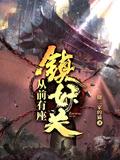 Once Upon a Time There Was a Demon Gate
241.5kReads9.6Score30.4kShelves
Once Upon a Time There Was a Demon Gate
241.5kReads9.6Score30.4kShelves
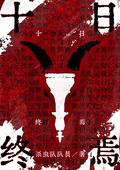 End of Ten Days
2MReads9.9Score269.2kShelves
End of Ten Days
2MReads9.9Score269.2kShelves
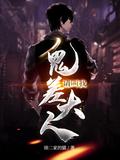 Please Call Me Ghost Master
159.8kReads9.6Score18.4kShelves
Please Call Me Ghost Master
159.8kReads9.6Score18.4kShelves
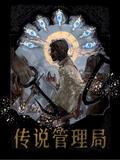 Legend Administration
207.2kReads9.6Score30kShelves
Legend Administration
207.2kReads9.6Score30kShelves
 Why Do Other Trainers Fail?
60.1kReads9.3Score5.4kShelves
Why Do Other Trainers Fail?
60.1kReads9.3Score5.4kShelves
 Tashenxu
3.1kReads8.4Score280Shelves
Tashenxu
3.1kReads8.4Score280Shelves
 God Came to the World, and When I Saw the Blood Bar, I Went Crazy!
168.4kReads9.3Score21.5kShelves
God Came to the World, and When I Saw the Blood Bar, I Went Crazy!
168.4kReads9.3Score21.5kShelves
 I Learned to Kill Gods in a Mental Hospital
1.5MReads9.9Score190.9kShelves
I Learned to Kill Gods in a Mental Hospital
1.5MReads9.9Score190.9kShelves
 Not an Evil God? See How I Lower the SAN Value
158.7kReads9.6Score18.1kShelves
Not an Evil God? See How I Lower the SAN Value
158.7kReads9.6Score18.1kShelves
 This Villain Has a Bit of a Conscience, but Not Much!
370.5kReads9.5Score37.2kShelves
This Villain Has a Bit of a Conscience, but Not Much!
370.5kReads9.5Score37.2kShelves
 It's so Painful That Even Ghosts and Gods Will Be Killed for You to See!
63.3kReads9.3Score5kShelves
It's so Painful That Even Ghosts and Gods Will Be Killed for You to See!
63.3kReads9.3Score5kShelves
 If You Hinder the Underworld from Handling the Case, Tathagata Will Also Hook You, I Said
102.4kReads9.3Score10.4kShelves
If You Hinder the Underworld from Handling the Case, Tathagata Will Also Hook You, I Said
102.4kReads9.3Score10.4kShelves
 I Have Infinite Retracements and Know All the Trump Cards
294.4kReads9.5Score37.5kShelves
I Have Infinite Retracements and Know All the Trump Cards
294.4kReads9.5Score37.5kShelves
 In My Words, the Death Row Prisoner Was Acquitted in Court
11kReads9.2Score1.5kShelves
In My Words, the Death Row Prisoner Was Acquitted in Court
11kReads9.2Score1.5kShelves
 Is It Reasonable for a Second-Level Civilization to Have Two-Way Foil?
105.2kReads9.6Score10.7kShelves
Is It Reasonable for a Second-Level Civilization to Have Two-Way Foil?
105.2kReads9.6Score10.7kShelves
 Taking Advantage of Qingmei's Ignorance, He Tricked Her into Becoming His Wife
73.2kReads9.5Score10.4kShelves
Taking Advantage of Qingmei's Ignorance, He Tricked Her into Becoming His Wife
73.2kReads9.5Score10.4kShelves
 Rebirth of an Academician: Back to 1975 as an Educated Youth
203kReads9.5Score23.4kShelves
Rebirth of an Academician: Back to 1975 as an Educated Youth
203kReads9.5Score23.4kShelves
 Gods and Demons Game: Master Fa Is the Eternal Truth!
70.7kReads9.1Score6.4kShelves
Gods and Demons Game: Master Fa Is the Eternal Truth!
70.7kReads9.1Score6.4kShelves
 I Asked You to Repair the Mecha, but You Just Replaced It with a New One?
40.7kReads8.9Score3.8kShelves
I Asked You to Repair the Mecha, but You Just Replaced It with a New One?
40.7kReads8.9Score3.8kShelves
 At the Beginning of Tiger King, the Tigress Was Actually Reborn as the Empress
18.1kReads9.2Score1.7kShelves
At the Beginning of Tiger King, the Tigress Was Actually Reborn as the Empress
18.1kReads9.2Score1.7kShelves
 Wushuang Head Teacher: I Can See Students' Talents
29kReads9.3Score3.6kShelves
Wushuang Head Teacher: I Can See Students' Talents
29kReads9.3Score3.6kShelves
 I Have an Ancient Kidney Body and Am Invincible in the End of the World.
190.4kReads5.8Score23.9kShelves
I Have an Ancient Kidney Body and Am Invincible in the End of the World.
190.4kReads5.8Score23.9kShelves
 Online Games: My Poison Can Kill Gods
452.8kReads9.2Score71.4kShelves
Online Games: My Poison Can Kill Gods
452.8kReads9.2Score71.4kShelves
 Please Retire Soon
24.6kReads9.3Score1.7kShelves
Please Retire Soon
24.6kReads9.3Score1.7kShelves
 The Stalls Sold Vigorously at the Beginning
389.4kReads9.7Score58.9kShelves
The Stalls Sold Vigorously at the Beginning
389.4kReads9.7Score58.9kShelves
 Gao Wu: My Daughter Burst into Tears After My Memories Were Exposed After My Death
972Reads8.3Score100Shelves
Gao Wu: My Daughter Burst into Tears After My Memories Were Exposed After My Death
972Reads8.3Score100Shelves
 Fortune Telling on the Street, I Fell in Love with the Empress of the Dynasty
46.8kReads9.0Score5kShelves
Fortune Telling on the Street, I Fell in Love with the Empress of the Dynasty
46.8kReads9.0Score5kShelves
 I Really Don't Want to Be a Rebel
10.4kReads8.9Score850Shelves
I Really Don't Want to Be a Rebel
10.4kReads8.9Score850Shelves
 Insect King's Immortal Journey
74.8kReads9.2Score8.3kShelves
Insect King's Immortal Journey
74.8kReads9.2Score8.3kShelves
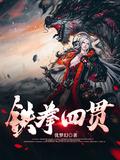 Iron Fist Four Strikes
1Reads5.8Score—Shelves
Iron Fist Four Strikes
1Reads5.8Score—Shelves
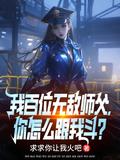 A Master Comes Down the Mountain, My Senior Sister Dotes on Me so Much
315.3kReads9.3Score10.2kShelves
A Master Comes Down the Mountain, My Senior Sister Dotes on Me so Much
315.3kReads9.3Score10.2kShelves
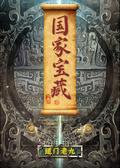 National Treasure
52.8kReads9.5Score7.4kShelves
National Treasure
52.8kReads9.5Score7.4kShelves
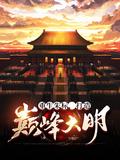 Ming Dynasty: the Most Powerful Prince in History
46kReads9.0Score5.1kShelves
Ming Dynasty: the Most Powerful Prince in History
46kReads9.0Score5.1kShelves
 I'm an Undercover Agent in the Exterminator Squad.
1Reads—Score—Shelves
I'm an Undercover Agent in the Exterminator Squad.
1Reads—Score—Shelves
 In the Era of Global E-Sports, I Am the Only Cheating Player
88.8kReads9.2Score9.8kShelves
In the Era of Global E-Sports, I Am the Only Cheating Player
88.8kReads9.2Score9.8kShelves
 There Is a Grave in My Dream, and I Am the Gravekeeper of Daxia
45.5kReads9.0Score4.9kShelves
There Is a Grave in My Dream, and I Am the Gravekeeper of Daxia
45.5kReads9.0Score4.9kShelves
 Spear Teacher
282.4kReads9.7Score40.3kShelves
Spear Teacher
282.4kReads9.7Score40.3kShelves
 Script Simulation: My Talent Increases a Hundred Times
12.4kReads8.8Score952Shelves
Script Simulation: My Talent Increases a Hundred Times
12.4kReads8.8Score952Shelves
 I Play the Horror World as a Development Game!
170.8kReads9.6Score22.5kShelves
I Play the Horror World as a Development Game!
170.8kReads9.6Score22.5kShelves
 I Said There Was No God Tonight, so the Gods Fell
40.8kReads9.6Score5.9kShelves
I Said There Was No God Tonight, so the Gods Fell
40.8kReads9.6Score5.9kShelves
 Weird Rules? I Choose to Be Rebellious
61.5kReads9.6Score8.4kShelves
Weird Rules? I Choose to Be Rebellious
61.5kReads9.6Score8.4kShelves
 Strange Talk Live Room!
221.3kReads9.7Score24.3kShelves
Strange Talk Live Room!
221.3kReads9.7Score24.3kShelves