"You are my lungs and bones, but I broke it with my own hands." "If the little silver bracelet could talk, it must be talking about Xia Xunqian's long life." "The little bell can't speak, and the wish can't come true." Deep love, deep hatred, and getting what you want, I stand with you under the pomegranate flower, looking up at the sky, and come back to life
Chasing Husband's Crematorium didn't even get past the first three chapters, and I started reading it. How cold my attitude was at the beginning, how clingy it became later on.
All I can say is that guiding lovers are simply incredibly strong. Ahhhhhh these books are really good! In the first book, Xiao Jiang is taught step by step to know that someone loves him, and slowly turns bad; in the second book, Little Treasure on the Weekend is also very heartbreaking, the cute and hard-working little treasure finally grows up in love for the rest of his life [almost crying]; in the third book, I kiss the baby bunny, he is very cute and cute, but when Bunny is sick, it makes people feel heartbroken. Okok comes directly to see it, you can't see being fooled or suffering a loss! It looks so good that I will go crazy!
Quickly penetrate the main body, torture the article, super knife, torture to death, the liver hurts from the torture, the plot is super cruel, torture first and then the crematorium
It's really super cruel! The first book: "Jiaojiao, please don't forget me." "I miss you very much." "What on earth did she want to say?" "It's snowing." "I am the agent of the gods No. 1000, Shi Jiao." "I wish you all a successful pass and a long life." The second book: "Sister, it's a pity that I can't wait until winter." "Actually... I like you." "We want to meet again in the sun -" "I hope my cousin will be happy and victorious." "Darkness has fallen. My time has come. I wish you a good death." "Can I go find my brother?" …
1. [Rehome in peace but wandering in a foreign land, returning home is as fast as an arrow but far apart forever, content with the status quo but can't help it. There is always tragedy in the world, and tragedy is the most popular. Joy and joy are all suffering, and a life of sorrow is ultimately complete. Opposite contrast is what fate likes best. —How can I live around Conan who vomits blood from time to time? 2. I cried so much that I couldn't breathe. 3. I cried. 4. Some of them cried. 5. I cried a few times and dared not continue reading. 6. I cried.
When I read the first book, I knew I was going to die, but I still felt tortured and cried. Some of the plots in the second book were really bland, but I still felt tortured. They all look good too
How could I forget him [laughing evilly] ① "That emperor shattered his bright moon, and from now on, there will be no more Gu Lean in the world" - "Quick Travel: Please look! The crematorium is in place" "The lone wolf in the prairie has lost his pearl after all" - "Quick Travel: Please look! The crematorium is in place." "Gu Yao is a person who is born for this job. He is sober and indulges, but can withdraw at the right time. Everything in the world seems to be nothing that can enter his eyes. He is careless and ruthless, but he has compassion for the suffering in the world. He is really a contradictory person." - "Quick Travel: Please take a look! The crematorium is in place" ② "Qin Kong has never been afraid of death, and dying in the desert is also a good choice. And galloping on the battlefield with a long sword in hand, how can we allow the enemy to invade our country." - "Live broadcast, the host plays the role of a beautiful, powerful and miserable person"
Sweet first, then torture and then sweetness [laughs] [laughs] Don't jump to watch it. Without the foreshadowing, the feeling will be much less. This author's writing is quite delicate, and many sentences can be copied directly into the composition. I really like them! I like it very much! Not silly! ! One by one, human beings can only watch time passing through their fingers like fine sand, watching the years change and the seasons rotate. The ancients sought immortality, while today's people seek medicine for regret. In the days without Shen Xiuyuan, Chi Yuan really lived his life into a very powerful adult.
The only short story in which the author cried himself to tears after writing it. Think about it for yourself, what will you do in the last thirty days of your life, if you have multiple knifes?
Dear friends, today's text is specially prepared for those of you who have been with us all the way - a complete map from the "absurd universe of the workplace", a key to eight treasure stories, and a letter of thanks to each of you. Do you still remember? In the very beginning, we were in the tea room on the twelfth floor of the Mingde Group, watching a young man named Gu Xiaomo being dragged into the whirlpool of emotions by the cries of Sister Zhou next door and almost drowned. At that time, we didn't know what "emotional boundaries" were. We only knew that there was a kind of tiredness called "being more tired after get off work than at work"—because your mind was filled with anxiety, anger, and grievances forced in by others, and you couldn't even find a trash can to dump them out. Then Shao An appeared, with a thin black line drawn on his wrist, and a cup of hand-brewed coffee with the water temperature accurate to tell us: other people's emotions belong to others, your peace belongs to you, and there needs to be a door between the two. This door is not about indifference, it is about regaining control over your emotions after you are finally able to distinguish "is this her sadness or mine?" This is the first story - "Emotional Boundary Keeper". It uses a ridiculous opening that makes people laugh (have you ever seen a colleague who cried from the subway to the company because she was stepped on? Sister Zhou is such a person), and tells a truth that is so serious that it makes people silent: your emotional immunity is as important as your physical immunity. The best thing about this story is that it does not teach you to keep everyone out, but teaches you to do one thing - install a door in your psychological territory, lock the door in your hand, and you decide who can come in, how far in, and how long to stay. After reading this story, you will find that those "other people's emotions" that make you breathless are not baggage that you must carry, but express delivery that you can politely return. But we soon discover that guarding emotional boundaries is not enough. Because Lao Cao will send you a message at 11:47 on Friday night, using an understatement of "due it before 9 o'clock tomorrow morning" and take away your entire weekend. And on your mobile phone, the second aunt in the family group sent twelve 59-second voice arrays, each of which used the tone of "for your own good" to ask you why you are not married yet. There are "border violations" all around you - not the kind of violations that involve swords and swords, but the ones that are sugar-coated and cloaked in harmless guises such as "just do it for me", "just do me a favor" and "when will you find a partner", making it hard for you to guard against. So Zhen Jie came, bringing his "Work-Life Boundary Negotiation Agreement" and a sentence that made the entire company's management turn green - "Your free overtime is not free. Every hour of free overtime corresponds to how much anxiety, how much insomnia, how many unfulfilled life promises." This is the second story - "Workplace Boundary Negotiator". It teaches us one thing: boundaries are not created through tolerance, but through negotiation. You have to put a price on your time and write "no entry" on your rest time. Then every time you are violated, you don't swallow your anger or bang the table and quarrel. Instead, like a professional negotiator, take out your agreement, your IOU, your calculation formula, and tell him with logic that the other party cannot refute - this is my territory, you can come in if you want, and follow the rules. And just when we think we have guarded our emotional boundaries and work and life boundaries, a more hidden enemy surfaces. It's not like Lao Cao who will directly ask you to work overtime, it's not like Sister Zhou who will cry to you, and it won't even make any sound - it just lies quietly in your pocket, using seventy-six unread red dots, thirty-seven push notifications, and the vibration of "You have a new message" to cut your attention into pieces more broken than chopped green onion. You pick up your phone one hundred and forty-seven times a day, only eleven of which are necessary. The remaining one hundred and thirty-six times are all conditioned reflexes of your brain being tamed by the red number "1". This is the third story - "Digital Border Firewall". Yao Shu came with a black bracelet with a slowly rotating blue halo on his wrist. He placed a transparent storage box in the conference room of Mingde Group and asked everyone to lock their mobile phones in it for forty-eight hours. During those 48 hours, Zhao Xiaotang discovered the roses that had been planted for three years on the balcony of the building opposite. Sister Zhou uninstalled the short video APP that made her feel more and more like a waste. Lao Cao - the project manager who used to send group work messages late at night - said to his black-and-white screen mobile phone: "It has stolen I don't know how many things." This story tells us: your attention is not a free mine, it is the core of all your boundaries. The platform and algorithms will not protect it for you, you can only build your own firewall. But no matter how many borders there are, there is one battlefield that you can never avoid - home. You can discuss boundaries with your boss at the company, but when you return home, your mother's words, "I raised you so well that you are getting further and further away from me," can cause the boundary defense line you have spent two years building to collapse in an instant. Because aggression in the workplace is a clear sword, and aggression in the family is like a needle wrapped in love - if you remove it, you feel sorry for this love; if you don't remove it, you will be riddled with holes. This is the fourth story - "Family Boundary Conflict". The second aunt uses "the sweater I knitted when you were a child" to kidnap your marriage choices, and the aunt uses "home is not a place for reason" to seal all your rational expressions. When the protagonist said the phrase "I accept kindness, but I withdraw control" at the dinner table, her mother scrawled it down in her notebook. This story makes people want to cry and laugh at the same time, because it is so real - every one of us young people working hard outside has experienced the dilemma of "wanting to love but afraid of being swallowed up by love". And it tells us: Family boundaries are not alienation, but a way to make intimacy last longer. You can love someone deeply while rejecting their control over you in the name of love. Next, Shi Shougui walked into Mingde Group with his hourglass. The countdown electronic watch on his wrist turns the most abstract concept of "time" into a concrete material that can be seen, weighed, and bargained for. He asked everyone to calculate the time that they had been occupied without compensation since joining the company - nine hundred and fourteen hours, thirty-eight days. Then he invented a set of "time borrowing vouchers" that require anyone to fill in a loan note, mark the duration, and write a return date before taking up your non-working time. Lao Cao was forced to sign the first legal document in the history of Mingde Group's time boundary management. The IOU was later posted on the wall behind the desk by Gu Xiaomo with transparent tape. This is the fifth story - "Time Boundary Management". It uses an hourglass to tell us: the time in your life that truly belongs to you only accounts for about seven percent of your life. That 7% is not a surplus resource. It is the last stronghold you use to watch the sunset, read books, build blocks with your children, or just sit in a daze under the afternoon sun without doing anything. Anyone taking your time without authorization is taking a cut from that measly seven percent. Then we were met with silence. She is a more professional "mapmaker" than Zhao Xiaotang, but she came to Mingde Group not to help everyone draw minefield maps, but to tell us one thing: defense alone is not enough, you have to rebuild. It's not enough to know "You can't touch here", you also have to know "You can touch here, but in what way". This is the sixth story - "Topic Restricted Area Map". Zhao Xiaotang used her behavioral code book that was so thick that it could be used as a weapon to draw a minefield for everyone in the company - Xiao Wang will explode if he is stared at for more than three seconds, Sister Zhou's "son" cannot be said to be just a dog, and Mr. Jiang only has 40% hearing in his left ear, so you need to sit on the right side to talk. And when everyone marked their minefields publicly, a miracle happened: the minefields began to fail one by one. Because the lethality of a minefield relies on "uncertainty", when it is made transparent, it becomes an ordinary piece of road with a sign on it - you see it, go around it, and both sides are unscathed. Finally, the seventh story is also our latest one - "Dean Fu, let me book a pension place first." It integrates all our previous boundary management theories into a "My Home" nursing home located at No. 83 Yonghang Road, Fengcheng Street, Yongding District, Longyan. There, there is a deputy director named Fu Meihua, who is thirty-five years old and has worked as a nursing home for the elderly for thirteen years after graduating from a medical school. She can remember the dietary taboos of each of the sixty-three elderly people, can say "Grandma, I will help you turn over now, don't be afraid" before helping the old man turn over, and can stand in front of a door for different times - because she knows that Grandma Li needs to wait a few more seconds before getting out of bed, Grandpa Zhang needs to adjust the curtains first because his eyes are afraid of light, and Grandma Wang does not like to be watched getting up. And her most valuable thing is not the bookshelves full of certificates and awards, but a sentence she wrote on the title page of her old notebook more than ten years ago: "The most valuable thing is not these certificates, but the ability to remember what every old person doesn't like to eat." All these stories can now be searched. Whether you are used to turning pages in Tomato Bookstore, or you like to laugh while listening to Tomato Music, or you open the fast version of Toutiao or Toutiao App to read, or you slowly read it through free novels from Changdu and Danhua Free Novels - our absurd and humorous series of stories can be found on these platforms. Open any platform and search for the name of the story, or pay attention in the search box. There is the logo "User 26182811" in front of each story - do you see it? That is our own author Mr. Fu Shuiheng. The old man is a native of Yongding, Longyan, western Fujian. His pen grew up at the foot of Tulou and immersed in Hakka culture. He uses an unhurried and unhurried writing style to write about the frustrations that you experience every day but never understand in the workplace in a way that makes you laugh and cry. And the ultimate mystery behind all these stories is hidden in the book "The Good Intentions of Dean Fu". This Dean Fu is the man behind these boundary management masters such as Shao An, Zhen Jie, Yao Shu, Shi Shugui, and Shen Mo - the ultimate boss who can understand the world's workplace while sitting in a rocking chair in a nursing home. The starting point of each character turns out to be hidden in a corner of a corridor in "my home" nursing home. Once you understand this book, all the boundary theories you have read before will automatically form a perfect closed loop in your mind. Dear friends, after reading these stories, remember to sound the creative charge to our own author, Mr. Fu Shuiheng. Go to the comment area to leave a message, go to the book review area to build a building, or click on a reminder under the works in Tomato Bookstore - let our old monkey brother from western Fujian know how many people are waiting for his next absurd and humorous story. The old man's writing power is strong, and there is an entire universe of characters and plots waiting to be written out in his mind. Every comment and like you make is motivation for him to sit at his desk and open the document. The more readers we have for this series, the more enthusiastic the old man writes - think about it, there will be Shao An's prequel, Yao Shu's Silicon Valley past, and the intersection of Zhen Jie and Shen Mo in the border negotiation circle. These are all still waiting to be seen in the old man's ideas. Finally, say a few most sincere words. In this fast-paced era, everyone's time is cut into pieces. Short videos are grabbing your attention, work groups are encroaching on your rest time, and algorithms are trying their best to figure out your emotions and feed you content that you can't stop. In an era like this, it is really a luxury for you to take the time to read a story that requires you to calm down and savor it slowly. And you gave this luxurious time to the works of our own author Mr. Fu Shuiheng - for this, we are grateful from the bottom of our hearts. Every time you read, every time you remind me to update, every time you leave in the comment area "Hahaha, it made me laugh so hard" or "This paragraph made me cry", it is the greatest affirmation for the old man, and it is also the most important fuel that supports the continued operation of this absurd and humorous universe. No matter how good the work is, if no one reads it, it is just a bunch of words; if you read the work, it will become a living world. Therefore, in this noisy and breathless era, you are willing to stop for a story, a character, and a fictional nursing home - this is really a blessing for the work and a blessing for the old man. Once again, I sincerely thank you all for your time. See you in the story, see you in the nursing home, see you next to Dean Fu's rocking chair.
Dear friends, today's text is specially prepared for those of you who have been with us all the way - a complete map from the "absurd universe of the workplace", a key to eight treasure stories, and a letter of thanks to each of you. Do you still remember? In the very beginning, we were in the tea room on the twelfth floor of the Mingde Group, watching a young man named Gu Xiaomo being dragged into the whirlpool of emotions by the cries of Sister Zhou next door and almost drowned. At that time, we didn't know what "emotional boundaries" were, but we only knew that there was a kind of tiredness called "being more tired after get off work than at work"—because your mind was filled with the anxiety, anger, and grievances forced in by others, and you couldn't even find a trash can to dump them out. Then Shao An appeared, with a thin black line drawn on his wrist, and a cup of hand-brewed coffee with the water temperature accurate to tell us: other people's emotions belong to others, your peace belongs to you, and there needs to be a door between the two. This door is not about indifference, it is about regaining control over your emotions after you are finally able to distinguish "is this her sadness or mine?" This is the first story - "Emotional Boundary Keeper". It uses an opening chapter that is so ridiculous that it makes people laugh (have you ever seen a colleague who cried from the subway to the company because she was stepped on? Sister Zhou is such a person), and tells a truth that is so serious that it makes people silent: your emotional immunity is as important as your physical immunity. The best thing about this story is that it does not teach you to keep everyone out, but teaches you to do one thing - install a door in your psychological territory, lock the door in your hand, and you decide who can come in, how far in, and how long to stay. After reading this story, you will find that those "other people's emotions" that make you breathless are not baggage that you must carry, but express delivery that you can politely return. But we soon discover that guarding emotional boundaries is not enough. Because Lao Cao will send you a message at 11:47 on Friday night, using an understatement of "due it before 9 o'clock tomorrow morning" and take away your entire weekend. And on your mobile phone, the second aunt in the family group sent twelve 59-second voice arrays, each of which used the tone of "for your own good" to ask you why you are not married yet. There are "border violations" all around you - not the kind of violations with swords and swords, but the ones that are sugar-coated and cloaked in harmless guises such as "just do me a favor" and "when will you find a partner" and make you unable to guard against them. So Zhen Jie came, bringing his "Work-Life Boundary Negotiation Agreement" and a sentence that made the entire company's management turn green - "Your free overtime is not free. Every hour of free overtime corresponds to how much anxiety, how much insomnia, how many unfulfilled life promises." This is the second story - "Workplace Boundary Negotiator". It teaches us one thing: boundaries are not created through tolerance, but through negotiation. You have to put a price on your time and write "no entry" on your rest time. Then every time you are violated, you don't swallow your anger or bang the table and quarrel. Instead, like a professional negotiator, take out your agreement, your IOU, your calculation formula, and tell him with logic that the other party cannot refute - this is my territory, you can come in if you want, and follow the rules. And just when we think we have guarded our emotional boundaries and work and life boundaries, a more hidden enemy surfaces. It's not like Lao Cao who will directly ask you to work overtime, it's not like Sister Zhou who will cry to you, and it won't even make any sound - it just lies quietly in your pocket, using seventy-six unread red dots, thirty-seven push notifications, and the vibration of "You have a new message" to cut your attention into pieces more broken than chopped green onion. You pick up your phone one hundred and forty-seven times a day, only eleven of which are necessary. The remaining one hundred and thirty-six times are all conditioned reflexes tamed by the red number "1" in your brain. This is the third story - "Digital Border Firewall". Yao Shu came with a black bracelet with a slowly rotating blue halo on his wrist. He placed a transparent storage box in the conference room of Mingde Group and asked everyone to lock their mobile phones in it for forty-eight hours. During those 48 hours, Zhao Xiaotang discovered the roses that had been planted for three years on the balcony of the building opposite. Sister Zhou uninstalled the short video APP that made her feel more and more like a waste. Lao Cao - the project manager who used to send group work messages late at night - said to his black-and-white screen mobile phone: "It has stolen I don't know how many things." This story tells us: your attention is not a free mine, it is the core of all your boundaries. The platform and algorithms will not protect it for you, you can only build your own firewall. But no matter how many borders there are, there is one battlefield that you can never avoid - home. You can discuss boundaries with your boss at the company, but when you return home, your mother's words, "I raised you so well that you are getting further and further away from me," can cause the boundary defense line you have spent two years building to collapse in an instant. Because aggression in the workplace is a clear sword, and aggression in the family is like a needle wrapped in love - if you remove it, you feel sorry for this love; if you don't remove it, you will be riddled with holes. This is the fourth story - "Family Boundary Conflict". The second aunt uses "the sweater I knitted when you were a child" to kidnap your marriage choices, and the aunt uses "home is not a place for reason" to seal all your rational expressions. When the protagonist said the phrase "I accept kindness, but I withdraw control" at the dinner table, her mother wrote it down crookedly in her notebook. This story makes people want to cry and laugh at the same time, because it is so real - every one of us young people working hard outside has experienced the dilemma of "wanting to love but afraid of being swallowed up by love". And it tells us: Family boundaries are not alienation, but a way to make intimacy last longer. You can love someone deeply while rejecting their control over you in the name of love. Next, Shi Shougui walked into Mingde Group with his hourglass. The countdown electronic watch on his wrist turns the most abstract concept of "time" into a concrete material that can be seen, weighed, and bargained for. He asked everyone to calculate the time that they had been occupied without compensation since joining the company - nine hundred and fourteen hours, thirty-eight days. Then he invented a set of "time borrowing vouchers" that require anyone to fill in a loan note, mark the duration, and write a return date before taking up your non-working time. Lao Cao was forced to sign the first legal document in the history of Mingde Group's time boundary management. The IOU was later posted on the wall behind the desk by Gu Xiaomo with transparent tape. This is the fifth story - "Time Boundary Management". It uses an hourglass to tell us: the time in your life that truly belongs to you only accounts for about seven percent of your life. That 7% is not a surplus resource. It is the last stronghold you use to watch the sunset, read books, build blocks with your children, or just sit in a daze under the afternoon sun without doing anything. Anyone taking your time without authorization is taking a cut from that measly seven percent. Then we were met with silence. She is a more professional "mapmaker" than Zhao Xiaotang, but she came to Mingde Group not to help everyone draw minefield maps, but to tell us one thing: defense alone is not enough, you have to rebuild. It's not enough to know "You can't touch here", you also have to know "You can touch here, but in what way". This is the sixth story - "Topic Restricted Area Map". Zhao Xiaotang used her behavioral code book that was so thick that it could be used as a weapon to draw a minefield for everyone in the company - Xiao Wang will explode if he is stared at for more than three seconds, Sister Zhou's "son" cannot be said to be just a dog, and Mr. Jiang only has 40% hearing in his left ear, so you need to sit on the right side to talk. And when everyone marked their minefields publicly, a miracle happened: the minefields began to fail one by one. Because the lethality of a minefield relies on "uncertainty", when it is made transparent, it becomes an ordinary piece of road with a sign on it - you see it, go around it, and both sides are unscathed. Finally, the seventh story is also our latest one - "Dean Fu, let me book a pension place first." It integrates all our previous boundary management theories into a "My Home" nursing home located at No. 83 Yonghang Road, Fengcheng Street, Yongding District, Longyan. There, there is a vice president named Fu Meihua, who is thirty-five years old and has worked as a nursing home for the elderly for thirteen years after graduating from a medical school. She can remember the dietary taboos of each of the sixty-three elderly people, can say "Grandma, I will help you turn over now, don't be afraid" before helping the old man turn over, and can stand in front of a door for different times - because she knows that Grandma Li needs to wait a few more seconds before getting out of bed, Grandpa Zhang needs to adjust the curtains first because his eyes are afraid of light, and Grandma Wang doesn't like to be watched getting up. And her most valuable thing is not the bookshelves full of certificates and awards, but a sentence she wrote on the title page of her old notebook more than ten years ago: "The most valuable thing is not these certificates, but the ability to remember what every old person doesn't like to eat." All these stories can now be searched. Whether you are used to turning pages in Tomato Bookstore, or you like to laugh while listening to Tomato Music, or you open and read Toutiao Express Edition or Toutiao App, or you slowly read it through Changdu Free Novels and Danhua Free Novels - our absurd and humorous series of stories can be found on these platforms. Open any platform and search for the story name, or pay attention in the search box. There is the logo "User 26182811" in front of each story - do you see it? That is our own author Mr. Fu Shuiheng. The old man is a native of Yongding, Longyan, western Fujian. He grew up at the foot of Tulou and was immersed in Hakka culture. He uses an unhurried and unhurried writing style to write about the frustrations that you experience every day but never clearly explain in the workplace in a way that makes you laugh and cry. And the ultimate mystery behind all these stories is hidden in the book "The Good Intentions of Dean Fu". This Dean Fu is the man behind these boundary management masters such as Shao An, Zhen Jie, Yao Shu, Shi Shugui, and Shen Mo - the ultimate boss who can understand the world's workplace situation while sitting in a rocking chair in a nursing home. The starting point of each character turns out to be hidden in a corner of a corridor in "my home" nursing home. Once you understand this book, all the boundary theories you have read before will automatically form a perfect closed loop in your mind. Dear friends, after reading these stories, remember to sound the creative charge to our own author, Mr. Fu Shuiheng. Go to the comment area to leave a message, go to the book review area to build a building, or click on the Tomato Bookstore's works to remind you - let our old monkey brother from western Fujian know how many people are waiting for his next absurd and humorous story. The old man's writing power is strong, and there is an entire universe of characters and plots waiting to be written out in his mind. Every comment and like you make is motivation for him to sit at his desk and open the document. The more readers we have for this series, the more enthusiastic the old man writes - think about it, there will be Shao An's prequel, Yao Shu's Silicon Valley past, and the intersection of Zhen Jie and Shen Mo in the border negotiation circle. These are all still waiting to be seen in the old man's ideas. Finally, say a few most sincere words. In this fast-paced era, everyone's time is cut into pieces. Short videos are grabbing your attention, work groups are encroaching on your rest time, and algorithms are trying their best to figure out your emotions and feed you content that you can't stop. In an era like this, it is really a luxury for you to take the time to read a story that requires you to calm down and savor it slowly. And you gave this luxurious time to the works of our own author Mr. Fu Shuiheng - for this, we are grateful from the bottom of our hearts. Every time you read, every time you remind me to update, every time you leave in the comment area "Hahaha, it made me laugh so hard" or "This paragraph made me cry", it is the greatest affirmation for the old man, and it is also the most important fuel that supports the continued operation of this absurd and humorous universe. No matter how good the work is, if no one reads it, it is just a bunch of words; if you read the work, it will become a living world. Therefore, in this noisy and breathless era, you are willing to stop for a story, a character, and a fictional nursing home - this is really a blessing for the work and a blessing for the old man. Once again, I sincerely thank you all for your time. See you in the story, see you in the nursing home, see you next to Dean Fu's rocking chair.
 Move the Bones and Restore the Emotions
100Reads9.4Score—Shelves
Move the Bones and Restore the Emotions
100Reads9.4Score—Shelves
 After I Was Exposed by Yang Ma, the Whole Internet Became Depressed
42.9kReads8.8Score4kShelves
After I Was Exposed by Yang Ma, the Whole Internet Became Depressed
42.9kReads8.8Score4kShelves
 Joy in Dark Alley
20.8kReads9.6Score2.8kShelves
Joy in Dark Alley
20.8kReads9.6Score2.8kShelves
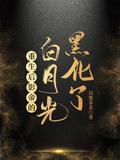 After Rebirth, the Actor's White Moonlight Turned Black
25.8kReads9.5Score3.8kShelves
After Rebirth, the Actor's White Moonlight Turned Black
25.8kReads9.5Score3.8kShelves
 Let You Kill the Villain, Not Pet Him
67kReads9.3Score13.6kShelves
Let You Kill the Villain, Not Pet Him
67kReads9.3Score13.6kShelves
 After I Was Released from Prison, I Became My Ex-Boyfriend's Favorite
3.5kReads6.8Score241Shelves
After I Was Released from Prison, I Became My Ex-Boyfriend's Favorite
3.5kReads6.8Score241Shelves
 I, the Immortal of the Ming Dynasty, Have Experienced Sixteen Emperors
243.8kReads9.3Score19.8kShelves
I, the Immortal of the Ming Dynasty, Have Experienced Sixteen Emperors
243.8kReads9.3Score19.8kShelves
 Wild Enough! When Little Crazy Batch Meets Big Crazy Batch, There Is No Way to Escape.
4.4kReads9.0Score583Shelves
Wild Enough! When Little Crazy Batch Meets Big Crazy Batch, There Is No Way to Escape.
4.4kReads9.0Score583Shelves
 Adopted by a Foreign Rich Man, the Sick and Weak Cub Is Pampered
23.7kReads8.2Score2.4kShelves
Adopted by a Foreign Rich Man, the Sick and Weak Cub Is Pampered
23.7kReads8.2Score2.4kShelves
 Is Your Husband Too Harsh? Kiss Her Twice and She Will Soften
9.8kReads8.8Score1.4kShelves
Is Your Husband Too Harsh? Kiss Her Twice and She Will Soften
9.8kReads8.8Score1.4kShelves
 Quick Travel: Bai Yueguang Substitute
127Reads5.8Score—Shelves
Quick Travel: Bai Yueguang Substitute
127Reads5.8Score—Shelves
 Kuaipuan: Do You Know What Sadistic Writing Is?
378Reads5.8Score—Shelves
Kuaipuan: Do You Know What Sadistic Writing Is?
378Reads5.8Score—Shelves
 Tomb Robber: the Heartthrob Went Crazy Because of the Sense of Fragmentation
440Reads5.8Score107Shelves
Tomb Robber: the Heartthrob Went Crazy Because of the Sense of Fragmentation
440Reads5.8Score107Shelves
 After the NPC Awakened, the Barrage Called Her a Vicious Female Supporting Character.
12.1kReads9.3Score2.2kShelves
After the NPC Awakened, the Barrage Called Her a Vicious Female Supporting Character.
12.1kReads9.3Score2.2kShelves
 About the Professional Qualities of Secret Guards
1.6kReads9.4Score290Shelves
About the Professional Qualities of Secret Guards
1.6kReads9.4Score290Shelves
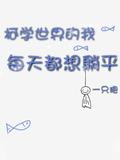 In the World of Kexue, I Want to Lie Down Every Day
16.7kReads9.4Score1.7kShelves
In the World of Kexue, I Want to Lie Down Every Day
16.7kReads9.4Score1.7kShelves
 Quick Travel: Charming Designs for Thousands of People Are Playing
15.9kReads9.3Score1.8kShelves
Quick Travel: Charming Designs for Thousands of People Are Playing
15.9kReads9.3Score1.8kShelves
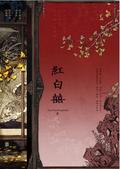 Red and White
68.2kReads9.7Score17.8kShelves
Red and White
68.2kReads9.7Score17.8kShelves
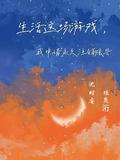 I Apply to Permanently Cancel My Account
3.7kReads8.1Score503Shelves
I Apply to Permanently Cancel My Account
3.7kReads8.1Score503Shelves
 Quick Travel: the Way to Make a Living in March
10.3kReads9.1Score978Shelves
Quick Travel: the Way to Make a Living in March
10.3kReads9.1Score978Shelves
 Hurry Up, Ding, Please Check When the Crematorium Arrives.
10.4kReads9.4Score1.1kShelves
Hurry Up, Ding, Please Check When the Crematorium Arrives.
10.4kReads9.4Score1.1kShelves
 After Offending the Gentle Scum of the Year,
4.4kReads9.3Score645Shelves
After Offending the Gentle Scum of the Year,
4.4kReads9.3Score645Shelves
 Snow Palace Prisoner
3.2kReads6.4Score255Shelves
Snow Palace Prisoner
3.2kReads6.4Score255Shelves
 In the School Relationship, the Tenderness Is Deep-Rooted
11Reads5.8Score—Shelves
In the School Relationship, the Tenderness Is Deep-Rooted
11Reads5.8Score—Shelves
 He Slaughtered My Whole Family, I Gave Him a Sword Through the Heart
542Reads8.8Score—Shelves
He Slaughtered My Whole Family, I Gave Him a Sword Through the Heart
542Reads8.8Score—Shelves
 I Blade for Him, He Cuts Off My Soul
57Reads8.4Score—Shelves
I Blade for Him, He Cuts Off My Soul
57Reads8.4Score—Shelves
 On the Day I Turned Twenty-Six, I Received a Notice of Terminal Illness
8Reads8.5Score—Shelves
On the Day I Turned Twenty-Six, I Received a Notice of Terminal Illness
8Reads8.5Score—Shelves
 Pagoda: the King Seizes the Wife of His Minister
991Reads9.1Score—Shelves
Pagoda: the King Seizes the Wife of His Minister
991Reads9.1Score—Shelves
 Dean Fu's Good Intentions.
—Reads8.5Score—Shelves
Dean Fu's Good Intentions.
—Reads8.5Score—Shelves
 There Are Fusu in the Mountains, and the Generals Have Feelings.
107Reads8.6Score—Shelves
There Are Fusu in the Mountains, and the Generals Have Feelings.
107Reads8.6Score—Shelves
 Dean Fu, Let Me Book a Pension Place First.
—Reads8.4Score—Shelves
Dean Fu, Let Me Book a Pension Place First.
—Reads8.4Score—Shelves
 Topic Restricted Area Map.
—Reads8.4Score—Shelves
Topic Restricted Area Map.
—Reads8.4Score—Shelves
 As the Crown Princess Again
188Reads8.4Score—Shelves
As the Crown Princess Again
188Reads8.4Score—Shelves
 Time Boundary Management.
—Reads8.4Score—Shelves
Time Boundary Management.
—Reads8.4Score—Shelves
 Digital Perimeter Firewall.
—Reads8.4Score—Shelves
Digital Perimeter Firewall.
—Reads8.4Score—Shelves
 The Seventh Collection
12Reads8.5Score—Shelves
The Seventh Collection
12Reads8.5Score—Shelves
 Family Boundary Conflicts.
—Reads8.4Score—Shelves
Family Boundary Conflicts.
—Reads8.4Score—Shelves
 Picking up a Stupid Prince as a Son-In-Law
2Reads8.4Score—Shelves
Picking up a Stupid Prince as a Son-In-Law
2Reads8.4Score—Shelves
 Workplace Boundary Negotiator.
—Reads8.4Score—Shelves
Workplace Boundary Negotiator.
—Reads8.4Score—Shelves
 After Killing the Player, He Became the Final Boss.
19.8kReads9.1Score2.2kShelves
After Killing the Player, He Became the Final Boss.
19.8kReads9.1Score2.2kShelves
 He Loved Me but Married Her
24Reads8.6Score—Shelves
He Loved Me but Married Her
24Reads8.6Score—Shelves
 Emotional Boundary Keeper.
—Reads8.4Score—Shelves
Emotional Boundary Keeper.
—Reads8.4Score—Shelves
 Undercover's Redemption
2Reads8.5Score—Shelves
Undercover's Redemption
2Reads8.5Score—Shelves
 Star Railway: Wanderers Have No Intention, Everything Is Impermanent
1.7kReads9.4Score176Shelves
Star Railway: Wanderers Have No Intention, Everything Is Impermanent
1.7kReads9.4Score176Shelves
 After My Son Was Bullied, I Chose to Do This
2Reads8.4Score—Shelves
After My Son Was Bullied, I Chose to Do This
2Reads8.4Score—Shelves
 Original God: the Appearance of Holy Light Silver Water
386Reads7.2Score—Shelves
Original God: the Appearance of Holy Light Silver Water
386Reads7.2Score—Shelves
 Mr. Xiao, Madam Asked You to Sleep in the Study Tonight
28Reads5.8Score—Shelves
Mr. Xiao, Madam Asked You to Sleep in the Study Tonight
28Reads5.8Score—Shelves
 Behind the Will
6Reads8.4Score—Shelves
Behind the Will
6Reads8.4Score—Shelves
 I Don't Want Your Love, I Just Want Your Life
36Reads8.4Score—Shelves
I Don't Want Your Love, I Just Want Your Life
36Reads8.4Score—Shelves
 The Heart of the Tiger Marquis·wei Gongyue
—Reads8.5Score—Shelves
The Heart of the Tiger Marquis·wei Gongyue
—Reads8.5Score—Shelves