In the Li Dongfang series, I have been watching the Wei, Jin, Southern and Northern Dynasties from the pre-Qin period, and now I am jumping to the Song Dynasty. It is very detailed, especially the history of the Three Kingdoms. I personally feel that the history of the Han Dynasty is told too fast, especially the middle period of the Eastern Han Dynasty, which passed by in a flash. Maybe the author wants to rewrite the end of the Eastern Han Dynasty. Financial Freedom Course is a book I have been listening to recently. It is a very basic theory and easy to understand.
The first part is about marrying a beggar, setting a goal, and going from a beggar to the queen mother. In the glory of the Great Zhou Dynasty, Feng Yao went from being a little girl who was sold to become the first female official to support two generations of emperors. It's also wonderful to talk about human affairs when meeting people. Li Sitong experienced incredible myths and became a god with a group of people. Why are you fine? After seeing it, you can treat minor illnesses by yourself and see a doctor for major illnesses. My transparent living method can help you manage your emotions after reading, and relieve your anxiety. The Ten Gods' Dispelling Technique explains the social secrets of the ancients. Jin Guan, the protagonist, Yu Shiyi has not finished reading it but is very optimistic about it and would recommend it. Under the Slave Book tells the story of the journey to exile, the ups and downs, and how he took root in the exile due to hard work and intelligence. Taoist doctor Su Ziyang, a novel and a medical book combined into one, has a very miraculous technique for self-examination for minor illnesses and for seeing a doctor for serious illnesses, you must read it! The record of changing one's destiny and the list of cultivating immortals and conferring gods are written by one author. Don't read it, don't learn it. After reading it, you have only a superficial understanding, but you also gain insights. After reading the above books, I had a deep memory and couldn't put them down. I even read some of them a second time and shared them with my friends. Good things must be shared. My culture is limited and I have a lot of typos in punctuation and I hope I can understand it.
Cognitive Dimension Upgrade: A Life Quest from "Being Trapped in the Situation" to "Breaking Through the Situation" We always say that "life has limitations". In fact, what traps us is never the wind and rain from the outside world, but the "low-dimensional barriers" of cognition - just like if Wang Baochuan was trapped in the obsession that "the prime minister's daughter must marry a powerful person", he would not have been able to persist for eighteen years; if he was trapped in the anxiety that "there will be no reward after hard work", he would not be able to wait for the relief in the golden palace. The wisdom of dealing with high-dimensional matters is essentially a search for "cognitive breakthrough": breaking the wall of inherent prejudice, jumping out of the well of self-imposed limitations, and "seeing more possibilities", turning "dead ends" into "a bright future". 1. The "wall" of cognition: What traps us is always "I think". Many times, our life dilemmas are the circles drawn by "low-dimensional cognition": - Trapped in "identity obsession": feeling that "I am an ordinary person and can't do big things", so I give up the courage to try and make mistakes; like Wang Baochuan, if he recognized that "the daughter of the Prime Minister cannot eat wild vegetables", he would have compromised and turned back in eighteen years, and there would be no future pattern. - Trapped in "relationship bias": being submissive to those in higher positions and feeling that "you must please in order to gain a foothold"; being dismissive and neglectful of those in lower positions, feeling that "he can't help me, so I don't need to care", living as a "utilitarian" as mentioned in high-dimensional dealings, but forgetting the transparency of "everyone has value". - Trapped in "result anxiety": When you do something, you are eager to get something in return. After a few months, you feel "hopeless". Like many people who envy Wang Baochuan for "becoming a queen", but cannot learn from her determination of "not asking about the results, just stick to your heart" - we are always bound by the thoughts of "I think this won't work" and "I don't think there will be results", and in the end we don't even have the courage to "start". The essence of this "wall" is to regard "one's own cognition" as "the whole world": thinking that class is unbreakable, thinking that relationships can only be calculated, and thinking that persistence will have no repercussions. Beyond what we can recognize, there is a broader world, but we don't dare to open the door of "try another possibility". 2. The "path" to break through: To break the situation, break the "obsession" first, and to expand the dimension, first "see". Gao Dimensional's approach to things says "take compatibility as the path and smile as the light." Wang Baochuan spent eighteen years living as a sample of "breaking the attachment" - cognitive breakthrough is never "forcibly raising the level", but "letting go of the obsession and seeing more angles": 1. Breaking the "attachment to identity": not being defined by labels, living only according to the true heart Wang Baochuan's first breakthrough was to break the label of "prime minister's daughter": she could be a "rebel" who threw a colored ball to choose a poor man, a "laborer" who cut vegetables in Wujiapo, or even a "Wang Baochuan" who was neither humble nor overbearing in the Golden Palace. She never thought about "what should I look like", only "what do I want to do". Just like we don't have to be stuck in the workplace, "I am a newcomer so I should be silent", and in life, we don't have to be stuck in the mindset of "I am an elder, so I should be strong" - identity is given by others, and "who I am" should be defined by my own choices. 2. Break the "obsession with relationships": don't focus on the "pros and cons", only look at "each other". The "upward and downward compatibility" of high-dimensional dealings is not a skill, but an upgrading of "seeing other people's perspectives". Wang Baochuan never treated Xue Pinggui "for his future wealth", but "trusted him as a person". Later, when she became queen, she did not put on airs because she had seen "everyone is not easy" in the cold kiln. We always calculate "what he can give me" in a relationship, but forget that "supporting each other" is the long-term solution: less "competition" with colleagues and more "matching" mentality; less "demand" for family members and more "consideration" - when you let go of the "pros and cons" and see "people themselves", most of the conflicts in the relationship will be reduced. 3. Break the "obsession with results": don't worry about "whether it will work out," just do "what needs to be done." In the past eighteen years, Wang Baochuan never thought about "whether Xue Pinggui will come back" or "can I be the queen" every day. He just cut vegetables and guarded the kiln every day, and did a solid job in "the current things". This is exactly what Gao Dimension says about "not thinking blindly": turning the energy consumed internally into "the power to break the situation." We are always entangled in "should we start" and anxious in "will we fail", but we forget that "you may not succeed if you do it, but you will definitely fail if you don't do it". Just like if you want to learn a skill, don't be afraid of "not being able to learn it", start the first class first; if you want to get into a relationship, don't be afraid of "getting hurt" first, send a sincere greeting first - the first step in cognitive breakthrough is to "do it first and then talk about it". 3. The "taste" of seeking: Dimension advancement is not "reaching the sky in one step", but "slowly living through practice". Many people think that "cognition of dimensionality" is a sudden enlightenment, but Wang Baochuan's eighteen years and Gao Dimension's "strength-based" approach to work all say: Breaking through is never a "dream", but a process of "hardening things and understanding through difficulties" - - It was while "cutting vegetables in Wujiapo" that I realized "steadiness": I know that no matter how difficult the life is, as long as we are willing to do it, we will never die of hunger; this is the upgrading of the "survival dimension", which allows us not to panic in the trough. - We understand the "pattern" when we are "compatible with both top and bottom": we are not humble to the strong because we know "I have strength and don't need to be attached"; we are not proud of the weak because we understand that "everyone has their own difficulties and there is no need to be scornful"; this is the upgrading of the "relationship dimension", allowing us not to twist in human relationships. - Achieving "sobriety" when "not thinking blindly": using the time spent guessing "what others think" to sharpen "one's own skills"; this is the upgrading of the "self-dimension", allowing us to stay calm in anxiety. The "return" of cognitive dimension improvement is never "suddenly becoming powerful", but looking back one day: It turns out that I am no longer bound by my identity, no longer calculated by relationships, and no longer frightened by the results - just like Wang Baochuan standing in the golden palace, she is not enlightened because of "becoming a queen", but because eighteen years of pursuit have already made her live a life that is "not trapped in poverty, not proud of wealth". Finally: The best cognitive breakthrough is to "live as your own light." Wang Baochuan's story and the wisdom of dealing with high-dimensional affairs can be summed up in one sentence: the latitude of cognition determines the height of life. If you are trapped in a "lower dimension", everything in front of you is a wall; if you are willing to "break out", there will be a road at your feet. There is no need to envy others for "living transparently", and there is no need to worry about being "stuck in the situation" - starting from today, try to break a small obsession: for example, stop thinking "I can't" and try "I try" first; try to look at the relationship from a different perspective: for example, say "hard work" to your subordinates more, and mention one more "idea" to your boss; try to replace "result anxiety" with "process focus": for example, when working on a project, do the "first step" solidly. The pursuit of cognitive dimension improvement has never been about "becoming a perfect person", but "becoming a more open-minded person than yesterday" - like Wang Baochuan, accept the choice, bear the hardship, break the obsession, and see the world; like Gao Dimension, be tolerant of others, warm yourself, take your time, and move forward steadily. One day, you will find that the wall that trapped you has long been turned into a road by you; the transparency you want has long been hidden in your persistence in "every breakout".
The book "Famous Figures in Ancient History" uses delicate writing and detailed historical materials to deeply analyze the outstanding figures in the five thousand years of Chinese civilization. The book covers politicians, military strategists, writers, scientists and many other fields, vividly reproducing their wisdom and personality charm. With his unique view of history, the author leads readers into the world of the ancients and feels their ambitions, deep thinking and outstanding contributions, allowing us to gain inspiration from admiration and appreciate the weight and splendor of history while reading. This book is not only a tribute to ancient celebrities, but also an inheritance of national spirit and cultural heritage. It is an ideal book for readers to understand ancient history and absorb the wisdom of sages. [Think]
If you want to get rid of the book drought, you might as well try these selected good books! "Home Feng Shui" takes you to explore China's survival culture, "Wild Vegetables Illustrated Book" teaches you to identify natural delicacies, reveals "historical truths that 99% of people don't know", and feels the wisdom of "Plum Blossoms Are Easy to Count". For inspirational changes in life, you might as well read "21 Days to Counterattack Life". Art lovers should not miss "Ancient Feng Shui Painting" and "Chinese Calligraphy from Beginner to Master", while "Basic Computer Knowledge" is a good helper for improving skills. Finally, dog lovers may wish to read "Illustrated Book of Famous Dogs", while novices in painting may start with "Learning to Paint from Scratch". One book, one world, let reading enrich your life!
I finished reading the first two books and started reading the third one from chapter 69. I started studying right where I was. All the knowledge was in my mouth. Knowledge came from all directions.
The first one is a learning novel, you will become a top student after reading it! The little junior sister who is a top student uses time management, learning methods, memory methods, and psychology to cultivate immortality efficiently and change her destiny against the will of nature. The plot is novel and funny, and she increases her knowledge and learns in a relaxed way.
📚1️⃣The first choice for entry into psychology, 100 concepts to open the door to wisdom. 📚2️⃣21 Days to make your life counterattack and achieve extraordinary results! 📚3️⃣ One stroke at a time, write Chinese charm, and the road to calligraphy begins from now on. 📚4️⃣Zero foundation? No problem! Colored pencils take you into the world of painting. 📚5️⃣If Feng Shui is not mysterious, life will be more beautiful. Fill your home with good luck and harmony.
[Teach you how to cultivate immortality and enlightenment, do you want to watch it? [Sparrow Food Masterwork][Add One to Bookshelf][Flying Kiss] Cultivation of Immortality and Enlightenment, a great book, highly recommended, philosophy of cultivation, subverting common sense
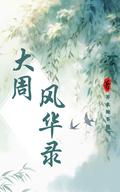 Great Zhou Feng Hua Lu
25.5kReads9.2Score4.7kShelves
Great Zhou Feng Hua Lu
25.5kReads9.2Score4.7kShelves
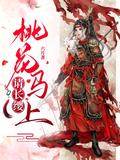 Peach Blossom Please Grow a Tassel Immediately
57kReads9.6Score16.6kShelves
Peach Blossom Please Grow a Tassel Immediately
57kReads9.6Score16.6kShelves
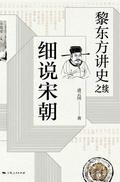 Continuation of Li Dongfang's History Lecture·details of the Song Dynasty
295Reads9.3Score113Shelves
Continuation of Li Dongfang's History Lecture·details of the Song Dynasty
295Reads9.3Score113Shelves
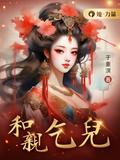 Beggar
81Reads8.7Score—Shelves
Beggar
81Reads8.7Score—Shelves
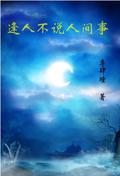 Don't Talk About Human Affairs When Meeting People
206.5kReads9.1Score12.2kShelves
Don't Talk About Human Affairs When Meeting People
206.5kReads9.1Score12.2kShelves
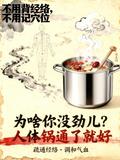 Why Are You so Unmotivated? It'll Be Fine If the Human Body Pot Is Cleared
19Reads5.8Score—Shelves
Why Are You so Unmotivated? It'll Be Fine If the Human Body Pot Is Cleared
19Reads5.8Score—Shelves
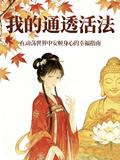 My Way of Living Transparently
11Reads5.8Score—Shelves
My Way of Living Transparently
11Reads5.8Score—Shelves
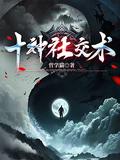 Social Arts of the Ten Gods
53Reads5.8Score—Shelves
Social Arts of the Ten Gods
53Reads5.8Score—Shelves
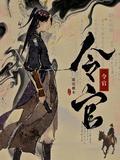 Commander
2.7kReads8.9Score385Shelves
Commander
2.7kReads8.9Score385Shelves
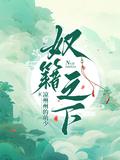 Daily Life of a Whole Family in Exile in Ancient Times
2.9kReads8.2Score375Shelves
Daily Life of a Whole Family in Exile in Ancient Times
2.9kReads8.2Score375Shelves
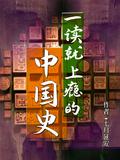 A History of China That Is Addictive Once You Read It
38.2kReads9.5Score6.2kShelves
A History of China That Is Addictive Once You Read It
38.2kReads9.5Score6.2kShelves
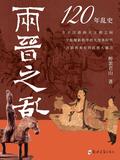 Rebellion Between Jin Dynasty and Jin Dynasty
3.9kReads9.6Score668Shelves
Rebellion Between Jin Dynasty and Jin Dynasty
3.9kReads9.6Score668Shelves
 Once Upon a Time There Was a Demon Gate
242.2kReads9.6Score30.8kShelves
Once Upon a Time There Was a Demon Gate
242.2kReads9.6Score30.8kShelves
 District 9
315.2kReads9.6Score47.8kShelves
District 9
315.2kReads9.6Score47.8kShelves
 I Learned to Kill Gods in a Mental Hospital
1.6MReads9.9Score210.6kShelves
I Learned to Kill Gods in a Mental Hospital
1.6MReads9.9Score210.6kShelves
 Sequential Highway: Don't Be Left Behind!
478.8kReads8.4Score30.7kShelves
Sequential Highway: Don't Be Left Behind!
478.8kReads8.4Score30.7kShelves
 The History of Punishment
50Reads8.6Score—Shelves
The History of Punishment
50Reads8.6Score—Shelves
 I Am a Chinese Medicine Practitioner
8.6kReads9.1Score1.2kShelves
I Am a Chinese Medicine Practitioner
8.6kReads9.1Score1.2kShelves
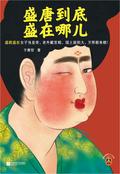 Where Did the Tang Dynasty Flourish?
245Reads9.1Score—Shelves
Where Did the Tang Dynasty Flourish?
245Reads9.1Score—Shelves
 Things About the Tang Dynasty
898Reads7.2Score139Shelves
Things About the Tang Dynasty
898Reads7.2Score139Shelves
 Masterpieces Without Discussion
1.3kReads6.7Score250Shelves
Masterpieces Without Discussion
1.3kReads6.7Score250Shelves
 Dust in the Torrent
—Reads—Score—Shelves
Dust in the Torrent
—Reads—Score—Shelves
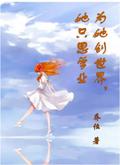 Create a World for Her, She Only Thinks About Her Studies
367Reads6.4Score127Shelves
Create a World for Her, She Only Thinks About Her Studies
367Reads6.4Score127Shelves
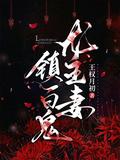 Dragon King Pin
50.4kReads9.5Score7.7kShelves
Dragon King Pin
50.4kReads9.5Score7.7kShelves
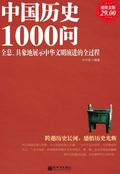 1000 Questions About Chinese History
60.2kReads9.6Score3.2kShelves
1000 Questions About Chinese History
60.2kReads9.6Score3.2kShelves
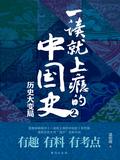 A History of China That's Addictive Once You Read It 2
719Reads5.8Score317Shelves
A History of China That's Addictive Once You Read It 2
719Reads5.8Score317Shelves
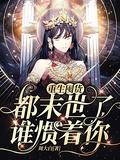 Rebirth in the Apocalypse: the Boss Starts by Hoarding Millions of Goods
132.9kReads9.4Score16.3kShelves
Rebirth in the Apocalypse: the Boss Starts by Hoarding Millions of Goods
132.9kReads9.4Score16.3kShelves
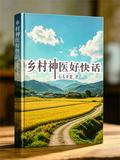 The Village Miracle Doctor Is so Happy
99.2kReads8.8Score6.8kShelves
The Village Miracle Doctor Is so Happy
99.2kReads8.8Score6.8kShelves
 Sunlight in the Cracks
148.8kReads9.8Score19.3kShelves
Sunlight in the Cracks
148.8kReads9.8Score19.3kShelves
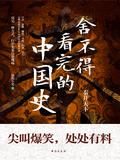 Chinese History That I Can't Bear to Read: Qin's Conquest of the World
1.8kReads5.8Score545Shelves
Chinese History That I Can't Bear to Read: Qin's Conquest of the World
1.8kReads5.8Score545Shelves
 Secret Decoding
4Reads5.8Score—Shelves
Secret Decoding
4Reads5.8Score—Shelves
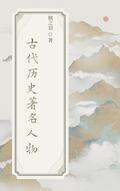 Famous Figures in Ancient History
1.8kReads—Score229Shelves
Famous Figures in Ancient History
1.8kReads—Score229Shelves
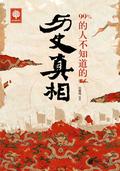 The Historical Truth That 99% of People Don't Know
591Reads9.3Score138Shelves
The Historical Truth That 99% of People Don't Know
591Reads9.3Score138Shelves
 Questions and Answers About the Spirit World
398Reads5.8Score—Shelves
Questions and Answers About the Spirit World
398Reads5.8Score—Shelves
 The Way Forward for Doctors
34Reads5.8Score—Shelves
The Way Forward for Doctors
34Reads5.8Score—Shelves
 Secret Words to Awaken the World: Travels of the Spirit
44Reads5.8Score—Shelves
Secret Words to Awaken the World: Travels of the Spirit
44Reads5.8Score—Shelves
 I Am Engaged in Technology in the Fairy World
103Reads8.8Score—Shelves
I Am Engaged in Technology in the Fairy World
103Reads8.8Score—Shelves
 Weird Things in Western Henan
5.8kReads8.4Score876Shelves
Weird Things in Western Henan
5.8kReads8.4Score876Shelves
 The Weapon of the Nation: a Century-Old Legend of China's Business War (Part 1 and 2)
307Reads9.3Score—Shelves
The Weapon of the Nation: a Century-Old Legend of China's Business War (Part 1 and 2)
307Reads9.3Score—Shelves
 Empire of China Prequel: Spring and Autumn Struggle for Hegemony
54Reads9.3Score—Shelves
Empire of China Prequel: Spring and Autumn Struggle for Hegemony
54Reads9.3Score—Shelves
 The Secret History of Manchuria (Part 1)
11.9kReads9.5Score1.4kShelves
The Secret History of Manchuria (Part 1)
11.9kReads9.5Score1.4kShelves
 Chinese Workers' Regiment: a Coppersmith's World War I
997Reads9.5Score—Shelves
Chinese Workers' Regiment: a Coppersmith's World War I
997Reads9.5Score—Shelves
 The Old Grandmother in Yuejiazhuang
1.1kReads9.2Score104Shelves
The Old Grandmother in Yuejiazhuang
1.1kReads9.2Score104Shelves
 Common Knowledge of Ancient Chinese Culture
—Reads5.8Score—Shelves
Common Knowledge of Ancient Chinese Culture
—Reads5.8Score—Shelves
 I Was Vulgar but Became an Immortal
670Reads5.8Score170Shelves
I Was Vulgar but Became an Immortal
670Reads5.8Score170Shelves
 Cultivation of Immortality Is a Philosophy
390Reads5.8Score121Shelves
Cultivation of Immortality Is a Philosophy
390Reads5.8Score121Shelves
 I Want to Always Be Happy
63.7kReads9.7Score9.4kShelves
I Want to Always Be Happy
63.7kReads9.7Score9.4kShelves
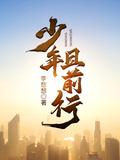 Young Man, Move Forward
70kReads9.5Score8.2kShelves
Young Man, Move Forward
70kReads9.5Score8.2kShelves
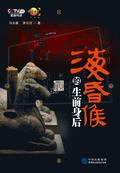 The Life and Death of Haihunhou
366Reads9.4Score107Shelves
The Life and Death of Haihunhou
366Reads9.4Score107Shelves
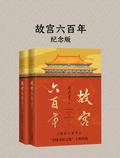 Six Centenary of the Forbidden City: Commemorative Edition
126Reads9.3Score—Shelves
Six Centenary of the Forbidden City: Commemorative Edition
126Reads9.3Score—Shelves