I Want to See Strategic War Scenes, the Tough Kind.
Views
20.2M
Books
282
Recommendations
1k
Updated
3d ago
There are too many novels written by Lao Liu. I like tough ones. If there are some, they will be tough. A 9 is enough. If you have any, please recommend them. Thank you!
The Qing government encircled the land to seize grain, butchered the Han people without blinking an eye. Rivers of blood flowed, and the people sold their sons and daughters and still starved to death. In such a dead situation, if Li Xin did not resist, would the Han people be completely extinct?
On the battlefield behind enemy lines to resist U. S. Aggression and aid Korea, a small unit of the Volunteer Army appeared out of nowhere. It was a thrilling life-and-death fight against the U. S. Ace special forces team.
I recommend this book. The male protagonist starts as a battalion commander of the German Arms Division and participates in battles such as the Battle of Songhu, the Battle of Nanjing, and the Battle of Xuzhou. It is worth watching.
I think this one is still good-looking. The troop strength is all from 10,000 to upwards. I have seen that the largest input of both sides in a battle was more than 3 million troops. It was already over a million before the late stage, and the logic was still online. All tactics, tactics and strategies were used.
The first volume contains strategic-level war scenes, with poor coverage of tactics and rich coverage of firepower. The protagonist leads the northern expedition to Guandong and raises the flag to march south. "I enter the game as a counselor and raise my flag to win the battle."
The most exciting time travel article on Tomato! The spirit of Emperor Huizong of the Song Dynasty has passed through, and he is not obsessed with calligraphy and painting, but is obsessed with the restoration of the country: escaping from the prison car, setting up a stronghold in Yimeng, and defeating the Jin soldiers at Weishan Lake. He used the knowledge of later generations to carry out the New Deal, make firearms, recruit famous generals from all walks of life, and attack the Jin and Song Dynasties, and finally unify the world! The excitement is intensive and the reversals are non-stop. Once you see it, you won't be able to stop!
In the martial arts world war between great powers, after defeating the protagonist, you take your brothers to the world of superpowers, where they each develop and lead the human world to make a comeback. It's all big scenes.
The most dramatic one. The arrival of UFOs triggered a series of stories such as parallel worlds, high-dimensional life, cyber hell, mechanical Cthulhu, space god list, AI revolution, and the establishment of a mechanical dynasty...
One book, fifty-eight bloodstains, four thousand eight hundred and seventy-two names - this may be the book you should not miss this year. If you have also frowned at the exaggeration of the "anti-war drama", this book will give you a different answer. Have you had such an experience? You turn on a film and television drama about the Anti-Japanese War, and after watching it for ten minutes, you want to turn it off - tearing up Japanese soldiers with your hands, hiding mines in your crotch, hiding mines in buns, killing Japanese snipers with one shot from eight hundred miles away... You sigh, turn off the screen, and think to yourself: Is this really how our ancestors won that war? No. No. They fought back with blood, lives, and 4,872 young lives with an average age of only 23 years old, every inch of the country. Today, I want to recommend a book to you. A different kind of anti-war novel. It's called - "No Japs Allowed". What story does this book tell? The protagonist of the story is Fu Shuiheng. He was originally a doctor of military industry from a later generation, but traveled to the mountainous areas of Lunan in 1939 and became a commander of the Eighth Route Army who pulled troops into the ravines to fight the Japanese. He has no cheats, no system, no plug-ins. He only has one thing - military knowledge in his mind. Local methods of refining smokeless gunpowder, simple rifling processing methods, systematic tactics of mine warfare... He took out this knowledge bit by bit, and allowed a team that started with more than a dozen people and seven or eight guns to fight its way out in an era when ammunition was extremely scarce. But this is not a "cheating" article. This is a book about blood, tears, sacrifice, and "why we can win." Fu Shuiheng took his three brothers, Fu Yihai, the second brother of the political commissar, and Fu Yihui, the third brother of the chief of staff, from Yimeng Mountain to Lunan, and from Lunan to Taiyuan. During the eight-year war of resistance, they experienced countless raids and counter-mops, ambushes and counter-ambushes, charges and counter-charges. They won. But the price of victory was the lives of 4,872 comrades. Average age - twenty-three. What moved me most about this book were these three places: 1. A flag, and 3,200 bloodstains. In the book, there is a flag. It is not a military flag or a party flag. It is a torn, blood-stained flag sewn from a white shirt. In 1937, a dozen ragged men were discussing how to fight the Japanese in a cave. Some people say that we should have a flag. Someone tore his white shirt and sewed it into this piece of cloth. In the first battle, three men were killed. They smeared the blood of their fallen comrades on the flag, one person at a time. They said that every trace of blood on this flag was a debt owed by the Japanese. One day, they must pay it back. One, two, three... From Yimeng Mountain to Taiyuan City, eight years, 3,200 bloodstains. At the surrender ceremony, Fu Shuiheng unfolded the flag in front of the Japanese generals. Three thousand two hundred blood stains were so shocking under the light that the Japanese generals lowered their heads and dared not look directly at them. Fu Shuiheng said: "Everything here is a blood debt owed by you. Today, we are here to collect the debt." I read this page three times and cried three times. 2. A pair of shoe soles and the phrase "My heart is bright." All four sons of Aunt Liu of Liujiayu were sent to the battlefield. The eldest brother died, the second child died, the third child was seriously injured and had his limb amputated, and the fourth child is still fighting on the battlefield. Aunt Liu was picking up shoe soles at home, pair by pair, from dusk to dawn, and from dawn to dusk. This is how her eyes got blinded. The villagers went to see her and said, "Sister, you can't see anymore, so what else are you paying for?" Aunt Liu said, "My eyes are blind, but my heart is bright. I know who to pay for the soles of my shoes." This sentence is the simplest sentence in the whole book, and it is also the most important sentence. It made me understand one thing - that war was not fought by soldiers alone. Every mother who collected shoe soles, every common person who sent food, and every father who sent his children to the battlefield were all participants in that war. Without them, there is no victory. 3. Moment of victory, silent cheers On August 15, 1945, news of Japan's surrender reached the troops. If it were a "divine drama", there should be red flags waving, gongs and drums roaring, and firecrackers blasting. But not in this book. More than 2,700 soldiers stood in the open field, no one cheered or celebrated. They were silent, and then - cried. They squatted on the ground, covering their faces, crying for their dead comrades, for eight years of suffering, and for those who would never come back. Fu Yihai gathered his troops and said only one sentence: "Comrades, we survived." Then he burst into tears. During the eight-year war of resistance, they sacrificed 4,872 people. When victory did come, no one could laugh. Because they know what it took to win this victory. This page is the quietest page in the whole book, and also the most deafening. Why should you read this book? Because our generation is getting further and further away from that war. Eighty years have passed, and those who experienced it are leaving us one by one. Their stories are being forgotten little by little. We have watched so many "anti-Japanese dramas" that sometimes we forget that real war is not like that. The real war is lying on the battlefield on a snowy night, shivering with cold, unable to pull the trigger with your finger. The real war is when you charge with a bayonet and your comrades around you fall one after another. You can't stop or look back, you can only keep charging forward. The real war is a three-and-a-half-year-old child sitting in the ruins, holding a rag doll in his hand and saying, "Mom is missing." The real war is like 3,200 bloodstains on a white cloth, each of which is a person who will never come back. The book "No Japanese Left Behind" made me re-understand the war. It allowed me to see how our ancestors used their flesh and blood to pave the way for us today. It is not a "divine drama" or a "splendid novel". It is a war novel with flesh and blood, tears and pain, sacrifice and dignity. After reading this, you will understand one thing - the peace we have today does not fall from the sky. It was earned with the lives of 4,872 young people with an average age of 23. Where to study? This book has been published on the Tomato novel platform. On Toutiao, Tomato Music, Danhua Free Novels, and Changdu Free Novels platforms, search for the book title "No Japanese Allowed to Stay" to read it. Yes, you read that right – it's completely free to read! There is no need to recharge, no need to open a membership, no need for any routine. As long as you have a mobile phone and an APP with Internet access, you can read this book. Look for the genuine book. The cover of the book has the title "No Japs Allowed" and the words "By Fu Shuiheng". The author's user name is "user 26182811". Look for this cover, look for this name - that's me, that's the original. Finally, I would like to ask you a favor. If you have read this book - even if you only read one episode, even if you only read a few of them - can you leave your footprints in the comment area? Write a few words about your feelings, even if it's just one sentence. "I cried when I saw the part where Aunt Liu was holding the sole of her shoe." "When the blood-stained flag was unfurled during the surrender ceremony, I was shaking all over." "The part where Fu Yihai held the small stone and cried, reminded me of my grandfather." Anything will do. Because the person who wrote this book wants to hear the readers' voices. I wonder if those words written with blood and tears moved you. This is also a kind of inheritance - we read their stories, we remember them, and we let more people know about them. Their deaths were not in vain. Their lives were not in vain. Written at the end On August 15, 1945, Japan surrendered. Eighty years have passed since that war. Today, eighty years later, we can sit at home and use our mobile phones to read novels, watch videos, and order takeout. We can go wherever we want and say whatever we want. We take it all for granted. But this is not a given. This is what 4,872 young people with an average age of 23 years old paid for their lives. They fell in the snow of Yimeng Mountain, in the fields of Lunan, in the valley of Motianling, in the ruins of Liugou Village, and under the walls of Taiyuan City. They did not see the day of victory. But the flag they left behind—the flag stained with 3,200 bloodstains—tells us: We won. Read this book not for hatred. It's about remembering. Remember their names. Remember their stories. Remember what they sacrificed their lives for. "No Japs Allowed" is waiting for you at Tomato Novels. After reading, remember to come to the comment area and tell me which episode made you cry. --- "Comrades, we survived." ——Fu Yihai, August 16, 1945, outside the south gate of Taiyuan City
One book, fifty-eight bloodstains, four thousand eight hundred and seventy-two names - this may be the book you should not miss this year. If you have also frowned at the exaggeration of the "anti-war drama", this book will give you a different answer. Have you had such an experience? You turn on a film and television drama about the Anti-Japanese War, and after watching it for ten minutes, you want to turn it off - tearing up Japanese soldiers with your hands, hiding mines in your crotch, hiding mines in buns, killing Japanese snipers with one shot from eight hundred miles away... You sigh, turn off the screen, and think to yourself: Is this really how our ancestors won that war? No. No. They fought back with blood, lives, and 4,872 young lives with an average age of only 23 years old, every inch of the country. Today, I want to recommend a book to you. A different kind of anti-war novel. It's called - "No Japs Allowed". What story does this book tell? The protagonist of the story is Fu Shuiheng. He was originally a doctor of military industry from a later generation, but traveled to the mountainous areas of Lunan in 1939 and became a commander of the Eighth Route Army who pulled troops into the ravines to fight the Japanese. He has no cheats, no system, no plug-ins. He only has one thing - military knowledge in his mind. Local methods of refining smokeless gunpowder, simple rifling processing methods, systematic tactics of mine warfare... He took out this knowledge bit by bit, and allowed a team that started with more than a dozen people and seven or eight guns to fight its way out in an era when ammunition was extremely scarce. But this is not a "cheating" article. This is a book about blood, tears, sacrifice, and "why we can win." Fu Shuiheng took his three brothers, Fu Yihai, the second brother of the political commissar, and Fu Yihui, the third brother of the chief of staff, from Yimeng Mountain to Lunan, and from Lunan to Taiyuan. During the eight-year war of resistance, they experienced countless raids and counter-mops, ambushes and counter-ambushes, charges and counter-charges. They won. But the price of victory was the lives of 4,872 comrades. Average age - twenty-three. What moved me most about this book were these three places: 1. A flag, and 3,200 bloodstains. In the book, there is a flag. It is not a military flag or a party flag. It is a torn, blood-stained flag sewn from a white shirt. In 1937, a dozen ragged men were discussing how to fight the Japanese in a cave. Some people say that we should have a flag. Someone tore his white shirt and sewed it into this piece of cloth. In the first battle, three men were killed. They smeared the blood of their fallen comrades on the flag, one person at a time. They said that every trace of blood on this flag was a debt owed by the Japanese. One day, they must pay it back. One, two, three... From Yimeng Mountain to Taiyuan City, eight years, 3,200 bloodstains. At the surrender ceremony, Fu Shuiheng unfolded the flag in front of the Japanese generals. Three thousand two hundred blood stains were so shocking under the light that the Japanese generals lowered their heads and dared not look directly at them. Fu Shuiheng said: "Everything here is a blood debt owed by you. Today, we are here to collect the debt." I read this page three times and cried three times. 2. A pair of shoe soles and the phrase "My heart is bright." All four sons of Aunt Liu of Liujiayu were sent to the battlefield. The eldest brother died, the second child died, the third child was seriously injured and had his limb amputated, and the fourth child is still fighting on the battlefield. Aunt Liu was picking up shoe soles at home, pair by pair, from dusk to dawn, and from dawn to dusk. This is how her eyes got blinded. The villagers went to see her and said, "Sister, you can't see anymore, so what else are you paying for?" Aunt Liu said, "My eyes are blind, but my heart is bright. I know who to pay for the soles of my shoes." This sentence is the simplest sentence in the whole book, and it is also the most important sentence. It made me understand one thing - that war was not fought by soldiers alone. Every mother who collected shoe soles, every common person who sent food, and every father who sent his children to the battlefield were all participants in that war. Without them, there is no victory. 3. Moment of victory, silent cheers On August 15, 1945, news of Japan's surrender reached the troops. If it were a "divine drama", there should be red flags waving, gongs and drums roaring, and firecrackers blasting. But not in this book. More than 2,700 soldiers stood in the open field, no one cheered or celebrated. They were silent, and then - cried. They squatted on the ground, covering their faces, crying for their dead comrades, for eight years of suffering, and for those who would never come back. Fu Yihai gathered his troops and said only one sentence: "Comrades, we survived." Then he burst into tears. During the eight-year war of resistance, they sacrificed 4,872 people. When victory did come, no one could laugh. Because they know what it took to win this victory. This page is the quietest page in the whole book, and also the most deafening. Why should you read this book? Because our generation is getting further and further away from that war. Eighty years have passed, and those who experienced it are leaving us one by one. Their stories are being forgotten little by little. We have watched so many "anti-Japanese dramas" that sometimes we forget that real war is not like that. The real war is lying on the battlefield on a snowy night, shivering with cold, unable to pull the trigger with your finger. The real war is when you charge with a bayonet and your comrades around you fall one after another. You can't stop or look back, you can only keep charging forward. The real war is a three-and-a-half-year-old child sitting in the ruins, holding a rag doll in his hand and saying, "Mom is missing." The real war is like 3,200 bloodstains on a white cloth, each of which is a person who will never come back. The book "No Japanese Left Behind" made me re-understand the war. It allowed me to see how our ancestors used their flesh and blood to pave the way for us today. It is neither a "sacred drama" nor a "shuangwen". It is a war novel with flesh and blood, tears and pain, sacrifice and dignity. After reading this, you will understand one thing - the peace we have today does not fall from the sky. It was earned with the lives of 4,872 young people with an average age of 23. Where to study? This book has been published on the Tomato novel platform. On Toutiao, Tomato Music, Danhua Free Novels, and Changdu Free Novels platforms, search for the book title "No Japanese Allowed to Stay" to read it. Yes, you read that right – it's completely free to read! There is no need to recharge, no need to open a membership, no need for any routine. As long as you have a mobile phone and an APP with Internet access, you can read this book. Look for the genuine book. The cover of the book has the title "No Japs Allowed" and the words "By Fu Shuiheng". The author's user name is "user 26182811". Look for this cover, look for this name - that's me, that's the original. Finally, I would like to ask you a favor. If you have read this book - even if you only read one episode, even if you only read a few of them - can you leave your footprints in the comment area? Write a few words about your feelings, even if it's just one sentence. "I cried when I saw the part where Aunt Liu was holding the sole of her shoe." "When the blood-stained flag was unfurled during the surrender ceremony, I was shaking all over." "The part where Fu Yihai held the small stone and cried, reminded me of my grandfather." Anything will do. Because the person who wrote this book wants to hear the readers' voices. I wonder if those words written with blood and tears moved you. This is also a kind of inheritance - we read their stories, we remember them, and we let more people know about them. Their deaths were not in vain. Their lives were not in vain. Written at the end On August 15, 1945, Japan surrendered. Eighty years have passed since that war. Today, eighty years later, we can sit at home and use our mobile phones to read novels, watch videos, and order takeout. We can go wherever we want and say whatever we want. We take it all for granted. But this is not a given. This is what 4,872 young people with an average age of 23 years old paid for their lives. They fell in the snow of Yimeng Mountain, in the fields of Lunan, in the valley of Motianling, in the ruins of Liugou Village, and under the walls of Taiyuan City. They did not see the day of victory. But the flag they left behind—the flag stained with 3,200 bloodstains—tells us: We won. Read this book not for hatred. It's about remembering. Remember their names. Remember their stories. Remember what they sacrificed their lives for. "No Japs Allowed" is waiting for you at Tomato Novels. After reading, remember to come to the comment area and tell me which episode made you cry. --- "Comrades, we survived." ——Fu Yihai, August 16, 1945, outside the south gate of Taiyuan City
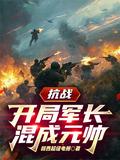 Anti-Japanese War: Army Commander at the Beginning, Marshal at the End
110Reads5.8Score—Shelves
Anti-Japanese War: Army Commander at the Beginning, Marshal at the End
110Reads5.8Score—Shelves
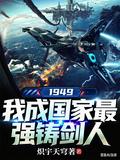 In the Early Days of the Founding of the People's Republic of China, He Returned to China to Develop Super Technology
46.5kReads7.8Score2.8kShelves
In the Early Days of the Founding of the People's Republic of China, He Returned to China to Develop Super Technology
46.5kReads7.8Score2.8kShelves
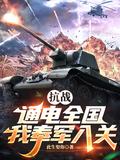 Anti-Japanese War: Electrify the Whole Country, We Enter the Customs with the Army
157Reads—Score—Shelves
Anti-Japanese War: Electrify the Whole Country, We Enter the Customs with the Army
157Reads—Score—Shelves
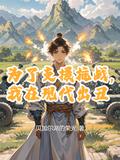 In Order to Support the Anti-Japanese War, I Made a Fool of Myself in Modern Times
25Reads—Score—Shelves
In Order to Support the Anti-Japanese War, I Made a Fool of Myself in Modern Times
25Reads—Score—Shelves
 War of Resistance: I Evacuated the Entire Third Reich
54Reads5.8Score—Shelves
War of Resistance: I Evacuated the Entire Third Reich
54Reads5.8Score—Shelves
 The Republic of China: Traveling Through Guandong, with Unparalleled Guns and Horses
12.2kReads8.7Score733Shelves
The Republic of China: Traveling Through Guandong, with Unparalleled Guns and Horses
12.2kReads8.7Score733Shelves
 War of Resistance: Bind the Enemy Killing System at the Beginning
11.3kReads8.5Score881Shelves
War of Resistance: Bind the Enemy Killing System at the Beginning
11.3kReads8.5Score881Shelves
 Liang Jian: I, Congratulate Li Yunlong on Getting Rich
9.2kReads8.3Score599Shelves
Liang Jian: I, Congratulate Li Yunlong on Getting Rich
9.2kReads8.3Score599Shelves
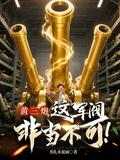 Huang Sanpao: This Warlord Is a Must!
320Reads5.8Score—Shelves
Huang Sanpao: This Warlord Is a Must!
320Reads5.8Score—Shelves
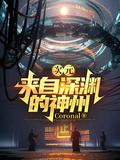 Dimension: China from the Abyss
3Reads5.8Score—Shelves
Dimension: China from the Abyss
3Reads5.8Score—Shelves
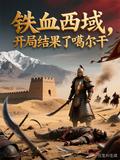 Iron-Blooded Western Region: Galdan Ended up at the Beginning
855Reads5.8Score—Shelves
Iron-Blooded Western Region: Galdan Ended up at the Beginning
855Reads5.8Score—Shelves
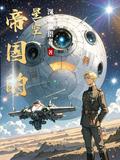 Empire Starry Sky
14Reads5.8Score—Shelves
Empire Starry Sky
14Reads5.8Score—Shelves
 Yesterday Is Today's Past
64Reads6.2Score—Shelves
Yesterday Is Today's Past
64Reads6.2Score—Shelves
 I'm Psycho: the Ace Tiger of the Skull Master
—Reads5.8Score—Shelves
I'm Psycho: the Ace Tiger of the Skull Master
—Reads5.8Score—Shelves
 300 Days of Survival in Desperate Situations
34.9kReads8.8Score2.3kShelves
300 Days of Survival in Desperate Situations
34.9kReads8.8Score2.3kShelves
 Operation Broken Arrow: Strange Visions
701Reads6.4Score106Shelves
Operation Broken Arrow: Strange Visions
701Reads6.4Score106Shelves
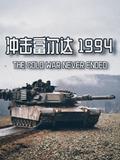 Shock at Fulda 1994
606Reads—Score105Shelves
Shock at Fulda 1994
606Reads—Score105Shelves
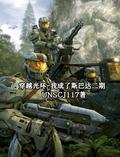 Traveling Through the Halo, I Became a Spartan II
981Reads6.1Score103Shelves
Traveling Through the Halo, I Became a Spartan II
981Reads6.1Score103Shelves
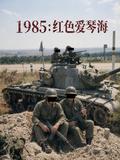 1985 Red Aegean
82Reads—Score—Shelves
1985 Red Aegean
82Reads—Score—Shelves
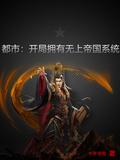 City: Start as an Emperor
10.2kReads8.4Score488Shelves
City: Start as an Emperor
10.2kReads8.4Score488Shelves
 Collection of Short Military Novels
212Reads—Score—Shelves
Collection of Short Military Novels
212Reads—Score—Shelves
 Start by Saving Blue Star and Become the Master of the Avenue
14.1kReads8.9Score929Shelves
Start by Saving Blue Star and Become the Master of the Avenue
14.1kReads8.9Score929Shelves
 Girls Fill in the Lines: Records of Bad Battles
167Reads—Score—Shelves
Girls Fill in the Lines: Records of Bad Battles
167Reads—Score—Shelves
 National Battlefield: Only I Can See Through the Treasure Chest
20.9kReads8.5Score1.5kShelves
National Battlefield: Only I Can See Through the Treasure Chest
20.9kReads8.5Score1.5kShelves
 Shield of Anatolia
196Reads—Score—Shelves
Shield of Anatolia
196Reads—Score—Shelves
 We Promised to Make a Game, but What the Hell Is Warhammer Battlefield?
564Reads7.4Score—Shelves
We Promised to Make a Game, but What the Hell Is Warhammer Battlefield?
564Reads7.4Score—Shelves
 Eagle over the Soviet Union
1.6kReads8.2Score163Shelves
Eagle over the Soviet Union
1.6kReads8.2Score163Shelves
 Anti-Japanese War: Huo Yufeng's Iron-Blooded Army Soul
2.5kReads6.5Score116Shelves
Anti-Japanese War: Huo Yufeng's Iron-Blooded Army Soul
2.5kReads6.5Score116Shelves
 Patent God of War Joins the War Just to Buy an Island
482Reads6.0Score—Shelves
Patent God of War Joins the War Just to Buy an Island
482Reads6.0Score—Shelves
 Zhang Hao, the Great Anti-Japanese Warlord
97Reads5.8Score—Shelves
Zhang Hao, the Great Anti-Japanese Warlord
97Reads5.8Score—Shelves
 The Era of the Rise of Greater China During the Anti-Japanese War
206Reads—Score—Shelves
The Era of the Rise of Greater China During the Anti-Japanese War
206Reads—Score—Shelves
 Anti-Japanese Iron-Blooded God of War
7Reads5.8Score—Shelves
Anti-Japanese Iron-Blooded God of War
7Reads5.8Score—Shelves
 The Eleventh Phase of Huangpu Reveals the Strongest Legend
6.7kReads6.1Score450Shelves
The Eleventh Phase of Huangpu Reveals the Strongest Legend
6.7kReads6.1Score450Shelves
 1853: Use Cannons to Measure Land Area
1.4kReads7.1Score—Shelves
1853: Use Cannons to Measure Land Area
1.4kReads7.1Score—Shelves
 Wow, My Circle of Friends Directly Connects to the Three Realms and Affects the Future.
—Reads5.8Score—Shelves
Wow, My Circle of Friends Directly Connects to the Three Realms and Affects the Future.
—Reads5.8Score—Shelves
 Hard-Core War of Resistance: Resources Can Support Millions of Soldiers
2.5kReads5.8Score481Shelves
Hard-Core War of Resistance: Resources Can Support Millions of Soldiers
2.5kReads5.8Score481Shelves
 Jiangshan Thief Color
889Reads7.1Score—Shelves
Jiangshan Thief Color
889Reads7.1Score—Shelves
 Traveling Through the Long March Road, I Exchanged Steps for Supplies
2.6kReads5.8Score185Shelves
Traveling Through the Long March Road, I Exchanged Steps for Supplies
2.6kReads5.8Score185Shelves
 Iron-Blooded War of Resistance: from the Beginning of the Sword to China's Take-Off
40.8kReads7.8Score3.9kShelves
Iron-Blooded War of Resistance: from the Beginning of the Sword to China's Take-Off
40.8kReads7.8Score3.9kShelves
 Anti-Japanese War: from the Jizhong Plains to the Bloody Battlefield
3.3kReads8.0Score249Shelves
Anti-Japanese War: from the Jizhong Plains to the Bloody Battlefield
3.3kReads8.0Score249Shelves
 War of Resistance: Rebirth of the Battlefield, My System Can Be Updated
3Reads—Score—Shelves
War of Resistance: Rebirth of the Battlefield, My System Can Be Updated
3Reads—Score—Shelves
 Traveling Through 1942, a Rough Start
12.2kReads8.4Score459Shelves
Traveling Through 1942, a Rough Start
12.2kReads8.4Score459Shelves
 Rebirth of the Bloody Battle on the Eastern Front
32.5kReads9.1Score2.4kShelves
Rebirth of the Bloody Battle on the Eastern Front
32.5kReads9.1Score2.4kShelves
 Travel Through 1900 to Become Bigger and Stronger
10kReads7.6Score527Shelves
Travel Through 1900 to Become Bigger and Stronger
10kReads7.6Score527Shelves
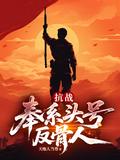 During the War of Resistance, the Number One Rebel in the Feng Dynasty
810Reads—Score—Shelves
During the War of Resistance, the Number One Rebel in the Feng Dynasty
810Reads—Score—Shelves
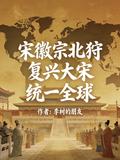 Song Huizong's Northern Hunting: Reviving the Song Dynasty and Unifying the World
3Reads5.8Score—Shelves
Song Huizong's Northern Hunting: Reviving the Song Dynasty and Unifying the World
3Reads5.8Score—Shelves
 Seven Star Ring
4Reads—Score—Shelves
Seven Star Ring
4Reads—Score—Shelves
 The Creator's Taboo
5.5kReads9.0Score574Shelves
The Creator's Taboo
5.5kReads9.0Score574Shelves
 Let's Work Together to Kill the Japanese Series
2Reads—Score—Shelves
Let's Work Together to Kill the Japanese Series
2Reads—Score—Shelves
 Let's Work Together to Kill the Japanese - Shanxi Chapter
—Reads—Score—Shelves
Let's Work Together to Kill the Japanese - Shanxi Chapter
—Reads—Score—Shelves