Do you like foreign history? If you like it, you can read this book. It's good. The content is consistent with real history. The plot is compact. It's quite interesting.
"Diary of an Anxi Soldier": the iron-blooded persistence of the Western Regions of the Tang Dynasty: "One Inch of Mountains and Rivers, One Inch of Blood": the pride of family and country in the late Han Dynasty: "Chaos in the Tang Dynasty": the turbulent meeting after the collapse of the prosperous age: "Journey to the Army": the youthful chapter of the ancient military: "One Inch of Mountains and Rivers of Blood" In the fictional Daliang era, the situation was changing and crises were everywhere. "An Inch of Blood from Mountains and Rivers" unfolds a magnificent historical scroll for you. The court is full of intrigues, various forces are fighting openly and secretly; the rivers and lakes are intertwined with grievances, and the heroes and knights have their own agendas. The protagonist comes from an ordinary background, but has great ambitions and rises in troubled times. He shuttles between the whirlpool of power and the disputes between rivers and lakes. Every step is surrounded by danger, and every decision is a matter of life and death.
The Tang Dynasty and the Five Dynasties were still in ruins. But with three thousand soldiers in front of the horse, he dared to seize four hundred states in the world.
"Sun and Moon Prosperity" - a passionate legend of the glory of the Ming Dynasty. The direct emperor Zhu Yuntong, with the blood of Taizu and the glory of Chang Lan, is involved in the turbulent whirlpool of imperial power as the most orthodox heir. When the iron blood of Hongwu meets the elegance of Jianwen, let's see how the young emperor re-creates the prosperous Chinese era of "the sea embraces all rivers and all nations come to court" amidst the conflicts and intrigues of the court. Here is the most thrilling power struggle, the most soul-stirring passionate journey, a majestic epic that subverts the trajectory of history, and is about to begin its ups and downs - How will he, who is destined to do his bidding, break through the obstacles and create a true Ming Dynasty on which the sun and the moon never set?
Hardcore hegemony! The Fantasy of the Century in the Torrent of Steel] In the iron-blooded voyage of 1900, the time traveler Li Yi used modern military thinking to reshape the laws of war. From the exiled prince to the overlord of the world, the dreadnoughts split the colonial shackles, and the aircraft carrier groups crushed the arrogance of the great powers. There is no golden finger in the system, only a military and industrial empire with precise deductions; no harem routines, focus on the journey of a passionate man. When the battleship's main guns are aimed at Tokyo Bay, the "Truth Range" is rewriting the history of China's humiliation - this is an epic breakthrough for hard-core military fans!
The Logic of War is a rare literature on war politics and history (war is never about a bunch of old people sending young people off, but the fanaticism of the entire country)
Son of Tomorrow and Survival in the Late Ming Dynasty are both masterpieces of the author's Mingjian Villa. They have profound historical background, delicate writing style, and rigorous logic (the reform will still be maintained after the death of the time traveler, unlike the neighbor who doesn't even have a money shortage, but always hides a big business organization, uses a matchlock gun without a spear to form a hollow formation, and then the Qing army sends people to death)
I, Chongzhen, will never hang myself. Let's put it this way, if you look at what others have written, it is indeed awesome. And the author does not make money from this book, so what he writes is very historical, but not in line with his peers (it has received a lot of bad reviews)
There is no time travel or system in this book. It describes the most powerful and victorious period of the Song Dynasty, when science and technology and culture were at their peak in history!
During the troubled times of the Northern and Southern Dynasties, the Hu people occupied China. A Han girl and her family were forced to escape from Luoyang. After five years of hard work and hardship, they finally led 7,000 white-robed troops to defeat the 500,000-strong Wei army and captured Luoyang, the sacred capital! It's recorded in the history books! Stick to reading the previous dozens of chapters and I will show you a different war.
The story of the naval battles of World War II, the historical naval and air equipment, the exquisite and professional naval and air tactics, the extremely cruel attacks between the two sides, and the humorous jokes are very worth reading.
Recommend this book. Hardcore and not wordy. Chinese version of Operation Brave! Special Forces overseas anti-terrorism operations. No system, no time travel. There is no bloody plot. The description of the scene is very immersive. The key is to have your brain!!
The ruffian is brave enough to do anything. The writing is of high quality and invincible. Every chapter is so exciting! The plot is fast-paced, the killings are decisive, and there is no trace of ink. Especially the first one is very worth reading.
The original novel about the Anti-Japanese War describes the details very well, and the war scenes are relatively realistic, without any system or space.
"No Japs Left Behind": More ruthless than "Bright Sword", more burning than "Snow Leopard", this is an Anti-Japanese War epic that will make your blood boil and make you burst into tears. If you think that Anti-Japanese War dramas only have the shocking part of "tearing off Japanese enemies with your hands", if you think that the story of the Eighth Route Army has been told badly - then you must not have read this work. "No Japs Allowed", the title of the book is so straightforward that it is almost crude, but the content is so profound that it makes people shudder. It is not an ordinary anti-war novel, but a heroic picture painted with blood and tears, and a heroic tragedy composed with life and faith. Today, I would like to solemnly recommend episodes 48 to 51 of this work to you. These four episodes are the soul of the entire work. --- 1. Three brothers, three personalities, an ultimate torture on "how to survive" Fu Shuiheng, Fu Yihai, Fu Yihui - three brothers, three completely different personalities, constitute the iron triangle of a legendary army. The eldest brother Fu Shuiheng, a doctor of modern military industry, travels back in time. He has no golden fingers and no system blessing. He only has a wealth of knowledge about future generations and a heart that wants to change history. He is not as impassioned as a traditional hero. Instead, he is taciturn. He is always squatting on the ground alone, drawing blueprints and pondering weapons. What he said was often incomprehensible - "modularity," "surgical strike," "special operations" - but these unfamiliar words eventually became powerful weapons for killing enemies on the battlefield. The second brother, Fu Yihai, escaped from the Fushun labor camp with wounds on his body that would never heal and pain in his heart that would never heal. He is calm, restrained and rational, like a cold stone. But in the 48th episode "The Cry of the Hidden Line", this stone shattered - when he led thirty-seven women and children to hide in the ravine and watched the Japanese soldiers walking by fifty meters away, a child was so frightened that he cried. The mother covered the child's mouth tightly, and the child suffocated and passed out. After the Japanese left, the child was revived and the mother collapsed on the ground. Fu Yihai turned his back. The soldiers saw his shoulders shaking, but there was no sound - he didn't even dare to cry. Because he is the only backbone here and the support of thirty-seven lives. This scene is more shocking than any gunfight scene. It makes you understand: the most cruel thing about war is not facing the enemy's gun, but facing the tears of one's own people, but having to pretend not to see it. The third younger brother, Fu Yihui, is a top student at Kangda University. He is sharp, confident and sharp. He led 12 people to sneak into the county behind enemy lines. He did not cause major damage, but specialized in killing traitors, blowing up power stations, and poisoning water sources. After each action, he left a note: "Specialized in curing Japanese disease." His "surgical strike" allowed the Japanese to withdraw troops from the front and return to defend, relieving the main force. Three brothers, three personalities, three fighting styles. But they have a common name - "Shanren Cluster", which was later upgraded to the "Independent First Special Operations Brigade". Between them, there is the joy of reunion, the pain of running-in, the fierceness of the dispute, the tacit understanding of understanding, and finally the trust that is entrusted with life and death. This complex and true brotherhood is more touching than any bloody plot. --- 2. The truth of the war is not "tearing the Japanese apart" but "living". What impressed me most about these four episodes was its restoration of the truth of the war. There are no cheats, no cheats, and no myth of one against a hundred. Some are: -Sacrifice. There were 487 men at the time of the expedition and 329 men at the time of return, a reduction of one-third. On the cliff of Duanhun Cliff, next to the fifty-eight names, one hundred and fifty-eight more names were carved. Behind every name, there is a soul that can never return home. --Choose. Fu Yihai asked the mother to cover the child's mouth and watched helplessly as the child suffocated and passed out. He knew what he was doing and what it meant, but he had no choice. This "no choice" is more cruel than any enemy's gun. --Persist in. Fu Yihui led twelve people and hid in the county behind enemy lines, walking on the edge of a knife every step of the way. But they did not back down, because they knew that if they killed one more traitor, the main force would be less stressed. --Hope. Ma's wife's child was named Shitou. He almost died in his mother's hands, but he survived. Fu Yihai said: "Shitou, when you grow up, I will teach you how to shoot." Shitou smiled, and that smile was like a light, lighting up the entire cave. The most cruel thing about war is that it forces mothers to cover their children with their own hands (even if it is only temporary suffocation); the greatest thing about war is that it allows these mothers to still choose to live and these children to still laugh. At the end of episode 50, the three brothers stood on the Soul-Desolating Cliff, looking at the newly engraved one hundred and fifty-eight names. Fu Yihai said: "When I was in the labor camp, I counted every day before going to bed: today I lived another day and was one day closer to revenge. Now I am thinking about how to prevent these names from increasing." Fu Shuiheng looked at the continuous Taihang Mountains in the distance and said softly: "Then fight to the end. Fight until the last Japanese is out of China." As the sun set, three figures stood side by side. Behind them are the names of countless sacrifices; in front of them is the war that has not yet ended; and in their hearts is the oath that no Japanese will be allowed to stay. This scene is enough to make anyone cry. --- 3. Depth of thought: Why fight? Who are you fighting for? The most rare thing about these four episodes is that in addition to the tense battle plot, there is always a main line of thought running through them: Why are you fighting? Fu Yihai's experience in the labor camp made him understand what "living is victory" means; the literacy campaign he organized made the soldiers understand what "one's life should not be lived in vain"; his choice to protect the masses made everyone understand what "the situation between the military and the people is like fish and water". In the 51st episode "Behind the Numbers", at the first party committee meeting of the Independent First Brigade, Fu Shuiheng proposed "three no's": no fixed station, no pomp and ceremony, and no separation from the masses. Fu Yihai added "three essentials": to build a military school, to set up a soldier's rights committee, and to carry out regular criticism and self-criticism. Fu Yihui took out the training syllabus and integrated modern special operations concepts into the training of the entire army. This episode may seem ordinary, but it is actually the soul of the entire work. It tells you: A truly powerful team is not built by weapons, but by systems, ideas, and people's hearts. When Fu Yihai said, "We are fighting a people's war, relying on the soldiers' hard work. If the rights and interests of the soldiers are not protected, who will fight for you?" You suddenly understand: Why can the Eighth Route Army win? Not because of the "magic skills" in the drama, but because of this simple, heartfelt respect for the soldiers and love for the masses. --- 4. The weight of history: real events, real emotions This work also has a rare advantage: it respects history. Fushun Labor Camp, Hundred Regiments War, Operation C... These real historical events and code names are cleverly integrated into the story, enhancing the richness of the work. What you read are not only fictional characters and plots, but also the real history. In the trailer for episode 52, the appearance of members of the Japanese Anti-War Alliance leads the story to deeper thinking: Are there good people among the Japanese? Should militarists and ordinary Japanese people be treated differently? Hatred and forgiveness, war and humanity, enemies and friends, these complex issues will be unfolded one by one in the subsequent stories. --- 5. Why must you read it? Because this is not just an anti-war novel. It is a novel about choice - in a life-or-death situation, do you choose to protect yourself or protect others? It is a novel about sacrifice - when you know you are going to die, do you still have the courage to move forward? It is a novel about hope - what keeps you alive in the darkest moments? It is a novel about brothers - when you stand side by side, with countless sacrificed comrades behind you, and a war that has not yet ended in front of you, can you still smile at each other? It is also a novel about people - in the furnace of war, people are forged into steel and burned into ashes. Those who survived and those who died have left an indelible mark on this land. --- Finally, please allow me to use the ending of episode 50 to extend an invitation to you: "Behind them are the names of countless sacrifices. In front of them is the war that has not yet ended. And in their hearts - is the oath that no Japanese will be allowed to stay." Open this book, enter that war-torn era, and get to know the heroes who sacrificed their lives to achieve today. You will read what responsibility is in Fu Yihai's silence; you will read what courage is in Fu Yihui's sharpness; you will read what faith is in Fu Shuiheng's persistence. You will see those two hundred and sixteen names on the cliff of Duanhun Cliff, and you will remember: Everything we have today was obtained with their lives. So please remember them. Please remember this work. Please remember: No Japanese are allowed to stay. --- P. S. Episodes 48 to 51 are just the beginning of the story of "Yamabashi Cluster". There will be more exciting plots to follow: the joining of the Japanese Anti-War Alliance, the birth of the "Taihang No. 1" Rifle, the life-and-death showdown with the Kwantung Army's "Snow Wolf" special team, and the final outcome of Yamamoto Kazuki... Each episode is more exciting than the last, and each episode is more shocking than the last. Now, starting from episode 48, let's step into this world that will make your blood boil and make you burst into tears.
Travel through time but not change, no cheats, no system, respect history, and show the prototype of the hero! This book is based on real historical events. Through thirteen large-scale battles in which the Sichuan Army participated and detailed battlefield descriptions, this book describes a passionate song in which 3.5 Million Sichuan Army soldiers fought bloody battles and were not afraid of sacrifice!
 Half of the System Breaks into the World
211Reads5.8Score—Shelves
Half of the System Breaks into the World
211Reads5.8Score—Shelves
 Glory of the Habsburgs
421Reads8.4Score—Shelves
Glory of the Habsburgs
421Reads8.4Score—Shelves
 Join the Army
31.8kReads9.2Score3.6kShelves
Join the Army
31.8kReads9.2Score3.6kShelves
 Joking About the Wei, Jin, Southern and Northern Dynasties
3.7kReads6.9Score310Shelves
Joking About the Wei, Jin, Southern and Northern Dynasties
3.7kReads6.9Score310Shelves
 Bright Sword: It's Fun to Follow Kong and Create the Strongest Military Industry
16.6kReads8.3Score852Shelves
Bright Sword: It's Fun to Follow Kong and Create the Strongest Military Industry
16.6kReads8.3Score852Shelves
 Jiangshan Thief Color
898Reads7.1Score—Shelves
Jiangshan Thief Color
898Reads7.1Score—Shelves
 Xitang
150kReads9.4Score16.9kShelves
Xitang
150kReads9.4Score16.9kShelves
 Return to Datang with Strategic Warehouse
186kReads9.5Score24.1kShelves
Return to Datang with Strategic Warehouse
186kReads9.5Score24.1kShelves
 Return to Yi and Restore Tang Dynasty
13Reads5.8Score—Shelves
Return to Yi and Restore Tang Dynasty
13Reads5.8Score—Shelves
 Emperor Yongle: Zhu Biao
46.1kReads9.0Score5.5kShelves
Emperor Yongle: Zhu Biao
46.1kReads9.0Score5.5kShelves
 Fu of the Tang Dynasty: Helping the World and Peaceful People
24Reads—Score—Shelves
Fu of the Tang Dynasty: Helping the World and Peaceful People
24Reads—Score—Shelves
 Traveling Through the Tang Dynasty: It's so Difficult to Be an Idle King
141.8kReads9.2Score10.3kShelves
Traveling Through the Tang Dynasty: It's so Difficult to Be an Idle King
141.8kReads9.2Score10.3kShelves
 Prince Zhaoming
8Reads—Score—Shelves
Prince Zhaoming
8Reads—Score—Shelves
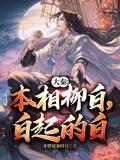 Da Qin: the Most Ruthless Prime Minister, the First Emperor Begged Me Not to Kill Him
42.4kReads9.4Score5.7kShelves
Da Qin: the Most Ruthless Prime Minister, the First Emperor Begged Me Not to Kill Him
42.4kReads9.4Score5.7kShelves
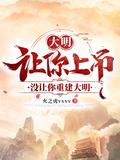 Daming: I Asked You to Hang Yourself, but I Didn't Ask You to Rebuild the Ming Dynasty
9kReads8.9Score871Shelves
Daming: I Asked You to Hang Yourself, but I Didn't Ask You to Rebuild the Ming Dynasty
9kReads8.9Score871Shelves
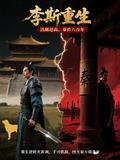 Li Si Was Reborn, Zhao Gao Was Beheaded Alive, and Qin Zuo Died Eight Hundred Years Ago
23Reads5.8Score—Shelves
Li Si Was Reborn, Zhao Gao Was Beheaded Alive, and Qin Zuo Died Eight Hundred Years Ago
23Reads5.8Score—Shelves
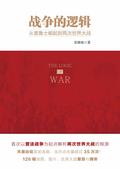 The Logic of War: from the Rise of Prussia to the Two World Wars
657Reads9.3Score195Shelves
The Logic of War: from the Rise of Prussia to the Two World Wars
657Reads9.3Score195Shelves
 Youchen of the Great Song Dynasty
52Reads8.6Score—Shelves
Youchen of the Great Song Dynasty
52Reads8.6Score—Shelves
 In Order to Save Her Lover, She Traveled Across the World
1Reads—Score—Shelves
In Order to Save Her Lover, She Traveled Across the World
1Reads—Score—Shelves
 Infantry Assault: Lite Collector's Edition
—Reads5.8Score—Shelves
Infantry Assault: Lite Collector's Edition
—Reads5.8Score—Shelves
 Traveling Through the Violent Qin Dynasty: Chen Sheng Led Me to the Uprising
100Reads8.2Score—Shelves
Traveling Through the Violent Qin Dynasty: Chen Sheng Led Me to the Uprising
100Reads8.2Score—Shelves
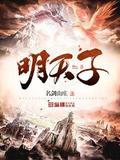 Tomorrow
193Reads5.8Score—Shelves
Tomorrow
193Reads5.8Score—Shelves
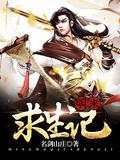 Survival in the Late Ming Dynasty
59Reads5.8Score—Shelves
Survival in the Late Ming Dynasty
59Reads5.8Score—Shelves
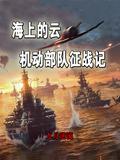 Clouds on the Sea: Mobile Troops' Conquests
3Reads5.8Score—Shelves
Clouds on the Sea: Mobile Troops' Conquests
3Reads5.8Score—Shelves
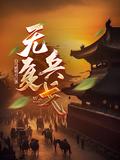 The Wind Blows and the Long Song
284Reads7.3Score—Shelves
The Wind Blows and the Long Song
284Reads7.3Score—Shelves
 Choose a Hero to Change History? Wait, I Will Pass Away First
135Reads8.3Score—Shelves
Choose a Hero to Change History? Wait, I Will Pass Away First
135Reads8.3Score—Shelves
 General Fengguo of the Ming Dynasty
2kReads8.6Score124Shelves
General Fengguo of the Ming Dynasty
2kReads8.6Score124Shelves
 A Powerful Official of the Song Dynasty
1.8kReads7.4Score109Shelves
A Powerful Official of the Song Dynasty
1.8kReads7.4Score109Shelves
 War of Resistance: I Am the King of Snipers
647Reads7.4Score—Shelves
War of Resistance: I Am the King of Snipers
647Reads7.4Score—Shelves
 Full Record of the Nanjing Massacre
—Reads5.8Score—Shelves
Full Record of the Nanjing Massacre
—Reads5.8Score—Shelves
 Complete Records of the Three Major Battles
3.3kReads9.6Score604Shelves
Complete Records of the Three Major Battles
3.3kReads9.6Score604Shelves
 Birds of a Feather in the Clouds
4Reads—Score—Shelves
Birds of a Feather in the Clouds
4Reads—Score—Shelves
 Border Operation
800Reads7.2Score128Shelves
Border Operation
800Reads7.2Score128Shelves
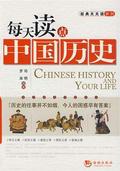 Read Some Chinese History Every Day
46Reads9.4Score—Shelves
Read Some Chinese History Every Day
46Reads9.4Score—Shelves
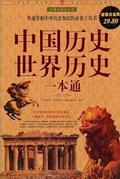 Chinese History and World History in One Book (A Must-Have Book for Chinese Families)
537Reads9.2Score191Shelves
Chinese History and World History in One Book (A Must-Have Book for Chinese Families)
537Reads9.2Score191Shelves
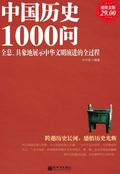 1000 Questions About Chinese History
60.2kReads9.6Score3.2kShelves
1000 Questions About Chinese History
60.2kReads9.6Score3.2kShelves
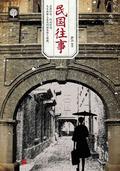 Past Events of the Republic of China
748Reads9.0Score104Shelves
Past Events of the Republic of China
748Reads9.0Score104Shelves
 Book 2 of Su Jie
1Reads5.8Score—Shelves
Book 2 of Su Jie
1Reads5.8Score—Shelves
 Anti-Japanese War: Return a Hundredfold, I Really Don't Want to Be a Commander
5.4kReads8.6Score354Shelves
Anti-Japanese War: Return a Hundredfold, I Really Don't Want to Be a Commander
5.4kReads8.6Score354Shelves
 Shanghai Beach: Rise from Lend-Lease
808Reads5.8Score129Shelves
Shanghai Beach: Rise from Lend-Lease
808Reads5.8Score129Shelves
 Anti-Japanese War: the Special Forces Started to Travel Across the Mountains to Fight the Japanese
978Reads8.4Score—Shelves
Anti-Japanese War: the Special Forces Started to Travel Across the Mountains to Fight the Japanese
978Reads8.4Score—Shelves
 Ghost Beans
48Reads—Score—Shelves
Ghost Beans
48Reads—Score—Shelves
 Guigu Shensou
597Reads6.6Score102Shelves
Guigu Shensou
597Reads6.6Score102Shelves
 No Japanese Are Allowed to Stay
10Reads5.8Score—Shelves
No Japanese Are Allowed to Stay
10Reads5.8Score—Shelves
 Bloody Song
738Reads8.9Score—Shelves
Bloody Song
738Reads8.9Score—Shelves
 Water Margin: the Soul of Zhu Biao Was Slaughtered When He Went Out.
207Reads5.8Score—Shelves
Water Margin: the Soul of Zhu Biao Was Slaughtered When He Went Out.
207Reads5.8Score—Shelves
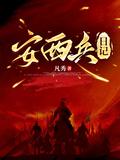 Diary of Anxi Soldier
18.4kReads9.4Score2.3kShelves
Diary of Anxi Soldier
18.4kReads9.4Score2.3kShelves
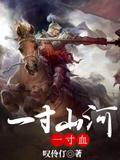 An Inch of Mountains and Rivers, an Inch of Blood
2.2kReads8.2Score176Shelves
An Inch of Mountains and Rivers, an Inch of Blood
2.2kReads8.2Score176Shelves
 Life in the Late Qin Dynasty with Game Skills
38Reads—Score—Shelves
Life in the Late Qin Dynasty with Game Skills
38Reads—Score—Shelves
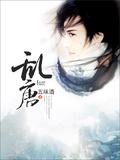 Chaos
2.4kReads7.6Score266Shelves
Chaos
2.4kReads7.6Score266Shelves