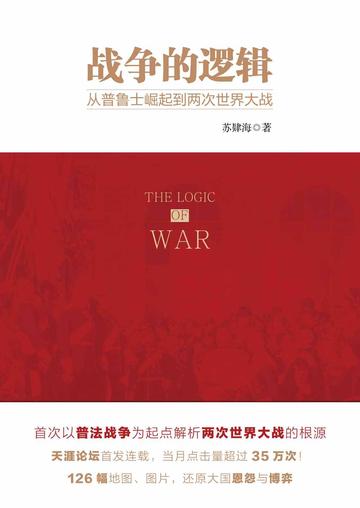
The Logic of War: from the Rise of Prussia to the Two World Wars
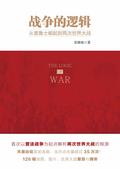
战争的逻辑:从普鲁士崛起到两次世界大战
- Status
- Completed
- Length
- 375k Words
- Genre
- Historical
- Updated
- 3y ago
- Source
- Fanqie
Stats
Tags
Synopsis
Reader comments
In booklists 26
Explore more →

Books That Students Should Read, In-Volume Essentials
Mathematics, Chinese, English, chemistry, physics, biology, geography, history, ancient poetry...
Normal Historical Military Category


You Can't Write Anything About the Anti-Japanese War Zone Other Than Showing Your Sword, Right?

Looking for Books for Junior High School Study! ! (Over)
My grades started plummeting when I entered junior high school. I obviously learned and knew how to do most of the questions correctly, but I got them wrong when I took the test. Now I am in high school! In the end, I did okay in the exam. Thank you everyone for reading the book (although I didn't read it either). I'll just treat this post as a souvenir.
A Book for Late-Night Study

Looking for Books About Germany 2Nd, 3Rd Germany, and the Holy Roman Empire

Looking for New German Books, Prussia, Germany 2, Germany 3 Are All Acceptable, HRE Is Okay
I want a new book! I have read all the old books and will update them steadily if needed.

My Five Favorite Historical Novels
Are There Any High-Quality Ancient War Texts Similar to "Shao Song"?
European Historical Fiction.
Modern times and ancient times should not be modern. Don't be too smart, but have a good historical foundation. Europe, no Chinese historical novels
A Must-Read for Chinese Language and Literature Majors
Are there any books that can actually help improve your writing and expression skills?
Mechanical Armor, Large War Weapons
Mecha, mechanic, gunner, you name it, please mess with me! ! ! ! ! !
Looking for Historical Novels About Shinra, Byzantium, Rome, and Germany.
I would like to read a book similar to "History of World Empires: The Austro-Hungarian Empire".

A Book About World War II in Germany
It's okay to fight Germany in World War I. Let me see the glory of the German Empire.

If You Are Interested in European Politics and Wars, Don't Focus on Magic and Fantasy, but Focus on History.
I would like to read a book similar to "Welcome to 19th-century Europe where strength is paramount".


The Kind That Cannot Be Understood by Hard Science
What I want is hard science. What I want is hard science. The main thing is that the protagonist leads the world to technological prosperity.
I Want to See a Rebirth in the World of German Kx Genre, a Genre Where People Change Their Gender and Participate in Politics and Fight in Wars.
I would like to read a book similar to "My Heart of Steel: In the Name of the Kaiser".

Must-Have Books for Kings of Scrolls
Taking Inventory of Germany
Are there any novels or videos that contain information about Germany, and Prussia too?


European Background
Looking for a bibliography on European background


Recommend Books on Skills
I would like to read a book similar to "Word, Excel, and PPT Office Applications from Beginner to Master". I want to learn some skills to make money, but my wallet is a bit tight. I hope you can recommend some free skills learning materials. They are good for everything, including handicrafts and making.


Fellow Taoists, Please Don't Hide the Books You Have Raised so That the Poor Taoist Can Take a Look at Them.
I want to read a book similar to "Online Games: Confession to the Underage Noble Daughter at the Beginning".

It must be said that the author's insights and analysis are very unique. The writing also has dark humor. I hope that more people will read this book to systematically understand Europe since Prussia and increase their knowledge; at the same time, they can also see the cruelty of war and treat it rationally.
In this book I read: On the surface, the Ruhr crisis broke out because of Germany's reparations issue, but in essence it was the result of France's efforts to weaken Germany and maintain high pressure on Germany to contain its rise. As Britain became increasingly pro-German, the Treaty of Versailles did not fundamentally weaken Germany. "As long as the victors still have strength, the Germans must be forced to taste the bitter consequences of defeat. Poincaré is convinced that France's advantage is limited to a few years, so it must do its best to make use of these few years."
This book really opened my eyes. Is there logic in war? ? But after reading this book, I was deeply shocked. It turned out that there were many, many reasons behind these wars, which made the war inevitable. The author is really bold. Through a large amount of historical data, he discovered an extremely secret logical chain of war. All countries acted in their own national interests and promoted the outbreak of World War II. In fact, both the first and second wars originated from the contradiction between France and Germany.
The part from Prussia to World War I is very good, but the part involving the Soviet Union and World War II is terrible. First of all, there is a lot of material that has been completely accepted by the West to smear it, and many of the evaluations and analyzes are very doubtful. Secondly, it only talks about the Soviet Union's black material and does not talk about what the West, Britain and the United States did. I don't quite agree with the final conclusion of the book. But I completely agree with the conclusion that war is a struggle for interests. Although it does not rise to the level of class, he tells the first half of the historical game very well in this regard. Overall worth a look.
This book really opened my eyes. Is there logic in war? ? But after reading this book, I was deeply shocked. It turned out that there were many, many reasons behind these wars, which made the war inevitable. The author is really bold. Through a large amount of historical data, he discovered an extremely secret logical chain of war. All countries acted in their own national interests and promoted the outbreak of World War II. In fact, both the first and second wars originated from the contradiction between France and Germany.
I am very happy to see this kind of book on the Tomato list, and I hope there will be more such valuable books. By the way, I highly agree with the author's idea, because I had a similar idea a long time ago, but I couldn't write it out😂
This book is different from other history books I have read. Anyway, the most intuitive feeling is that I will not find it boring. This may be because the language of this book is relatively popular and humorous, and at the same time it can explain things clearly. Anyway, I like it very much.
The author writes well and is very knowledgeable, but I don't quite agree with the final war of technological annihilation. No matter how powerful the technology is, it still needs resources and materials. I don't think the earth's resources are unlimited. Whether a war can break out depends on people's needs.
The author's awareness of the problem is to trace the fundamental reasons for the outbreak of the two world wars in the 20th century. To this end, he drew on common practices in historical research, extended the timeline, and looked for how the factors that prompted the outbreak of the war sprouted and developed from earlier times. In this book, his core point is that the contradiction between France and Germany was the core contradiction of the two world wars. The resulting alignments and alliances between countries completed the division of power among military groups. The contest of comprehensive national power played a fundamental role in the success or failure of the war. This analytical framework is also more in line with the emphasis by some political scholars on the shaping of nation-states by military and war mobilization.
The author's profound insights allowed me to understand the causes and processes of the world war at a deeper level. The author discusses each country separately, which is a bit like a biographical history book. It is clearly organized and coherent, making it easy to understand. This is a good book. The author is a sensible person. It is a blessing to read a book written by a sensible person.
Good book. After reading it, it filled in some gaps. The author has a very good intention, cuts out the complex and simplifies it, and highlights the key points. It is worth reading!
The first 2/3 is normal, and then it starts to pull and step frequently. The subjective emotions are beyond words. But it still gave me a lot of gains. Book lovers are reminded to maintain a humble and critical attitude when reading history.
After reading this book, I think most of the views are unique and profound, which makes people's eyes bright. But some views are biased, such as Stalin and Eastern Europe after World War II. Overall, it is a good book and you should read it dialectically.
Overall, it's not bad. The narrative is very good. It's more interesting than the simple and boring narration. The flexible and vivid description and the author's own understanding can make people get into the mood quickly. However, success is also a failure, and failure is also a failure. In some places, the subjective consciousness is too strong. It can be seen that the author has always meant to respect the beauty and belittle the Soviet Union.
After reading, check in! It is worth reading, which will allow you to better understand international disputes and the history of World War I and World War II. The postscript is more worth reading. The following content is excerpted from the postscript: This book takes German history as the main line and tells the conflicts among European countries based on national interests, especially economic interests. It further uses the conflicts between countries as the starting point to describe the diplomacy and mutual alliances and confrontations between countries, and then deduce the reasons for the outbreak of the two world wars.
Whether it is the origin of World War I or World War II, the contradiction between France and Germany is the main thread. Only by understanding this can we have a deeper understanding of Hitler and these two wars that brought huge disasters to all mankind, so as to avoid the outbreak of the next world war. Therefore, what the author wants to focus on in this book is the impact of the most representative economic strength of a country's comprehensive strength on the outcome of the war. This impact is fundamental. As early as 100 years ago, Marx said: "Nothing is more dependent on economic preconditions than the army and navy." Lenin, who experienced World War I and led the Soviet Civil War, had a deeper understanding of the importance of the economy: "In war... It is the economy that plays a decisive role." The need for economic development is often the foundation that dominates a country's policies, especially its foreign policy. Starting from this point, we can even deduce the logical chain from the Franco-Prussian War to World War II just like proving mathematical theorems.
If adults are pressed for time, you can just read the summary of the last chapter. If you are a student, you should read it again. If you don't understand, you can ask your parents, teachers, or artificial intelligence. You must ask while reading, and gradually understand the causes and consequences of history, as well as the reflection of contemporary domestic and foreign events. In short, it is a good summary of the history of the development of post-human war in modern civilization. Make more money. The only legal place for ordinary people to make more money is the financial market. Although the financial market has a narrow escape, which industry is not?
It's very good. I'm currently reading it. The history of World War I and World War II is written better than written on paper.
Very good, very reasonable, without any political overtones
It was okay in the past, but as soon as the Soviet Union came out, there were some private goods.
I didn't know how they hurt me. In fact, I was happy, but more compatriots were suffering, so I dedicated everything and even my life. Later, they awarded me a medal. I confessed my sins in front of God with glory, and just prayed that I would not meet my commander in hell.
Yes, I have read "History of World War I" but that book did not explain in detail the reasons for the outbreak of the war. This book fills the gap in this part of my mind.
When I watched William II, I felt like my blood pressure was high.
The author uses an extremely rational perspective to get straight to the essence of the phenomenon. The conflicts between countries cannot be described only from one aspect, and there is no real black and white in life. Therefore, this book is a good guide for understanding the history of World War II [Love][Love]
A super good book, so cool, you can read the rise of Germany from a great and intelligent perspective. For example, we pay special attention to the application of diplomacy, economics, and scientific and technological progress in the military. Compared with strategies and tactics, these are obviously more capable of determining the outcome of the entire war, rather than the traditional one-general taking over the entire war.
Many people long for war. But they simply don't understand the horrors of war. Whether it's the front or the rear I very much doubt whether the major countries are really ready for a three-war war. Because of the existence of nuclear weapons, if it were not for the overwhelming advantage, it is likely to be a protracted war. And because of long-term relative peace, countries' National sentiment. It is likely to give the country a strong endurance combat capability. It is very likely that every person in the country will become a victim of war.
The viewpoint is unique, and in my opinion it is biased in some places. It is a good book for understanding Prussia, namely World War I and World War II.
It looks good, except that the historical sources of the Soviet Union at the back are not obvious. It is indeed interesting to look at the two world wars from the perspective of Germany's rise and revenge.
Wonderful Germany, Amazing Hitler - Earth Cleaning Agent
\Listening to and reading this book, we understand why Germany became the core of one party in World War I and the initiator of World War II; we also understand that the comprehensive contradictions composed of religion, ethnicity, and country caused the inevitable reason why Europe became the main battlefield of World War II.