I joined a chat group. The conversations in it were full of humor and had a patriotic theme, which reminded me of the work "At this moment, I am the patron saint of China". Such a setting can not only arouse resonance, but also convey positive energy in a relaxed and pleasant atmosphere.
In the time-travel hegemony novel, an engineering graduate student traveled through time and became the miserable emperor of Great Xia. After three days on the throne, his strength was weak. Everyone in the court had their own evil intentions, eunuchs poisoned him, powerful ministers prepared imperial edicts for his throne, and all forces wanted to kill him. At critical moments, he summoned Chinese heroes to turn the tide, and the book shortage could be entered.
As the son of Yuan Shu, he has the status of the fourth generation and the third prince, but he faces his father who wants to proclaim himself emperor! All kinds of friction, fighting Yuan Shao for luck! Very nice, I'm following the update now
This imaginative article travels back in time to Su Dun, Su Dongpo's youngest son who died in infancy, and changes Su Dongpo's fate and Jingkang's shame. A rigorous historical text, not mindless. Su Dun took out a few pieces of paper from his sleeves, which were densely written with words. "I was in Hangzhou before. I read hundreds of books and found a few pieces of evidence. Not many, just ten." He spread the paper on the old cases next to him, "But I think the direction is right." Su Dun pointed to the first piece and said in a calm tone: "Look at the sentence in "Dayu Mo" that 'the human heart is in danger, the Dao is only small, but the essence is only one, and the Yunzhi Juezhong' is quoted in "Xunzi Jieye Pian", but Xunzi said it was quoted from the "Tao Jing", not the "Shang Shu"." "And 'Yunzhi Juezhong' should come from the Analects of Confucius. Yao said, "The calendar of heaven is in your hands, and if you are willing to hold on to it, the world will be poor, and the fortune of heaven will last forever." "The Analects of Confucius said that 'Shun also ordered Yu', but what Shun said to Yu in "Dayu Mo" is completely different from what Yao said to Shun." "The so-called sixteen words of Yu Ting are simply made up." He raised his head and glanced at everyone, waiting for them to be shocked, excited, or "enlightened" as written in later novels. However - Fan Xun raised his head and said disapprovingly: "Maybe Xunzi remembered it wrong?" Su Dun was stunned. Zhao Mingcheng nodded, with a serious look on his face: "I saw before that "Xunzi·Junzi Pian" quoted "One person is happy, and the people rely on it", and said it was the "Biography"." "Actually, this sentence comes from "Shangshu·Lu Xing"." "The source of this quotation must be misremembered by Xunzi." Su Xingchong also said: "Pre-Qin books are all bamboo slips, and it is not easy to read them. The scholars cited the scriptures and most likely wrote them from memory. Without reading and checking, the words may not be accurate." Su Dun's mouth twitched. Huh? Is there something wrong with your reaction? Too calm? Too rational? Shouldn't we exclaim "Oh my God, this is fake" and then people will be angry and share the same hatred? Why are all of them so... Calm? However, it makes so much sense, I am speechless! Li Qingzhao remained silent, just lowered his head and read the original text copied by Su Dun carefully. She stared at those lines of words for a long time, then suddenly raised her head, with a hint of weirdness in her eyes: "The original text of "Xunzi: Uncovering" is: 'In the past, when Shun ruled the world, everything was accomplished without edicts. When he was in danger, he was full of glory; when he raised a little, his glory was unknown.' Later, he quoted the "Tao Jing": "The danger of the human heart, the weakness of the Taoist heart, and the number of dangers can only be known by a wise gentleman." She looked at Su Dun with a strange light in her eyes - a look that doubted her IQ: "You don't think it's the same sentence just because 'the human heart is in danger, the Tao's heart is weak' and 'the human heart is in danger, the Tao's heart is weak' are very similar?" Su Dun was displeased and replied stiffly: "These two sentences are exactly the same, how come they are not plagiarism?" "But the meanings of these two sentences are completely different!" Li Qingzhao talked eloquently: "Xunzi first said that Shun was 'in danger' and 'nurturing the subtlety' - this means that Shun advocated using a single-minded heart to explore the subtle principles of things." "Then he quoted the "Tao Jing" that "the human heart is in danger, the Tao heart is subtle". He quoted the sentence from the "Tao Jing" in order to explain the 'danger' and 'micro' of Shun earlier." "The key point of this sentence is in the last sentence - 'The number of dangers is small, only a wise gentleman can know it'. It is talking about the 'ji' (sign) between 'danger' and 'micro', which only a 'wise gentleman' can detect." She paused, and spoke in a clear voice: "But the key point of the sixteen words of "Dayu Mo" is also at the end, 'Wei Jing Wei Yi, Yu Zhi Ju Zhong', which means to use the 'Jing Yi' skill to 'Zhi Zhong'." "The themes and philosophies of the two sentences are fundamentally different. One talks about detecting signs, and the other talks about adhering to the middle way." "Just because these eight characters are somewhat similar, do you say it is plagiarism?" Fan Wei continued: "Even if it is plagiarism, it may be that the Dao Jing copied Dayu Mo, and then was recorded as the Dao Jing. There are too many such things." He thought for a while and gave an example: "For example, the sentence 'Without indifference, one cannot achieve clear aspirations, without tranquility, one cannot reach far', which comes from "Huainanzi Zhushu Xun" of the Western Han Dynasty. More than three hundred years later, Zhuge Liang quoted it in "The Book of Commandments", and now everyone thinks it was Zhuge Liang who said it." "There is also 'the courage to be big but the heart to be small, the wisdom to be round but the action to be square', which also comes from "Huainanzi Zhushu Xun", Sun Simiao quoted it, and now everyone thinks it is Sun Simiao's words." Zhao Mingcheng added: "This is also the case in "Xunzi" itself. The section about three years of mourning in "Xunzi: Rites", from "Three years of mourning, what" to "It is the same in ancient and modern times", the entire paragraph was included in the "Book of Rites" and became the "Three Years Questions"." "Now when people quote these sentences, they must think that they come from the "Book of Rites", and not from "Xunzi"." Su Xingchong also nodded: "As for what Yao said when he surrendered to Shun, it is different from what Shun said when he surrendered to Yu. Isn't it strange?" "Two generations of holy kings faced different world situations, so they naturally had different things to say." Su Dun was confused by everyone's words and words. Didn't those books of later generations say that the "Sixteen-Character Heart Biography" was the core evidence for Yan Ruochu's falsification of "Gu Wen Shangshu"? Didn't it mean that as soon as this piece of evidence came out, the Neo-Confucianists were speechless? How come you can't even convince a few seven- and eight-year-old children here?
I have read this book twice and listened to it once, and have been following it for more than half a year. It is unsystematic, relaxing, farming, and funny. I will read it with you.
In the early days of the founding of the People's Republic of China, the country was revitalized by industry, and in the Republic of China, there was a spy crisis, each with its own splendor.
The male protagonist never guessed that Lao Zhu might have read his diary. I don't know what to say. I can read the writing, but I still feel that it's all fascinating.
In this time-travel theme, the protagonist, a retired soldier turned photographer, goes to the mountains to move the tombs of his ancestors to save his father. By chance, he gets a special camera in a red sandalwood box. When he takes actual photos of an ancient house, he jumps directly to the Tang Dynasty.
He traveled through time and became a soldier who was about to die in the field. In a desperate situation, he activated the star system of the general. Let's see how he fights his way out of hell to the sky!
Time travel to the last emperor of the Southern Song Dynasty. He led his army from a small island to counterattack the Yuan Dynasty. After several life-and-death battles, there are no more timid people in the Southern Song Dynasty. Let's see how the new Song Dynasty rises. There is no system, but there are elements of martial arts.
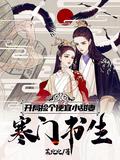 A Poor Scholar, He Picked up a Cheap Little Wife at the Beginning
38.1kReads9.2Score3.9kShelves
A Poor Scholar, He Picked up a Cheap Little Wife at the Beginning
38.1kReads9.2Score3.9kShelves
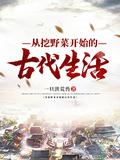 Ancient Life Began with Digging Wild Vegetables
18.8kReads8.8Score1.4kShelves
Ancient Life Began with Digging Wild Vegetables
18.8kReads8.8Score1.4kShelves
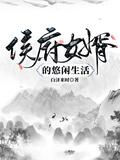 My Arrogant and Talented Lady in the Hou Family
34.2kReads9.0Score3.3kShelves
My Arrogant and Talented Lady in the Hou Family
34.2kReads9.0Score3.3kShelves
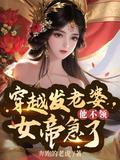 He Won't Accept the Wife He Sent Through Time Travel, the Empress Is Anxious
1.1kReads8.0Score104Shelves
He Won't Accept the Wife He Sent Through Time Travel, the Empress Is Anxious
1.1kReads8.0Score104Shelves
 Go Crazy! the System Shares Tasks with the Country
2.7kReads6.7Score178Shelves
Go Crazy! the System Shares Tasks with the Country
2.7kReads6.7Score178Shelves
 Traveling Through Ancient Times, the Villain Has Many Women and Many Blessings
979Reads6.0Score—Shelves
Traveling Through Ancient Times, the Villain Has Many Women and Many Blessings
979Reads6.0Score—Shelves
 After Being Read by the First Emperor, All the Civil and Military Officials Went Crazy!
20.6kReads9.2Score3.1kShelves
After Being Read by the First Emperor, All the Civil and Military Officials Went Crazy!
20.6kReads9.2Score3.1kShelves
 At the Beginning, All the Dynasties Are Rebelling, I Summon All the Heroes of China
5Reads—Score—Shelves
At the Beginning, All the Dynasties Are Rebelling, I Summon All the Heroes of China
5Reads—Score—Shelves
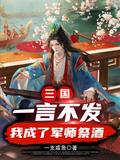 Three Kingdoms: Without Saying a Word, I Became a Military Advisor Offering Wine
2.2kReads9.0Score178Shelves
Three Kingdoms: Without Saying a Word, I Became a Military Advisor Offering Wine
2.2kReads9.0Score178Shelves
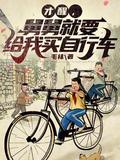 I Just Woke up and My Uncle Wants to Buy Me a Bicycle.
24.6kReads8.4Score1.3kShelves
I Just Woke up and My Uncle Wants to Buy Me a Bicycle.
24.6kReads8.4Score1.3kShelves
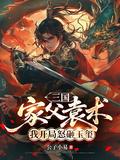 Three Kingdoms: the Rebellious Son of the Yuan Family Broke the Jade Seal at the Beginning
83.9kReads8.6Score9.4kShelves
Three Kingdoms: the Rebellious Son of the Yuan Family Broke the Jade Seal at the Beginning
83.9kReads8.6Score9.4kShelves
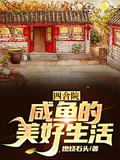 Siheyuan: the Beautiful Life of Salted Fish
22.2kReads5.8Score1.1kShelves
Siheyuan: the Beautiful Life of Salted Fish
22.2kReads5.8Score1.1kShelves
 The Coquettish Three Kingdoms Diaochan Cai Wenji and Xiao Qiao Are All Numb
876Reads5.8Score115Shelves
The Coquettish Three Kingdoms Diaochan Cai Wenji and Xiao Qiao Are All Numb
876Reads5.8Score115Shelves
 Courtyard: Come Quickly, Sew His Mouth Shut
134.1kReads8.0Score6.3kShelves
Courtyard: Come Quickly, Sew His Mouth Shut
134.1kReads8.0Score6.3kShelves
 Father Su Dongpo's Wife Li Qingzhao and His Father Song Huizong
23.2kReads8.5Score2.9kShelves
Father Su Dongpo's Wife Li Qingzhao and His Father Song Huizong
23.2kReads8.5Score2.9kShelves
 Starting a City, I Rely on the System to Compete in the World
161.1kReads9.3Score26.2kShelves
Starting a City, I Rely on the System to Compete in the World
161.1kReads9.3Score26.2kShelves
 51 Years of Rebirth: Living in Seclusion in the Mountains and Building a Super Home
51.4kReads8.9Score5.6kShelves
51 Years of Rebirth: Living in Seclusion in the Mountains and Building a Super Home
51.4kReads8.9Score5.6kShelves
 Prehistoric: Start in the Kunlun Mountains and Transform into Billions
32kReads9.0Score2.6kShelves
Prehistoric: Start in the Kunlun Mountains and Transform into Billions
32kReads9.0Score2.6kShelves
 Bullying My Disciple, Do You Really Think I Can Only Teach?
47.8kReads8.8Score4.5kShelves
Bullying My Disciple, Do You Really Think I Can Only Teach?
47.8kReads8.8Score4.5kShelves
 Five Random People Are Messing up China, Cheating and Cheating to Dominate the World
579Reads—Score—Shelves
Five Random People Are Messing up China, Cheating and Cheating to Dominate the World
579Reads—Score—Shelves
 Three Kingdoms: Full Force at the Beginning
24.5kReads8.3Score1.9kShelves
Three Kingdoms: Full Force at the Beginning
24.5kReads8.3Score1.9kShelves
 Family Time Travel: Eighteen Ways to Survive in Ancient Times
74.6kReads9.5Score9.8kShelves
Family Time Travel: Eighteen Ways to Survive in Ancient Times
74.6kReads9.5Score9.8kShelves
 Three Kingdoms: Golden Hammer Tai Sui
488Reads—Score—Shelves
Three Kingdoms: Golden Hammer Tai Sui
488Reads—Score—Shelves
 Three Kingdoms: I Am the Eldest Grandson of Guan Yu, Maicheng Saved My Grandfather First
751Reads8.8Score111Shelves
Three Kingdoms: I Am the Eldest Grandson of Guan Yu, Maicheng Saved My Grandfather First
751Reads8.8Score111Shelves
 Qianlong from Prince Yongdi to the Emperor of Eternity
11.2kReads8.3Score667Shelves
Qianlong from Prince Yongdi to the Emperor of Eternity
11.2kReads8.3Score667Shelves
 Mechanic in the Red Age: I Help My Ancestors Forge Heavy Weapons
46.1kReads8.8Score3kShelves
Mechanic in the Red Age: I Help My Ancestors Forge Heavy Weapons
46.1kReads8.8Score3kShelves
 Traveling Through the Qing Dynasty, the Second Generation of a Down-And-Out Official Became a First-Class Official
24Reads—Score—Shelves
Traveling Through the Qing Dynasty, the Second Generation of a Down-And-Out Official Became a First-Class Official
24Reads—Score—Shelves
 Empress Cixi and Her Three Doting Eunuchs
33.9kReads9.1Score2.5kShelves
Empress Cixi and Her Three Doting Eunuchs
33.9kReads9.1Score2.5kShelves
 Traveling Through the Tang Dynasty: It's so Difficult to Be an Idle King
139.2kReads9.2Score9.8kShelves
Traveling Through the Tang Dynasty: It's so Difficult to Be an Idle King
139.2kReads9.2Score9.8kShelves
 A Man Wrote a Diary in the Ming Dynasty and Defeated Zhu Yuanzhang at the Beginning
10.7kReads8.3Score908Shelves
A Man Wrote a Diary in the Ming Dynasty and Defeated Zhu Yuanzhang at the Beginning
10.7kReads8.3Score908Shelves
 A Pool of Mirrors
1Reads5.8Score—Shelves
A Pool of Mirrors
1Reads5.8Score—Shelves
 Datang: I Made a Lot of Money by Sending My Wife at the Beginning
15.4kReads8.7Score1.4kShelves
Datang: I Made a Lot of Money by Sending My Wife at the Beginning
15.4kReads8.7Score1.4kShelves
 Strong Soldiers, Create Unparalleled Generals
13.1kReads7.2Score1.2kShelves
Strong Soldiers, Create Unparalleled Generals
13.1kReads7.2Score1.2kShelves
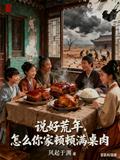 We Talk About the Lean Years, but Why Is Your House Full of Meat Every Meal?
280.7kReads8.2Score24.5kShelves
We Talk About the Lean Years, but Why Is Your House Full of Meat Every Meal?
280.7kReads8.2Score24.5kShelves
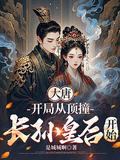 Datang: at the Beginning of the Game, Li Er Was Furious When He Carried the Coffin to Advise.
22.2kReads8.2Score1.4kShelves
Datang: at the Beginning of the Game, Li Er Was Furious When He Carried the Coffin to Advise.
22.2kReads8.2Score1.4kShelves
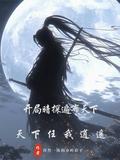 Daxia: Summon a Snare at the Beginning to Suppress the World
31.7kReads8.1Score1.6kShelves
Daxia: Summon a Snare at the Beginning to Suppress the World
31.7kReads8.1Score1.6kShelves
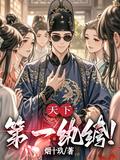 The Best Dude in the World!
82.5kReads8.7Score8.9kShelves
The Best Dude in the World!
82.5kReads8.7Score8.9kShelves
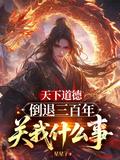 The World's Morality Has Regressed for Three Hundred Years. What Does It Have to Do with Me?
539.1kReads9.1Score65.8kShelves
The World's Morality Has Regressed for Three Hundred Years. What Does It Have to Do with Me?
539.1kReads9.1Score65.8kShelves
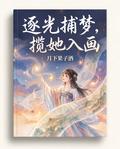 The Crown Prince Is Fierce: I've Got This Little Lady.
10.7kReads8.5Score876Shelves
The Crown Prince Is Fierce: I've Got This Little Lady.
10.7kReads8.5Score876Shelves
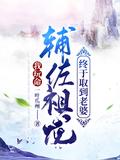 I Risked My Life to Assist Zulong and Finally Got My Wife
10.1kReads9.2Score865Shelves
I Risked My Life to Assist Zulong and Finally Got My Wife
10.1kReads9.2Score865Shelves
 At the Beginning of the Game, Yang Guifei Was Raped and the Tang Dynasty Was Given a Peaceful Year.
31.6kReads7.9Score3.5kShelves
At the Beginning of the Game, Yang Guifei Was Raped and the Tang Dynasty Was Given a Peaceful Year.
31.6kReads7.9Score3.5kShelves
 The Grandson of the Emperor Who Has Disappeared for Eight Years
44.8kReads8.9Score4.3kShelves
The Grandson of the Emperor Who Has Disappeared for Eight Years
44.8kReads8.9Score4.3kShelves
 Starting from Daxia: the Founding Kings Come One After Another
3.5kReads9.0Score380Shelves
Starting from Daxia: the Founding Kings Come One After Another
3.5kReads9.0Score380Shelves
 People Became Trolls in the Ming Dynasty and Made Courtiers Angry
3.1kReads8.6Score138Shelves
People Became Trolls in the Ming Dynasty and Made Courtiers Angry
3.1kReads8.6Score138Shelves
 Global Super Power: I Can Summon Emperors of All Ages
69Reads5.8Score—Shelves
Global Super Power: I Can Summon Emperors of All Ages
69Reads5.8Score—Shelves
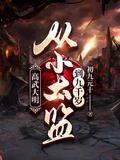 Gaowu Ming Dynasty: from Young Eunuch to Nine Thousand Years Old
110.3kReads9.2Score11kShelves
Gaowu Ming Dynasty: from Young Eunuch to Nine Thousand Years Old
110.3kReads9.2Score11kShelves
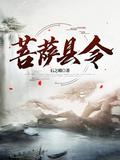 Bodhisattva County Magistrate
28kReads9.2Score2.9kShelves
Bodhisattva County Magistrate
28kReads9.2Score2.9kShelves
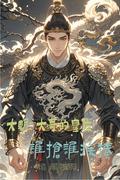 Daming: Whoever Seizes the Throne of Eldest Brother Will Be Beaten
41.9kReads8.8Score2.6kShelves
Daming: Whoever Seizes the Throne of Eldest Brother Will Be Beaten
41.9kReads8.8Score2.6kShelves
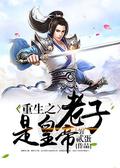 Rebirth: I Am the Emperor
3.3kReads8.8Score371Shelves
Rebirth: I Am the Emperor
3.3kReads8.8Score371Shelves
 Ming Dynasty: the Eldest Grandson of the Emperor at the Beginning, Grandfather Zhu Tufu
5.3kReads8.4Score448Shelves
Ming Dynasty: the Eldest Grandson of the Emperor at the Beginning, Grandfather Zhu Tufu
5.3kReads8.4Score448Shelves