[Get it] "The King of Scouts" tells the legendary story of Yang Zilun, a modern special soldier who traveled to the Jin Dynasty and became a military scout. This world is similar to China, but it is full of disputes between practitioners and demons. Between life and death, there are many dangers. With modern equipment and wisdom, Yang Zilun flexes his muscles on this imaginary historical stage, engaging in fearless iron-blooded battles and humorous daily banter. His sentence "Xue'er, I can't find my way home" expresses the helplessness and nostalgia of the time traveler, while "Brother Savage, if you don't come back, I don't dare to die" shows the deep friendship between comrades. In the face of the enemy, he showed no mercy and shouted, "Kill their corpses to feed fish and shrimps, cut off their heads and build a temple in Beijing", which was very domineering. In the world of cultivation, he calls himself the "Ten Thousand Years Foundation Building Period", with a hint of self-deprecation in his humor. Yang Zilun's dream is to cross the galaxy and return to the blue planet, which shows his deep longing for his hometown. His story has both a sense of history and modern humor and romance. It can be called a legendary epic that combines iron-bloodedness, humor, cultivation and adventure.
Do you think you are having an affair with a slave, but I don't know? Do you think you are hiding business taxes, but I don't know? The southeast is rich, but Shaanxi is thousands of miles away, and people are dying of hunger. The ministers of the court, regardless of the lives of the people and the survival of the world, suck the blood of the Ming Dynasty and cut the people's flesh! The anger of a common man is enough to splatter three feet with blood. Do you know that the emperor is angry and lays down millions of corpses!
I have read "Historical Military Spy" twice, and there is no single one. However, I still can't figure out the clues about the author [face covering]. A bit brain-burning
The timeless classic The Qin Empire [Top post] I have read it twice and it's not enough. I have to dig it out and read it again from time to time. Sometimes you can't always read YY cool articles. Reading classics can continuously gain wisdom from the ancients and avoid making the same mistakes [Exploration]
1. Core themes 1. **Redefinition of historical status** - Trying to break through the traditional "conqueror" perspective and reinterpret the historical significance of Genghis Khan from modern dimensions such as globalization, institutional innovation, and cultural inclusion. - Emphasize its comprehensive impact on the process of human civilization (politics, military, economy, religion, etc.). 2. **Strengthening of the national perspective** - Through the expression "best in the world", highlight the Mongolian nation's contribution to world civilization (such as the post system, military art, political democracy, etc.). **2. Analysis of specific key points** **[Military and Political]** 1. **Military Achievements** (Points 1, 2, and 4) - **Scale Dimension**: "The largest territory" and "the largest scale of war" highlight the breadth and speed of the expansion of the Mongolian Empire (conquered over 30 million square kilometers of imperial territory in 25 years). - **Technical Dimension**: Cavalry tactics, intelligence systems, psychological warfare, etc. Are regarded as the pinnacle of military art in the cold weapon era. 2. **Institutional Innovation** (points 3 and 7) - **Station System** ("Transportation Liaison System"): A communication network spanning Europe and Asia was established, which influenced the logistics system of later generations. - **Khuritai System** ("Political Democracy"): The Great Khan was elected through a meeting of tribal nobles, reflecting early checks and balances on power. **[Economy and Culture]** 3. **Economic Influence** (Point 8) - Accumulate wealth through control of the Silk Road and war and plunder. According to the Wall Street Journal, its total wealth may reach the trillions level. 4. **Religious Policy** (Point 10) - Implement the "religious freedom" policy, allowing the coexistence of Shamanism, Islam, Christianity, etc., And serving the stability of the empire's rule. **[Historical Evaluation]** 5. **Controversial Positioning** (Points 5, 6, 11) - "The Greatest Successor" and "The Most Influential Person": Emphasize his counterattack from tribal orphan to empire builder, and his cross-civilization influence that opened up the Eurasian continent. - "Pioneer of Globalization": Promote the exchange of Eastern and Western technologies (gunpowder, printing), species (grapes, carrots), and culture (astronomy, medicine) through business networks. 6. **Cultural Symbolization** (Points 9 and 12) - **Sacrifice Phenomenon**: Deified in Mongolia, China, Iran and other places, reflecting the complex attitudes of multiple civilizations towards their heritage. - **Mystery Marketing**: The unknown location of the tomb and its legendary life experience continue to inspire the imagination of future generations and form a cultural IP. **3. Questionable expressions** 1. **Subjective evaluation** - Expressions such as "the greatest achiever" and "the richest in a millennium" lack quantitative standards and need to be analyzed in the context of specific historical contexts. 2. **Modern Concept Projection** - Terms such as "globalization" and "democracy" are at risk of being misplaced by the times, and the difference between them and modern connotations needs to be analyzed. 3. **Selective Narrative** - The destruction of civilization caused by the war (such as the massacre of Baghdad and the sharp decline in population) is not mentioned, and the evaluation needs to balance the achievements and costs. **4. Deep logic** - **Civilization Interaction Perspective**: View the Mongol Empire as a catalyst for technological, institutional, and cultural exchanges between the East and the West (such as the post system affecting the Russian postal system). - **Non-Western Centrism**: Challenge the "Eurocentric" view of history and highlight the foundational role of nomadic civilization in the modern world. **5. Extended thinking directions** 1. **Comparative study**: Compare the institutional innovations and limitations of other empires of the same period (such as the Arab Empire and the Song Dynasty). 2. **Heritage controversy**: Whether the long-term impact of the Mongol conquest on the Islamic civilization of Central Asia and the Slavic civilization of Eastern Europe was constructive. 3. **Construction of historical memory**: How different countries (China, Mongolia, Russia, Iran) selectively use the symbols of Genghis Khan to construct national identities. It is recommended that you combine Jack Weatherford's "Genghis Khan and the Making of Today's World" and Sugiyama Masaaki's "The Rise and Fall of the Mongol Empire" and other works to conduct critical readings based on multiple academic perspectives.
The book " Ce Rides the World" tells the story of the battles between various ethnic groups, tribes and small countries in the Western Regions during the Western Jin Dynasty. The plot is vivid and interesting, well worth watching! [Praise]
A masterpiece, as a Machiavellian novel 📖 that fictionalizes Eastern history, the author not only constructs a complete world view, but also has many characters with distinct characteristics, the plot is compact and not procrastinating, and the description of the human heart and human nature is especially delicate.
The modern invincible soldier king travels back to the body of an ordinary soldier on the Saarhu battlefield during the Wanli period of the late Ming Dynasty. Watch the King of Soldiers kill the enemy with one move, kill one person with three moves, kill all directions, and crush the Hou Jin army. The joy is dripping with joy, the iron-blooded feelings are heart-stirring. It is a wonderful novel that is definitely worth reading. If you don't believe me, give it a try. You will definitely not be able to put it down. It can be said that it is much better than most of today's war novels that travel through the late Ming Dynasty! ! ! The modern invincible soldier traveled back to the second year of Chongzhen in the late Ming Dynasty and lived in the body of a soldier from the Beijing camp when the Qing army entered the Pass for the first time to attack Desheng Gate in Beijing. Watch the King of Soldiers kill the enemy with one move, kill one person with three moves, kill all directions, and crush the Qing army. The joy is dripping with joy, the iron-blooded feelings are heart-stirring. It is a wonderful novel that is definitely worth reading. If you don't believe me, give it a try. You will definitely not be able to put it down. It can be said that it is much better than most of today's war novels that travel through the late Ming Dynasty! ! !
The extremely exciting one-on-one scenes, the magnificent battle scenes, and the battles of wits between civil servants fully demonstrate Sun Tzu's art of war. The most professional and exciting fighting scenes on the Internet, the best depiction of ancient war scenes.
The new book covers the Three Kingdoms, the art of war, strategy, people's livelihood, noble families, relatives, crusades, sieges, field battles, heroines, children, and foreign races. No harem. There is mercy, not the Holy Mother. People live their lives and attack cities and villages. Behead generals and assassinate assassins. Prestigious family, marriage. There is no system, Golden Finger only has the protagonist Gao Wu, a single female protagonist, and no harem. There will be other historical female characters appearing, but not harems. For example, Cai Wenji. . . .
The novel of the late Tang Dynasty is unsystematic and the writing style is light and funny. It tells the story of the foreign wars between the Uighurs and Tubo, the civil war and the rebellion of the Jiedushi, and the story of 3,000 Tang people fighting against the 100,000 Uighur army. It is refreshing.
The war scenes are grand, the storyline is beautiful, and the cruel scenes of the war are bloody and cruel enough. All wars have historical wars as templates, and it's interesting to dig into them.
What is written here is a story about troubled times. The background of the era is the Five Dynasties and Ten Kingdoms period, the most chaotic and brutal period in China. There is no list here, everything is perfectly arranged. There is only the process of the protagonist going from a blank piece of paper to reaching the top! Here there are setbacks, growth, principles of life, the most practical life growth experiences, and the application of ancient tactics. There is also intrigue, checks and balances, strategy, and martial arts! What is inaction? Promising but why? But as for the ending, please find the answer from the book.
The ones in the Ming Dynasty can be fine, fine grains, they are simply fine grains, they can be mixed up in temples, how can they be simple, all historical figures are described in three dimensions, or there are no villains, the positions are different, everyone looks like a villain, some details are still exquisite, especially the strategic layout and war are very consistent, and even the marching route and geographical knowledge are involved in a lot, highly recommended!
 I Was a Powerful Official in Soochow
43Reads—Score—Shelves
I Was a Powerful Official in Soochow
43Reads—Score—Shelves
 1853: Use Cannons to Measure Land Area
1.4kReads7.1Score—Shelves
1853: Use Cannons to Measure Land Area
1.4kReads7.1Score—Shelves
 The Tripod of Great Unification
—Reads—Score—Shelves
The Tripod of Great Unification
—Reads—Score—Shelves
 Qianlong from Prince Yongdi to the Emperor of Eternity
13.4kReads8.3Score766Shelves
Qianlong from Prince Yongdi to the Emperor of Eternity
13.4kReads8.3Score766Shelves
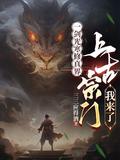 The Light of a Sword Chills the World of Cultivation, Here Comes the Ancient Sect
15.9kReads9.1Score1.9kShelves
The Light of a Sword Chills the World of Cultivation, Here Comes the Ancient Sect
15.9kReads9.1Score1.9kShelves
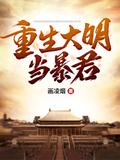 Rebirth of the Ming Dynasty as a Tyrant
18.4kReads9.0Score1.7kShelves
Rebirth of the Ming Dynasty as a Tyrant
18.4kReads9.0Score1.7kShelves
 Spy Lurking Railway Files Liaoshen Jingzhe
4Reads5.8Score—Shelves
Spy Lurking Railway Files Liaoshen Jingzhe
4Reads5.8Score—Shelves
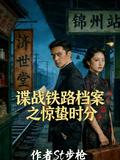 Railway Archives: the Stinging Hour
3Reads5.8Score—Shelves
Railway Archives: the Stinging Hour
3Reads5.8Score—Shelves
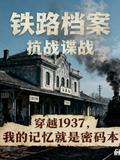 Railway Archives
2Reads5.8Score—Shelves
Railway Archives
2Reads5.8Score—Shelves
 The Poor Become Rich When They Turn Around
17Reads—Score—Shelves
The Poor Become Rich When They Turn Around
17Reads—Score—Shelves
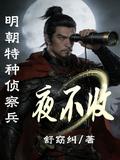 Ming Dynasty Special Reconnaissance Troops Did Not Collect at Night
741Reads5.8Score149Shelves
Ming Dynasty Special Reconnaissance Troops Did Not Collect at Night
741Reads5.8Score149Shelves
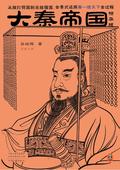 Qin Empire: Essence Edition
2.3kReads9.6Score509Shelves
Qin Empire: Essence Edition
2.3kReads9.6Score509Shelves
 Abandoned Desert Island
—Reads—Score—Shelves
Abandoned Desert Island
—Reads—Score—Shelves
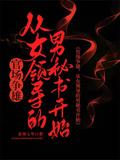 The Fight for Supremacy in Officialdom Begins with the Male Secretary of the Female Leader
205.1kReads9.3Score15.1kShelves
The Fight for Supremacy in Officialdom Begins with the Male Secretary of the Female Leader
205.1kReads9.3Score15.1kShelves
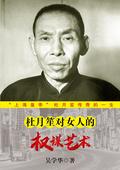 Du Yuesheng's Art of Manipulating Women
1.9kReads9.5Score378Shelves
Du Yuesheng's Art of Manipulating Women
1.9kReads9.5Score378Shelves
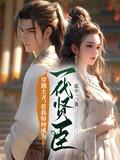 Travel Across Daqi and See How I Became a Wise Minister
13.3kReads8.4Score1.3kShelves
Travel Across Daqi and See How I Became a Wise Minister
13.3kReads8.4Score1.3kShelves
 Tokyo Yunmenglu
1Reads—Score—Shelves
Tokyo Yunmenglu
1Reads—Score—Shelves
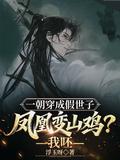 The Fake Prince Who Was Kicked Out of the Prince's Mansion Relied on the Imperial Examination to Counterattack the Powerful Ministers.
43.1kReads8.6Score5.6kShelves
The Fake Prince Who Was Kicked Out of the Prince's Mansion Relied on the Imperial Examination to Counterattack the Powerful Ministers.
43.1kReads8.6Score5.6kShelves
 A Complete Biography of the Tang Dynasty - the Complete Version
112Reads9.4Score—Shelves
A Complete Biography of the Tang Dynasty - the Complete Version
112Reads9.4Score—Shelves
 Riding the World
959Reads6.4Score—Shelves
Riding the World
959Reads6.4Score—Shelves
 Qing Dynasty 296
4.9kReads7.4Score103Shelves
Qing Dynasty 296
4.9kReads7.4Score103Shelves
 The Roaring Eastern Front
12Reads5.8Score—Shelves
The Roaring Eastern Front
12Reads5.8Score—Shelves
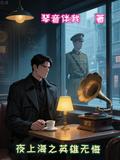 The Hero of Shanghai at Night Has No Regrets
87Reads5.8Score—Shelves
The Hero of Shanghai at Night Has No Regrets
87Reads5.8Score—Shelves
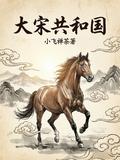 Song Republic
43Reads—Score—Shelves
Song Republic
43Reads—Score—Shelves
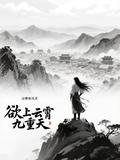 Desire to Ascend to the Ninth Heaven
659Reads5.8Score—Shelves
Desire to Ascend to the Ninth Heaven
659Reads5.8Score—Shelves
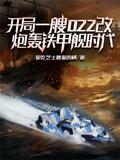 Drive 022 and Return to the Spice Islands to Become a Pirate
1.8kReads7.1Score107Shelves
Drive 022 and Return to the Spice Islands to Become a Pirate
1.8kReads7.1Score107Shelves
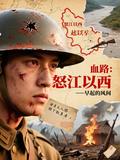 Bloody Road: West of Nujiang River
29Reads6.9Score—Shelves
Bloody Road: West of Nujiang River
29Reads6.9Score—Shelves
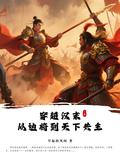 Traveling Through the Late Han Dynasty: from a Border General to the Common Ruler of the World
—Reads—Score—Shelves
Traveling Through the Late Han Dynasty: from a Border General to the Common Ruler of the World
—Reads—Score—Shelves
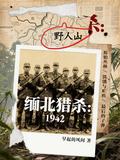 Hunting in Northern Burma: 1942
7Reads5.8Score—Shelves
Hunting in Northern Burma: 1942
7Reads5.8Score—Shelves
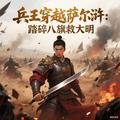 The King of Soldiers Crosses the Saarhu: Crushing the Eight Banners to Save the Ming Dynasty
484Reads7.3Score—Shelves
The King of Soldiers Crosses the Saarhu: Crushing the Eight Banners to Save the Ming Dynasty
484Reads7.3Score—Shelves
 Beacon Smoke Billows in Love with the World of Mortals
1Reads—Score—Shelves
Beacon Smoke Billows in Love with the World of Mortals
1Reads—Score—Shelves
 Three Kingdoms: the Rise of a Family with a Spear in Hand
401Reads5.3Score—Shelves
Three Kingdoms: the Rise of a Family with a Spear in Hand
401Reads5.3Score—Shelves
 The King of Soldiers Zhenguo
3Reads5.8Score—Shelves
The King of Soldiers Zhenguo
3Reads5.8Score—Shelves
 Three Kingdoms: Traveling Through the Yellow Turban and Reversing the World
927Reads8.8Score—Shelves
Three Kingdoms: Traveling Through the Yellow Turban and Reversing the World
927Reads8.8Score—Shelves
 Three Kingdoms: Let Han Yu Rule the World
1kReads8.0Score—Shelves
Three Kingdoms: Let Han Yu Rule the World
1kReads8.0Score—Shelves
 A Stick from the Tang Dynasty
2.6kReads8.8Score202Shelves
A Stick from the Tang Dynasty
2.6kReads8.8Score202Shelves
 The Legend of Han Xin, the Master of Weapons
—Reads5.8Score—Shelves
The Legend of Han Xin, the Master of Weapons
—Reads5.8Score—Shelves
 Far East
122Reads5.8Score—Shelves
Far East
122Reads5.8Score—Shelves
 Mountain and River Column
18Reads—Score—Shelves
Mountain and River Column
18Reads—Score—Shelves
 Blood-Stained Ming Dynasty
262Reads7.1Score—Shelves
Blood-Stained Ming Dynasty
262Reads7.1Score—Shelves
 Iron Age
8.8kReads9.0Score1.2kShelves
Iron Age
8.8kReads9.0Score1.2kShelves
 The Sky of the Republic of China
12.2kReads8.6Score1.5kShelves
The Sky of the Republic of China
12.2kReads8.6Score1.5kShelves
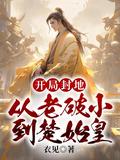 Starting Fiefdom: from Laopoxiao to Chu Shihuang
12.2kReads8.8Score1kShelves
Starting Fiefdom: from Laopoxiao to Chu Shihuang
12.2kReads8.8Score1kShelves
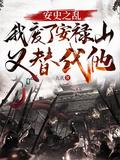 My Aunt Is Yang Guifei
5.4kReads8.2Score500Shelves
My Aunt Is Yang Guifei
5.4kReads8.2Score500Shelves
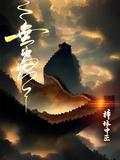 Do Nothing
1Reads6.9Score—Shelves
Do Nothing
1Reads6.9Score—Shelves
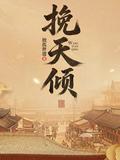 The Ming Dynasty Restarts: at the Age of Three, He Ascends the Throne and Proclaims Himself Emperor
22kReads8.3Score1.7kShelves
The Ming Dynasty Restarts: at the Age of Three, He Ascends the Throne and Proclaims Himself Emperor
22kReads8.3Score1.7kShelves
 Rescue 1644: Starting from Crossing Li Yan
7Reads—Score—Shelves
Rescue 1644: Starting from Crossing Li Yan
7Reads—Score—Shelves
 Datang: I Am in Suiye City, My Younger Brother Li Taibai?
7.5kReads8.7Score654Shelves
Datang: I Am in Suiye City, My Younger Brother Li Taibai?
7.5kReads8.7Score654Shelves
 Why Is It Clear?
855Reads8.2Score—Shelves
Why Is It Clear?
855Reads8.2Score—Shelves
 Liu Yu: Not Confused at 35 Years Old
272Reads8.2Score—Shelves
Liu Yu: Not Confused at 35 Years Old
272Reads8.2Score—Shelves