You can read the knowledge reserve, including original poems, various literary discussions, historical knowledge, etiquette and rules, and even the specific details of how to make Hexiang beads. It is a semi-classical Chinese work, so don't read it if you mind.
A cross-border book, for the convenience of understanding, it can be regarded as "The End of Ten Days" which combines hard science fiction, strong strategy, and high viewpoints. However, the group of protagonists is not normal, and the reason why readers laugh has nothing to do with the author. The book is logically rigorous, and the 17 subject knowledge contained in it are all supported by orthodox theories and are not folk science or market experience. The story is exquisitely designed, interlocking, with a lot of foreshadowing and pitfalls that must be filled in. It is not a scattered plot put together for the purpose of imparting knowledge. This book contains a lot of knowledge and is a thoughtful work. There must be some readers who are willing to use their brains.
Do you think hackers only steal data? They also want to steal our cultural DNA. Fortunately, someone has hidden the ancestral recipe deeper than the firewall—in the human heart. #CulturalSovereignty #cybersecurity #intangible cultural heritage protection
Four realms: Executive, Human, Bureau, Dao. During the Chu Dynasty, there was a prosperous trading town in the south of the Yangtze River, named Linjiang City. There are many merchants in the city, and all industries are prosperous. Countless people are working here to make a living. Some people work hard all day long, some are skilled in all aspects, and some are strategizing and controlling the overall situation. However, few people can see through the underlying laws of the world. There is an unwritten saying circulating in the local area: those who do things are exhausted, those who are good people have the right and left, those who make decisions control the world, and those who understand the truth overlook all living beings. This sentence exactly corresponds to the life situations of the four types of people in Linjiang City, and also explains the most fundamental gap between people. The first level: immersed in work, trapped in execution. The first person to appear was A Shi, a coolie from the dye house in the city. Ah Shi was born with a strong body and worked diligently and steadfastly. He got up to work before dawn every day, carrying water, dyeing cloth, drying, and carrying things. He worked from morning to night, and his hands were covered with thick calluses. His body was always stained by dyes. He firmly believes that as long as he is willing to work hard, work hard, and do his best at what he does, he can live a good life. He never shied away from the hard work in the dyeing workshop. Others were lazy and slippery, but he always worked hard. The fabrics he dyed were uniform in color and solid in workmanship, which won the praise of the workshop manager. But even so, he still could only make a living with a meager salary. He was trapped by heavy labor every day, without any leisure time, and no chance to change his destiny. Some co-workers advised him not to be too stubborn and to learn to be lazy and flexible, but Ah Shi disagreed. He felt that to be a man, you should work hard and reap the rewards. But even though he tried his best, he was just the most capable coolie in the workshop. He was always assigned to do the most basic execution work. Day after day, year after year, he was always working at the bottom, and he couldn't even figure out the entrance to the dyeing workshop. This is the first level: struggling to execute and relying on hard work, you can only be wrapped up in trivial matters, running for a living, and never being able to escape from the small place in front of you. Second level: Good at being a good person and dealing with human feelings. In sharp contrast to Ah Shi, is Lin San, the shopkeeper of the dyeing shop. Lin San is not as capable as A Shi, he can't do heavy work, and he doesn't understand the fine craftsmanship of dyeing cloth, but he is best at being a good person. He speaks human words to people and lies to ghosts. He can please his employer, make him happy and gain trust; If anyone has a happy event, he will definitely come to congratulate them; if anyone encounters difficulties, he will lend a helping hand in a timely manner and accumulate excellent connections. Relying on his ability to be versatile, Lin San worked his way from a small clerk to the position of shop owner of a dyeing shop. He did not have to do hard work, but he was able to receive generous remuneration, and he was considered prestigious in Linjiang City. He often laughed at A Shi: "What's the use of knowing how to do things? It's better to work hard all your life than to understand people and be a good person." Lin San relies on understanding human nature and dealing with various interpersonal relationships, avoiding the hard work of the bottom and living a decent life. However, he has always been bound by the world's rules. He has to look at people's faces and take great pains to maintain various relationships. If he is not careful, he will offend people and lose his position. He can win against people who are immersed in doing things, but he can never get out of the favor situation. He is tied up by various relationships and cannot take the real initiative. This is the second level: fighting for humanity, relying on being a human being, being able to get out of the bottom and working hard, but being trapped in human relationships and always being controlled by others. The third level: planning and planning. Above Lin San is Mr. Zhou, the owner of the dyeing shop. Mr. Zhou doesn't have to work like A Shi, nor does he need to deal with favors like Lin San. What he is good at is making plans. He never cared about the trivial matters in the dyeing workshop, nor did he dwell on temporary gains and losses. Instead, he looked at the entire Jiangnan cloth business. He predicts market conditions in advance, hoards dyes and cotton at low prices, and sells them when cloth prices rise; he unites with other merchants to monopolize supply, control prices, and formulate industry rules; he arranges upstream and downstream industries, opens cloth shops, builds workshops, opens up transportation channels, and weaves the business into a big network, allowing everyone to make a living in his layout. Lin San is just a pawn in Master Zhou's game, and he has to act according to Master Zhou's plan. No matter how hard A Shi works, he is just a screw in the game, running around within the established rules. Mr. Zhou does not need to do anything himself, he only needs to strategize to control the direction of the entire business, earn a steady stream of wealth, and become one of the richest businessmen in Linjiang City. He could easily defeat Lin San, who was good at being a good person, because no matter how good Lin San was in human relations, he could not escape the trap he had set. But Mr. Zhou's situation is not impeccable. He can control people's hearts and business, but he cannot control the changes in world affairs and the laws of the market. Later, the imperial court promulgated new policies to adjust the trade tax system, and there was a flood in the south of the Yangtze River. The cloth market plummeted, and Mr. Zhou's layout was instantly shattered. He lost most of the family business accumulated over the years and almost went bankrupt. This is the third level: you can control the situation of a party by putting together a layout and relying on strategy, but you cannot escape the laws of heaven. In the event of natural disasters, man-made disasters, or general changes, no matter how sophisticated the situation is, it will collapse. The fourth level: Understand the rules, the avenue is invisible. In Linjiang City, there is also a reclusive old man, known as Mr. Su. Mr. Su has no official position and does not engage in business, but he is regarded as a distinguished guest by merchants and dignitaries in the city. Master Zhou is even more respectful to him and always visits him for advice when encountering problems. Mr. Su never participates in specific tasks, nor does he deliberately manage favors, nor does he take the initiative to seek profits, but he can see through the laws of everything in the world. He understands the weather, climate changes, and years of prosperity and decline; he observes general trends and understands court policies and business trends; he understands human nature and sees through the ups and downs of people's hearts, pros and cons, and gains and losses. In the early years, Mr. Zhou hoarded goods and wanted to drive up prices. Mr. Su advised him: "When things go to the extreme, they will inevitably reverse, and when they are extremely prosperous, they will decline. If prices are too high, there will be backlash. Only by complying with the laws of the market can you survive for a long time." Mr. Zhou refused to listen, which led to merchants' resistance and government intervention, resulting in heavy losses. Later, when the imperial tax system was reformed, Mr. Su reminded Mr. Zhou in advance to reduce his property and seek progress while maintaining stability. Mr. Zhou followed his words and was able to save the remaining family business under the dual impact of floods and the New Deal. Mr. Su never strives for profit, but he can overlook the overall situation and see through the limitations of all those who work, behave, and play games. Those who do things are trapped in execution and are consumed by physical strength and trivial matters; those who do things are trapped in human nature and are kidnapped by favors and relationships; those who make decisions are trapped in strategies and are swayed by the situation and the general trend. Only Mr. Su understands the laws of the world and acts according to them. He is not tied down by trivial matters, not wrapped up in human feelings, and is not trapped by situations. He seems to be doing nothing, but he is doing everything. He does not need to fight, deal with, or plan, but he can always remain stable in the changing world, guiding others to avoid disasters and seize opportunities. Those who work hard, fight for humanity, and fight for layout will spend their whole lives chasing, but in the end they cannot escape their own bottlenecks. Only those who understand the rules and follow the way of heaven are the real top masters. The situation changes from the heart, the way comes from the enlightenment. The story of Linjiang City explains the difference between the four realms of life: The people at the bottom work hard and execute, only focusing on the things in front of them, working hard, but they are always led by things, always running for a living, unable to see the higher scenery; People at the middle level strive for favors and be a good person, know how to manipulate people's hearts, deal with relationships, and can escape from the toil at the bottom, but they live in the world of human relations, are controlled everywhere, and have difficulty controlling their own destiny; people at the top strive for strategies and layouts, and can control the situation, control others, and control one party from a high place, but in the end they cannot withstand the general trend and cannot escape the constraints of laws; People at the top follow the rules, follow the way of heaven, see through the essence of things, comply with the laws of heaven and earth, are not attached to things, are not trapped in emotions, are not obsessed with situations, remain unchanged in response to all changes, and are always in an invincible position. In this life, it is right to work hard, but if you only know how to do things, you will always be dominated by others; it is right to be a good person, but you will only know how to deal with relationships, and you will always be able to deal with relationships; it is even more right to know how to make plans, but relying only on strategy will not be able to withstand the vagaries of the world. If you don't understand human nature, you will be used by people's hearts and become other people's pawns; if you don't understand the rules, you will never be able to break the situation in front of you, and you will spend your whole life at the bottom. The further you go, the less you rely on brute force, favors, or calculations, but on your understanding and compliance with the rules. A true master never consumes himself at the bottom, does not get entangled in trivial matters, does not cling to favors, does not indulge in layout, but calmly sees through the rules, follows the rules, overlooks the low dimensions from the high dimension, and copes with all changes with the great road. This is the highest wisdom in life.
666 Strongly recommends it. The writing is very good, but the title is a bit awkward. It should be called something nice and attractive. This is automatically recommended, otherwise I would have missed this good book. The writing is very practical, it can be regarded as an alternative kind of immortality writing, covering coders, finance, consolidated statements, financing, entrepreneurship, VR/MR...
Cultivate oneself, manage one's family, govern the country and bring peace to the world! [Working on manuscript][Working on manuscript][Working on manuscript]
It is logical, systematic and professional, with brains and quality. A novice starts to perform surgeries and understands the real work and life of a surgeon. He has no emotional line, gradually upgrades and gradually grows up. Unlike the miracle doctor who came down from the mountain and is invincible when he goes out, he is just a garbage medical student who gradually works hard to improve his skills and finally achieves success. You said before that your buddy is a guanxi household, but he doesn't pick on you. Now that your brother is teaching your director to perform surgery, do you still call him a guanxi household?
 Romance of the Later Han Dynasty
6Reads8.4Score—Shelves
Romance of the Later Han Dynasty
6Reads8.4Score—Shelves
 Romance of the Former Han Dynasty
2Reads8.4Score—Shelves
Romance of the Former Han Dynasty
2Reads8.4Score—Shelves
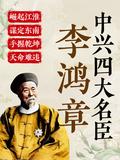 Li Hongzhang, One of the Four Famous Ministers of ZTE
2Reads8.1Score—Shelves
Li Hongzhang, One of the Four Famous Ministers of ZTE
2Reads8.1Score—Shelves
 The History of Song Taizu That I Can't Bear to Read Carefully
2Reads7.8Score—Shelves
The History of Song Taizu That I Can't Bear to Read Carefully
2Reads7.8Score—Shelves
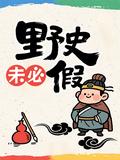 Unofficial History May Not Be Fake
47Reads8.7Score—Shelves
Unofficial History May Not Be Fake
47Reads8.7Score—Shelves
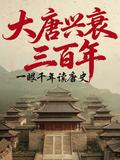 The Rise and Fall of the Tang Dynasty over Three Hundred Years: Reading the History of the Tang Dynasty over a Thousand Years at a Glance
11Reads8.1Score—Shelves
The Rise and Fall of the Tang Dynasty over Three Hundred Years: Reading the History of the Tang Dynasty over a Thousand Years at a Glance
11Reads8.1Score—Shelves
 Records of Emperor Wu of the Qing Dynasty
1Reads7.8Score—Shelves
Records of Emperor Wu of the Qing Dynasty
1Reads7.8Score—Shelves
 Romance of the Thirteen Dynasties of the Qing Dynasty
2Reads8.1Score—Shelves
Romance of the Thirteen Dynasties of the Qing Dynasty
2Reads8.1Score—Shelves
 The Romance of Zeng Guofan
1Reads7.9Score—Shelves
The Romance of Zeng Guofan
1Reads7.9Score—Shelves
 Red Mansion Calligraphy for Writing New Books
9Reads—Score—Shelves
Red Mansion Calligraphy for Writing New Books
9Reads—Score—Shelves
 Dying Wish
174Reads5.8Score102Shelves
Dying Wish
174Reads5.8Score102Shelves
 Great Wisdom Qu Yuan Tianwen 172 Answers
4Reads5.8Score—Shelves
Great Wisdom Qu Yuan Tianwen 172 Answers
4Reads5.8Score—Shelves
 Xiannong Starts a Prairie Fire
2Reads5.8Score—Shelves
Xiannong Starts a Prairie Fire
2Reads5.8Score—Shelves
 Hengji Fengjie
12Reads5.8Score—Shelves
Hengji Fengjie
12Reads5.8Score—Shelves
 All Those Years When I Treated People with Diseases of Poverty
27Reads—Score—Shelves
All Those Years When I Treated People with Diseases of Poverty
27Reads—Score—Shelves
 A Foreign Country
66Reads—Score—Shelves
A Foreign Country
66Reads—Score—Shelves
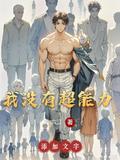 I Don't Have Super Powers
34Reads—Score—Shelves
I Don't Have Super Powers
34Reads—Score—Shelves
 Useless
17Reads—Score—Shelves
Useless
17Reads—Score—Shelves
 Essays on the Western Expedition
19Reads7.9Score—Shelves
Essays on the Western Expedition
19Reads7.9Score—Shelves
 Killing People and Killing People
9Reads—Score—Shelves
Killing People and Killing People
9Reads—Score—Shelves
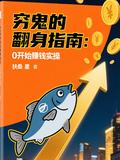 The Poor Man's Guide to Turning Back: Practical Operations to Start Making Money from 0
1.3kReads8.0Score389Shelves
The Poor Man's Guide to Turning Back: Practical Operations to Start Making Money from 0
1.3kReads8.0Score389Shelves
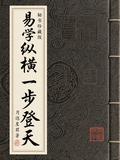 Yi Xue Ascends to the Sky in One Step
9.2kReads8.8Score2.1kShelves
Yi Xue Ascends to the Sky in One Step
9.2kReads8.8Score2.1kShelves
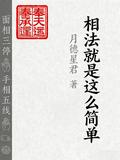 Phraseography Is That Simple
242Reads5.8Score—Shelves
Phraseography Is That Simple
242Reads5.8Score—Shelves
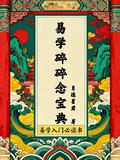 The Easy-To-Learn Guide
1.8kReads8.4Score675Shelves
The Easy-To-Learn Guide
1.8kReads8.4Score675Shelves
 Civil Law Inheritance Record
15Reads5.8Score—Shelves
Civil Law Inheritance Record
15Reads5.8Score—Shelves
 Live Worse Than a Pig! It Doesn't Consume as Much as a Mouse
2Reads8.6Score—Shelves
Live Worse Than a Pig! It Doesn't Consume as Much as a Mouse
2Reads8.6Score—Shelves
 Return to the Ruins (Life Growth)
—Reads8.5Score—Shelves
Return to the Ruins (Life Growth)
—Reads8.5Score—Shelves
 Mortal Coders Add SAP and XR to Conquer the World
154Reads5.8Score—Shelves
Mortal Coders Add SAP and XR to Conquer the World
154Reads5.8Score—Shelves
 Bondi
—Reads5.8Score—Shelves
Bondi
—Reads5.8Score—Shelves
 White Tiger Tongyi
18Reads8.6Score—Shelves
White Tiger Tongyi
18Reads8.6Score—Shelves
 The Battle of Changjin Lake: the Turning Point of the Korean War
542Reads9.4Score—Shelves
The Battle of Changjin Lake: the Turning Point of the Korean War
542Reads9.4Score—Shelves
 Chinese War History: Spring and Autumn and Warring States Period
89Reads9.2Score—Shelves
Chinese War History: Spring and Autumn and Warring States Period
89Reads9.2Score—Shelves
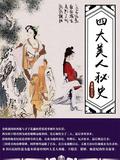 The Secret History of the Four Beauties
201Reads9.2Score—Shelves
The Secret History of the Four Beauties
201Reads9.2Score—Shelves
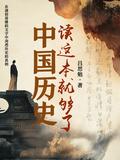 This Book on Chinese History Is Enough
56Reads8.3Score—Shelves
This Book on Chinese History Is Enough
56Reads8.3Score—Shelves
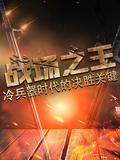 King of the Battlefield, the Key to Victory in the Cold Weapon Era
27Reads8.1Score—Shelves
King of the Battlefield, the Key to Victory in the Cold Weapon Era
27Reads8.1Score—Shelves
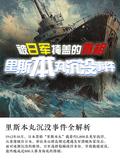 The Truth Covered up by the Japanese Army: the Sinking of the Lisbon Maru
114Reads8.7Score—Shelves
The Truth Covered up by the Japanese Army: the Sinking of the Lisbon Maru
114Reads8.7Score—Shelves
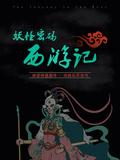 Monster Code: Journey to the West
209Reads9.3Score—Shelves
Monster Code: Journey to the West
209Reads9.3Score—Shelves
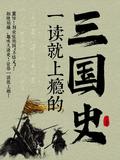 A History of the Three Kingdoms That Will Make You Addicted as Soon as You Read It
1.3kReads9.4Score133Shelves
A History of the Three Kingdoms That Will Make You Addicted as Soon as You Read It
1.3kReads9.4Score133Shelves
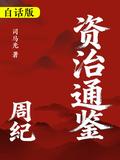 Zizhi Tongjian·zhou Ji (Vernacular Version)
5Reads8.6Score—Shelves
Zizhi Tongjian·zhou Ji (Vernacular Version)
5Reads8.6Score—Shelves
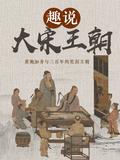 Interesting Facts About the Song Dynasty
2.7kReads9.4Score176Shelves
Interesting Facts About the Song Dynasty
2.7kReads9.4Score176Shelves
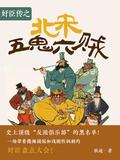 The Legend of the Traitor: Five Ghosts and Six Thieves of the Northern Song Dynasty
7Reads8.4Score—Shelves
The Legend of the Traitor: Five Ghosts and Six Thieves of the Northern Song Dynasty
7Reads8.4Score—Shelves
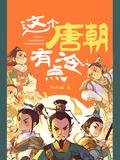 This Tang Dynasty Is a Bit Cold
33Reads9.2Score—Shelves
This Tang Dynasty Is a Bit Cold
33Reads9.2Score—Shelves
 Do I Have a Relationship? I Turned Around and Taught the Directors How to Perform Surgeries.
193Reads5.8Score—Shelves
Do I Have a Relationship? I Turned Around and Taught the Directors How to Perform Surgeries.
193Reads5.8Score—Shelves
 Five Tigers Pingnan
2Reads8.4Score—Shelves
Five Tigers Pingnan
2Reads8.4Score—Shelves
 Ping Wu Lu
—Reads7.6Score—Shelves
Ping Wu Lu
—Reads7.6Score—Shelves
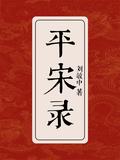 Records of Ping Song Dynasty
5Reads7.5Score—Shelves
Records of Ping Song Dynasty
5Reads7.5Score—Shelves
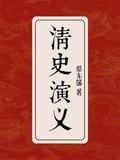 Romance of Qing History
2Reads8.3Score—Shelves
Romance of Qing History
2Reads8.3Score—Shelves
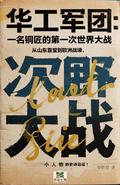 Chinese Workers' Regiment: a Coppersmith's World War I
997Reads9.5Score—Shelves
Chinese Workers' Regiment: a Coppersmith's World War I
997Reads9.5Score—Shelves
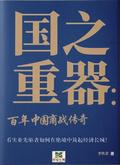 The Weapon of the Nation: a Century-Old Legend of China's Business War (Part 1 and 2)
307Reads9.3Score—Shelves
The Weapon of the Nation: a Century-Old Legend of China's Business War (Part 1 and 2)
307Reads9.3Score—Shelves
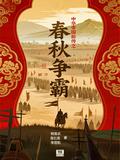 Empire of China Prequel: Spring and Autumn Struggle for Hegemony
54Reads9.3Score—Shelves
Empire of China Prequel: Spring and Autumn Struggle for Hegemony
54Reads9.3Score—Shelves