The writing style is engaging and the pace is tight. It is full of details about the Silk Road scenery and ancient trade. It is hard to read without closing your eyes. The plot becomes more and more intense as you go on.
I recommend all of them. I think the level of good reading is from the first to the last book. There are books from every dynasty, including the Republic of China, modern times, Song Dynasty, and Han Dynasty. They are all very well written and worth reading.
Reborn as the Tang Dynasty Prince Li Chengqian, he was careful not to break his leg. Under the pressure of his father, he quietly developed the productivity of the Tang Dynasty and built the Tang Dynasty on which the sun never sets step by step. Unify the world, and the earth is the Chinese earth.
The protagonist becomes the adopted son of an aristocratic family by accident, and becomes a commander of the Imperial Guard. Since then, he has risen through the ranks, slaughtered hundreds of officials, and built the strongest Imperial Guard in the Ming Dynasty.
When he ascended the throne at the age of sixteen, his grandmother lowered the curtain, surrounded by princes, and the Huns watched. He spent six years dormant, waiting for his grandmother to die before he started his game. Wei Qing was the sword he raised, Master Fu Yan was the one who laid the plan, and Zhang Tang was the blade he sharpened. The order of grace, the plot of Mayi, the decisive battle in Mobei - every step is calculated after three steps. But at the end of this game of chess, the son died, the queen died, and all the old officials in the dynasty died. He stood on the tower of Weiyang Palace, holding a black piece in his hand, and said: My chess game is over. If you like the machinations of emperors and machinations, this book is a must-read.
The four poisonous warriors appeared to help. The hidden dragon lies in the abyss, and the eight sons seize the throne. The winner becomes the emperor, the loser dies. There are Xiongnu in the north and various kingdoms in the west. The Three Kingdoms stood in a tripartite state and unified the world. This book is an imaginary version of history. The whole book is decisive in killing, profound in power, and does not use wisdom. Let you know how a disabled prince seizes the throne and becomes the wise ruler of the world.
An unsystematic essay about the late Qing Dynasty, the Chen brothers' road to national salvation, Liangjiang autonomy, the war against Japan, the annexation of Ryukyu, and participation in the French-Qing war.
Write a grand story of rebirth in troubled times. The pen and ink hides integrity, and the sword protects the common people. The more you read, the more you read. "The Epic of Mountains and Rivers" + "Complete Wisdom" + "Civil and Military Dragons". Two completely different life paths finally meet at the end of the mountains and rivers, and work together to rewrite the future of the times. # #Strategies #Outstanding writing style
This book, recently published, has a bit of a knife, Cheng Qian was reborn, and he was reborn at a node. In this life, he no longer competes for favor. Overnight, his temperament changed drastically. Li Shimin dreamed of the original history and wanted to ease the relationship between father and son. However, Li Tai interfered in the middle, making their misunderstanding deeper and deeper... The writing by Li Zhi in this book is particularly interesting.
The people around the protagonist are too powerful to pretend, and they are slapped in the face every day, instead of being slapped in the face. Su Dun took out a few pieces of paper from his sleeves, which were densely written with words. "I was in Hangzhou before. I read hundreds of books and found a few pieces of evidence. Not many, just nine." He spread the paper on the old cases next to him, "But I think the direction is right." Su Dun pointed to the first piece and said in a calm tone: "Look at the sentence in "Dayu Mo" that 'the human heart is in danger, the Dao is only small, but the essence is only one, and the Yunzhi Juezhong' is quoted in "Xunzi Jieye Pian", but Xunzi said it was quoted from the "Tao Jing", not the "Shang Shu"." "And 'Yunzhi Juezhong' should come from the Analects of Confucius. Yao said, "The calendar of heaven is in your hands, and if you are willing to hold on to it, the world will be poor, and the fortune of heaven will last forever." "The Analects of Confucius said, 'Shun also ordered Yu', but what Shun said to Yu in "Dayu Mo" is completely different from what Yao said to Shun." "The so-called sixteen words of Yu Ting are simply made up." He raised his head and glanced at everyone, waiting for them to be shocked, excited, or "enlightened" as written in later novels. However - Fan Xun raised his head and said disapprovingly: "Maybe Xunzi remembered it wrong?" Su Dun was stunned. Zhao Mingcheng nodded along, with a serious look on his face: "I saw before that "Xunzi·Junzi Pian" quoted "One person is happy, and the people rely on it", and said it was from the "Biography"." "Actually, this sentence comes from "Shangshu·Lu Xing"." "The source of this quotation must be misremembered by Xunzi." Su Xingchong also said: "Pre-Qin books are all bamboo slips, and it is not easy to read them. The scholars cited the scriptures and most likely wrote them from memory. Without reading and checking, the words may not be accurate." Su Dun's mouth twitched. Huh? Is there something wrong with your reaction? Too calm? Too rational? Shouldn't we exclaim, "Oh my God, this is fake" and then people will be angry and share the same hatred? Why are all of them so... Calm? However, it makes so much sense, I am speechless! Li Qingzhao remained silent, just lowered his head and read the original text copied by Su Dun carefully. She stared at those lines of words for a long time, then suddenly raised her head, with a hint of weirdness in her eyes: "The original text of "Xunzi: Uncovering" is: 'In the past, when Shun ruled the world, everything was accomplished without edicts. When he was in danger, his glory was full; when he raised a little, his glory was unknown.' Later, he quoted the "Tao Jing": "The danger of the human heart, the weakness of the Taoist heart, and the number of dangers can only be known by a wise gentleman." She looked at Su Dun with a strange light in her eyes - a look that doubted her IQ: "You don't think it's the same sentence just because 'the human heart is in danger, the Tao's heart is small' and 'the human heart is in danger, the Tao's heart is small' are very similar?" Su Dun was displeased and replied stiffly: "These two sentences are exactly the same, how come they are not plagiarism?" "But these two sentences have completely different meanings!" Li Qingzhao talked eloquently: "Xunzi first said that Shun was 'in danger' and 'nurturing the subtlety' - this means that Shun advocated using a single-minded heart to explore the subtle principles of things." "Then he quoted the "Tao Jing" that "the human heart is in danger, the Tao heart is subtle". He quoted the sentence from the "Tao Jing" in order to explain the 'danger' and 'micro' mentioned by Shun earlier." "The key point of this sentence is in the last sentence - 'The number of dangers is small, only a wise gentleman can know it'. It is talking about the 'ji' (sign) between 'danger' and 'micro', which only a 'wise gentleman' can detect." She paused, and spoke in a clear voice: "But the key point of the sixteen words in "Dayu Mo" is also at the end, 'Wei Jing Wei Yi, Yu Zhi Ju Zhong', which is to use the 'Jing Yi' skill to 'Zhi Zhong'." "The themes and philosophies of the two sentences are fundamentally different. One talks about detecting signs, and the other talks about adhering to the middle way." "Just because these eight characters are somewhat similar, do you think it is plagiarism?" Fan Wei continued: "Even if it is plagiarism, it may be that the Dao Jing copied Dayu Mo, and then was recorded as the Dao Jing. There are too many such things." He thought for a while and gave an example: "For example, the sentence 'Without indifference, one cannot achieve clear aspirations, without tranquility, one cannot reach far', which comes from "Huainanzi Zhushu Xun" of the Western Han Dynasty. More than three hundred years later, Zhuge Liang quoted it in "The Book of Commandments", and now everyone thinks it was Zhuge Liang who said it." "There is also 'the courage to be big but the heart to be small, the wisdom to be round but the action to be square', which also comes from "Huainanzi Zhushu Xun", Sun Simiao quoted it, and now everyone thinks it is Sun Simiao's words." Zhao Mingcheng added: "This is also the case in "Xunzi" itself. The section about three years of mourning in "Xunzi: Rites", from 'three years of mourning, what' to 'the same thing in ancient and modern times', the entire paragraph was included in the Book of Rites and became the 'Three Years Questions'." "Now when people quote these sentences, they definitely think they come from the "Book of Rites", not "Xunzi"." Su Xingchong also nodded: "As for what Yao said when he surrendered to Shun, it is different from what Shun said when he surrendered to Yu. Isn't it strange?" "Two generations of holy kings faced different world situations, so they had to explain themselves differently." Su Dun was confused by everyone's words. Didn't those books of later generations say that the "Sixteen-Character Heart Biography" was the core evidence for Yan Ruochu to falsify the "Gu Wen Shangshu"? Didn't it mean that as soon as this piece of evidence came out, the Neo-Confucianists were speechless? How come you can't even convince a few seven- and eight-year-old children here?
Historical Machiavellian writing is unsystematic and not brainless. The main theme is a battle of wits and politics, and the protagonist is decisive and decisive at every step. Those who like military and political struggle will fall into the trap, and those who are overflowing with the Holy Mother's Heart will automatically be detoured.
A novel about the Three Kingdoms, a good book. Ten men conquer the world every day. They also have to conquer the Western Regions, as well as the Snowy Region, Grassland, and Liaodong.
If you like war in the ancient cold weapon era, you can read it. The Chinese regard war as an art, and this book extensively describes this art. The biggest feature of this book emphasizes the importance of intelligence. The role of intelligence is often underplayed in many war-themed novels.
A good time-travel historical novel. The important thing is that women travel through time and realize their ideals step by step through their own abilities and knowledge. The writing is not trivial and the story is strong. I have been reading it for more than 20 years and I can read it. It is not a bad ending and it is worth reading!
Not exaggerated, very rational, and intellectually interesting. The real Five Hus and Sixteen Kingdoms are the most exciting, and the Five Hus chaos era of China is wonderful.
A modern company commander travels through the late Ming Dynasty, his IQ is online throughout, and the plot is exciting. It has been completed and can be watched with confidence.
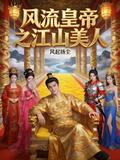 The Romantic Emperor's Beauties
5Reads—Score—Shelves
The Romantic Emperor's Beauties
5Reads—Score—Shelves
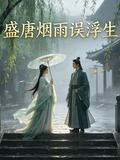 Wandering into the Prosperous Tang Dynasty, Drunken Life
5.8kReads5.7Score473Shelves
Wandering into the Prosperous Tang Dynasty, Drunken Life
5.8kReads5.7Score473Shelves
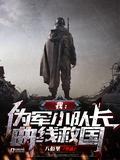 Me: the Leader of the Puppet Army Saved the Country Through Curves
59Reads5.8Score—Shelves
Me: the Leader of the Puppet Army Saved the Country Through Curves
59Reads5.8Score—Shelves
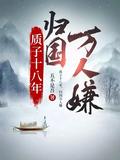 After Eighteen Years as a Proton, Thousands of People Hated Him When He Returned Home
660Reads7.6Score123Shelves
After Eighteen Years as a Proton, Thousands of People Hated Him When He Returned Home
660Reads7.6Score123Shelves
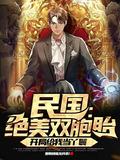 Republic of China: the Beautiful Twins Will Be My Maids at the Beginning
545Reads5.8Score—Shelves
Republic of China: the Beautiful Twins Will Be My Maids at the Beginning
545Reads5.8Score—Shelves
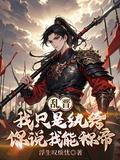 Luan Jin: I'm Just a Playboy, You Said I Can Be Emperor
2Reads5.8Score—Shelves
Luan Jin: I'm Just a Playboy, You Said I Can Be Emperor
2Reads5.8Score—Shelves
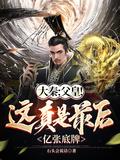 Da Qin: Father, This Is Really the Last 100 Million Trump Cards
8.7kReads8.6Score646Shelves
Da Qin: Father, This Is Really the Last 100 Million Trump Cards
8.7kReads8.6Score646Shelves
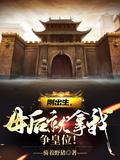 As Soon as I Was Born, My Mother Used Me to Fight for the Throne!
2.1kReads7.1Score104Shelves
As Soon as I Was Born, My Mother Used Me to Fight for the Throne!
2.1kReads7.1Score104Shelves
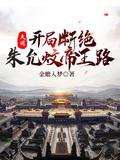 Ming Dynasty: Zhu Yunwen's Imperial Path Was Cut Off at the Beginning
18kReads8.5Score812Shelves
Ming Dynasty: Zhu Yunwen's Imperial Path Was Cut Off at the Beginning
18kReads8.5Score812Shelves
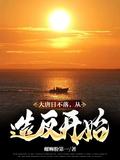 Datang: After Time Travel, I Will Just Start Playing
4.5kReads8.5Score193Shelves
Datang: After Time Travel, I Will Just Start Playing
4.5kReads8.5Score193Shelves
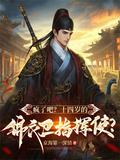 Ming Dynasty: the Strongest Royal Guards, Slaughtering Hundreds of Officials
58.6kReads8.9Score6.1kShelves
Ming Dynasty: the Strongest Royal Guards, Slaughtering Hundreds of Officials
58.6kReads8.9Score6.1kShelves
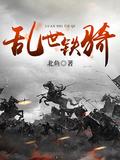 Troubled Times Iron Cavalry
14kReads8.6Score1.4kShelves
Troubled Times Iron Cavalry
14kReads8.6Score1.4kShelves
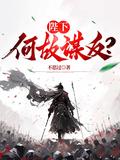 Your Majesty, Why Are You Plotting Rebellion?
—Reads5.8Score—Shelves
Your Majesty, Why Are You Plotting Rebellion?
—Reads5.8Score—Shelves
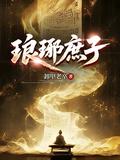 I Have Been Here Since Nine Days
25.7kReads8.9Score1.2kShelves
I Have Been Here Since Nine Days
25.7kReads8.9Score1.2kShelves
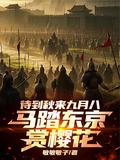 When Autumn Comes on September 8Th, We Will Go to Tokyo to Enjoy the Cherry Blossoms.
2.6kReads7.2Score165Shelves
When Autumn Comes on September 8Th, We Will Go to Tokyo to Enjoy the Cherry Blossoms.
2.6kReads7.2Score165Shelves
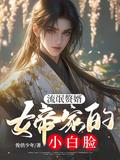 The Gangster Son-In-Law, the Pretty Boy of the Empress' Family
42.7kReads9.3Score4.8kShelves
The Gangster Son-In-Law, the Pretty Boy of the Empress' Family
42.7kReads9.3Score4.8kShelves
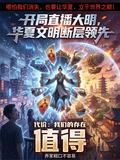 The Live Broadcast of the Ming Dynasty Started, and the Chinese Civilization Fault Took the Lead
740Reads5.8Score226Shelves
The Live Broadcast of the Ming Dynasty Started, and the Chinese Civilization Fault Took the Lead
740Reads5.8Score226Shelves
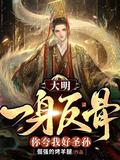 Daming: I Am a Rebellious Person, but You Praise Me as a Great Saint
5.8kReads8.4Score423Shelves
Daming: I Am a Rebellious Person, but You Praise Me as a Great Saint
5.8kReads8.4Score423Shelves
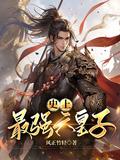 The Strongest Six Princes in History
21.3kReads8.8Score1.8kShelves
The Strongest Six Princes in History
21.3kReads8.8Score1.8kShelves
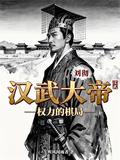 Emperor Wu of the Han Dynasty: the Chess Game of Power
1kReads7.4Score101Shelves
Emperor Wu of the Han Dynasty: the Chess Game of Power
1kReads7.4Score101Shelves
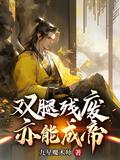 Even with Disabled Legs, One Can Become an Emperor
—Reads5.8Score—Shelves
Even with Disabled Legs, One Can Become an Emperor
—Reads5.8Score—Shelves
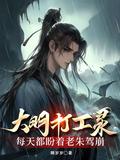 Job Record in Ming Dynasty: I Look Forward to Lao Zhu's Death Every Day
55.4kReads9.1Score4.4kShelves
Job Record in Ming Dynasty: I Look Forward to Lao Zhu's Death Every Day
55.4kReads9.1Score4.4kShelves
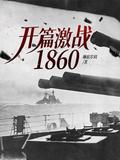 The Beginning of the Fierce Battle 1860
2.3kReads7.4Score148Shelves
The Beginning of the Fierce Battle 1860
2.3kReads7.4Score148Shelves
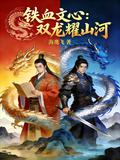 Iron-Blooded Literary Heart: Two Dragons Glow the Mountains and Rivers
130Reads7.5Score—Shelves
Iron-Blooded Literary Heart: Two Dragons Glow the Mountains and Rivers
130Reads7.5Score—Shelves
 Water Margin: the Soul of Zhu Biao Was Slaughtered When He Went Out.
207Reads5.8Score—Shelves
Water Margin: the Soul of Zhu Biao Was Slaughtered When He Went Out.
207Reads5.8Score—Shelves
 His Majesty! His Royal Highness Is Crazy Again!
36kReads8.4Score3.4kShelves
His Majesty! His Royal Highness Is Crazy Again!
36kReads8.4Score3.4kShelves
 The Consort in Black Clothes Rests on the Mountain and River
112Reads—Score—Shelves
The Consort in Black Clothes Rests on the Mountain and River
112Reads—Score—Shelves
 Samsara Anxi: I Died a Million Times in the Tang Dynasty
15Reads—Score—Shelves
Samsara Anxi: I Died a Million Times in the Tang Dynasty
15Reads—Score—Shelves
 The Bingzhou Wolf Cavalry Recorded in the Beacon Smoke at the End of the Han Dynasty
64Reads—Score—Shelves
The Bingzhou Wolf Cavalry Recorded in the Beacon Smoke at the End of the Han Dynasty
64Reads—Score—Shelves
 Another Possibility of the Northern Song Dynasty
4.9kReads9.1Score487Shelves
Another Possibility of the Northern Song Dynasty
4.9kReads9.1Score487Shelves
 Tianmu: My Live Broadcast Covers Ancient and Modern Times
712Reads5.8Score107Shelves
Tianmu: My Live Broadcast Covers Ancient and Modern Times
712Reads5.8Score107Shelves
 Father Su Dongpo's Wife Li Qingzhao and His Father Song Huizong
23.2kReads8.5Score2.9kShelves
Father Su Dongpo's Wife Li Qingzhao and His Father Song Huizong
23.2kReads8.5Score2.9kShelves
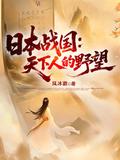 Japan's Warring States Period: the Ambition of the World
706Reads5.8Score102Shelves
Japan's Warring States Period: the Ambition of the World
706Reads5.8Score102Shelves
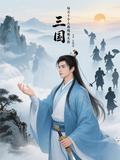 Three Kingdoms: with Ten People Every Day, I Slowly Become Invincible
186Reads6.9Score—Shelves
Three Kingdoms: with Ten People Every Day, I Slowly Become Invincible
186Reads6.9Score—Shelves
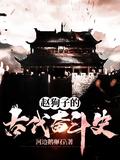 The Ancient History of Struggle of Zhao Gouzi
12.7kReads9.0Score1.2kShelves
The Ancient History of Struggle of Zhao Gouzi
12.7kReads9.0Score1.2kShelves
 Renovation of Xue Fucheng's Former Residence
—Reads8.6Score—Shelves
Renovation of Xue Fucheng's Former Residence
—Reads8.6Score—Shelves
 Go Back to Ancient Times and Expand Territory
99Reads—Score—Shelves
Go Back to Ancient Times and Expand Territory
99Reads—Score—Shelves
 The Singularity Arrives--2099
—Reads8.5Score—Shelves
The Singularity Arrives--2099
—Reads8.5Score—Shelves
 Acting King Zhao Zhang: Started by Provoking a Civil War
61Reads—Score—Shelves
Acting King Zhao Zhang: Started by Provoking a Civil War
61Reads—Score—Shelves
 Farmers Pension
2Reads8.4Score—Shelves
Farmers Pension
2Reads8.4Score—Shelves
 Kuang Fu Han Room, She Is Serious
10.9kReads9.4Score1.5kShelves
Kuang Fu Han Room, She Is Serious
10.9kReads9.4Score1.5kShelves
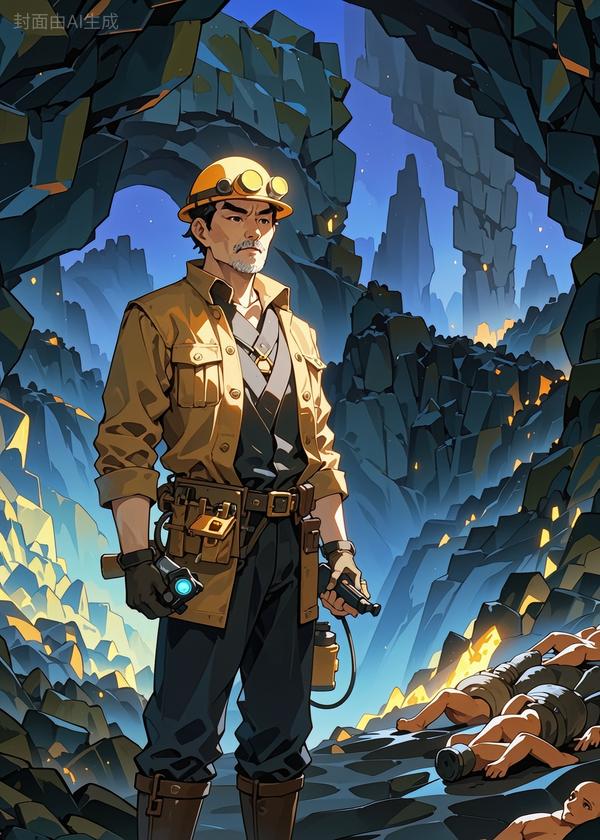 Geological Survey Engineer
—Reads8.6Score—Shelves
Geological Survey Engineer
—Reads8.6Score—Shelves
 In Order Not to Be Punished by the Nine Tribes, I Can Only Take the Initiative to Send
16.6kReads9.2Score1.4kShelves
In Order Not to Be Punished by the Nine Tribes, I Can Only Take the Initiative to Send
16.6kReads9.2Score1.4kShelves
 Late Ming Dynasty: from Sankou Botian to the Granary of the World
1.2kReads6.3Score119Shelves
Late Ming Dynasty: from Sankou Botian to the Granary of the World
1.2kReads6.3Score119Shelves
 My Iron-Blooded Career in the Northern Wei Dynasty
777Reads—Score—Shelves
My Iron-Blooded Career in the Northern Wei Dynasty
777Reads—Score—Shelves
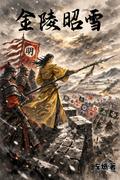 Jinling Zhaoxue
7Reads5.8Score—Shelves
Jinling Zhaoxue
7Reads5.8Score—Shelves
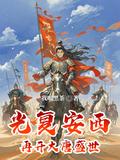 Tang Dynasty Anxi Army
10.1kReads9.0Score975Shelves
Tang Dynasty Anxi Army
10.1kReads9.0Score975Shelves
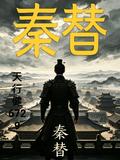 Qin Dynasty
3.4kReads9.2Score407Shelves
Qin Dynasty
3.4kReads9.2Score407Shelves
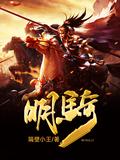 Mingqi
12.8kReads8.6Score1.3kShelves
Mingqi
12.8kReads8.6Score1.3kShelves
 From the Border Army to the First King of Daxia
709Reads—Score100Shelves
From the Border Army to the First King of Daxia
709Reads—Score100Shelves