Older people can't scan a health code during the epidemic, and they even appeared on CCTV news. Could it be that this group is really that embarrassing? Do they play online? Read the headlines? Read novels? What kind of novels do they like to read?
"Ye Bu Shu" is a special and elite scout in the border army of China's Ming Dynasty. Please take a look: hard-core reconnaissance duel, layer-by-layer reversal of spy battles, and involuntary affection, all in this legend of the Ming Dynasty special scouts! Exciting, suspenseful, and dangerous... It couldn't be more exciting... Big man, rise up
Dear readers: In the past few weeks, we have followed the writings of Mr. Fu Shuiheng and walked through five seemingly absurd but actually profound life journeys. When I closed the last page of "Financial Terminology Translator", I suddenly wanted to talk to you about what these five stories are about, and why they are worth your time to read. Let me tell you one by one. Let's talk about "Credit Card Split Personality" first. This is the most "shocking" of the five stories. If an AI system is suddenly activated on your credit card, it will use your own voice, your own logic, and your own tone to convince you to keep spending. Can you handle it? The protagonist Li Mingming is a rationalist who has been working in finance for eight years. What he is most proud of is "living within his means". But when Heika Li's "mirror system" began to convince him with his own ideas, all lines of defense collapsed - the eighteen yuan coffee turned into a bill of more than 40,000 yuan, and the 30,000 yuan watch turned into an irreversible split personality. The most chilling part of this story is not how much money he owed, but when Li Mingming tried his best to wake up, he found that his right hand was no longer obedient. The hand that swipes credit cards and the hand that pays debts are becoming two people. If you have ever regretted making a purchase, if you always feel that your "other self" is spending money on your behalf, this story will let you see that it is not that you are weak in willpower, but that you may have been accurately calculated. Then there's The Trouble with the Tax Wizard. This is probably the most "healing" of the five stories. Financial manager Ma Liqin has hated the tax bureau for half his life, but because of a dare game at the annual meeting, an eight-centimeter-tall golden tax elf - Tax Xiaotong - appeared on his shoulder. This little thing will cry, laugh, and get hurt. It will shrink into a ball when Ma Liqin scolds the tax bureau, and it will light up again when he understands the meaning of taxation. It translates every tax payment into something tangible and tangible: the flu shot your dad got today, the new batch of microscopes that arrived at your son's school, the water pump that was just replaced in your mom's old neighborhood. This story uses the warmest image to tell the coldest thing - paying taxes is not a cut of flesh, but a bill that you and everyone around you pay for the world. Many readers said that for the first time after reading the book, they felt that the word "taxation" was not so annoying. This is probably the magic of Mr. Fu Shuiheng. The third one is "Fighting the Laws of Economics". If you are starting a business, or reading other people's business plans, or even just heard of the words "window", "flywheel" and "broken window effect", this story will make you laugh to death and wake you up. Ding Kai is a 26-year-old shared power bank entrepreneur who can put five contradictory laws into the same PPT at the same time. He believed that the "broken window effect" is to smash the window first and then grow, and the "ratchet effect" is that users can't go back after using it once. Then he wrote Adam Smith's "invisible hand" into a piece of code and stuffed it into the backend pricing system. As a result, the system went crazy - at the same time, it increased the price by 40% and issued a 30% off coupon. While saying that the more expensive it was, more people would buy it, it lowered the price and begged users not to leave. Every abused economic concept is brought back to its original form in this story. This is not a mockery of entrepreneurs, but a reminder to everyone: Don't leave the power of interpretation to words you don't understand. Fourth, "Financial Freedom Virus". This is the easiest of the five stories for you to get into. Sun Xiaoxiao is an ordinary operator with a monthly salary of 6,000. She does everything exactly like the rest of us - fantasizing about "passive income" when she works overtime until the early morning, and silently reciting "I also want financial freedom" when she sees others showing off their island tours. Then things got out of hand. Starting from the cup of milk tea that Lao Shen invited her to drink before leaving her job, a secret "virus" spread along the trusting relationship among colleagues: some people spontaneously held financial management sharing sessions in the conference room during lunch break, some posted "Ten Years Countdown to Financial Freedom" all over their workstations, and some people's first reaction to their daughter who came to ask for a comic book was to calculate the proportion of this expense in the family's cash flow. The most frightening thing is that the infected people seem to be extremely sober, motivated and rational. This is not an anti-financial story, this is to tell you - when you fold all your life goals into a number, freedom is no longer freedom. The only person in the company who has not been "infected" is an old employee named Yu Shouzhuo. His secret is just one sentence: "The flow of money and time must be pushed back from people, not from expected rates of return." The last one is "Financial Terminology Translator". If your parents, your friends, or yourself have ever faced a contract, a bank text message, or a financial management manual and felt that "you know every word, but when you put it together, it's not human words," this story will give you an unprecedented power. Song Ci is an ordinary Internet practitioner. After being knocked unconscious by a bunch of jargon in the bank lobby, he accidentally obtained a plug-in that can "translate financial jargon into vernacular." Then the whole system began to loosen up - Lao Lu from the sales department interrupted the product manager at the product training meeting for the first time and translated a complex financial plan into a dialect-like explanation; the brand department began to equip all customer materials with a "human translation column"; the company management discovered that the original complaints from customers in those years about "not being able to understand" were not the customer's problem. The most touching thing about this story is not the plug-in itself, but the fact that it triggered the entire organization to reflect on "communication responsibility" - those who have the right to speak should also bear the responsibility of being understood. Five stories, five entrances, five aspects of life. They are all about the workplace, finance, consumption, taxation, and economics. But in essence, Mr. Fu Shuiheng writes about how each of us ordinary people can stay awake in this complex world, how not to be coerced, and how to still find our own words when bombarded by various terms and concepts. So dear friends, these five stories are now officially published on Tomato Books. Our own author, Mr. Fu Shuiheng, went to search and verify it himself. As a result, he found all the works smoothly, and they are waiting for everyone there. For those who like the absurd and humorous series of stories, please go to Tomato Book Store to search and read and get a sneak peek. Please look for the user number 26182811 when searching. This is our own Mr. Fu Shuiheng. Don't find the wrong door. Finally, I sincerely thank you all for your love and preference. In this fast-paced era of everything, are you willing to stop scrolling and read these five stories from beginning to end word by word? Accompany Li Mingming to experience the fear of split personality, accompany Ma Liqin to hear the tax elf's thoughts, accompany Ding Kai to admit his mistakes at the voting meeting, and accompany Sun Xiaoxiao to explore the dream of financial freedom. On the way, I found my way back and accompanied Song Ci to translate those heavenly financial terms into words that my mother could understand. This patience, this seriousness, and this respect for words will always be the charge created by our own author, Mr. Fu Shuiheng, and the strongest motivation and warmest source of strength for him to continue writing. Thank you. Real. I hope that after reading these stories, you will laugh, be surprised, and meditate, and with a slightly clearer self, continue to walk steadily and clearly in this lively and absurd world. See you in the next story.
Dear readers: In the past few weeks, we have followed the writings of Mr. Fu Shuiheng and walked through five seemingly absurd but actually profound life journeys. When I closed the last page of "Financial Terminology Translator", I suddenly wanted to talk to you about what these five stories are about, and why they are worth your time to read. Let me tell you one by one. Let's talk about "Credit Card Split Personality" first. This is the most "shocking" of the five stories. If an AI system is suddenly activated on your credit card, it will use your own voice, your own logic, and your own tone to convince you to keep spending. Can you handle it? The protagonist Li Mingming is a rationalist who has been working in finance for eight years. What he is most proud of is "living within his means". But when Heika Li's "mirror system" began to convince him with his own ideas, all lines of defense collapsed - the eighteen yuan coffee turned into a bill of more than 40,000 yuan, and the 30,000 yuan watch turned into an irreversible split personality. The most chilling part of this story is not how much money he owed, but when Li Mingming tried his best to wake up, he found that his right hand was no longer obedient. The hand that swipes credit cards and the hand that pays debts are becoming two people. If you have ever regretted making a purchase, if you always feel that your "other self" is spending money on your behalf, this story will let you see that it is not that you are weak in willpower, but that you may have been accurately calculated. Then there's The Trouble with the Tax Wizard. This is probably the most "healing" of the five stories. Financial manager Ma Liqin has hated the tax bureau for half his life, but because of a dare game at the annual meeting, an eight-centimeter-tall golden tax elf - Tax Xiaotong - appeared on his shoulder. This little thing will cry, laugh, and get hurt. It will shrink into a ball when Ma Liqin scolds the tax bureau, and it will light up again when he understands the meaning of taxation. It translates every tax payment into something tangible and tangible: the flu shot your dad got today, the new batch of microscopes that arrived at your son's school, the water pump that was just replaced in your mom's old neighborhood. This story uses the warmest image to tell the coldest thing - paying taxes is not a cut of flesh, but a bill that you and everyone around you pay for the world. Many readers said that for the first time after reading the book, they felt that the word "taxation" was not so annoying. This is probably the magic of Mr. Fu Shuiheng. The third one is "Fighting the Laws of Economics". If you are starting a business, or reading other people's business plans, or even just heard of the words "window", "flywheel" and "broken window effect", this story will make you laugh to death and wake you up. Ding Kai is a 26-year-old shared power bank entrepreneur who can put five contradictory laws into the same PPT at the same time. He believed that the "broken window effect" is to smash the window first and then grow, and the "ratchet effect" is that users can't go back after using it once. Then he wrote Adam Smith's "invisible hand" into a piece of code and stuffed it into the backend pricing system. As a result, the system went crazy - at the same time, it increased the price by 40% and issued a 30% off coupon. While saying that the more expensive it was, more people would buy it, it lowered the price and begged users not to leave. Every abused economic concept is brought back to its original form in this story. This is not a mockery of entrepreneurs, but a reminder to everyone: Don't leave the power of interpretation to words you don't understand. Fourth, "Financial Freedom Virus". This is the easiest of the five stories for you to get into. Sun Xiaoxiao is an ordinary operator with a monthly salary of 6,000. She does everything exactly like the rest of us - fantasizing about "passive income" when she works overtime until the early morning, and silently reciting "I also want financial freedom" when she sees others showing off their island tours. Then things got out of hand. Starting from the cup of milk tea that Lao Shen invited her to drink before leaving her job, a secret "virus" spread along the trusting relationship among colleagues: some people spontaneously held financial management sharing sessions in the conference room during lunch break, some posted "Ten Years Countdown to Financial Freedom" all over their workstations, and some people's first reaction to their daughter who came to ask for a comic book was to calculate the proportion of this expense in the family's cash flow. The most frightening thing is that the infected people seem to be extremely sober, motivated and rational. This is not an anti-financial story, this is to tell you - when you fold all your life goals into a number, freedom is no longer freedom. The only person in the company who has not been "infected" is an old employee named Yu Shouzhuo. His secret is just one sentence: "The flow of money and time must be pushed back from people, not from expected rates of return." The last one is "Financial Terminology Translator". If your parents, your friends, or yourself have ever faced a contract, a bank text message, or a financial management manual and felt that "you know every word, but when you put it together, it's not human words," this story will give you an unprecedented power. Song Ci is an ordinary Internet practitioner. After being knocked unconscious by a bunch of jargon in the bank lobby, he accidentally obtained a plug-in that can "translate financial jargon into vernacular." Then the whole system began to loosen up - Lao Lu from the sales department interrupted the product manager at the product training meeting for the first time and translated a complex financial plan into a dialect-like explanation; the brand department began to equip all customer materials with a "human translation column"; the company management discovered that the original complaints from customers in those years about "not being able to understand" were not the customer's problem. The most touching thing about this story is not the plug-in itself, but the fact that it triggered the entire organization to reflect on "communication responsibility" - those who have the right to speak should also bear the responsibility of being understood. Five stories, five entrances, five aspects of life. They are all about the workplace, finance, consumption, taxation, and economics. But in essence, Mr. Fu Shuiheng writes about how each of us ordinary people can stay awake in this complex world, how not to be coerced, and how to still find our own words when bombarded by various terms and concepts. So dear friends, these five stories have now been officially published on Tomato Books. Our own author, Mr. Fu Shuiheng, went to search and verify it himself. As a result, he found all the works smoothly, and they are waiting for everyone there. For those who like the absurd and humorous series of stories, please go to Tomato Book Store to search and read and get a sneak peek. Please look for the user number 26182811 when searching. This is our own Mr. Fu Shuiheng. Don't find the wrong door. Finally, I sincerely thank you all for your love and preference. In this fast-paced era of everything, are you willing to stop scrolling and read these five stories from beginning to end word by word? Accompany Li Mingming to experience the fear of split personality, accompany Ma Liqin to hear the tax elf's thoughts, accompany Ding Kai to admit his mistakes at the voting meeting, and accompany Sun Xiaoxiao to explore the dream of financial freedom. On the way, I found my way back and accompanied Song Ci to translate those heavenly financial terms into words that my mother could understand. This patience, this seriousness, and this respect for words will always be the charge created by our own author, Mr. Fu Shuiheng, and the strongest motivation and warmest source of strength for him to continue writing. Thank you. Real. I hope that after reading these stories, you will laugh, be surprised, and meditate, and with a slightly clearer self, continue to walk steadily and clearly in this lively and absurd world. See you in the next story.
The stories of the struggles of blind people described in "Master Jin's Different Life" have been personally experienced by our friends over 50 years old. The background of the times and the many characters in society are more likely to evoke our memories, and it makes people feel warm when reading them.
"Sister, people in the village say that you two have such a relationship, how can you marry your daughter to him again? This is too..." Dafeng shook his head and said to his sister with a sigh. "It's none of your business, my daughter is willing," Erfeng said with a smile...
It is a very realistic novel. The male protagonist has two children with another woman, and the female protagonist realizes that he already has a family outside the home. It was her daughter who told her about this. But even though the man's heart is no longer in this family, she is still unwilling to divorce... It writes the bitter history of most women who sacrifice their careers for the sake of their families. It is worth reading.
When people reach middle age, what they fear most is that their husbands will betray them, their children will become useless, and their parents will fall ill. This is exactly what happened to this 50-year-old woman.
Have you read these books? I have read it three times, and each one is a classic. The writing is so wonderful that I fell in love with it as soon as I opened it.
 Weiminguan Road
5.2kReads9.1Score380Shelves
Weiminguan Road
5.2kReads9.1Score380Shelves
 Rebirth of Water and Warm Life
3Reads5.8Score—Shelves
Rebirth of Water and Warm Life
3Reads5.8Score—Shelves
 I Gave My Wife 800,000 Yuan to Open a Store, and She Gave the 18-Year-Old Summer Job a Note of Perpetual Motion.
376Reads8.4Score—Shelves
I Gave My Wife 800,000 Yuan to Open a Store, and She Gave the 18-Year-Old Summer Job a Note of Perpetual Motion.
376Reads8.4Score—Shelves
 The Tough Female Village Chief and the Wonderful Little Miracle Doctor
1.1kReads—Score162Shelves
The Tough Female Village Chief and the Wonderful Little Miracle Doctor
1.1kReads—Score162Shelves
 Medicine Box Scent
111Reads5.8Score—Shelves
Medicine Box Scent
111Reads5.8Score—Shelves
 Murano Medical Fairy
6kReads—Score554Shelves
Murano Medical Fairy
6kReads—Score554Shelves
 Miracle Doctor: I Saved Two Girls, but They Insisted on Marrying Me
3.7kReads6.6Score563Shelves
Miracle Doctor: I Saved Two Girls, but They Insisted on Marrying Me
3.7kReads6.6Score563Shelves
 Ghost Doctor Little Shennong
2kReads9.0Score319Shelves
Ghost Doctor Little Shennong
2kReads9.0Score319Shelves
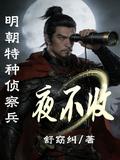 Ming Dynasty Special Reconnaissance Troops Did Not Collect at Night
739Reads5.8Score141Shelves
Ming Dynasty Special Reconnaissance Troops Did Not Collect at Night
739Reads5.8Score141Shelves
 A Family by the Yishui River
4.1kReads8.7Score454Shelves
A Family by the Yishui River
4.1kReads8.7Score454Shelves
 My Girlfriend Ran Away During the Wedding, and Xi Shi Angrily Threw on Her Wedding Dress.
54Reads5.8Score—Shelves
My Girlfriend Ran Away During the Wedding, and Xi Shi Angrily Threw on Her Wedding Dress.
54Reads5.8Score—Shelves
 Financial Term Translator.
2Reads8.5Score—Shelves
Financial Term Translator.
2Reads8.5Score—Shelves
 Leisurely Small Mountain Village, Happy Little Miracle Doctor
159Reads5.8Score—Shelves
Leisurely Small Mountain Village, Happy Little Miracle Doctor
159Reads5.8Score—Shelves
 Financial Freedom Virus.
1Reads8.6Score—Shelves
Financial Freedom Virus.
1Reads8.6Score—Shelves
 Consecrator? Village Guard? I Am the Happy Little Miracle Doctor
404Reads5.8Score103Shelves
Consecrator? Village Guard? I Am the Happy Little Miracle Doctor
404Reads5.8Score103Shelves
 The Laws of Economics Fight.
—Reads8.6Score—Shelves
The Laws of Economics Fight.
—Reads8.6Score—Shelves
 Erhu, Don't Be so Tigerish.
537Reads7.6Score—Shelves
Erhu, Don't Be so Tigerish.
537Reads7.6Score—Shelves
 Trouble with the Tax Wizard.
—Reads8.5Score—Shelves
Trouble with the Tax Wizard.
—Reads8.5Score—Shelves
 The Little Magic Stick in the Beauty Village, Cultivating Immortality and Progress 749
401Reads5.8Score—Shelves
The Little Magic Stick in the Beauty Village, Cultivating Immortality and Progress 749
401Reads5.8Score—Shelves
 Credit Card Split Personality.
—Reads8.4Score—Shelves
Credit Card Split Personality.
—Reads8.4Score—Shelves
 It's Not Easy for the Gambling King's Daughter to Catch the Abstinent Bodyguard, Kneeling Down and Coaxing Her
196Reads8.7Score—Shelves
It's Not Easy for the Gambling King's Daughter to Catch the Abstinent Bodyguard, Kneeling Down and Coaxing Her
196Reads8.7Score—Shelves
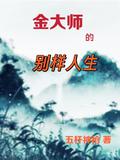 The Different Life of Master Jin
—Reads—Score—Shelves
The Different Life of Master Jin
—Reads—Score—Shelves
 Daoyuanxumeng
453Reads—Score—Shelves
Daoyuanxumeng
453Reads—Score—Shelves
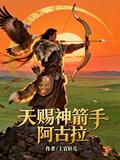 God-Given Archer Agula
—Reads5.8Score—Shelves
God-Given Archer Agula
—Reads5.8Score—Shelves
 Gu Dao Wentian
—Reads5.8Score—Shelves
Gu Dao Wentian
—Reads5.8Score—Shelves
 Era, Those Things in the Production Team
49Reads5.8Score—Shelves
Era, Those Things in the Production Team
49Reads5.8Score—Shelves
 Love in the Night: the Escape of Educated Youth
45.6kReads8.2Score2.6kShelves
Love in the Night: the Escape of Educated Youth
45.6kReads8.2Score2.6kShelves
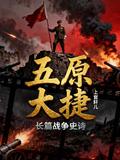 The Great Victory of Wuyuan
2Reads5.8Score—Shelves
The Great Victory of Wuyuan
2Reads5.8Score—Shelves
 Majiazhuang Love Story
13.2kReads8.7Score928Shelves
Majiazhuang Love Story
13.2kReads8.7Score928Shelves
 Beyond the Wall, Where to Go?
178Reads5.8Score—Shelves
Beyond the Wall, Where to Go?
178Reads5.8Score—Shelves
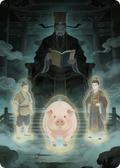 Folk Anecdotes: Reincarnation Reform
24Reads8.5Score—Shelves
Folk Anecdotes: Reincarnation Reform
24Reads8.5Score—Shelves
 A Housewife's Awakening
30.8kReads9.2Score2kShelves
A Housewife's Awakening
30.8kReads9.2Score2kShelves
 The Drama Continues and the Pearls Are Returned
209Reads5.8Score—Shelves
The Drama Continues and the Pearls Are Returned
209Reads5.8Score—Shelves
 Guanyi
32.7kReads7.0Score1.8kShelves
Guanyi
32.7kReads7.0Score1.8kShelves
 Men Are Like Iron
30.2kReads9.3Score3.4kShelves
Men Are Like Iron
30.2kReads9.3Score3.4kShelves
 Village Night
19.4kReads8.8Score1.9kShelves
Village Night
19.4kReads8.8Score1.9kShelves
 My Aunt Is Unemployed, so It Makes Sense for Her to Be My Secretary, Right?
1.2kReads5.6Score163Shelves
My Aunt Is Unemployed, so It Makes Sense for Her to Be My Secretary, Right?
1.2kReads5.6Score163Shelves
 It's Just Fifty
285Reads8.9Score—Shelves
It's Just Fifty
285Reads8.9Score—Shelves
 Middle Aged Man
214Reads7.1Score—Shelves
Middle Aged Man
214Reads7.1Score—Shelves
 After Rebirth, He Married a Cold Military Doctor from an Aristocratic Family with His Child.
2.2kReads8.9Score169Shelves
After Rebirth, He Married a Cold Military Doctor from an Aristocratic Family with His Child.
2.2kReads8.9Score169Shelves
 After Rebirth, She Became an Unattainable Woman
82Reads6.8Score—Shelves
After Rebirth, She Became an Unattainable Woman
82Reads6.8Score—Shelves
 A Pair of Red Hands
18.5kReads9.0Score1.8kShelves
A Pair of Red Hands
18.5kReads9.0Score1.8kShelves
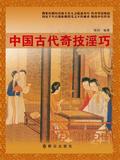 Ancient Chinese Magic Skills
18.3kReads9.5Score3kShelves
Ancient Chinese Magic Skills
18.3kReads9.5Score3kShelves
 Peach Blossom Red [Peach Blossom Tribulation]
10Reads—Score—Shelves
Peach Blossom Red [Peach Blossom Tribulation]
10Reads—Score—Shelves
 Fengce
73Reads8.9Score—Shelves
Fengce
73Reads8.9Score—Shelves
 A Big Man from Northeast China Lives in 403 of the Female Worker Dormitory
890Reads8.3Score—Shelves
A Big Man from Northeast China Lives in 403 of the Female Worker Dormitory
890Reads8.3Score—Shelves
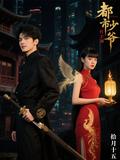 City Young Master Red Dust Sword
200Reads8.5Score—Shelves
City Young Master Red Dust Sword
200Reads8.5Score—Shelves
 Western Trade Route
333Reads5.8Score—Shelves
Western Trade Route
333Reads5.8Score—Shelves
 Restart Your Life with a Few White Moonlights
393Reads5.8Score—Shelves
Restart Your Life with a Few White Moonlights
393Reads5.8Score—Shelves
 A History of China That Is Addictive Once You Read It
38.2kReads9.5Score6.2kShelves
A History of China That Is Addictive Once You Read It
38.2kReads9.5Score6.2kShelves