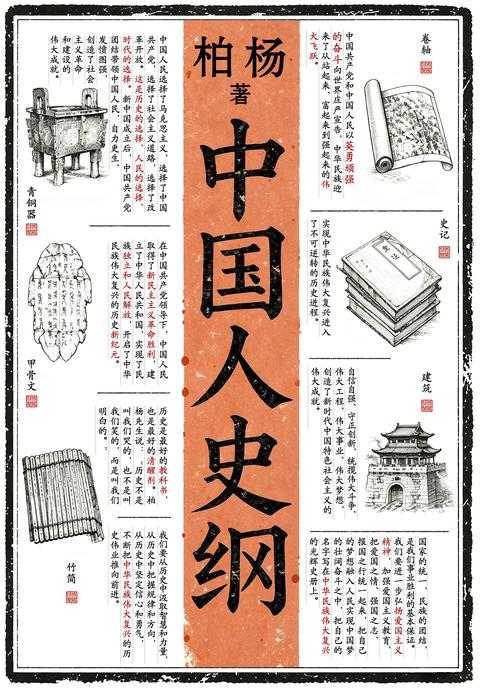
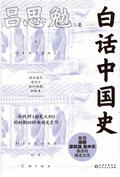
Bai Yang's monumental work of history, newly revised! A comprehensive history written for ordinary people, it has remained in print and popular for decades. Professor Zhang Fan of Peking University's Department of History was invited to write the preface for the new edition: "Even today, it remains unique among works on this subject."
Spanning from the age of ancient myths to the early 20th century, this book divides time into 100-year periods. With a writer's keen eye and a fighter's sincerity, Bai Yang has created a monumental history of five thousand years that looks beyond the rise and fall of dynasties to focus on the joys and sorrows of ordinary people.
"I sing no praises to emperors; I speak plainly for the people." This was Bai Yang's principle, and it is why this book has endured for decades and influenced generations.
He brings emperors and ministers down from their pedestals, calls them by name without deference, and judges their merits and failings by the standards of ordinary people.
He reshapes the passage of time into 100-year periods and includes a timeline of major world events in each chapter, helping readers understand Chinese history from an international perspective.
He warned of a "culture vat" and revealed the recurring "bottleneck crises" in the cycles of dynastic rule. These may not be rigorous academic concepts, but they are enough to give every reader pause. His distinctive historical insights remain thought-provoking to this day.
He pays attention to common people forgotten by history and celebrates the folk creativity behind Tang poetry, Song lyrics, Yuan drama, and Ming and Qing fiction.
Reading An Outline History of the Chinese People means reading the shared story of where we came from.
"We have only one country, and that is China. We take pride in being Chinese, not in belonging to a dynasty. When China was strong, as under the Han, Tang, or Qing dynasties, we took pride in being Chinese. When China was weak, as during the Northern and Southern Dynasties, the Five Dynasties, the Song, the Ming, or the final years of the Qing, we still took pride in being Chinese."
Understand the past, and you can step into the future with greater clarity.