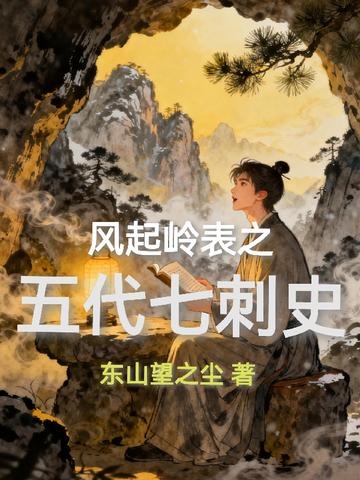
When the Wind Rises in Lingbiao: The Five Dynasties’ Seven Governors
风起岭表之五代七刺史
- Status
- Completed
- Length
- 117k Words
- Genre
- Historical
- Subgenre
- Historical & Ancient
- Updated
- 2mo ago
- Source
- Fanqie
Stats
Tags
Synopsis
More by this author
In booklists 95
Explore more →
Looking for Meticulously Researched Historical Fiction
They seem pretty hard to find. Let's give it a try.
I'm Out of Books to Read. Please Recommend Something!
Comedy + one heroine + superpowers or a System. Ideally the hero and heroine grew up together as childhood sweethearts, and it's sweet. Please!
Looking for Historical Novels. I Prefer Stories with a Strong Historical Focus
Looking for books like *I Possessed Someone in the Spring and Autumn Period and Became a Lord (A Little Lord of the Spring and Autumn Period)*. Does anyone know any realistic novels like *Life in the Middle Ages*, *A Little Lord of the Spring and Autumn Period*, and *Anxi Army Diary*, with a focus on history, politics, economics, war, and farming?
Looking for Great Books That Aren't All the Same, with High-Quality Writing

Ensemble-Cast Stories, Ensemble-Cast Stories!!!
I'm looking for books like The Silly Heir Apparent Lacks More Than Just Virtue. Something with a large cast in an ancient setting, about young people full of ambition and spirit. Ծ‸Ծ
My Favorite Historical Novel on Tomato Novel
I'm looking for books like Taking Another Name in Langya. Transmigration isn't a dinner party; it's a deadly game at every turn. The plot should be vivid and interesting, with side characters who are smart. The protagonist should slaughter their way through life-or-death situations. It should be historically accurate, with a natural romance.
The Best Historical Novels From Every Dynasty
Preferably a book rated above 9.
Looking for Novels Set During the Five Dynasties and Ten Kingdoms, the Jin Dynasty, or the Northern and Southern Dynasties
I’ve read so many stories set in the Tang, Song, and Ming dynasties that I’m tired of them. I’d like to try some less common historical periods. Preferably completed. Please recommend some~~~
Deep, Thought-Provoking Stories That Feel Like Masterpieces
Something like *The Three-Body Problem*, for example.
Looking for Literary Fiction
I urgently need a book with excellent writing and something meaningful to say, the kind that can help improve your essay writing.
Looking for Gorgeous, High-Quality Novels with Beautiful Writing and Memorable Lines


New Authors, Let’s Review Each Other’s Work and Offer Advice. I Have No Books, So I Just Want to Take This One Everywhere
I'd like to read something like *The Fifteen Realms of Tiandu*.
Period Novels That Are as Realistic as Possible
I don't want a protagonist who goes head-to-head with everyone from the start. The story should develop realistically and stick as close to real life as possible.
What's Your Number-One Pick? It Has to Be an Ancient Romance
Looking for Superbly Written Historical Novels!
I've read The Chief Ministers, A Scholar of Superior Character, A First-Rank Official, A Generation's Military Advisor, The Son-in-Law, The Beauty of the Rivers and Mountains, The Unification of the Mountains and Rivers, I Picked Up Qin Shi Huang, The End of Song, New Song, and Joy of Life. Are there any similar novels with a highly intelligent protagonist who plans everything in advance?
Are There Any Authors Who Seriously and Responsibly Finish Their Stories? I Don't Care If They're Good or Bad!
Are There Any Good Historical Novels Set in Ancient China, with Excellent Writing and No Made-Up History?
Your Top Picks for Scheming Ancient-Era Romance
Looking for books similar to The Phoenix Consort, Nine Thousand Years Old.
The Pinnacle of Historical Fiction
I'm looking for the definitive masterpiece for each historical era, the one that no other work can match. For example, the Song dynasty's greatest work is *Song of the Southern Dynasty*. Are there similar books for other dynasties?
The Best of the Best in Historical Fiction
What’s the Most Popular Historical Novel on Tomato Novel?
I want something like Claiming the Surname Zhuge: Vast Heavens, Rebuild the Han Dynasty!
Historically Accurate, Without Making Things Up
Historical fiction has more room for worldbuilding, with vivid characters and no distortion of history. I want a satisfying read that covers dynasties, major and minor events, wars, and loyal civil and military officials, all presented in a historical setting.

Anyone Writing a New Story? We Can Review Each Other's Work.
The Best Historical Romance Novels You've Ever Read
Anyone who clicks in won't be disappointed. Leave your reading lists so we can recommend and share books with each other!
Reader comments 62
Google Translate
Most stories always focus on the Central Plains, and few people pay attention to the past hidden in the mountains and rivers. This book takes a unique approach, following the trajectory of an ancient family, and narrating the ups and downs of a land spanning several dynasties. Several generations of people have gone on and on, sticking to one place in troubled times, and repeatedly weighing and choosing in the changing situation. The writing is calm and restrained, and the unique local scenery and customs can be seen everywhere. The many characters have their own positions and destinations, and they are not weak foils. The road is long and the storm has not stopped. We are waiting for the next chapter to continue writing the chapters of the years that belong to this land in southern Xinjiang.
"Feng Qiling Biao: A History of the Seven Governors of the Five Dynasties" This is a historical group portrait with a rich heritage. It focuses on the Ning family, the powerful chieftain of Lingnan, and outlines a long history spanning hundreds of years in the Southern Chen, Sui and Tang Dynasties. The book portrays several heroes of the Ning family, including fierce generals guarding the country and expanding the wild lands, counselors commanding troops to conquer and manage the southern frontier, and civil servants entering the court and giving outspoken advice, both civil and military, showing the centuries-old splendor of a clan. The author is rooted in the historical facts of Anzhou Prefecture, depicts the blending and symbiosis of Han ancestors and Li officials, and salvages the dusty years of Lingnan. Different from the assembly line style of traveling through the Internet, this book is based on real local history, integrating the inheritance of aristocratic families, battlefield expeditions, and the development of mountains and seas. The writing style is simple and profound, and the layout is vast. Thousands of years have passed, and the wars and hatreds of the past have disappeared, but the spirit of the ancestors to seek strength in the sea and expand the country is vividly reflected on the paper. The whole book has both the texture of historical materials and literary appeal, slowly unfolding the magnificent historical picture of the vast land. Readers who prefer regional history and family epic themes can feel the unique spirit of the mountains and rivers of Lingnan here.
This is a high-quality historical novel with a strong ancient charm. It breaks away from the routine narrative of popular ancient dialects and is written in pure ancient prose. It fully demonstrates the author's solid literary heritage. It is an excellent work for immersing yourself in reading the troubled times of the Tang Dynasty. The most amazing thing is the pure ancient writing style in the book. The words are concise and elegant, the contrasts are neat, and the organization is well organized. The author is well versed in the rhythm and essence of ancient Chinese writing, and there is no redundant procrastination of vernacular. Every wording fits the literary style of the Tang Dynasty, and the rhetoric is elegant but not cumbersome, simple but not obscure. Whether it is the description of scenery, the presentation of the current situation, the depiction of moods, or the description of human feelings, they all adhere to the rhythm of ancient prose. Every word has its origin and every sentence has its structure, which shows the profound accumulation of ancient prose and the ability to control words. It is full of fragrance and long-lasting ancient charm when reading. In addition to the writing style, the text texture and narrative style of the work are even more unique. The author uses delicate and steady pen and ink to accurately grasp the background of the Tang Dynasty, and vividly highlights the chaotic atmosphere of turbulent mountains and rivers, separatist vassal towns, and ups and downs of officialdom. The text combines the weight of history with the delicacy of literature. A few strokes can outline the pattern of the times and the character of the characters. The details are exquisitely drawn and the atmosphere is full. Different from the popular expression of most popular historical novels, this book carries the story of troubled times in a pure ancient language, making the text itself the biggest attraction. The author abandons exaggeration and embellishment, and uses minimalist ancient writing style to write about complicated world affairs. The writing style is elegant and upright, and the charm is mellow. It has the rigor and weight of history books and the smart charm of literature. Reading the whole article is like reading the fragments of an ancient book, immersing yourself in the land of Lingbiao, and feeling the ups and downs of officialdom in troubled times and the vicissitudes of the times. The entire work relies on excellent writing skills to reshape the texture and height of ancient historical literature. With pure ancient writing, calm narrative rhythm, and a strong sense of historical atmosphere, it has both literary aesthetics and historical heritage. It is a high-quality historical work that is full of sincerity and has great literary charm. It is worth reading carefully and pondering over and over again.
Most authors always focus their writing on the heights of temples, and few focus on the joys and sorrows that have settled far away in the rivers and lakes. This book takes a different approach, with a multi-line narrative, following the fireworks in ordinary alleys, and detailing the morning and dusk of an old city through the four seasons. Several generations have passed down the fire from generation to generation, guarding a craft amidst the hustle and bustle, and constantly adapting and moving forward in the tide of the times. The brushstrokes are gentle and restrained, and the unique sounds and smells of the city can be seen everywhere. Many characters have their own origins and destinations, and they are not facial makeup backgrounds. The years are long and the story is unfinished. I look forward to the follow-up chapters and continue to write the ordinary legends that belong to this world of fireworks. Recommended for more readers to read
"Feng Qiling Biao: A History of the Seven Governors of the Five Dynasties" Many historical novels often focus on the disputes in the Central Plains. This work takes a different approach and focuses on the land of Lingnan during the Sui and Tang Dynasties. The novel takes the Ning chieftain family as the main line, connecting characters from several generations, from the Southern Chen Dynasty to the Sui and Tang Dynasties, and tells the story of the family's grand history of being in charge of governorship and opening up southern Xinjiang for generations. The book contains not only the grand plans of conquering Jiaozhi and reclaiming the wilderness, but also the political confrontations of court discussions and clan games. The author combines local historical materials to describe the unique regional features of the blending of Han people and local officials, and outlines the long history of the Baiyue ancestors as they strived to conquer the sea. The writing style is thick and simple, and the group portraits are three-dimensional. It breaks out of the traditional historical narrative framework and slowly reveals the dusty past events of Lingnan for thousands of years, giving readers a unique historical reading experience.
"Feng Qiling Biao: A History of Seven Governors in the Five Dynasties" breaks away from the routine of assembly-line online articles, takes root in the real history of the Ning family chiefs in Lingnan, and unfolds the ups and downs of the Lingnan family in the Sui, Tang and Five Dynasties over the past century. It not only contains the passionate ambitions of the children of aristocratic families to expand territories and guard the country, but also records the rich past of the integration and symbiosis between the Han ancestors and the Baiyue ethnic groups. The writing style is full of ancient charm and the pattern is broad. There are no floating golden fingers, using historical materials as the skeleton and human feelings as the flesh and blood, it outlines the changes in the mountains and rivers of Anzhou Prefecture across thousands of years. It is worth reading for readers who like serious historical group portraits and family epic themes.
This unique historical masterpiece focuses on Lingnan and reflects the changes of several dynasties through the rise and fall of aristocratic families. The classical Chinese narrative is unique and a bit obscure to read, but the descriptions are delicate and the characters are three-dimensional. It is suitable for calming down and reading slowly.
A real hardcore historical masterpiece! The five generations of governors of the Ning family in Lingnan are used as clues to connect the changes in the Sui and Tang Dynasties. Military generals fight, civil servants discuss politics, and national integration go hand in hand. The book is based on solid research and combines Qinzhou's local folk customs and village historical materials. The group portraits are vivid and the writing style is profound. It describes the century-old character of the frontier tycoons in a soul-stirring way. It is a must-read for history lovers!
A very excellent work that breaks the creative thinking of modern novels and has a unique narrative method. The novel uses a lot of classical Chinese. Although it is a bit obscure for me to read, this does not prevent it from being an excellent work.
It not only contains the political grievances and grievances inherited by a powerful family from generation to generation, but also has the folk customs passed down orally from the local countryside. It uses words to open a page of Lingnan that is often omitted in official history.