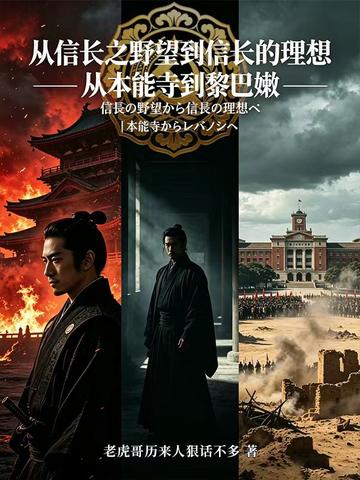
In the tenth year of the Tensho era, during the Honnoji Incident, Oda Nobunaga was trapped in a desperate situation. His close friend, Tsuneki Kiyoshi, an Onmyoji of the Tsuchimikado school serving under Nobunaga's son, Oda Nobutada, performed a forbidden technique, offering his own blood and essence as a sacrifice. Using the sexagenary date of a Mizunoe-Uma year as a soul anchor and Japan's dragon veins as a boundary lock, he sent Nobunaga drifting through a rift in time for four hundred years. Tragically, Nobunaga passed through the Mizunoe-Uma days of the Mizunoe-Uma years from 1642 to 1942, before finally falling on another Mizunoe-Uma day in 1969, the forty-fourth year of the Showa era, beside an abandoned nursing home near the former site of Honnoji Temple in Kyoto.
The moment he appeared, he heard an argument just like the one between Mori Ranmaru and Ogawada Tomokatsu all those years ago. Mistaking the voices for his old retainers, Nobunaga rebuked them, only to be talked back to by an unfamiliar young man. He suddenly realized he was in the unfamiliar Showa era, amid a secret gathering of the Communist Party.
The instant the warlord of a chaotic age looked up, he encountered Shigeya Nobuko, the cool and aloof heart of the organization. Across four hundred years of time and fate, it was love at first sight. The Sengoku-era warlord was swept into the tide of Japan in the 1960s and 70s. With the schemes of a thousand years and an air of ruthless command, he navigates the hidden currents of the age, all to protect the person fate has destined for him.




Historical events are almost always true.