The official histories record only 654 characters about him.
The final sentence reads, "He then drank poison and died."
At thirty-three, he died from poisoned wine given to him by his own people.
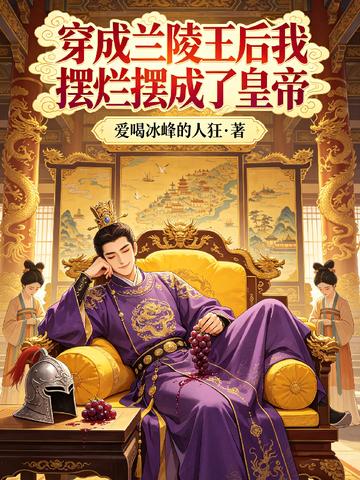
Zhang Hai, a PhD in history at Peking University, had spent seven years studying Northern Qi. He had revised his dissertation seven times, and his advisor's comment was always, "Revise it some more." He thought his life was already absurd enough, until he transmigrated into the body of Gao Changgong, the Prince of Lanling himself.
At the foot of Mount Mang, five hundred faced one hundred thousand. He donned his iron mask and charged into battle, then removed his helmet to reveal his face. One battle made him a legend. The soldiers sang the "Battle Song," and the people spread the news far and wide. The histories state it plainly: this was the beginning of his fame, and the start of the countdown to his death.
At court, the emperor asked him, "You went too deep into battle. Now that you've suffered a defeat, regret is of no use." The histories say he replied, "It was a family matter, close to my heart." Those four words earned him a cup of poisoned wine.
This time, he smiled. "Your Majesty, I am your subject. Protecting your realm on your behalf is my duty."
He'd narrowly passed the test.
If yielding meant death and fighting meant death, then why not... fight for it?
He opened businesses, built an intelligence network, developed gunpowder, and recruited a girl group. On the surface, he acted greedy and lecherous to tarnish his reputation and save his life. In secret, he treated the whole world as a chessboard.
He had considered changing his fate and becoming emperor. What he had never considered was this:
Before he had even begun to fight, a crowd of people had already pushed the throne right in front of him.
"Did they hand me the wrong script?"
The empress hid her smile behind her hand. "Your Majesty, living long enough to become emperor is a skill in its own right."
Compare with similar works: · More rigorous than "Tang Brick" and more relaxed than "New Song" · The depth of research is close to that of "Stealing the Ming", and the narrative rhythm is close to that of "The Son-in-law" · Belongs to the first echelon in the subdivided track of "academic time-travel writing" This is a highly completed and professional historical time travel novel. The author effectively integrates rigorous academic skills with the refreshing rhythm of online writing, and finds a relatively comfortable balance between "historical authenticity" and "literary readability" - not blindly seeking speed, but willing to stay in the details and delve deeply into the characters' hearts.
Good books from the Eastern Jin and Southern and Northern Dynasties periods