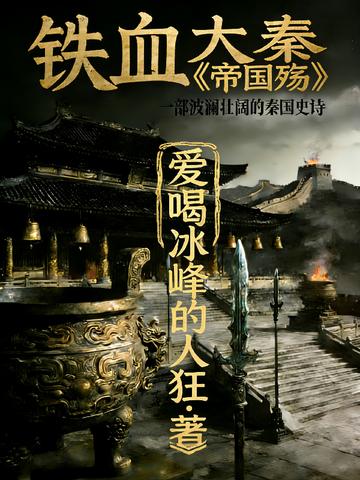
In 221 BC, King Ying Zheng of Qin vanquished the six states and became ruler of all under heaven. Yet the foundations of this mighty empire were already tottering: amid the fierce clash between Legalist statecraft and Confucian benevolence, the unfathomable whirlpool of power in Xianyang Palace, and the still-burning flames of restoration among the former subjects of the six states.
This novel chronicles the rise and fall of the Qin dynasty, with historical figures such as Shang Yang, Lü Buwei, Li Si, Han Fei, Zhao Gao, Fusu, Hu Hai, and Zhang Han as its pieces on the board. Across a million words, it unfolds as a sweeping epic of empire. The conflict between “ruling through Legalism” and the “Confucian way of kingship” forms the main thread, while “the corruption of human nature by power” runs beneath it. Between the lines of history, it searches for “what might have happened,” bringing warmth back to the cold pages of the historical record.
The First Emperor’s tyranny estranges the realm; Chen She raises the banner of rebellion, and heroes emerge from every quarter; a bloody battle at Julu, then Xianyang goes up in flames. When Liu Bang’s army enters Xianyang and Xiang Yu’s fire burns for three months without dying out, the empire that once “held power over all under heaven” is finally reduced to a long sigh in the pages of history.