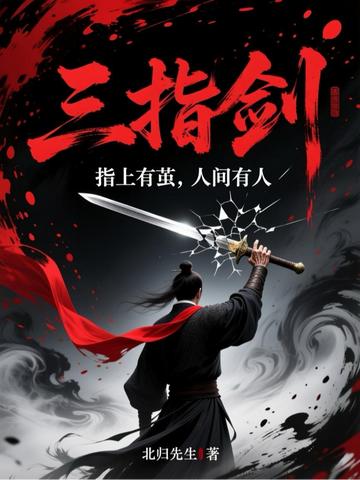
Baidi City, on the Song-Liao border. A vast military stronghold built of stone.
An old beggar sat in the city gate passage. His right arm was missing, his left eye was blind, and he had only three fingers left. He had sat there for ten years, like a stone in stagnant water.
Then one day, he tossed a tattered booklet to a menial worker chopping firewood.
“Ten thousand times a day. Follow the poses in here and strike at the air. Don’t ask why.”
The worker was named Yan Beigui. When he woke up, he was lying in the snow, with things that didn’t belong to this world in his mind: numbers, formulas, and principles he couldn’t name but somehow understood.
He knew no inner arts. He understood no techniques. He had no master and belonged to no sect.
But in three years, he turned “chopping firewood” into a sword art no one had ever seen before.
Three fingers on the sword. A seventy-three-degree swing. Ten thousand strikes a day.
He wasn’t chopping wood. He was cleaving through the laws that governed the world.
Then the old beggar said, “Go out and see the world.”
So he went.
He saw a scrap of cloth in Rouge Alley, embroidered in gold thread with a bird whose tail feathers forked in two.
He saw a massacre outside Jinling City, where thirty-seven people had been reduced to dried bones in a single night.
He saw the light of the full moon in a peach-blossom grove, and the two words “Gui Xu” appear on a jade pendant.
He saw a girl in a white dress, standing on a stone bridge and watching a carp float belly-up.
He saw a talkative swordsman in white invite him to a bowl of spring noodles with extra meat.
He saw a finger shatter a black-iron saber on the Sword Debate Platform.
He saw so many things.
But there was one thing he couldn’t figure out:
Why would anyone willingly take a blade for him?