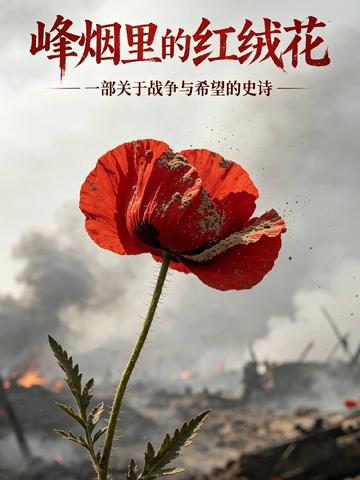
In 1938, Chunxing, an embroiderer in Liuxi Village in North China, thought her life would remain as peaceful as the magpies she embroidered on window lattices. Then Japanese troops entered the village. Her father was killed protecting a ledger containing anti-Japanese intelligence. He pressed the bloodstained ledger and half of a red velvet flower pattern into her arms, leaving her with only one instruction: “Take it to Shibapan and find the person wearing a blue headscarf.”
Seventeen-year-old Chunxing sets out to cross the enemy lines, carrying embroidery needles coated with anesthetic. She uses her skills to conceal intelligence: dandelions are a signal for a rendezvous, red velvet flowers warn of danger, and intertwined lotus vines mean it is safe. The peddler Lao Zhou teaches her how to tell friend from foe; the rhythm of his tobacco pipe tapping against her embroidery basket is their code. The puppet soldier Zhao Er steals her provisions, but when Japanese troops search them, he hides the ledger in his holster, gruffly saying, “I can’t stand seeing a girl bullied.”
She hides behind a grave mound and uses an embroidery needle to snap the pursuers’ shoelaces. At the base of a blockhouse, she slips intelligence into a puppet soldier’s sleeve with her stitches. In the green fields, the red velvet flowers she embroiders bloom one after another amid the smoke of gunfire, like the flowers of “Chinese courage,” as her father called them.
At last, standing at the mountain shrine at Shibapan, she meets Mr. Su, the man in the blue headscarf and one of her father’s former students. The corner of his scarf bears the other half of the red velvet flower. Only then does Chunxing understand: her father had split the flower in two, one half to protect their family, the other to serve the nation. And the countless flowers she embroidered had long since joined together in the flames spreading across the land.