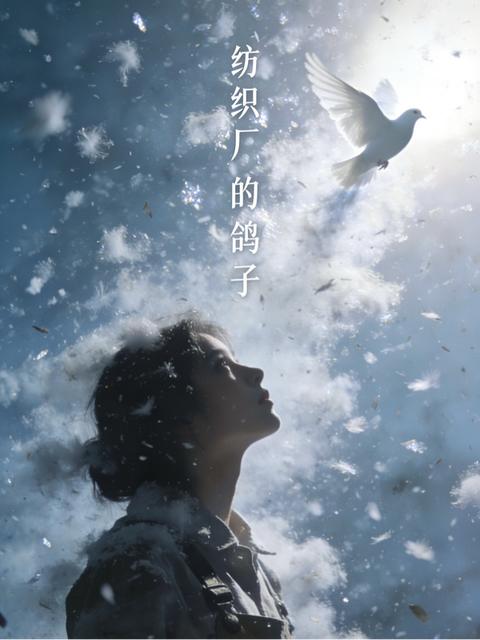
In the spring of 1968, textile worker Lin Mei finished the night shift and heard that the position at the radio factory had gone to her second younger brother. She said nothing. She just asked for the table by the window and began attending night school.
She was twenty-two that year, her eyelashes covered in cotton fluff like a dusting of snow.
Over the next ten years, her eldest younger brother, Lin Lou, flew high and then fell back down. Her second younger brother, Lin Tao, lived anxiously with the position he'd been given. Her second elder sister, Lin Qin, smiled graciously on her wedding day. When her eldest elder sister, Lin Mei, got married, she held a washbasin printed with a pair of flying pigeons, her eyes curved in a smile. Beside the spinning machines, Lin Mei stole glances at books. At night school, she drew pigeons. She drew them for ten years, until at last their wings grew broad.
A flock of pigeons lived beneath the factory roof. Every morning they flew out, and every evening they came back. Their wings were coated in dust, but they kept flying all the same. Lin Mei watched them for ten years. She watched the enamel basin by her mother's bed lose half its finish, and watched herself turn from twenty-two to thirty-two.
Later, she went to the provincial capital for further training. When she returned with new skills, she entered the radio factory where she should have worked all along. On the day she retired, she stood at the factory gate and looked back. The pigeons were still beneath the roof, cooing.
She smiled, then turned and walked away.
The pigeons never flew away, but she did.