Pangu cleaved the primordial chaos with his axe, separating the clear from the murky, raising the sky high and stretching the earth far and wide. But the power he spent creating the world ran out, and his divine body crumbled: his breath became wind and clouds, his voice thunder, his left eye the sun and his right eye the moon, his limbs the four poles and five sacred mountains, his blood the rivers, his sinews the paths beneath the earth, his flesh the soil, his hair and beard the stars, his skin and fur the plants, his teeth and bones metal and stone, his essence pearls and jade, and his sweat rain. Only a wisp of primordial clarity remained, sinking into the abyss at the western edge of the world. It drifted and sank for three thousand seven hundred years, waiting for its moment to come.
In that age, the world was unstable and the dome of heaven was collapsing. Mount Buzhou struggled alone to hold it up, riddled with cracks like a spiderweb. Turbid waves surged in the western reaches, and chaos congealed into an ink-black miasma that devoured yang energy and laid waste to all living things. In the east, the sea flooded inland, its furious waves crashing against the shore. A third of the land sank, all creatures wailed, and their souls became fireflies scattered across the ashen sky screen. The gods were trapped in the cracks, the dragons mired in the turbid waves, and the phoenixes consumed by wildfires. The first people hid in the gaps among Pangu’s bones, living on raw meat and blood, never knowing if they would survive the next day. The primordial world languished in chaos. Everyone said Pangu’s work was done and the world would soon return to chaos.
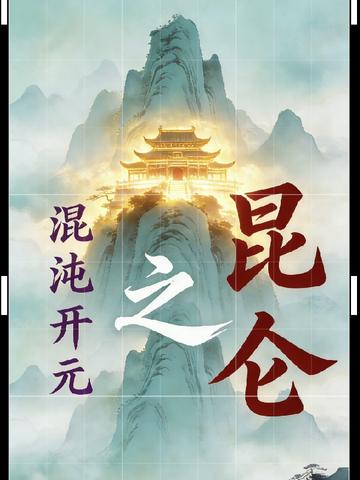
Then one day, a roar shook the universe from deep within the western abyss. Pangu’s primordial clarity burst forth from the darkness and gathered into a mountain pillar that pierced the heavens: Kunlun. Its emergence stabilized heaven and earth and subdued chaos. From then on, the backbone of China stood tall.