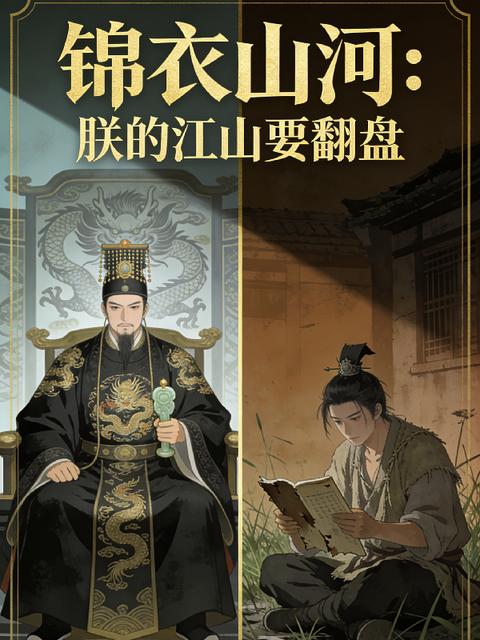
In the winter of the third year of Chongzhen, Zhu Cihong awoke from a terminal illness he should not have survived, only to find himself the most down-and-out prince in the Great Ming.
His maternal relatives had been executed, and he was trapped behind towering walls. His only way out was a fractured yet vivid memory of the fourteen years of death that lay ahead, lodged in his mind.
No System, no immortal arts, no meteorite falling from the sky.
Only a cold foreknowledge of history’s course, and an in-depth understanding of late Ming technology, finances, and human nature.
He emerged from behind the walls and began weaving his web at a tavern.
He used double-entry bookkeeping to expose corrupt officials’ ledgers, homemade chili powder to win over a company commander, and a flaw in a privately minted copper coin to lay a deadly trap.
Salt certificates about to lose value? I’ll short them in advance.
The grain transport route shifting to sea? I’ll hoard goods and drive up prices.
Red-barbarian cannons? I’ll dig up graves and build my own.
He opened taverns to control intelligence, founded banks to move money across the realm, and trained troops in firearms, providing disaster relief through work. Amid the bloodshed between the eunuch faction and the Donglin Party, amid the howls of refugees and cavalry, he climbed upward through the cracks in history.
Until one day, he stood before the charcoal brazier’s execution frame at the Meridian Gate, watching the once-mighty Nine-Thousand-Year-Old personally ignite the flames that would consume him.
Beside him, the woman who had followed him from the Qinhuai River tossed bloodstained banknotes into the fire one by one. Firelight reflected on her profile as she said softly:
“Master, it’s time to become emperor.”