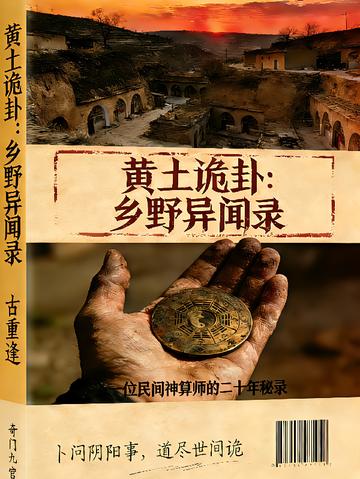
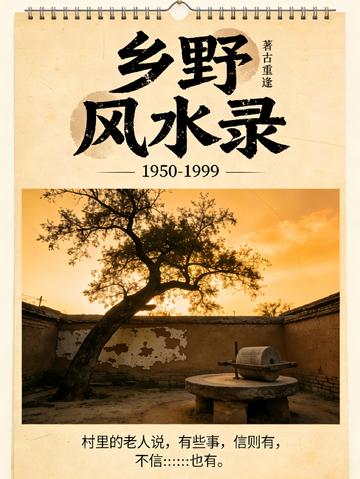
In 1978, a severe drought struck the Loess Plateau. Chen Sanshui, a sixteen-year-old shepherd boy, found three ancient objects in an abandoned house: an anonymous book of divination, a bronze compass, and a string of elm-wood abacus beads.
From then on, his neighbors called him “the little fortune-teller.”
Over the next twenty years, he witnessed nine eerie events on the loess hills: a headless wedding procession walking at midnight, a drought demon sealed at the bottom of a well for a hundred years, an old paper-cutting woman who stole people’s lifespans, an ancient grave that moved on its own... Behind every incident lay a tale of joy and sorrow buried by time.
Using the ancient art of Qimen Dunjia, he laid out charts and sought the truth at the edge of life and death. With seventy-two abacus beads, he cast divinations, walking the narrow divide between science and superstition.
This is no tale of cultivating immortality, but the true memories of a village fortune-teller: of old crafts on the verge of disappearing, of the twilight and dark nights of rural China from the 1970s through the 1990s, and of bygone days spent living and dying in the loess, where some things simply cannot be buried by the earth.




The history of the older generation is too real