“The immortal path is heartless, so I will enter it through love. The Way of Heaven is unjust, so I will reshape the world.”
She was once a healer who devoted herself to saving lives, but after rescuing a cultivator, she was drawn onto the path of immortality. With her worthless five-element spiritual roots, she is scorned by everyone in her sect. And in a cultivation world where the strong prey on the weak, her compassionate heart seems laughable.
From menial disciple to sect leader, from mortal woman in the human realm to an exalted figure revered across all three realms, she has crossed mountains of corpses and seas of blood, and witnessed the purest goodness and beauty. Asked how she attained the Great Dao, she answers only, “I save others, save myself, and save this mortal world.”
This is an epic tale of conviction and transformation, the way of medicine and the way of slaughter, personal love and the greater good. Watch as an ordinary woman uses a healer's compassion to relieve the world's suffering and a mortal's body to prove the supreme Dao, forging her own path to the heavens in a world of cultivation fraught with intrigue and danger.
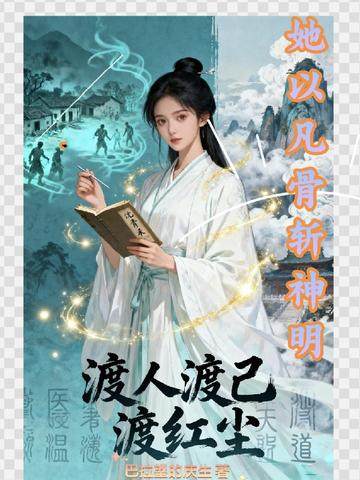


"Crossing the Dust" uses "the benevolence of a doctor" to break the traditional framework of cultivating immortality and build a refreshing world view. The heroine Shen Qinghe does not have heaven-defying spiritual roots, but relies on her medicinal spirit body and medical inheritance to navigate the thorny path of "using medicine to enter the Tao" in the law of the jungle. The author cleverly turns silver needles and herbs into weapons of war, so that the technique of saving lives can also be used to fend off enemies. The logic is self-consistent and full of imagination. What's even more rare is that the work maintains the warmth of humanity in the grand narrative. Shen Qinghe's growth from a kind-hearted medical girl to one who respects all three realms is not a move towards indifference and ruthlessness, but rather a determination to "transfer others and oneself" in the mountains of corpses and seas of blood. Xie Yunlan's transformation from the ruthless swordsmanship to the most passionate swordsmanship, and Lu Li's protection across three generations, both make the emotional line full and restrained. The work deeply explores the nature of "the way of heaven" - is it too supreme to forget emotion, or is it the ultimate emotion? This philosophical inquiry runs throughout, making cultivating immortality not only an increase in strength, but also a search for the meaning of life. "Duchen" not only retains the grandeur of the immortal warrior, but also injects modern humanistic care. It can be called a strong and warm epic of female immortality.