


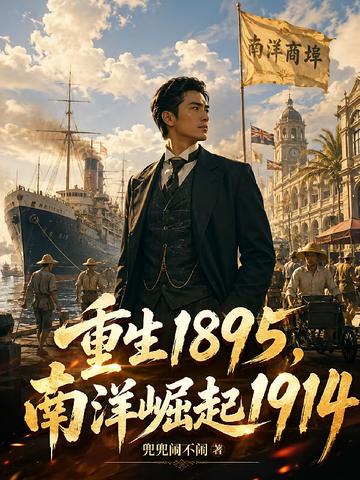
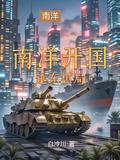
Reborn in 1895: Founding a New Nation in the South Seas
重生1895,我在南洋立新国
- Status
- Ongoing
- Length
- 3.0M Words
- Genre
- Historical
- Subgenre
- Historical & Ancient
- Updated
- 14h ago
- Source
- Fanqie
Stats
Tags
Synopsis
More by this author
In booklists 48
Explore more →

Founding a Nation Overseas!!! If Not, Do Not Recommend It
Looking for books like *System: Building a Nation Overseas from the Start*.
Looking for Historical Novels. I Prefer Stories with a Strong Historical Focus
Looking for books like *I Possessed Someone in the Spring and Autumn Period and Became a Lord (A Little Lord of the Spring and Autumn Period)*. Does anyone know any realistic novels like *Life in the Middle Ages*, *A Little Lord of the Spring and Autumn Period*, and *Anxi Army Diary*, with a focus on history, politics, economics, war, and farming?


Stories About Founding a Country on the Indochinese Peninsula
Looking for something like *Starting in the Savage Mountains, I Lead Bandits in Fighting the Japanese*. Any good resistance-war novels?
Military Novels About Founding an Independent Nation and Crushing Anyone Who Defies You

Transmigrating to the Late Qing Dynasty as an Imperialist Power, Preferably Anti-Qing
Can't Seem to Find Any More Tomato Novels About Founding Nations in Nanyang or Australia
I'm looking for books like *King of Nanyang: Starting by Integrating the Stragglers of the Expeditionary Force*. Can anyone recommend something? I can't find any novels to listen to at work!

Looking for Historical Novels Set During the Industrial Revolution, the Victorian Era, or World War I and World War II
Soldiers, spies, secret agents, aristocrats.

For Fans of Late Ming Historical Military Fiction: The Best of the Best
Looking for books like I Passed Myself Off as Chongzhen's Son, Cut Through the Qing Army, and Revived the Ming. The battle scenes feel realistic, the characters fit their historical counterparts, and the payoff is well paced. The protagonist struggles to survive against the odds and plans carefully at every step. No massive tech-tree development and no golden finger.
Looking for Books About Warlords in Republican-Era China or the Late Qing Dynasty, Especially Without a System
The story needs to make sense. Don’t recommend stories that don’t make sense or rely on a System. And absolutely no romance.



Rated 9.9, Worth Binge-Reading All Night!!!
Looking for stories similar to Reborn Wanwan: Now That We’re Reborn, Who’s Going to Spoil You? The plot is fresh, gripping, and just keeps getting better as you read!


Looking for a Novel Where the Protagonist Owns a Mountain and Builds Their Own Faction
I read this novel a while ago, but I've forgotten the title. The protagonist owns a mountain. He starts by buying rice, then builds up his own faction. Could any of you tell me what it's called?
Historical Military Fiction

Please, Novels About Fighting the Great Powers and Saving China in the Late Qing and Early Republic

Stories Where the Protagonist Founds His Own Country
The protagonist conquers territory and founds a nation.
Founding a Country Overseas and Developing Technology
Looking for books similar to *World War: The Empire Rises, and the Great Powers Tremble*.



High-Quality Nation-Building Novels Set in Australia, Southeast Asia, or South America
Looking for Novels About Founding Countries in Australia, India, and North or South America
The Protagonist Builds Power on the Frontier, Rebels, and Expands the Realm
A Man's Romance: Massive Warships and Huge Guns, Late Qing, World War I, or Republican-Era China Are All Fine!
War! War! War! World War II, the Cold War, or Modern Warfare. No Space Wars


War! I Want War! Massive Wars, and the Protagonist Has to Be a Monster
Late Qing, Republican Era, and World War I: Building an Army and Dominating a Region
Looking for books like *Warlord: Super Talent System*.
Any Books About Southeast Asian Nation-Building Around 1950? Please Recommend a Few

The Protagonist Builds a Faction to Support Himself, Instead of Being Worked to the Bone
Looking for books like The Apocalypse Arrives: The Goddess School Beauty Begs Me to Kill Her.
Reader comments 53
Google Translate
Rigorous, not brainless, not a novice. It is a very good deduction article, and it is a masterpiece in 🍅 (continue to maintain rigorous and reasonable deductions, and never kill everyone without brains). When will the author update me?
It's okay. It's worth a look. I personally think that the naval construction is a bit too fast. National development is based on talents. Nanyang was founded only ten years ago and has a population of several million. Most of them are immigrants from the lower class who went bankrupt in the Qing Dynasty. The literacy rate is not high. Where are the skilled workers and engineers? They are directly building 20,000-ton dreadnoughts, and the construction time is almost the same as the construction time of British dreadnoughts in history. In Southeast Asia, there is no need to have dreadnoughts so soon. Large cruisers are enough. I personally think it is better to wait for the British dreadnoughts to come out before building dreadnoughts. The expansion can be slower, and it is better to accumulate strength and expand territory during World War I. At that time, arms sales could be used in exchange for the British selling the colonies of the Netherlands and other countries in Southeast Asia to achieve the purpose of expansion.
Why can't production capacity be expanded? If we want to reap the development dividends of World War I, we should expand production capacity, build more branches, and develop several industrial bases along the way. We can't just develop in Pontianak. Nanyang now has such a large territory and many natural harbors. How about developing more industrial cities near mineral resources? Taking advantage of the large number of military orders, we can develop more industrial bases to expand the industrial scale. Orders have been queued for a year. Why not immediately expand production capacity and build more industrial bases? There were still several years left before the First World War, and the industrial demand in the future would be increasing. What would a monthly production of more than 100 tanks be enough for? When the intensity of the war increased in the latter part of the war, hundreds of tanks would have to be scrapped on the battlefield. Find a few more places with mineral resources across the country to develop several industrial bases. It feels very strange to me. There is obviously no shortage of minerals in Nanyang, but it seems that all the industries are located in Pontianak. So what is the use of such a large land without development and construction? There are so many famous port cities such as Perth, Palembang, Medan, Jakarta, Banyan Tree, Makassar, etc., And there are also many places suitable for industrial development. Why stick to Pontianak for development? If Pontianak was bombed in World War II, would the military industry be ruined? Industrialization has a scale effect. The larger the scale, the higher the production capacity and the lower the cost. Now it gives me the feeling that the whole country is trying to develop Pontianak, including military factories and shipyards. I have said it before. There are so many natural harbors and mineral resources in Nanyang. Is it okay to pick a few more suitable places to build a few shipbuilding bases? The Pontianak Shipyard in front still has to free up a few docks to build civilian ships. It is very strange. In such a large land now, if industries are not developed in places suitable for development, how can the economy improve? And I feel that I should take advantage of the opportunity to write about domestic construction, how many railways have been laid, how many ports have been built, how much the economy has improved, how much the population has increased, how industrial development is, how technology is, and how immigration is. Why do you have to write in detail about the tactics, ideas, reflections, and summaries of those people on the European battlefield? You just sell goods. , Just mention Europe occasionally. Now that we are reaping the dividends of World War I, we should write about the changes caused by the domestic economic growth through foreign exchange exports, how the country is developing, how the industrialization process is, and how it attracts immigrants. Now that Europe is at war, Nanyang should also be able to attract some European scientists to immigrate.
This book is one of Tomato's rare and rigorous historical deductions. It is completely unsystematic and completely based on the logic of the times. The core feature is a hard-core complete industrial farming line. From the beginning of the restoration of the country to defeating the colonists, to the establishment of light and heavy industries to the self-built fleet, every step of infrastructure and military development is in line with the real technological development context, and the details are solid and convincing. The diplomatic game between dealing with the Dutch colonists, going south to Japan, and the British and French powers was full of tension, and the long-term layout of rising through World War I was extremely attractive. From gathering the suffering Chinese workers, rebuilding Lanfang to dominating Nanyang, step by step, he endured and accumulated strength and then turned against the wind. The feelings of family and country and the accumulation of long-term management are particularly enjoyable to read.
After reading Chapter 87, the overall feeling is pretty good. The writing is smooth, the story is coherent, it is basically reasonable, and it is exciting. However, the pace is a bit slow, and the halo of the protagonist should be more eye-catching. Readers hope to see a refreshing article, in which the protagonist has a chivalrous heart, guides the country, and controls everything. If the author accumulates more experience, he should be able to write well, and the work will be popular.
Generally speaking, if you just watch it for fun and pass the time, it's okay, but you don't need to pay attention to the numbers in the article, because they are always inconsistent and too random. In addition, without the lousy things like the system, the protagonist's step-by-step (relatively speaking, more logical, although the speed is still a bit fast, but it is well-founded) development is also more exciting to watch. (This was posted when I saw Chapter 242) In addition to the large proportion of AI writing assistance in the article (you can read a very obvious sense of AI and AI writing in many places, but the plot should be the author's own ideas), the overall development speed is relatively fast. For this point, I think it is appropriate to treat this as the protagonist starting a game of Steel 4 or V3 as a player. After all, the rhythm of the players is like this. As for the indigenous issues mentioned in other reviews of this book, To be honest, the author was only there when they read it, and there was no subsequent content and the previous text had a strong sense of AI, which led to a bad feeling. In fact, this book has very little content specifically about indigenous people, and generally speaking, there is nothing to keep outsiders in mind, so I hope the previous comments will not mislead future generations. So if you are not very opposed to the AI style of writing and have higher requirements for content quality, this book is still suitable for reading and passing the time.
This novel is above average. The plot is okay and the historical knowledge is okay. The shortcoming is that it has the shadow of an urban novel, especially at the beginning. It lacks the sense of historical depth and rigor, but the more you write later, the better.
Seeing more than 200 chapters, this technology is progressing too fast. The more I look at it, the more confused I become. A lot of content is exchanged between left and right
It's a great novel, but it's a pity that so few people have read it that I can't even comment on it [face covering] The main body of the novel is still very rigorous. There are no cheats, and there is no such thing as using black technology backhand. The development of technology is really laid out in advance and climbed up step by step. All aspects are still to my liking [Chigua]
It's very good. It's well written. It's much better than having a system. It just lacks a country map. There is no rough map. I hope the author can reissue the map.