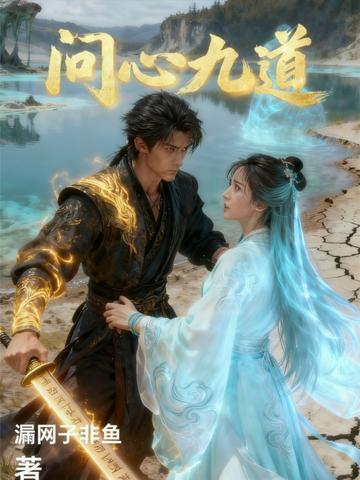
The Nine Paths of Asking the Heart
问心九道
- Status
- Completed
- Length
- 419k Words
- Genre
- Eastern Fantasy
- Subgenre
- Eastern Cultivation
- Updated
- 9mo ago
- Source
- Fanqie
Stats
Tags
Synopsis
More by this author
 Heart Crossing: Log of Recovering Dark Energy Across the Heavens
 From the Start, I Had a Generator: Becoming a Dad in the Apocalypse
 Walker in the Mist: See It, Then Pretend You Didn't
 A Lonely Boat on a Cold River: Twenty Years Adrift in the Sea of Officialdom
 Echoes of the Ninth: The Midnight Echo Archives
In booklists 18

New Writers and New Books: Share Them Here
Looking for books like Sealing Demons and Eradicating Evil.

Looking for a New, Really Great Novel About the War of Resistance and Spy Warfare, Rated at Least 9/10
Looking for books like Spy King: This Undercover Agent Gets Danger Warnings (Deep Sea Infiltration). A fantastic new resistance-era spy thriller, rated over 9 out of 10. Come check it out!
Besides the Way of the Common People and the Way of Ruthlessness, Are There Novels About Other Paths?
Recommend Me Some Books, Any Genre
As long as it doesn’t make the characters stupid, any genre is fine. A bit of good writing would be even better (●°u°●)
Let’s Recommend Books to Each Other, with Comments and Paragraph Reviews
I’m looking for books similar to Western Fantasy: Is This Really a Farming System? I’ll make time to review yours too. I’m new here.
New Releases! Fantasy With Wildly Imaginative Ideas
Looking for something similar to Starfall Forging God. A new book is out! If you enjoy imaginative fantasy, give it a try! It’s a lot of fun.
Ensemble Casts: A Group Comes Together, and in the End Some Die While Others Are Wounded
Tragic Xianxia! The Kind That Tears Your Heart to Pieces! Make It Hurt! Make It Hurt! Make It Hurt!
Angsty Cultivation Novels!!! Please!
Seek the Way, Pursue the Way, Follow the Way, Attain the Way
All beings under heaven seek the path to immortality, while I alone seek enlightenment. Enlightenment brings eternal life, yet the multitudes abandon the Dao to pursue immortality, mistaking the branch for the root. The immortal path promises freedom and ease, but what does it mean to be free? What does it mean to be at ease? There are no immortals in this world. If there were, they would be demons, for demons are unrestrained, free, and at ease.
The Protagonist Burns Themself Away to Protect the World, the More Fiery and Tragic the Better

Looking for Stories Where Everyone Gets Their Comeuppance ( ͡° ͜ʖ ͡°)✧
Are There Any Traditional Cultivation Texts? Start with Foundation Building
Looking for Angst: Ideally, the Heroine Dies
Please!
BL, Ensemble Cast, Cultivation ˃̣̣̥᷄⌓˂̣̣̥᷅
I want something like I Accidentally Got My Dragon-Ao Tian Childhood Friend Hooked on Me. Does anyone know a cultivation story with two male leads and an ensemble cast, where the whole protagonist group are outstanding talents, it has a happy ending, and they travel together to explore the world before becoming powerful figures across the different continents? My favorite...
Ancient-Era Inspirational Romance and Fantasy Novels, Let’s Read and Review Each Other’s Work
I want something like *Qiang Hai Romance*. Fantasy, survival and rebirth, inspiring romance, cultivation and adorable pets, transmigration with an imaginative twist.
Any Recommendations for Traditional Fantasy?
I’m looking for a classic story where the male lead starts out as a good-for-nothing, then breaks through and moves on to a new map, joining a sect or academy. There are all kinds of rankings, and most importantly, a continent-wide competition like the Three Thousand Provinces Tournament or the Hundred Dynasties War. Just the classic formula.
Looking for Cultivation Novels Where Everyone Is Reborn and Gets Their Comeuppance! Urgently Needed!!!
I'd like to read something like *After My Spirit Root Was Destroyed and I Was Buried, My Senior Brothers Wept Bitterly*. Are there any similar novels? I really want to read one!
Reader comments 50
Google Translate
"Asking the Nine Paths of the Heart" is a profound work that uses "heart fire" to illuminate the path of spiritual practice. The author does not fall into the mold of traditional fairy tales and interweaves the fates of five characters - Ming Xuance, Chan Ruoxi, Xiao Ji, Hua Yingluo, and Mo Yuan - into a magnificent picture of exploring one's true heart. The core of the story is not conquest by force, but the painful and resolute confirmation of each character's own path when they are on the verge of loss. The philosophy of "taking the true heart as the ruler" runs through the book. Under the grand settings of Eclipse, Dragon Palace, Return to Ruins, etc., It always asks: After seeing through all the rules and prices in the world, do people still have the courage to show their sword to fate? His writing is like a spark of fire and a lotus flower, bringing readers a touching expedition about persistence, growth and choice in the ups and downs of the sea of embers.
What really moved me about "The Nine Ways of Asking the Heart" is the "epic of the human heart" buried under the shell of a fairy tale. When Ming Xuance picks up the measuring ruler, when Ruoxi struggles between blood and true love, practice is no longer a stack of skills, but an unforgettable expedition to ask questions. The author uses delicate brushstrokes to outline a world where oriental style and philosophical speculation are intertwined. The mystery of one's life experience, the bond between Taoists, the mutual support of partners, and sincere emotions. The characters stick to their sincerity in the torrent of fate, which is moving. The hardest thing is never to have unparalleled supernatural powers, but to still have the courage to ask questions to heaven and earth after seeing through everything. The fire in the heart is like a lotus, burning the light of humanity. Five-star recommendation!
This work uses "asking the heart" as the ruler to measure a philosophical path that goes beyond the traditional framework of cultivating immortality. The author does not construct a simple confrontation between good and evil, but allows each character - whether it is the ruler-holding Ming Xuance, the torn Yu Ruoxi, or the oath-keeping Xiao Ji - to complete the most painful confirmation of their own path in front of the abyss of fate. When "the shadow of the eclipse" and "the abyss of the ruins" become inner mirror images, spiritual practice will sublimate from the art of moving mountains and filling seas to the courage to face the true heart. The story ultimately points to a profound proposition: real power comes from seeing through all the rules in the world and still daring to wield a sincere sword against fate with a burning heart. The stars in the sea of embers sink, only the fire in the heart is like a lotus, illuminating the way for all living beings to find the path. The author's writing style is like silk, and reading it is like looking at a landscape. At first glance, it is the form, but in every detail, it is the charm and character.
"Nine Ways of Asking the Heart" breaks out of the cool writing routine of "fighting monsters, upgrading and cheating all the way", and uses delicate writing and profound philosophical thinking to launch a shocking "expedition to the heart" for us. With "asking the heart" as the core, the author restores the essence of spiritual practice from the magical power of moving mountains and reclaiming seas to an inquiry into one's own soul. It explores not only cultivation and strength, but also the confrontation between free will and established destiny, and the dialogue between the created and the creator. If you are tired of the same fantasy routines and are eager to see real soul collision and spiritual growth in the world of cultivation, this work is definitely worth reading. It is not only a fairy novel, but also a "mirror of questioning minds" that reflects all living beings.
"Questioning the Nine Ways of the Heart" carries out a profound reflection on the 'meaning of existence' under the shell of a fairy. When the protagonist finally faces the so-called "Supreme Will" and discovers that everything originated from the "author's" pen, the level of the story suddenly rises. It explores not only cultivation and strength, but also the confrontation between free will and established destiny, and the dialogue between the created and the creator. The setting of "My heart is the source" breaks the traditional fantasy framework and allows each character to become the "writer" of his own story. This is not only cultivation of immortality, but also a philosophical expedition about 'why I am who I am'.
This "Nine Ways to Ask the Heart" is really eye-catching! Under the framework of traditional fantasy cultivation, it breaks away from the simple routine of fighting monsters and upgrading, and goes deep into the soul of the character, launching a shocking "Central Expedition". The moment Ming Xuance picked up the measuring ruler from the embers, the pain of Ling Ruoxi being torn between blood and true love, Xiao Ji's persistence in guarding the silent oath with a sword... Each character is burdened with the shackles of their own destiny. In the shadow of the eclipse, the conspiracy of the Dragon Palace, and the many tests of the abyss of the ruins, they complete the painful confirmation and persistence of their own path. What particularly moved me was the work's profound deconstruction of the "essence of practice" - the most difficult thing is never the magical power to move mountains and reclaim seas, but the courage to still use your sincerity as your ruler, ask questions to heaven and earth, and show your sword to fate after seeing through the rules and costs of the world. "The stars in the sea of embers are sinking, and the avenue is speechless; only the fire in the heart is like a lotus." This is not only an image in the book, but also the spiritual core throughout the book. The author uses delicate brushstrokes to outline a world that is both oriental in spirit and full of philosophical speculation. The characters' struggle and awakening in the torrent of fate allow readers to feel the brilliance and warmth of human nature in addition to the bloody battle. If you are tired of the same fantasy routines and are eager to see real soul collision and spiritual growth in the world of cultivation, this work is definitely worth reading! It makes us believe that the real "asking" is ultimately "asking the heart."
This book is like a spiritual journey, with each character finding his or her own path on the edge of fate. Ming Xuance's determination to lift the measuring ruler, Yue Ruoxi's struggle between blood and sincerity, Xiao Ji's silent protection, Hua Yingluo's power of rebirth from withering, and Mo Yuan's calculation of fate as meticulous and distant as the stars - they are not just people in the story, but more like a projection of a certain part of our hearts. Eclipse, Dragon Palace, and Guixu may seem like shells of immortal heroes, but inside they are real battlefields where everyone faces loss and choice. The sentence "After seeing all the rules and costs clearly, I still dare to take my heart as my ruler" makes people's eyes warm when reading it. This is not the kind of story that you'll forget once you're done. It's like a cup of slow-boiled tea, slightly bitter in the mouth but with a sweet aftertaste. If you have ever asked yourself "Why do I persist?" You may find a distant resonance in this book.
"Asking the Heart" is titled "Asking the Heart", which leads the fairy tale narrative from the battle of supernatural powers to the inquiry deep in the heart. The author weaves group portraits with delicate brushstrokes: Ming Xuance grasps the sky ruler to seek truth in the fireworks, Yue Ruoxi struggles between blood and emotion, Xiao Ji guards the oath with the sword of silence, Hua Yingluo regains a new life in the withering, and Mo Yuan peeks at the traces of fate in the astrolabe - each character is an "aspirant". Under the grand crisis of eclipse, conspiracy and return to ruins, what we really face is the confirmation of our own path. This is precisely the profoundness of the work: it is not satisfied with building a fantasy world, but puts the practice into "heart fire like lotus". The so-called "most difficult practice" is not to move mountains and fill seas, but to know that the rules of the world are cruel and still dare to ask questions about heaven, earth and fate with your true heart as your ruler. At a time when fairy-tale themes are becoming increasingly homogeneous, this inward exploration of "Tao" gives the story a rare philosophical weight. The sentence in the introduction, "The stars are sinking in the sea of smoke, the road is speechless, only the heart is burning like a lotus" is a perfect portrayal of the spirit of the whole book. It invites readers to accompany the characters through moments on the verge of loss, witness them tearing apart and persevering, and let the fire of their hearts illuminate their respective journeys. This is a spiritual epic that belongs to practitioners, and it is also a mirror that reflects the minds of all sentient beings. What really impressed me was that it described practice as "cultivation of the mind." There are no cheating monsters and upgrades along the way, only five vivid characters who question their true feelings again and again at the critical moment of fate. Ming Xuance's persistence, Mandarin Ruoxi's tenacity, Xiao Ji's silence... Everyone confirms the path they want to take in the midst of loss. The author's writing style is so spiritual that it is like a spark falling on my heart. As I read, I followed them ups and downs and made decisions together. This is not an ordinary fairy tale, but a sincere expedition about "why we fight". After reading it, I felt very calm, but also kindled with a fire.
Opening "The Nine Ways of Asking the Heart" is like stepping into a magnificent and profound inner practice. Every character in the author's works - the ruler-holding Ming Xuance, the struggling He Ruoxi, the oath-keeping Xiao Ji... Are not perfect heroes, but real souls making painful choices in the torrent of fate. While reading, I was often struck in my heart by those "persistence on the verge of loss", as if some of my own confusions were echoed in the book. "Use your true heart as your ruler and draw your sword to fate" - this is not only the skeleton of the story, but also the spiritual charm that runs through every page. The writing style has the elegance of Eastern immortals and the bones of martial arts, making it very graphic when read. If you also like to look for answers about "self" and "path" in the fantasy world, this book will be like a fire in your heart, quietly illuminating your reading time.
"Asking the Heart" takes "Asking the Heart" as its core and constructs a philosophical epic that transcends the traditional framework of cultivating immortality. The author focuses on the character's torture and perseverance of his own path in desperate situations - whether it is the measuring ruler picked up by Ming Xuance or the rebirth of Hua Yingluo in the withering, they are all profound interpretations of "the truth is the way". The work's diction is magnificent and its artistic conception is profound. Under the grand narrative of fate and rules, the fire of human nature is always shining like a lotus. It can be called a sincere work full of Eastern wisdom and life force. A very nice novel