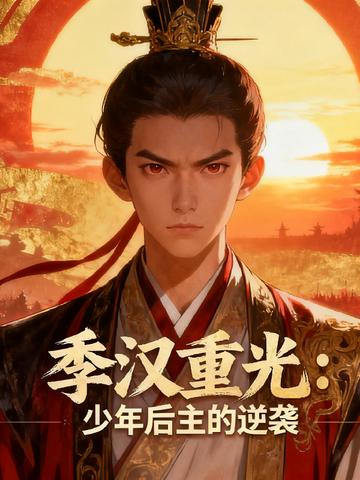
In the twenty-fourth year of Jian’an, at Fancheng, fifteen-year-old Liu Shan awoke from a raging fever with memories of a life more than forty years in the future filling his mind: the “so happy here, I’ve forgotten Shu” feast at the palace in Luoyang, the blood spilled when Jiang Wei’s attempt to restore the kingdom failed, and the flames that consumed Shu Han… He had been reborn at the pivotal moment that could change everything, carrying boundless regret with him.
At that time, Guan Yu had flooded the seven armies and shaken all of China, unaware that Lü Meng had already crossed the river in white robes. His father, Liu Bei, was about to launch the Battle of Yiling to avenge his defeat, laying the groundwork for the kingdom’s downfall. Chancellor Zhuge Liang had yet to set out from Qishan, and the wheels of Ji Han’s fate had not yet been locked in place by the dust of history.
This time, he would no longer be the Later Lord branded “incompetent.” Faced with the headstrong Guan Yu, he risked his life to speak out, hoping to avert the crisis in Jingzhou. Faced with his furious father, he pleaded and shed blood to stop the eastern expedition and preserve Shu Han’s strength. And faced with his devoted adopted father, he would no longer be a passive observer deep in the palace. Instead, he would learn to balance the court and secure the kingdom’s rear.
From the fires of war at Fancheng to the entrusting of the orphaned heir at Baidi, from the court in Chengdu to the battlefields of Qishan, young Liu Shan used his foresight to see coming dangers and wisdom beyond his time to resolve conflicts and build up national strength. He recruited worthy talent, reformed farming and sericulture, and curbed military power, proceeding one careful step at a time through the cracks in history. He would break free of the label of being “impossible to save,” and make the Han banners, now drifting in the wind, fly once more over the Central Plains.
This is the story of a ruler burdened with infamy who began his life anew as a boy and spent a lifetime proving that “so happy here, I’ve forgotten Shu” may have been nothing more than a game of patient restraint.
 Superpowered Crime Busters: Lost in the Shadows of Crime
 Haunted House Mysteries: From Vengeful Spirit to Shadow
 The 101st Time Working Overtime, I Found Love
 The Tribulation of Mystic Dust: The Stars' Evolution
 Eternal Night, Star River: My Heaven-Defying Comprehension
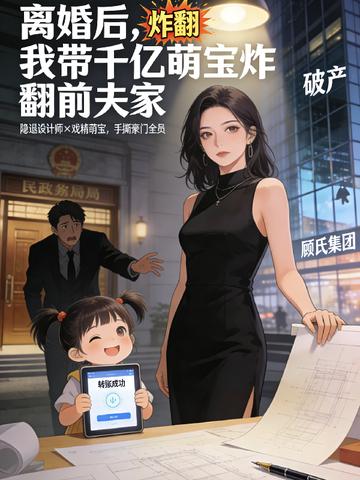 After the Divorce, I Took My Billion-Dollar Cuties and Turned My Ex-Husband's Home Upside Down
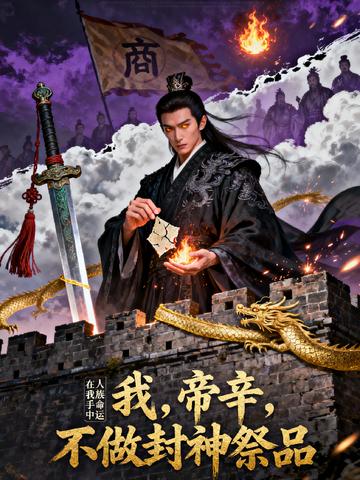 I, Di Xin, Refuse to Be a Sacrifice in the Investiture of the Gods