The Qing Dynasty's First Emperor: Shaking 1644 with a Modern Mind
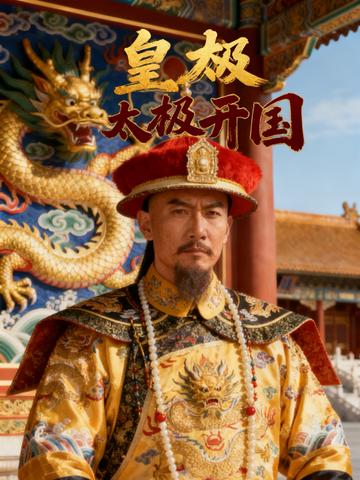
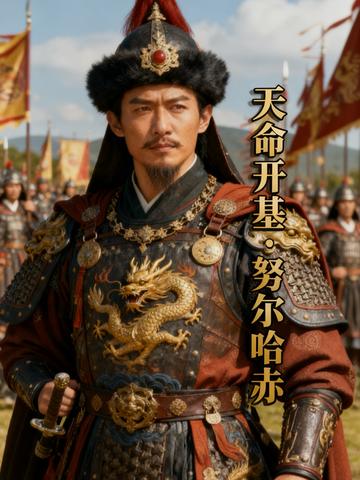
When Chen Ming, chief engineer of the Mozi quantum satellite, opens his eyes after an experimental accident, he discovers he has become Aisin Gioro Hong Taiji, the Fourth Beile of Later Jin.
The year is 1626, an era of close-quarters combat and primitive political maneuvering. Yet Hong Taiji's mind contains the entire technological tree of modern civilization.
His enemies think they face nothing more than the Eight Banners, skilled in archery and horsemanship.
They will soon see that the “Red Barbarian Cannons” in the Tianyou Army's ranks, optimized through fluid mechanics, have greater range and accuracy; that the widespread use of battlefield first aid and basic sanitation rules has caused soldier casualties to plummet; and that an intelligence network rebuilt according to game theory leaves the Ming Dynasty's Embroidered Uniform Guard and Guan Ning Iron Cavalry exposed, as if running naked in the dark.
His people think they follow nothing more than a wise khan.
They watch in fear and awe as their great khan applies basic chemistry to improve metallurgy and forge stronger blades and armor; uses statistics and logistics models to rebuild supply lines, allowing his army to wage war far from Shenyang for the first time. Outside Shengjing, he even secretly establishes the first “modern” workshop powered by water.
But this modern mind also brings an unprecedented ideological earthquake.
As the idea that “all people are equal” begins to challenge deeply rooted slavery, and scientific reasoning shakes the foundations of the “divine right of kings,” Hong Taiji realizes he is walking a