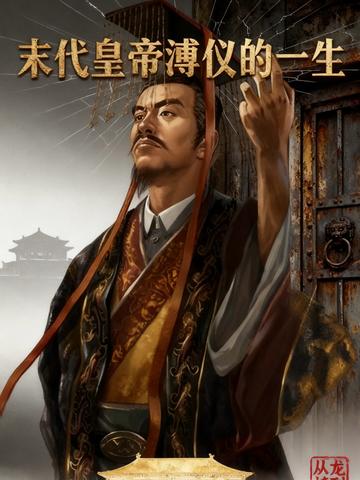
Aisin Gioro Puyi, the last emperor of China’s feudal dynasties, lived a life that mirrored the dramatic changes China underwent in the twentieth century. From ascending the throne at the age of three to becoming an ordinary citizen, his fate was tightly bound up with the nation’s upheavals.
A Prisoner in the Forbidden City (1908–1924)
In 1908, three-year-old Puyi was named emperor by Empress Dowager Cixi shortly before her death. His reign title was Xuantong. He grew up amid the strict palace rules of the Forbidden City, enjoying imperial privileges but having no freedom. In 1912, the Republic of China was founded, and he was forced to abdicate. Under the terms of the favorable treatment accorded to the Qing imperial family, he was still allowed to remain in the inner palace, becoming “the emperor within the Forbidden City.” Zhang Xun’s farcical attempt to restore the monarchy briefly put him back on the throne, but twelve days later he abdicated once again. In 1924, Feng Yuxiang launched a coup in Beijing, abolished the favorable treatment terms, and expelled him from the palace.
Years of Uncertainty in Tianjin and the Puppet State of Manchukuo (1925–1945)
The seven years Puyi spent living in Tianjin marked a turning point in his thinking. Amid the bustle and splendor of the foreign concessions, he encountered Western culture, but was also deeply influenced by ideas of restoring the monarchy. Japanese invaders saw value in his identity and, in 1932, installed him as the head of the puppet state of Manchukuo, first as its chief executive and later as its emperor. For fourteen years, he wore the imperial robes once more, but was merely a puppet in the hands of the Japanese Kwantung Army. His every word and action was monitored, and he had no real power.
Reform and a New Beginning (1945–1967)
At the end of World War II, Puyi was captured by the Soviet Red Army at Shenyang Airport, beginning five years as a prisoner of war. In 1950, he was extradited to China and sent for reform at the Fushun War Criminals Management Center. From sorting his own clothes to learning work skills, he gradually shed his imperial