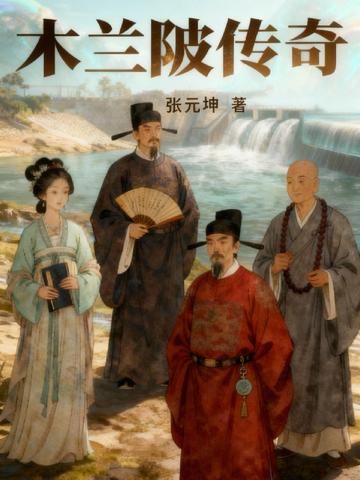
The Legend of Mulanpi
木兰陂传奇
- Status
- Completed
- Length
- 269k Words
- Genre
- Ancient Romance
- Subgenre
- Ancient Romance High-Concept
- Audience
- Female
- Updated
- 10mo ago
- Source
- Fanqie
Stats
2Reads
35Chapters
31Reads · all time
Tags
Synopsis
Reader comments
In booklists 2




Seeking, National Security, Spy Type
Want to watch something like "I'm a policeman, why do I have all these abnormal skills?" Book.
239Books8.2MViews2dUpdated





Technology, Military, Strategy, Economy, Culture,
The main focus is on military novels such as personal manufacturing of high-tech aircraft, etc.
165Books257.9kViews1moUpdated
More by this author
 I Am a Member of the Red Army, Requesting to Return to the Army
 Sailing Back to the Sea of People
 Legend of Zheng Qiao
 Bloody Sleepy Cow Mountain
 Little Fifth Brother: Putian Afanti
 Jiang Chunlin: the Last Iron Censor
 A Collection of Stories About Human Fireworks
 Zen Shadow
 A Broken Edge Becomes a Front: the Red Army's Wounded Soldiers Break Out of Desperate Situations
 Crazy Ax Breaks the Sky: the Wild History of Black Whirlwind
 Airborne Secretary Jia: the End of a Power Stealer
 Japanese Army Hunt: Female Students Hidden Deadly List
"The Legend of Mulanpi" is based on the floods in the Northern Song Dynasty, and uses mythological touches to outline a relay for the people that spans a thousand years. Qian Siniang, dressed in red, gets involved in danger, sells her dowry to build a fence, green bamboo drives away rocks, colorful butterflies lead springs and other magical plots, which not only add to the legend, but also complement the core of "people's hearts are miracles". From the Du Mulan leaf that Hu Gong entrusted him with in his dream to the nanmu ruler passed down from generation to generation, the tokens connect the four sages' perseverance in water control. The text is full of fireworks and a sense of mission, making Mulanpi not only a water conservancy project, but also a spiritual totem of the original intention of "serving the people". It is passionate and moving to read.
Using legend as a pen, we draw a scroll of water control for thousands of years. Zhang Yuankun's "Legend of Mulan Pi" breaks out of the traditional narrative framework and connects the magnificent history of Mulan Pi's construction with delicate brushstrokes. The book not only contains the arduous quest of craftsmen to cut stones and build mountains, but also the passionate efforts of women with lofty ideals and the common people to work together, blending the grandeur of water conservancy projects with the warmth of the humanistic spirit. The text combines the weight of historical materials with the agility of legend, making the wisdom and perseverance of the millennium ancient Pei vividly appear on the page. In the ups and downs of the plot, readers can not only touch the ingenuity of ancient water conservancy technology, but also feel the character of the Fujian ancestors who dared to be pioneers and united as one. This work is not only a retelling of a legend, but also an affectionate tribute to the Chinese people's spirit of controlling water and rejuvenating the country, and their endless life.
"The Legend of Mulan Pi" uses concise writing to outline the feats of Qian Siniang, a woman from the Northern Song Dynasty. The legendary details of using a hairpin to throw a hairpin into the ground to determine the site of the Pipi show the wisdom of ancient women in water conservancy projects that cannot be ignored. The work skillfully combines historical facts and folklore, and reveals the eternal proposition of symbiosis and co-prosperity between man and nature through the water conservancy miracle of Mulan Pi. The collection of folk imaginations such as "iron chains entangled with dragons" in the book makes scientific rationality and humanistic romance intertwined, allowing this thousand-year-old water conservancy project to surge into the waves of life again in the text. In the Northern Song Dynasty, floods were raging in Putian. Qian Siniang, a 16-year-old lady, brought her dowry and inherited her dream of immortality, and led her people to build a fence to protect the people. The fantasy of using a divine whip to drive away rocks and wine jars to generate money is intertwined with the hard-core water conservancy wisdom of using glutinous rice to solidify foundations and diverting irrigation from canals in Shenzhen, as well as the millennium relay of Lin Congshi sinking jade and Li Hong exchanging sand. The red coat reflects the turbid waves, and the nanmu ruler conveys the original intention. From the Yuanyou Dragon Boat Festival to the coronation of modern world heritage, the word "for the people" spans time and space. In the book, Putian Hongtuan and Mulan River Tide are full of regional fireworks. When reading, you can see the hardships of water control and touch the hot temperature of spiritual inheritance.