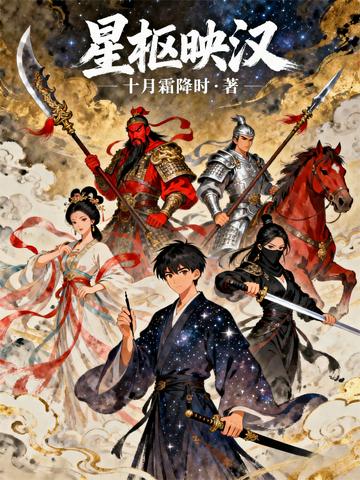
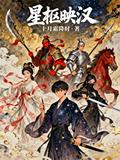
The Star Hub Shines on Han
星枢映汉
- Status
- Ongoing
- Length
- 484k Words
- Genre
- Historical
- Subgenre
- Historical High-Concept
- Updated
- 6mo ago
- Source
- Fanqie
Stats
Tags
Synopsis
In booklists 22
Nowadays, You Can't Even Find a Story Without Someone Being Reborn or Transmigrating Into a Book
The Pinnacle of Historical Fiction
Looking for books similar to *Tang Dynasty: Defying the Imperial Decree Is the Only Way to Get Stronger*. This book makes me cry every time I read it. I've read it five or six times, and I still cry. I just can't believe anything else is better. It's the strongest historical novel in my book! An 8.9 rating is way too low. I'd give it a 9.
Transmigrate into History, Rewrite It, and Change the Course of History!
The Three Kingdoms Is Huge on Tomato, Recommend Some Good Three Kingdoms Stories
Looking for books similar to *Galloping Through the Three Kingdoms*. Any kind of great Three Kingdoms story is welcome. If you're brave enough to write it, I'm brave enough to read it.
Any Masterpiece Three Kingdoms Novels on Tomato? Please Share!
Historical Fiction! The Characters Must Have Brains!!
Are there stories where a modern person transmigrates back to ancient times and uses their profession to make a difference? Like a doctor who transmigrates to the past and advances medicine within the limits of the era, or a modern special forces expert who transmigrates to ancient times and builds an army using modern ideas. Or just invent penicillin or something. From the start, they pull out an AK-47.
Looking for Historical Fiction with Smart Characters
The protagonist and the emperor are brothers, and the protagonist wields immense power. Everyday comedy.
Are There Any Novels Without a System? I’m Sick of Systems
It's always Systems, Systems, Systems. I'm sick of it. Can't anyone make it on their own? How many of the novels that become classics are System stories? Seriously.
Three Kingdoms, Feel-Good Story, Unification in the End
Reborn with a System.
Three Kingdoms Stories Rated 9.0 or Higher, with an Incredibly Handsome Protagonist and a Cavalry-Focused Army
Ideally set in Youzhou, Bingzhou, or other regions famous for horses. The protagonist should be highly skilled in martial arts. No crossover characters or summoning.
Please Recommend Three Kingdoms Stories About Building an Independent Power and Eventually Unifying the Land
In Three Kingdoms Novels, Strategists Are Always Dumbed Down to Make the Protagonist Look Smart. Disagree? Come Argue
No System
No System
Three Kingdoms Stories About a Faction Rising from Nothing
There must be a System and no female lead, with the protagonist building up a power base from an ordinary civilian. At least five million words, though there’s no word limit if it’s good.
No Rebirth! No Transmigration! No System!!! Please, Just Give Me a Story That Makes Sense
I am going through a reading slump. No reborn stories, transmigrate stories, Systems, or campus settings. I do not want something purely sweet. A little angst would be even better. The logic should make sense, and ideally it should be around 150,000 to 300,000 words. Any genre is fine.
Three Kingdoms Stories Where the Protagonist Joins Liu Bei Right from the Beginning
What Are Some Good Novels About the Three Kingdoms?
Looking for some good Three Kingdoms novels.
No Transmigration, Rebirth, or System
Are there any stories where a transmigrated woman can’t outmatch a truly well-bred young lady?
Any Books About Serving as a Strategist in the Three Kingdoms Era? No Summoning Historical Figures
Strategists should stick to being strategists. I don’t want them to be too good at fighting.
No System, No Transmigration, No Rebirth, No Harem
Looking for books like Will You Fall With Me, O God? No System, no transmigration, no rebirth, no harem.
Anything Where the Characters Don’t Transmigrate!!!
I'm Looking for a Decent and Good Book. I've Been Giving up on Writing Lately...
I sincerely pray for a book that doesn't involve time travel, rebirth, cheating, a certain skill that reaches the golden finger level, a book that doesn't have to be delicate, doesn't have to be clever, and doesn't have to be. The writing style should be good, the plot should be interesting, and it should be a book that opens up the imagination. It doesn't matter whether it's ancient or modern, short stories are best.
Reader comments 71
Google Translate
Among the flood of Three Kingdoms online articles, this book is simply a refreshing breath of fresh air. It does not use poorly written routines such as time travel, system, and invincible flow. Instead, it uses details and tactics to reconstruct a chaotic era in the late Han Dynasty that is full of gravity. The author's writing skills are very steady, and the group portraits are particularly brilliant. There is no absolute protagonist, every character has struggles and ambitions in troubled times. From the counselors who gaze at the stars to determine their destiny, to the military generals who break the formation, to the silent hidden forces, everyone is weaving their own destiny, making the whole story full of tension. The most surprising thing is the setting of "weak assistant Liu". It does not write Liu Bei as a saint destined to his destiny, nor does it write Shu Han as a cool script that cheats all the way. Instead, it focuses on how a group of ordinary people used their own methods to fight for the word "kuangfu" in the decadent Han Dynasty. This restrained and tragic narrative adds a heavy historical texture to the story. The foreshadowing is very subtle. The astrological undertones of the ancient luck of the green gold are intertwined with the battlefield of swords and swords. When reading, I can't help but guess the connection behind those details. The author perfectly blends the romantic feeling of "weaving destiny into a tapestry, and putting pen to paper into a map of stars" with the cruel reality of the troubled times in the late Han Dynasty. It has both the poetry of the literati's pen and the hard core of battlefield conquest. If you are tired of reading the same old Three Kingdoms novels and want to read a historical strategy book that truly speaks with details and logic, this book is worth your while to read carefully.
"Xingshu Yinghan" is definitely a breath of fresh air in the Three Kingdoms-themed online literature. It does not use the traversal, system and invincible routines of the bad street, but returns to the troubled times of the late Han Dynasty itself. The author uses solid details and group portraits to present us a flesh-and-blood world of the Three Kingdoms, full of intrigue and passion. The characters in the author's works are not blessed by golden fingers, but they are all vivid and three-dimensional. They struggle, make choices, and check each other in troubled times, just like the "chess players in troubled times" mentioned in the introduction, and every step touches the hearts of readers. The decisive plot advancement and undelayed rhythm make it impossible to stop once you start the game!
Just like writing compositions when I was a child, the teacher said that if my compositions can't move me, why should I move others? The same is true for this novel. The first touching point I wrote was Lu Bu's battle with Zhou Yan. I felt that I must be very good, but I had to explain the background, so I started from scratch. However, once I wrote the background, I wrote nearly 200 chapters. At this point, it can no longer be considered the background. I was halfway through writing Zhuojun when I realized that there was no plot for Zhang Fei, and Zhang Fei hadn't appeared yet. This was illogical, but I just couldn't stop. Finally, I suddenly realized that Fei Ge had been there a long time ago, but I hadn't been "allowed" to see him yet. I often jump back and forth between bursting with inspiration and running out of inspiration. I spend at least five hours every day perfecting the plot and adding logical relationships to make the combat power system not look so broken. I have high requirements for war scenes and interactions, and am determined to make every character vivid and every battle grand. After all, the protagonist can only grow up if he has experienced the shock and fear brought by absolute power, experienced the self-doubt and crushing guilt that penetrate deep into his bones in the face of a sophisticated conspiracy and cruel sacrifice that cannot be defeated even with all his strength, and the sense of insignificance and powerlessness that penetrates into his soul, right? No matter what, I will always finish it with high quality. This is my promise to myself. Finally, I bow and thank you all for your support😆
At a time when there are so many themes about the Three Kingdoms, this book can be called a breath of fresh air. There are no cliche tricks such as time travel and systems. The story of the late Han Dynasty is full of tension based on the imagination of "gazing at the stars to determine destiny" and the peach garden friendship that subverts cognition. The decisive protagonist and the vivid group portraits of troubled times. Five-star recommendation! ! ! !
Publishing level! At a time when there are so many online articles about the Three Kingdoms, "Xingshu Yinghan" is undoubtedly an eye-catching and sincere work. The author constructs a grand worldview that is both rooted in historical facts and full of romantic imagination. He perfectly interweaves the mysterious setting of stargazing and destiny with the vicissitudes of the troubled times of the late Han Dynasty, from court intrigues to street fireworks, from border beacons to astrological deductions, weaving a three-dimensional and majestic picture of the times. This world has both the weight of history and the dramatic tension of fate and struggle. Every setting is interlocking, self-consistent and persuasive. What is even more valuable is the author's rigorous logic. He did not rely on cool writing routines such as time travel and systems, but based on solid historical research, he made each character's choice consistent with his character and the logic of the times. Whether it is Cao Cao's doubts and fears before writing a poem, or Zhuge Liang's exhaustion behind "Leaving the Master", they are all portrayed in a sensible way, allowing the hero to step down from the altar and making history full of human warmth. The causal chain of major and minor events in the book is clear, and the details of the power struggle can withstand scrutiny, which is enough to show the author's ultimate pursuit of narrative logic. This is not only a novel of the Three Kingdoms, but also a "character chronicle of the heroic era" that is both literary and logical, worthy of careful reading by all lovers of the Three Kingdoms.
If you think this is just an ordinary Three Kingdoms travel or hegemony book, you are wrong. "The Legend of the Stars of the Three Kingdoms" is like a literary "Characters of the Heroic Era". It boldly sheds the aura of deification given to famous generals and advisers by historical novels, and instead uses a delicate and humanistic touch to illuminate the faces that have been mentioned in textbooks, and even fictional characters' struggles and choices in the torrent. The author has obviously done solid research, but the narrative is not obscure. He made Cao Cao show his doubts and fears before composing a poem in Hengshan, made Zhuge Liang suffer the unexplainable fatigue behind "Departure of the Master", and also made an ordinary soldier think about the meaning of war in the firelight of Red Cliff. The book not only contains the scenes of temples, but also the fireworks in the market and the wind and frost of the frontier fortress, which together weave a three-dimensional and majestic picture of the late Han Dynasty. Its core charm lies in "disenchantment" and "reconstruction". It tells us that heroes are also mortals, and behind their choices are complex human nature and the dilemma of the times. This gives those familiar plots new tension and resonance. For readers who want to feel the great atmosphere of the Three Kingdoms but are tired of simple facial expression narratives, this book is undoubtedly a breath of fresh air. It makes that bright and cruel history really have warmth and weight.
The late Han Dynasty described by the author is not a stage where heroes criticize Fang Qiu, but a Shura field where a group of "chess players" struggle to survive in troubled times. The mystery of stargazing to determine destiny, the passion of Zhenyue to break the formation, and the hidden and silent tactics are all woven into the sense of fate of "falling stars form a picture". There is no invincible protagonist, there is only a group of people who try their best to support the Han Dynasty in the shadow of swords and swords. This sense of reality is far more exciting than cheating all the way.
The different Three Brothers in Taoyuan, with its imaginative writing style, completely subverts our understanding of traditional classics and injects a new interpretation perspective into the story. It is indeed an excellent online novel worthy of five-star praise. Reaching the tenth chapter, Liu Bei was lying ill and worried about life and death.
The beginning starts with coldness, wounds and poisoning, and it quickly establishes Liu Bei's condition. He is not a lofty hero, but an ordinary person who may fall at any time, which is a special plus. The description of the environment is not just the background. The wilderness, dark clouds, howling wolves, and smoke from the cavalry are all in service of "the pursuit is approaching". You will unconsciously become nervous when reading. Physical pain, confusion of consciousness, and the need to move forward alternately. The rhythm is very steady, without any rush or delay. Especially short sentences like "Must go. Can't stop." Are very oppressive.
[Historical texture·Group portrait of the Three Kingdoms] Abandon the clichés such as the time-travel system and reshape the situation of the late Han Dynasty with solid writing skills. The foreshadowing is dense, the details are exquisite, the villain is decisive in killing, and the supporting lines are restrained and innovative. It can be called a calm and readable historical masterpiece of group portraits.