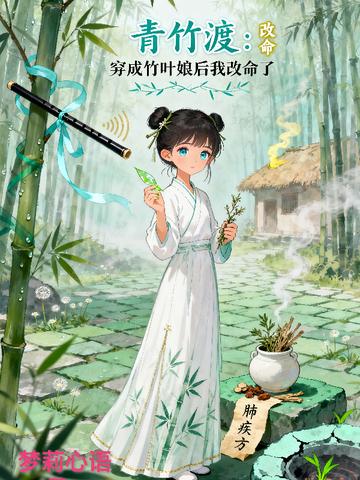
Everyone in Qingzhu Ferry knows Yun won't live to thirteen. Lung disease leaves her gasping after just a few steps, and a fortune-teller says she brings bad luck to her family. Her relatives are secretly preparing to dig up the kitchen stove to "drive out evil." No one knows that Yun's soul now belongs to Lin Wei, a traditional Chinese medicine doctor from the modern world.
She uses her professional knowledge to treat her illness while matching wits with her family's superstitions and dealing with a local bully's harassment. Every day feels like walking a tightrope. Then one day, she realizes someone keeps leaving fresh medicinal herbs beneath her window, and that the narrow path she often takes is always laid with gravel before it rains. It is the boy who secretly likes her.
The boy's devotion gives her courage, and her medical skills gradually change Qingzhu Ferry: she cures the villagers' minor ailments and exposes the lies behind their superstitions. When the day she was supposed to die passes, Yun is not only still alive and healthy, but also opens a pharmacy at the ferry crossing with the boy. The wind passes through the bamboo grove, carrying the scent of medicine and new love. This time, at last, fate is on her side.
The death of my childhood friend, 13-year-old Yunzi, was a tragedy in a poor era and a product of feudal superstition. This time travel article is used as a memorial. If you are interested, you can enter the novel to feel, comment and make suggestions ❤️ ❤️ ❤️ "Green Bamboo Crossing" breaks away from the clichés of time-travel literature and takes Chinese medicine knowledge as the core of life-changing. The protagonist uses professional medical skills to save himself and others, and the details are solid. The plot of two-way redemption is very heart-warming, blending modern knowledge with local fireworks, making "Breaking Fate" persuasive, going beyond the highlights of a cool novel, and becoming a hymn of knowledge and courage.