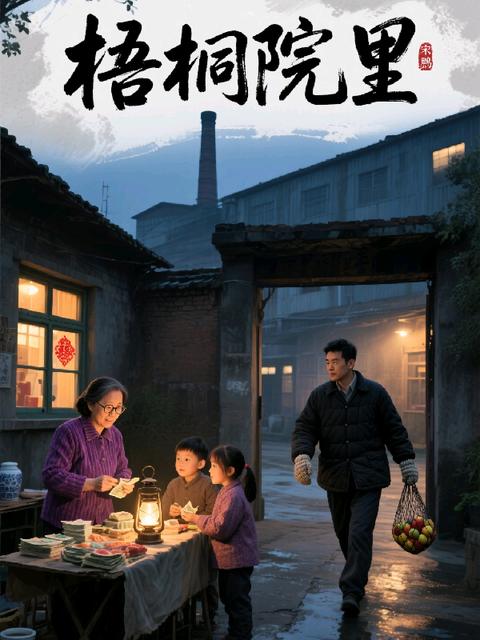
In the early 1980s, the ancient city of Linzhou reached a turning point in its fortunes. The Wutong Courtyard, a historic and overcrowded residential compound, was home to three families living side by side.
The Song family’s head, Song Weiguo, was a veteran worker at the state-owned porcelain factory. Upright and principled, he firmly believed that “the factory is home.” The Xu family’s head, Xu Pengcheng, worked in sales at the factory. Quick-witted and perceptive, he had a keen nose for opportunity. The Wu family’s widowed Aunt Zhao lived with her two children and ran a small stall by the courtyard entrance, struggling to make ends meet.
The story begins with the porcelain factory’s final round of welfare housing assignments. Song Weiguo was certain that his seniority would earn him a new home and ease the cramped conditions of his family of five, who were squeezed into just two rooms. But he was unexpectedly passed over. The apartment went to someone who was more “in need of a little help.” Meanwhile, the winds of reform reached Linzhou. The factory’s fortunes began to decline, and cracks appeared in the once-secure “iron rice bowl.”
Xu Pengcheng was the first to sense the changes. His sales trips brought him into contact with emerging private porcelain factories in Guangdong and overseas orders, stirring his ambition. He and Song Weiguo, who clung to the status quo and believed the difficulties were only temporary, clashed fiercely, representing two entirely different paths. In the end, Xu Pengcheng boldly took unpaid leave and used his accumulated connections and experience to go into business with others, setting up a small ceramics trading company.
The Xu family’s leap into business sent shock waves through Wutong Courtyard. Envy, jealousy, and gossip followed. The Xu family’s life visibly improved. They bought a refrigerator and a color TV, inspiring the younger generation, including Song Weiguo’s son Song Dong and the Wu family’s daughter Wu Xiujuan.

The burden of life weighed heavily on Song Weiguo's shoulders. He tried and struggled, but wasn't he just a reflection of the lives of the masses?
It provides a relatively objective description of life during that era.
Rich in content and pleasant to listen to.
The characters are portrayed with great detail, realistically depicting the historical context. It's relatable and captivating! This book portrays Song Weiguo, a stubborn mule, as his worthless pride causing hardship for his entire family, perfectly illustrating that character determines destiny! Listening to the story made me want to give that stubborn mule Song Weiguo a good beating! 🤭
A work with a strong sense of history. Very realistic.