


A Long Song for the Han Dynasty: The Jin Prince's Immortality
汉祚长歌:晋王永生
- Status
- Completed
- Length
- 1.3M Words
- Genre
- Historical
- Subgenre
- Historical High-Concept
- Updated
- 5mo ago
- Source
- Fanqie
Stats
Tags
Synopsis
More by this author
In booklists 23
Any Male-Oriented Novels with a Female Protagonist?
A sudden whim.
I'm in a Terrible Reading Slump. Please Recommend a Top-Tier Masterpiece
Looking for New Gender-Bender Stories!! Godfathers, Help Me Out 😭!
Looking for books similar to Can the Villainess and the Reborn Heroine Find Happiness Too?

Looking for Good Gender-Swap Stories
Looking for books like Good Thing I Almost Turned into a Catgirl. Any good gender-bender stories rated above 9? Especially ones with a white-haired little girl. Please, and preferably something long. Anyone?
Any Stories Where a Man Turns Into a Woman and Becomes Invincible?!
I’m Out of Books to Read, Give Me Some Transformation Stories
Give me some fresh transformation stories. I've already read so many of them.
Looking for Masterpieces, but Not Anything on the Recommendation Rankings
Don't recommend anything where the protagonist's surname is Ye or Ling, where the protagonist has a cute little sister, or where the protagonist is a bleeding-heart do-gooder. In short, no stupid novels. The darker and more ruthless, the better! Kill, kill, kill!!!
I Want to Read About the Strongest Protagonist of Their Generation, with an Ice-Cold Aura 😭
The protagonist is the strongest of their generation in the cultivation world and levels up quickly. A power fantasy would be ideal. Don't recommend stories full of misunderstandings and frame-ups where the protagonist has to prove their innocence. If you're already the strongest, why play mind games with a bunch of nobodies?
High-Quality Immortality Novels. Please!
Looking for books like Undying for Eternity: Burying the Heavens, the Earth, and All Living Beings.
A Veteran Reader with 7,000+ Hours Recommends Great Books! Let’s Swap Recommendations!
Recommend Books with Principled Protagonists. A Little Too Compassionate Is Fine
Modern novels always go out of their way to avoid making the protagonist a saint, preferring to portray them as petty or villainous. I want to read about a protagonist who is chivalrous and courageous, clearly distinguishes good from evil, understands right from wrong, and helps others within their means.
Gods, Faithful Followers, and a Female Protagonist
Female protagonist, female, female.
Gender-Bender Stories!!! No Old or Dropped Books, Please. Preferably Ones Where the Protagonist Stays Single


Transformation Stories, Gender-Swap Stories, Body-Swap Stories
Looking for books similar to *After Turning the Campus Belle into a Maid, We Switched Bodies*.
Gender Transformation and Xianxia
Gender Transformation + Behind-the-Scenes Scheming
I'm looking for books like I'm Your Love Rival, Not Your Wife! (I'm Definitely Not a Yandere).
The Protagonist Is a Royal Palace Enshrinee, Part of the Royal Family, and Very High in the Line of Succession
The Protagonist Is Immortal and Witnesses Life and Death Throughout the Ages
Looking for New Novels About the Late Han Dynasty and Three Kingdoms, Published in the Past Year
Looking for something like "The Han Dynasty’s Last Embers: I’m Not Fighting for the Central Plains, I’m Fighting for the World." Three Kingdoms history, creative ideas, something fresh. No old books, I’ve read pretty much all of them.
A Powerful Minister's Daughter: Brilliant, Ruthless, and Cunning
The heroine's father or family should be a powerful minister, feared by the emperor. I don't care whether he's a loyal minister or a treacherous one. I don't want petty household squabbles over wives, concubines, and children. I want a ruthless ambition to seize power for the family. And a powerful minister's daughter should act like one: skilled at plotting for power and wielding it.
Urban Fantasy with Gender-Bender Transformation
Looking for something like I Became an Heiress Running from an Arranged Marriage and Started Livestreaming in the Ghost Realm. Urban supernatural fiction. Though the author tells the story through episodic, instance-based arcs, they go to great lengths to avoid making it feel formulaic. The characters stay in character, the setting and logic hold up, and it's a rare, wonderfully bizarre read.
I'm Out of Books to Read, Please Help Me
Looking for stories like *Going to the Countryside? No Worries, She's Got Supplies and a Powerful Officer on Her Side*. Guys, my bookshelf is in a panic again. Any good period, modern, quick transmigration, or maybe Taoist-exorcist novels?
Any Recommendations? I Have No Idea
I've run out of things to read. Nothing seems satisfying anymore. Some books have great beginnings, but they never get finished, and the further you read, the duller they become. Does anyone have anything good to recommend? I like male-male romances.
Reader comments 50
Google Translate
Change Order, a fantasy version of Qin and Han Dynasties. The protagonist can be said to be semi-invincible in the early stage (some of them can't be beaten), and truly invincible in the later stage (the ones that can't be defeated are basically gone). My personal opinion has not been disappointed. The main historical process has not changed much, but the protagonist has changed a lot, and there is nothing ambiguous. To be honest, there are some female supporting characters but there is no further description. It is very interesting and I look forward to subsequent updates. I don't know the history in detail, but the latest plot is already about the Eternal Han Dynasty. A lot of the history that I have heard of (not sure about the dynasty, but I have heard the allusions) is constantly being staged in the New Han Dynasty (Ji Han). The protagonist is already half-hungry in the later stage. It mainly tells the story of the New Han royal family and the surname Liu. The history is repeated. When the royal family does something unnatural and evil, the protagonist becomes angry and takes action. Then, Then I hung up, and I couldn't figure out how the plot was going to develop. Isn't it really going to continue like this until modern times? The protagonist now only occasionally comes out to show his presence in front of others, and has a sense of presence. The author also said before that he wanted to develop a plot of the protagonist traveling in the world of mortals (it should be cut off due to resistance from readers). Is this the beginning of the outline after part of the plot is not developed? I don't know what other readers think, but the latest plot is a bit torture for me (I know that the updated content may be confusing, but I still keep up with the updates).
I thought it was food, but I didn't expect it to be food [Thoughts] Pulled and pulled, suddenly poisoned [spit]
When the protagonist descends from the gods, does it have no effect if the person who is descended by the gods dies? If so, he is not invincible and has countless lives. If the protagonist becomes the emperor, he can change the law however he wants. Arrange a goddess in each place to reduce the pressure and there is no fear of rebellion from the family. It's a bit unreasonable. The Xiongnu prophet is a master of the Purple Mansion Realm, and another prophet can be born decades after the death of the previous prophet. Then besides the protagonist, the Huaxia tribe has only one Xiang Yu who is a Purple Mansion Realm master. Or is it because he has extraordinary talents?
It's okay. Books from this kind of perspective are quite rare. Only in the world of creation can you write a similar flavor. For example, I am God in the Starting Point, but it lacks a trace of truth and ancient charm. Although this book is immature, it is very interesting. After reading it, I have a question that cannot be considered a problem. The author is obviously rushing for the plot. Each time period is very short. After writing the characters, he immediately changes to the next batch. This may be to make room for the big plot later, or he may not intend to write a long story. But there are two problems with this approach. First, rushing to the main plot and jumping fast are two different things. Nowadays, time is both fast and urgent. If you don't write a few chapters for each emperor, you can save space to write other things. However, you start to drive out the next emperor, making the main plot thin and long. Changshengtian is too fragmented. The trip to America and India can slow down a bit, expand the world view more, and write more about the protagonist and the characters around him. Secondly, it is too late to go from Liu Bang's uprising to Han Wu, especially when the protagonists have relatives. This is a golden opportunity to set the tone for the atmosphere of the book. If you want to write about ancient rhymes and an epic feel, write more about the conquest of Qin, the Chu-Han battles, and more about various countries. If you want to write about a sense of detachment, focus on describing the family relationship between the protagonist and Liu Bang's family, and then use the space saved from the plot to write more about how time passes. The current way of writing, with each emperor passing by in a hurry, can indeed give the plot such a refined feeling, but it also gives up too many other advantages. You can write 50 chapters about the end of Qin, Chu and Han, 70 chapters about the beginning of Han Dynasty, 70 chapters about Wu of Han Dynasty, how he was youthful, how he became dim in his later years, how his relationship with the protagonist changed, and then spend 10 chapters to write about the subsequent relationship between the emperor and the emperor. How is daily life in Guanghan Palace? There is eternal life in the north. Shouldn't the protagonist go to the grassland more often to inspect the enemy's situation? Study the principles of gods? What's interesting about America? What's the scenery like in Siberia and the Bering Strait? How did Zhaojun and the protagonist react when they traveled west? These can all be expanded upon, but the author has covered them in almost five or six sentences. Then you wrote a little about Changshengtian in the early Han Dynasty and then put it down, and wrote a little about Changshengtian in the Hanwu Dynasty. It was too fragmented, and it was really suspected of being a running story. Writing in such detail does not take up much space, because the following emperors, except for the third generation of Guangwu, can be written a little more, and the remaining strokes can add a super-mundane feeling of bad chess fate. Guangwu stepped on the accelerator immediately. This is right, and the author is right to handle it this way. In addition, writing about the characters in detail earlier will not destroy this feeling, but will make people feel like they are suddenly looking back. Just like the book "The Pauper", if every detail is well written and the characters are well created, it will also create a sense of vicissitudes of life. You can't divide each time node equally, you have to expand it and omit it. Why do this? Why add more branches? It's very simple. In a novel like yours, the protagonist's initiative is very low, and there is very little main character development. There is no way to do this. Then you need to make up for it elsewhere, and branch plots are a good way to do it. Then finally to the present, we will write about the Three Kingdoms again. How good. Now each emperor is divided into several chapters, and then we write about the East and the West. We cover Chu and Han in one stroke, Japan in one stroke, and India in one stroke. It's not that it's not possible, but the overall space is too thin.
Slightly flawed, but not out of the ordinary. Recommended I keep up with updates every day, and I think it is definitely worth five stars. But now the more I read, the more I feel something is wrong. I have forgotten it, and I feel a little sick! The four hundred years of the Han Dynasty were based on history books. The heroine was also over four hundred years old. She was the supreme existence in the book. She just allowed things to develop and watched the Three Kingdoms period come. It's not that the protagonist must be a Virgin, but what is the meaning of her existence? Is it to bring warmth to foreigners? To preserve history? The emperors of the Liu family are all political monsters. With the protagonist as their backer, history will never turn out like this. Ordinary people will always die the most in incidents. They deliberately wait for the arrival of the Three Kingdoms just to write more content! The Troubled Times of the Three Kingdoms proves that everything before is meaningless, it's so disgusting🤢
The writing is very good. Although there are few post elements, it is still very attractive. It would be better if there were more post elements. [Shy]
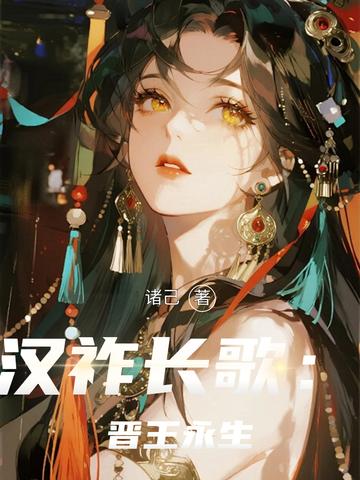
4.6 Stars, rounded down good looking The historical knowledge is very good, or very good, and the self-made classical Chinese texts can be easily picked up. Although the setting is ordinary, it is well integrated. It generally follows the existing historical route, citing classics, with slight changes in minor details, which is quite innovative. The protagonist's vassal state is already close to the country of China, and I don't know what to do next. Although the plot line is natural in some places, the logic is not smooth, but it is not to say poisonous. There are some supplements missing. I hope more repairs will be done. By the way, I suggest changing the cover. Your AI cover looks too cheap.
This book is really well written and I have read several of the author's books. The existence of Wuhun provides strong rationality for many of the protagonist's actions.
The best historical novel I have ever seen. First of all, it can be seen that the author has a very strong foundation in ancient Chinese, and some classical Chinese texts that are very suitable for the Han Dynasty background of the novel are very tasteful. There is also historical knowledge, and many of the dialogues between the characters are translated from ancient classical Chinese. What I personally find most interesting is the supplementary historical data at the end, which tells the story of the protagonist's contemporary achievements being recorded by later generations, which gives the whole novel a strong historical atmosphere.
This is one of the most awesome historical transformation articles I have ever seen on Tomato.