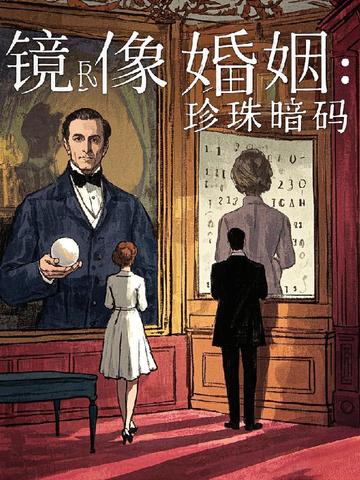
The cracks in a perfect marriage began with a bloodstained pearl.
Lin Wanqiu, a former forensic pathologist, found a photograph in her husband Chen Mo’s study: a woman wearing a pearl necklace lay dead in Jingquan Plaza, blood snaking across the ground in the shape of a sinister smile. What chilled her even more was that the necklace around the victim’s neck was identical to the one exchanged as a token at her own wedding. It was only when she found the laser-etched number “7” inside the pearl clasp that she realized it was the killer’s trophy number.
Smart home surveillance footage showed “her” carrying a bloodstained suitcase in the middle of the night. A scalpel, sedatives, a forged diary: all the evidence pointed to her. But as a former criminal forensics expert, she knew better than anyone that the direction of overlapping fingerprints, the angle of the blood spatter, and the stride of the “woman” in the footage all revealed a horrifying truth: the person beside her had used marriage to weave a cocoon, trapping her in an intricately crafted mirrored prison.
As her daughter’s flash cards, the kitchen baking scale, and the audio from the dashcam gradually became keys to decoding the clues, Lin Wanqiu pieced together Chen Mo’s double identity. On the surface, he was a kind and considerate CEO of a medical company. In reality, he was a serial killer with emotional mirroring disorder, marking his prey with pearl necklaces, manipulating memories through the smart home system, and carrying out blood-soaked organ-trafficking deals behind the mask of a “perfect husband.”
In court, she used forensic powder to reveal the fingerprints her husband had deliberately left behind, and exposed his tampering with the surveillance using the microchip hidden inside a drilled pearl. When Pearl Number Seven broke apart in the witness box, what rolled out was more than just the bloodstained truth