


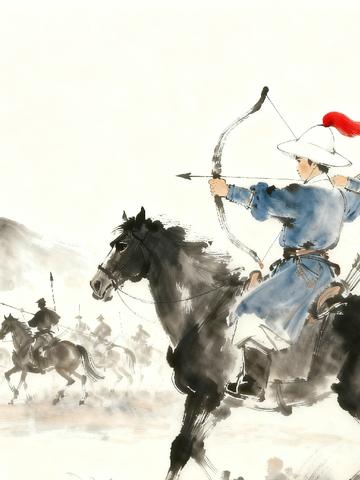
Even Bandits Can Set the World Ablaze
流贼也可以燎原
- Status
- Ongoing
- Length
- 2.6M Words
- Genre
- Historical
- Subgenre
- Historical & Ancient
- Updated
- 3d ago
- Source
- Fanqie
Stats
Tags
Synopsis
In booklists 73
Explore more →
Historical Fiction! The Characters Must Have Brains!!
Are there stories where a modern person transmigrates back to ancient times and uses their profession to make a difference? Like a doctor who transmigrates to the past and advances medicine within the limits of the era, or a modern special forces expert who transmigrates to ancient times and builds an army using modern ideas. Or just invent penicillin or something. From the start, they pull out an AK-47.
Looking for Meticulously Researched Historical Fiction
They seem pretty hard to find. Let's give it a try.

New Book Hub: Stories Over 100,000 Characters with No Reviews Yet
Looking for books similar to *Dawn Blossoms Plucked at Dusk*. Let's encourage each other! There are so many books on Tomato Novel. Keep going. If writing is your passion, drop this one and start over. If it's how you make a living, keep at it.
Looking for High-Quality Historical War Novels
What’s the Hottest Historical Novel on Tomato Novel?
I’m in a reading slump.

Looking for Stories About a Modern Person Transmigrating to the Ming Dynasty
Alternate history.
Top-Rated Novels Set in the Ming Dynasty
No System-based stories.
Historical Fiction That Feels Realistic
No System, and nothing about The Legend of Qin. Just straight historical fiction.
Historical Novels
A big collection of historical novels.
Good Historical Fiction
Transmigration to the Late Ming Dynasty
Looking for books similar to *Reborn as Zhu Yuntong: Building a Peak Ming Dynasty*. Are there really no novels about transmigrating to the late Ming, without some massive reform that succeeds overnight? Must the protagonist develop technology and build a nuclear bomb by hand? The story seems to have no System, but the protagonist is a human computer, a scientist, and a politician...
Late Ming: Rising from the Margins and Creating My Own Future!!!
Please recommend good books about the Late Ming, rising from the bottom to build your own dynasty!

New Book, Come Say Hi! Let’s Review, Follow, and Like Each Other. I’ll Always Return the Favor Within 24 Hours!
Looking for books like Asking the Dao of Reincarnation. Any new authors want to exchange reviews or follow each other?

Ancient-era Stories About Building up Your Own Power Step by Step
Secretly establishing his own faction

Looking for Historical Novels About Transmigrating to the Past, the Kind You Can't Help Rereading Again and Again
There Are Hardly Any Good Historical Novels! Come Debate Me
Low EQ: I want a good novel. High EQ: Prove me wrong
Historically Accurate, Without Making Things Up
Historical fiction has more room for worldbuilding, with vivid characters and no distortion of history. I want a satisfying read that covers dynasties, major and minor events, wars, and loyal civil and military officials, all presented in a historical setting.
History Novels That Get Your Blood Pumping
The emperor defends the nation's borders; the ruler dies for the state.
Historical Novels Based on Official History
Historical novels based on official history, not unofficial accounts. Any dynasty is fine, but it absolutely has to be official history! Official history! Please! Historical fiction is really useful to me.
May the Sun and Moon River Flow Forever, and the Ming Dynasty Endure! Any Novels Where the Ming Dynasty Is Unbeatable?
Are There Any Good Historical Novels Set in Ancient China, with Excellent Writing and No Made-Up History?
Historical Fiction That Doesn't Dumb Down the Characters
I want a protagonist with brains
Late Ming Dynasty Conquest Novels
Looking for books similar to Ming Dynasty: I Told You to Hang Yourself, Not Rebuild the Ming Dynasty. I'm looking for late Ming novels where the protagonist rises from humble beginnings, becomes powerful, and are well researched historically.

Recommend Me High-Quality Ming Dynasty Novels. Nothing Illogical, Please.
Looking for books similar to Reborn as Zhu Biao: Building a Peak Ming Dynasty! I've read quite a few novels about the Ming Dynasty, and I'm getting more and more into them. I'm in a reading slump, so please recommend some great ones.
Reader comments 46
Google Translate
The author's writing is good, but it lacks the internal perspective of the rogue bandits. It is impossible for Liu Chuzhi to be monolithic within himself. Wang Tie next door also has a lot of internal strife, and the rogue camp camps more often cheat each other than help each other. However, the pace of this book is obviously faster, and it can be regarded as a rare masterpiece.
The author's historical knowledge is really good. There are many things that you obviously don't know unless you read the official and county records carefully. (But the early sentence segmentation is too abstract and easy to persuade) The writing gets better and better, and the author usually responds to historical issues, which is rare in Tomato.
The book is generally good, and the plot is okay, but one point will be deducted for the treatment of the landlord's family. This is unreasonable for a time traveler protagonist. I will continue to read it and am always ready to add another star.
It truly restores the peasant military situation at that time. Many people say that we should be loyal to the emperor and serve the country and help the Zhu family. But I want to say that the society at that time was rotten to the core. There is too much food to eat, but brother, I really said that the vassal king can still survive at least, and most of the food is enough to squeeze people. To be honest, in Shaanxi and Shanxi at that time, how many people did not have enough to eat and how many people died. Life was all relative and very restored.
This book is really good, very realistic, and very consistent with the situation at that time. Before the defeat of Songshan, the Ming army's combat power was indeed not low. The rebel army could not defeat the Ming army. Big and small Cao, Guan Ning's army, Xuan Dajun, Shaanxi and Gansu border troops were encircled and suppressed by many elites. The rebel army was really unbeatable. However, when Li Zicheng became big and came out for the second time, the Ming army was no longer able to organize a large-scale elite encirclement and suppression. What about Liu Liangzuo, Zuo Liangyu and the like? During the first encirclement and suppression meeting, their stinky sweet potatoes and rotten bird's eggs were not included. Another one is the newcomer Sun Chuanting. Although Sun Chuanting is indeed capable, his seniority and combat effectiveness are indeed not as good as those of the army that just started suppressing the rebels.
The reason why the Han Dynasty was fully occupied by the Manchu Qing Dynasty at the end of the Ming Dynasty was because the Han Dynasty lacked the political organization to compete with the Manchu Qing Dynasty. It would be okay if the Daxi Army, which was deeply cultivated in Yunnan, was given time to develop, but the premise is that there are people in front who can block the Manchu Qing Dynasty. However, it is impossible for the Southern Ming forces to watch the peasant army develop and grow, and it is more likely to jointly attack the rebel army. In the southwest region, there was a chieftain rebellion in the early years of Chongzhen. Especially in Sichuan, there were these troops and commanders who put down the rebellion. It was only after the death of the commander that the peasant army could make a big difference in Sichuan, otherwise it could only be a small fight. Referring to the five extended dynasties at the end of the Tang Dynasty, the Khitan who occupied the Youyun area was much stronger than the Manchu Qing Dynasty. There were many political forces in the Han area, and there were also external regimes such as the Dali Kingdom. The Khitan was defeated in the Central Plains region after the Jin Dynasty after destroying the Central Plains regime. When the Qing Dynasty entered the country, there was no other big organization in the north except Li Zicheng. Because of the years of war, there was not that many people in the north. It is extremely difficult for anyone who travels through the past to defeat the Manchus. The most critical step is whether they can stand firm in the southwest region. Then they must stand firm or fight in the Yangtze River area. The Yangtze River area cannot be occupied by the Manchus because it is the economic core of the Ming Dynasty. If you want to confront the Manchus, you must at least fight with the Manchus in the Yangtze River area and then fight for consumption. Who would the northern gentry choose between the Manchus and the peasant army? The protagonist must make compromises if he wants to quickly establish himself in the southwest region. Before the Manchus entered the customs, they were a country that could firmly control millions of people, could produce their own firearms and horses, had strong military strength, and had many civil servants to help govern. The protagonist obviously does not have this time and can only bring over the chieftains, enlightened gentry, and down-and-out scholars to share power as much as possible. The protagonist must also give birth to children as soon as possible and then raise them, and finally use them for marriage, rule, and enfeoffment to win the support of others. If an anti-Qing alliance can be formed to fight against the Manchus, it is a victory. The most unstable factor is Nanming. It's well written, although it lacks some details. The regime established by the protagonist can refer to the Ming Dynasty. As long as the protagonist has many sons and the adopted son has no inheritance rights, it is an important support for the imperial power. Refer to the Mu family in Yunnan, the adopted son can be used to establish a border land with many chieftains. The princes under the enfeoffment system of the Ming Dynasty had military and administrative powers at that time, because Nanjing was the capital at that time, and the provinces surrounding Nanjing were directly and firmly controlled by the central government. Therefore, there were no enfeoffed princes, and they were all enfeoffed from provinces far away from the capital. The further away from the capital, the weaker the central control and the higher the cost of governance. There is no problem for Zhu Yuanzhang to enfeoff provinces far away from the capital. The problem is that Zhu Di regards this enfeoffment as pig farming and goes too far. If the protagonist has Beijing as the capital, then the surrounding provinces cannot be enfeoffed. Shaanxi and the South can be enfeoffed, but the size of the Don't Be Pig-Raising Army must be limited, and it can also be allowed to manage a place. However, except for the first generation, the scale should be controlled. After the third generation, there are no restrictions on positions, and after the fifth generation, they do not belong to the clan. If you want to seal the throne, it would be a place outside the traditional Han Dynasty. It would be too hard. The protagonist needs to have more children, otherwise he will not be able to choose a prince who is willing to endure hardship and is capable.
Author, your writing is getting better and better. You can clearly see the transformation from a novice to a veteran. As for the content, there have never been any problems. It's very interesting. [Like]
I am Zhang Xianzhong, a government official in Mizhi County, and also a friend of Brother Li. Liu Chuzhi returned the same greeting and said: "I am Liu Chuzhi, a deserter from Yansui Town." "I can tolerate the discomfort from the front, but I can speak frankly from the back [smile]
The writing is very good, but the cheats are too strong for the opponent. The protagonist's various mindless operations will give away kills. According to the protagonist's experience, he is not a novice in tactics and strategy. In order to slow down the progress, every time the protagonist rises, he will suddenly give away kills without any brains. The opponent has no clues and has explosive combat power.
This is the first time I write a book review. This book is indeed useful for understanding the peasant uprising in the late Ming Dynasty. It does not deliberately discredit any party. It also proves that it is not feasible to be a sitting bandit in the early stages of the uprising. The only drawback is that it feels like the protagonist currently has no capable subordinates.