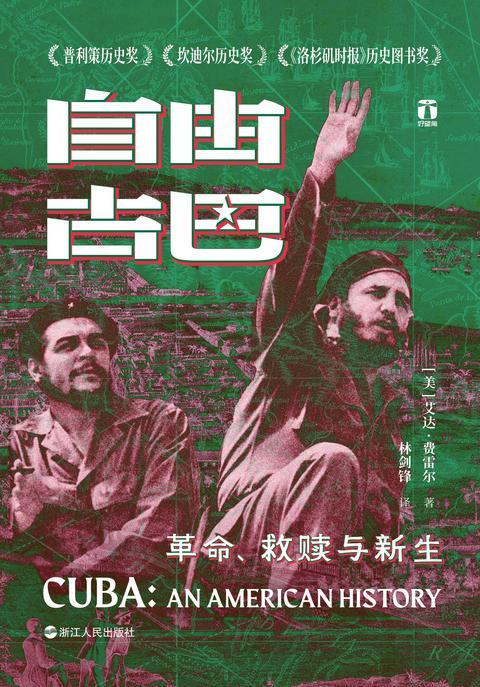
Winner of the Pulitzer Prize for History and the Los Angeles Times Book Prize for History, and enthusiastically recommended by numerous Pulitzer Prize winners. Also recommended by such acclaimed publications as The Economist, Kirkus Reviews, The Wall Street Journal, and The Guardian.
One of the few comprehensive histories of Cuba available in China, this is the magnum opus of a Cuban American historian. It tells the story of Cuba across five centuries, with a scope and richness that other works on Cuban history can hardly match. It also breaks away from traditional heroic narratives, telling the stories of the Cuban people in prose-like strokes. This is an epic and authoritative history of Cuba.
An epic history of Cuba, this is also a history of the relationship between the United States and Cuba, recounting the tangled ties between the two countries over several centuries. Cuba is the largest island in the Caribbean and one of the first lands Columbus set foot on during his first voyage to the Americas in 1492. Its fertile land, together with shiploads of enslaved Africans, made Cuba a jewel in the crown of the Spanish Empire, supplying Europe with a steady stream of sugar, coffee, and tobacco. But behind this wealth lay the sweat and blood of countless Indigenous people and enslaved Africans. From the very beginning, the pursuit of freedom and racial liberation has been a central thread in Cuban history.
With the Spanish-American War at the end of the nineteenth century, Spanish colonizers departed in disgrace. But the newly established Republic of Cuba (1902-1959) quickly fell under American control, becoming a prize of the latter's expansionist policies and having to begin a new struggle for independence and freedom. In 1959, the Cuban Revolution led by Castro succeeded, and the Cuban people finally established the independent nation they had long yearned for. The United States, that powerful and dangerous neighbor, has never taken its eyes off Cuba.
In fact, this five-century history of Cuba is both the story of the Cuban people's pursuit of freedom and liberation and the intertwined history of slavery, sugar plantations, colonialism, and national revolution. It is also the story of the complex relationship between Cuba and the United States. By taking a close look at Cuba's development, we witness its remarkable journey from conquest and enslavement toward freedom and independence. Cuba also serves as a mirror reflecting the process by which the United States gradually attained global hegemony over the past century and more.
It is worth noting that this book never confines its perspective to a handful of great figures. The people sewing by the faint light in slave cabins, those who took up arms in the revolution, and those whose names never appeared in official histories are the true protagonists of Cuban history.





A very interesting book. Cuba made a great attempt.