[An important work on the study of miscellaneous internal diseases and Zhu Danxi's theory]
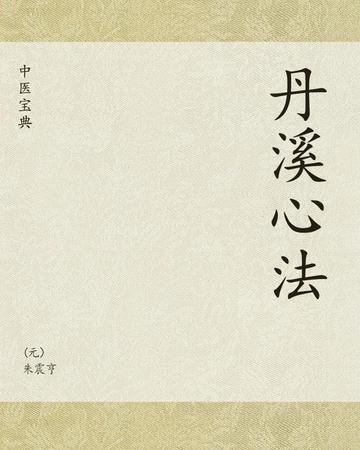
Zhu Danxi's disciples Zhao Yide, Liu Shuyuan, and Dai Yuanli compiled the experience of Danxi and added their own opinions. The content is rich, including six medical treatises in the first chapter, followed by nearly a hundred treatises on internal, external, gynecological, pediatric, and facial features diseases. For each disease, the original treatise on Danxi is first recorded, followed by the invention of Yuanli, and then the prescriptions, appendices, etc. The book is rich in content and covers internal, external, gynecological, and pediatric diseases. It is almost all-inclusive. It is the most influential work compiled by Dan Xi by his descendants. It also contains book theory, methods, prescriptions, and medicines, and has great guiding significance for the practice of syndrome differentiation and treatment of miscellaneous diseases. Moreover, this book is concise and concise in dialectical analysis, and the selection of prescriptions is simple and practical.
Zhu Zhenheng (1281~1358), male, courtesy name Yanxiu, was a famous medical scientist in the Yuan Dynasty. He was a native of Yiwu, Zhejiang Province today. Because his former residence had a beautiful stream named "Danxi", scholars respected him as "Danxi Weng" or "Mr. Danxi". Zhu Zhenheng's medical skills were superb, and his clinical treatment effect was as good as that of a drumstick. There were many cases of patients recovering immediately after taking the medicine without the need for further consultation. Therefore, people at that time also praised him as "Zhu Yi Tie" and "Zhu Banxian". He first studied Confucianism, and then changed his medical way, integrating the strengths of various schools into one, becoming a famous doctor of his generation. Zhu Zhenheng thinks that the three schools of thought have not prepared the method of nourishing yin in addition to the methods of purging fire, attacking evil, and tonifying the middle and replenishing qi. He strongly advocated the theory of "Yang is always in excess and Yin is often insufficient", created the theory of the pathogenesis of Yin deficiency and fire, and affirmed the importance of Yin Qi and Yuan Jing in the human body. He was called the founder of the "Yin Nourishing School" by later generations. Together with Liu Wansu, Zhang Congzheng, and Li Gao, they are listed as the "Four Great Masters of the Jin and Yuan Dynasties" and occupy an important position in the history of Chinese medicine. He had many disciples and his books were widely circulated. He was the most famous medical scientist in the Yuan Dynasty.