


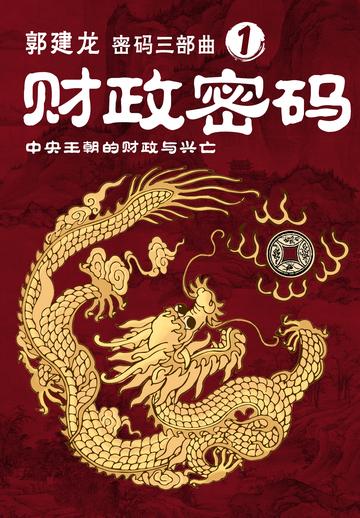
Financial Password
财政密码
- Status
- Completed
- Length
- 280k Words
- Genre
- Historical
- Subgenre
- Unknown
- Updated
- 2y ago
- Source
- Fanqie
Stats
24Chapters
1.7kReads
9.4Score
493Shelves
504Listens
33.7kReads · all time
Tags
Synopsis
More by this author
 The Lost Three Hundred Years: China's Openness and Closeness After the Great Geographical Discovery (1516-1840) (Longitude and Latitude Series)
 Under the Smoke of Three Thousand Pagodas: a Cultural Journey of Five Countries in Southeast Asia
 The Great History of the Silk Road: When Ancient China Encountered the World
 Guo Jianlong's "Asian Trilogy"
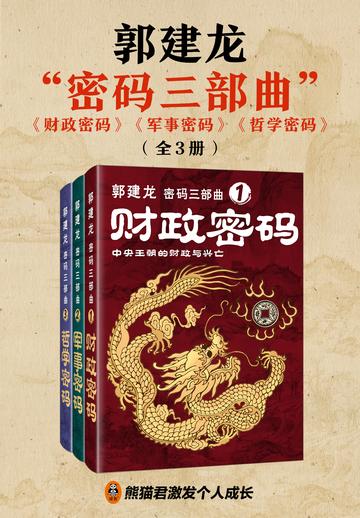 Guo Jianlong's "Code Trilogy"
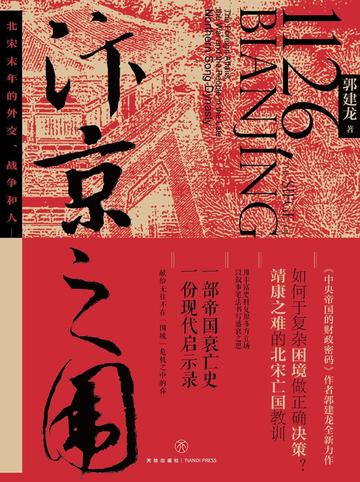 The Siege of Bianjing: Diplomacy, War, and People in the Late Northern Song Dynasty
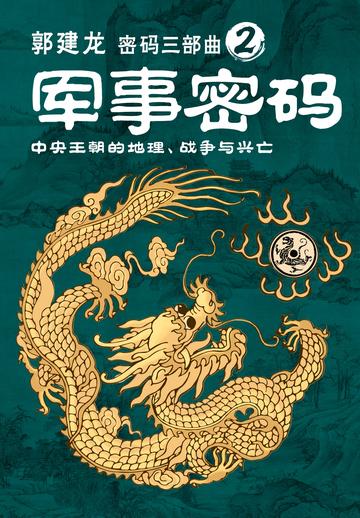 Military Code
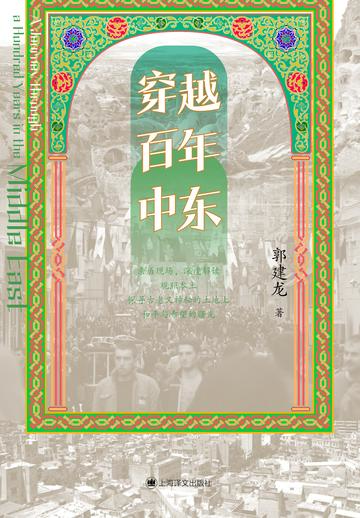 Traveling Through the Middle East for a Century
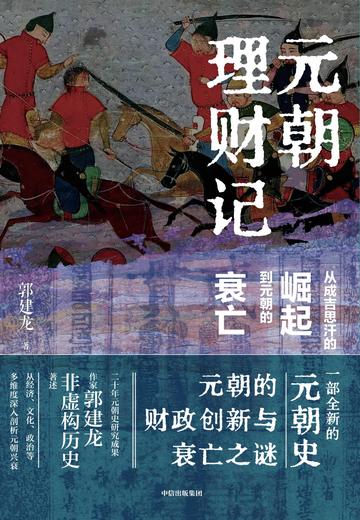 Financial Management of the Yuan Dynasty
 Guo Jianlong's Classic Best-Selling Set
In booklists 1





Reader comments 22
Google Translate
A pretty good book. There are some flaws in the content, but overall, I thought it was pretty good, and it helped me get a step closer to understanding Chinese history. This is the first book that I have read completely while reading it on my mobile phone. In the past, I only read half of it and gave up halfway, or I couldn't read it before reading a few pages. It's not that the content is not good, it's that I lack the ability to control myself. If possible, I would like to use this book as a starting point and expand to other books🤓🤓. In this way, maybe I can read the book gradually, right? 🤓🤓Let your life have a little meaning and do something meaningful🤓🤓🤗🤗🤓
Not bad, the advantages outweigh the disadvantages, single fiscal determinism, suitable for people who look at history from a different perspective The rise and fall of Chinese dynasties over two thousand years: 1. Early dynasty: There were few people in the land, and light taxes stabilized the finances. 2. Mid-term: Population growth and land annexation led to insufficient finances. 3. Late period: Monopoly, tax increases, money printing, and robbing merchants led to civil collapse. 4. Ending: Peasant uprising/foreign enemy invasion, change of dynasty 1. Yantieguanying: Invented by Emperor Wu of the Han Dynasty, the cash machine of successive emperors 2. Land equalization system: from the Northern Wei Dynasty to the Sui and Tang Dynasties, the closest attempt to "public ownership of land" in ancient times 3. Renting is mediocre: In the early Tang Dynasty, the tax system was very simple. If you have land, rent it, if you have a body, you can do it, and if you have a home, you can pay tax. 4. Two tax laws: tax based on person, tax based on property/land, recognition of private ownership of land 5. One Whip Law (Zhang Juzheng of the Ming Dynasty): merge all taxes, pay silver, simplify taxes 6. Divide a person into an acre (Qing Dynasty): the head tax is merged into the land tax
It can be seen that the author has worked hard, and the data here is quite detailed. Before this, I had read and heard about the central banknotes of the Yuan Dynasty from Kublai Khan's Challenge by Sugiyama Masaaki. The author also feels that these banknotes have replaced the role of copper coins in the market, which feels quite bragging [thoughts]
How to solve the financial problems of a unified country? Starting from the time of Emperor Wu of the Han Dynasty, through the Tang, Song, Yuan, Ming and Qing dynasties, the institutional genes and cultural genes that have been passed down for thousands of years can still take shape in 2026.
This is a book with a very research perspective and depth, which is very beneficial! I also admire the author very much. The completion of this book requires reading a lot of historical data and possessing certain financial knowledge. As a long-term financial practitioner, I can honestly say that this book is very professional and I recommend reading it!
Starting from the changes in the ruler's fiscal policy, it demonstrates the relationship between finance and the destiny of the country. The content is very detailed and fully explains the importance of finance. However, it did not introduce modern concepts and did not look at the problem from an overall perspective, so it failed to reach a sublimated conclusion.
Good book. This book analyzes the driving forces behind historical evolution from a financial perspective, giving people a deeper understanding of history. This book is also of great value for understanding modern finance. Some financial systems are actually the same as in ancient times.
Jianlong's books are all good and I have read many of them. This book looks at empire from an economic perspective, which was a good new perspective in the era when this book was published.
It's great to see history from a different perspective.
I have never seen history from the perspective of money. It was an enlightenment and a bolt from the blue. It was super exciting and more than addictive.