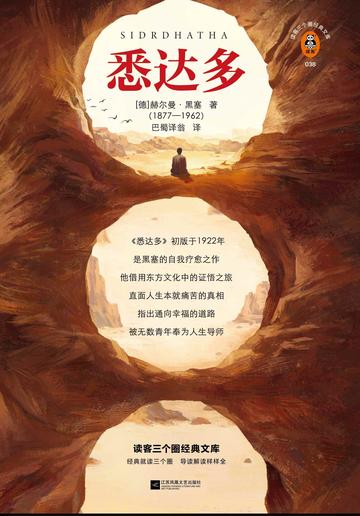
Siddhartha, an aristocratic young man from ancient India, walked and meditated on the rose path in the fig garden.
Since his birth, Siddhartha has had the success that most people desire: a prominent family background, a smart mind, the love of his parents, the following of his friends, the admiration of the opposite sex...
But these are not the life he wants. Siddhartha was full of confusion and longed to understand the true meaning of life. Just now, he made a decision: let go of everything in front of him and find his true self.
Open this book, follow Siddhartha, embark on the wisdom journey of spiritual enlightenment, and become a better version of yourself.
Reader comments
This book reminded me of a friend of mine who also felt lost and confused on the road of life. Siddhartha's story inspired her and made her understand that pursuing her true self is a long and arduous journey. I was also deeply inspired by the wisdom and spiritual exploration in the book. It teaches us to keep thinking and introspecting, and to constantly search for the true meaning of life. This is a book that resonates with people. I recommend it to everyone!
When he was in great distress, he came across such a book and passages like this. While he was writing about Siddhartha, it was like a knife analyzing himself.
Regardless of country or past and present, the chronic illnesses in the secular world and the joys and sorrows in life are almost all the same. There are few new things in the world.
But along the way, some people have reached enlightenment, while the vast majority of people are just like ants.
When Siddhartha was planning to destroy his body in pursuit of inner peace, my painful heart was also rising and falling, almost shouting: Destroy Siddhartha, destroy it, destroy it, the world is meaningless.
But when he stuck his head out and felt the desire to live again,
I followed him in my heart, wanting to see how such a son of a Brahmin, such an ascetic ascetic, such a Siddhartha, who had experienced the prosperity of love and desire in the world, what on earth was he looking for, and what was he ultimately found?
After experiencing prosperity and abandoning it, when he returned to the ferryman on the river that once crossed him to the gate of prosperity, he was beside the old man, in this river, under these ordinary starry sky and moonlit nights, and found the perfection of life in every plant, tree, even stone and dust. He gained the peace in his heart that he had been searching for most of his life.
I finally found spiritual salvation in a place I passed through more than 20 years ago
But should we feel regret? After countless soul traumas, wandering around for decades, until finally, at the river bank where we had already met, beside the ferryman, we suddenly woke up?
No. All experiences in the world have their inevitable rationality. Because of this, we can understand all things more deeply and realize what perfection is. Only in this way can we know what is happening and why.
These words seem to analyze through time and space the sympathetic readers he met, trying to help these people see their own hearts clearly and find a prescription to save themselves.








This book reminded me of a friend of mine who also felt lost and confused on the road of life. Siddhartha's story inspired her and made her understand that pursuing her true self is a long and arduous journey. I was also deeply inspired by the wisdom and spiritual exploration in the book. It teaches us to keep thinking and introspecting, and to constantly search for the true meaning of life. This is a book that resonates with people. I recommend it to everyone!
When he was in great distress, he came across such a book and passages like this. While he was writing about Siddhartha, it was like a knife analyzing himself. Regardless of country or past and present, the chronic illnesses in the secular world and the joys and sorrows in life are almost all the same. There are few new things in the world. But along the way, some people have reached enlightenment, while the vast majority of people are just like ants. When Siddhartha was planning to destroy his body in pursuit of inner peace, my painful heart was also rising and falling, almost shouting: Destroy Siddhartha, destroy it, destroy it, the world is meaningless. But when he stuck his head out and felt the desire to live again, I followed him in my heart, wanting to see how such a son of a Brahmin, such an ascetic ascetic, such a Siddhartha, who had experienced the prosperity of love and desire in the world, what on earth was he looking for, and what was he ultimately found? After experiencing prosperity and abandoning it, when he returned to the ferryman on the river that once crossed him to the gate of prosperity, he was beside the old man, in this river, under these ordinary starry sky and moonlit nights, and found the perfection of life in every plant, tree, even stone and dust. He gained the peace in his heart that he had been searching for most of his life. I finally found spiritual salvation in a place I passed through more than 20 years ago But should we feel regret? After countless soul traumas, wandering around for decades, until finally, at the river bank where we had already met, beside the ferryman, we suddenly woke up? No. All experiences in the world have their inevitable rationality. Because of this, we can understand all things more deeply and realize what perfection is. Only in this way can we know what is happening and why. These words seem to analyze through time and space the sympathetic readers he met, trying to help these people see their own hearts clearly and find a prescription to save themselves.