


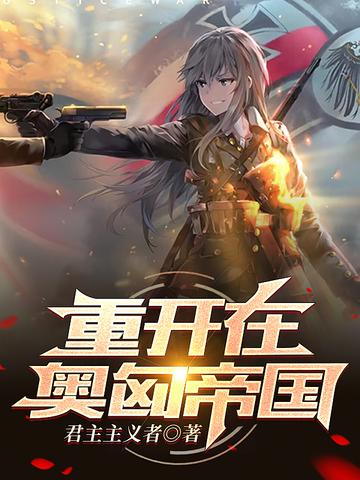
Reborn in the Austro-Hungarian Empire
重开在奥匈帝国
- Status
- Completed
- Length
- 486k Words
- Genre
- Historical
- Subgenre
- Historical & Ancient
- Updated
- 2y ago
- Source
- Fanqie
Stats
Tags
Synopsis
More by this author
In booklists 50
Explore more →


Founding a Nation Overseas!!! If Not, Do Not Recommend It
Looking for books like *System: Building a Nation Overseas from the Start*.


Looking for World War I Stories About the Austro-Hungarian Empire, or the Second German Empire Works Too, I Am Tired of the Third Reich
Any Stories About European Politics and War? No Magic or Fantasy, Preferably Historical
Looking for books similar to *Welcome to Nineteenth-Century Europe, Where Strength Reigns Supreme*.





British Style, Medieval Aristocracy
Looking for Books About Warlords in Republican-Era China or the Late Qing Dynasty, Especially Without a System
The story needs to make sense. Don’t recommend stories that don’t make sense or rely on a System. And absolutely no romance.

Looking for a Hard-Core Military Novel
Hardcore Naval Warfare, Preferably Set Before 1914
I want to read something similar to Naval War: Buying a Battleship from the Start.

Historical Novels About the Holy Roman Empire, Byzantium, Rome, and the Second German Empire
Looking for books similar to *A History of World Empires: The Austro-Hungarian Empire*.

Looking for Novels About Being Reborn in Medieval or Modern Europe 🙏🙏🙏
Thank you, thank you!


Historical Stories (Any Dynasty, No System, and with Intelligent Characters)
Looking for books like *The Glory of the Great Wei*. Historical novels with some brains behind them. Read too many mindless wish-fulfillment stories and they’ll rot your mind.



Any Books Similar to Becoming the German Führer?
I want books like *The Führer’s Life Starting with Nuclear Winter*.
Any Stories About European Politics and Wars? No Magic or Fantasy, Preferably Historical
Looking for books similar to *Welcome to 19th-Century Europe, Where Strength Reigns Supreme*.

Straightforward Historical Military Fiction
A Man's Romance: Massive Warships and Huge Guns, Late Qing, World War I, or Republican-Era China Are All Fine!

Books German Fans Will Enjoy
I want to read something like *My Steel Moe Heart: In the Name of the German Kaiser*.

Historical Novels Set in Europe
Stories set in ancient or modern-era Europe, but not contemporary times. No characters getting dumber for the plot, and a solid grasp of history. European history, not Chinese historical fiction.
Any Good German Fiction? Second or Third Reich, Either Is Fine
Looking for books similar to My Steel Heart: In the Name of the Kaiser.





My Dad Is a Coal Boss: Fans, Let's Talk!
Starting a topic for my book, *My Dad Is a Coal Boss*. Come chat if you enjoy it! I’m getting ready to write my next book!
Looking for New Novels About Germany: Prussia, the Second or Third Reich, or the Holy Roman Empire
I want new books! I've already read the older ones. I'm looking for something that won't go on hiatus and updates regularly.
Looking for Strategic-Scale Warfare and All-Out Clashes
There are way too many novels on Tomato where the protagonist is a sneaky schemer. I like protagonists who fight head-on. Are there any like that? A score of 9 is fine. Please recommend some, thanks!

Please Recommend Soviet-Era or Industrial Fiction

Historical Novels About Transmigration to Ancient Times
Looking for books similar to *Claiming an Island as King in a Chaotic World*.

Stories About Rising to Power in Europe, the Soviet Union, Italy, and the American West
I'm looking for books like Reborn in Britain: From Gangster to Tycoon (Starting in Britain). Stories about a protagonist who rises step by step in Europe, the Soviet Union, Italy, and the American West. Somewhere between the criminal underworld and legitimate business, preferably set around World War I or II. The American West can be set in the...
Any Books About World War I or II? Europe, Germany, France, Britain, Italy, America, Austria, Russia, Hungary, Greece, Romania, and the Balkans
Looking for books similar to *Serbia's Counterattack*.
Reader comments 50
Google Translate
The Austro-Hungarian Empire's mobilization and replenishment system was different from that of Germany. It did not set up a supplementary regiment with the same number as each regiment to be responsible for the regiment's troop replenishment. Instead, it adopted a complex system that combined reserve troops, supplementary battalions, supplementary areas and "local reserves". The Austro-Hungarian military service law stipulates that all healthy male youths must perform universal compulsory military service. Healthy males over 21 years old are selected and assigned by the conscription bureau to serve in the Reichswehr for three years, then in the reserve army for seven years, and then in the local defense forces for another two years of active service, or in the local defense forces for 10 years of "alternative reserve service" (serving a few weeks each year). Soldiers who have completed active service in the Imperial Wehrmacht can continue to perform voluntary military service for one year. During the voluntary military service, they will be paid and have the opportunity to attend the junior military school with the battalion. Technical forces and the navy encourage voluntary military service. All other men aged 19 and under 43 who are not drafted into the National Defense Forces, Reserve Army and Local Defense Forces must serve in the local reserve forces. Unlike Germany's local defense force, which is a reserve force, the Austro-Hungarian local defense force is on active duty. The Austro-Hungarian Empire's mobilization and replenishment system was different from that of Germany. It did not set up a supplementary regiment with the same number as each regiment to be responsible for the regiment's troop replenishment. Instead, it adopted a complex system that combined reserve troops, supplementary battalions, supplementary areas and "local reserves". The Austro-Hungarian military service law stipulates that all healthy male youths must perform universal compulsory military service. Healthy males over 21 years old are selected and assigned by the conscription bureau to serve in the Reichswehr for three years, then in the reserve army for seven years, and then in the local defense forces for another two years of active service, or in the local defense forces for 10 years of "alternative reserve service" (serving a few weeks each year). Soldiers who have completed active service in the Imperial Wehrmacht can continue to perform voluntary military service for one year. During the voluntary military service, they will be paid and have the opportunity to attend the junior military school with the battalion. Technical forces and the navy encourage voluntary military service. All other men aged 19 and under 43 who are not drafted into the National Defense Forces, Reserve Army and Local Defense Forces must serve in the local reserve forces. Unlike Germany's local defense force, which is a reserve force, the Austro-Hungarian local defense force is on active duty. The Austro-Hungarian mobilization plan is that after the mobilization order is issued, men serving in the reserve army will immediately be transferred to active service in the Imperial Defense Forces. Soldiers serving in the alternative reserve of the local defense forces will be transferred to active service in the local defense forces. Reserve personnel of the local reserve units will be trained intensively to make up for the loss of troops during wartime. During the mobilization period, the Austro-Hungarian Wehrmacht established few new units and mainly used reserve personnel to fill existing units, mainly the undermanned parts of each unit and supplementary battalions under certain regiments. The battalion has all officers, most non-commissioned officers and a small number of soldiers. During the deployment period after the mobilization order is issued, the battalion is filled with reserve personnel. Most of them follow the regiment to fight, and a small number are formed into new regiments. After each regiment fills up the supplementary battalion and puts it into battle, it immediately establishes a new supplementary battalion to receive and train new recruits from the rear. These newly-built supplementary battalions after mobilization stay at the original garrison of the regiment and are supplemented by local reserve personnel in the supplementary area to which the regiment belongs. Usually, after completing the training, they immediately join the original regiment and join the original regiment to fight. When establishing new supplementary battalions, the highest record during the war was that a Hungarian regiment of the Imperial Wehrmacht used 20 supplementary battalions. If you include the 4 battalions it had before mobilization, and assuming that the regiment had 4 battalions at the end of the war (even if it was full), the entire regiment had been fired five times. This shows that the Austro-Hungarian Empire suffered huge war losses.
Yes, although there are many themes about World War I in Tomato at present, this one about Austria-Hungary is definitely the first one.
Tomato is one of the rare Austrian novels, and the historical common sense is correct, but the description of Franz is too cold-blooded, and the description of Conrad's ability is too outstanding. In fact, it was precisely because Conrad sent the Austrian standing army to death in the early stage that he was at a disadvantage.
The writing is good, but I remember that Herzenteff was already over fifty at this time in history, right?
The language is rigorous and true. On the one hand, the plot is close to reality. On the other hand, the arrival of the protagonist will also change the tragic fate of the Austro-Hungarian Empire. The victory of the war will strengthen the prestige and power of the protagonist. I really look forward to the future (to be honest, I seem to hope that the Greek king can continue to rule Greece. I don't know if the author's portrayal is not bad)
Very good story, but the introduction is too confusing
Overall, average quality First of all, you need to know that the description is based on the prototype of Tight Wire, so it is quite difficult to write. After all, novels always have to have characters, and you cannot just write about the overall situation of KV. Secondly, this is based on the Austro-Hungarian Empire. The perspective is unique in Tomato, and the audience for research on Austro-Hungarian history is relatively small. Such an attempt is worthy of encouragement. Furthermore, the historical knowledge content of the book is relatively solid, and there are no major errors (but the "Soviet Union" part is really difficult, I hope it can be corrected) The last thing that is a bit special is that the author describes a lot of scenery and buildings. Although I have never been there, it is still refreshing (of course there are definitely readers who don't like it, it depends on personal preference) Give it a five-star rating and let the author continue your journey as a war criminal! (I hope I won't see you at the war criminals' table next time [laughing evilly])
In my opinion, the author is more suitable for writing essays rather than novels. The large number of lyricism and metaphors in the article not only do not bring out the excellence of the work, but also give me a feeling of a defense. However, the rationality of the arrangement of the content of the article is still good. The disadvantage is that the lyrical vocabulary is arranged too frequently.
The writing is relatively detailed. I think this is the only one that sets out from Austria-Hungary. I also read a novel that set out from Bavaria. I forgot what it was called. It was about developing technology and then crushing it with advanced tactics and technology. Looking forward to the author's plot development.
Very good article, love comes from Habsburg