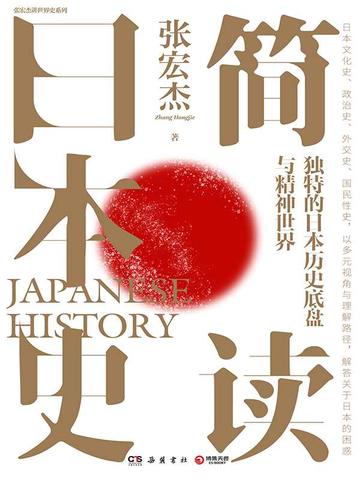
A Simple Guide to Japanese History
简读日本史
- Status
- Completed
- Length
- 318k Words
- Genre
- Historical
- Updated
- 4y ago
- Source
- Fanqie
Synopsis
More by this author
 Corrupt Practices: Corruption and Anticorruption in the Ming and Qing Dynasties
 A History of the Evolution of Chinese National Character
 A Concise History of China: Power and Finance Behind Corruption Through the Dynasties
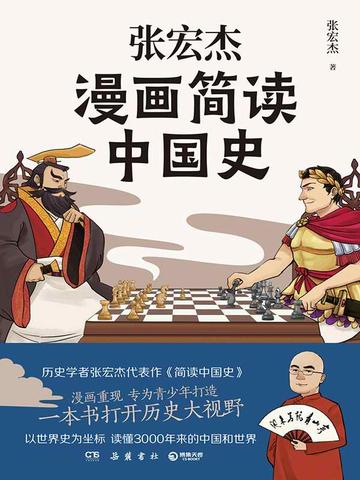 A Quick Comic Guide to Chinese History by Zhang Hongjie
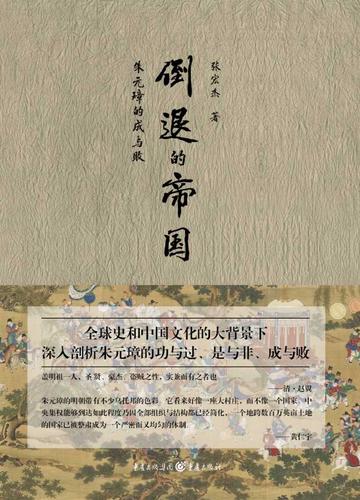 The Empire in Decline: Zhu Yuanzhang's Triumphs and Failures
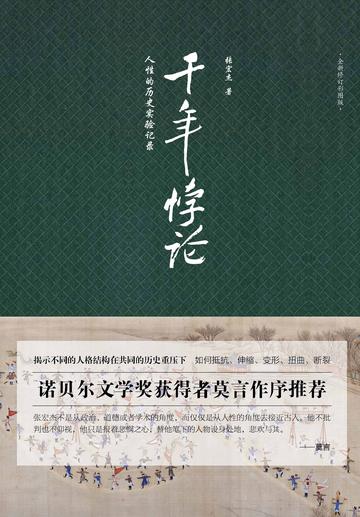 The Millennium Paradox
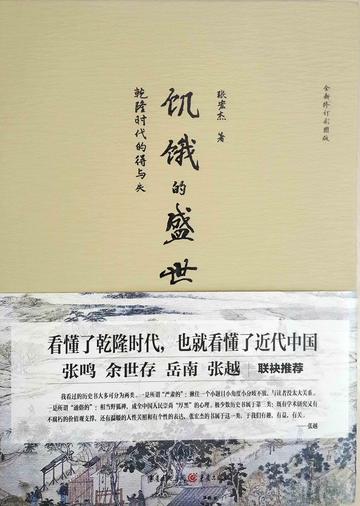 The Hungry Flourishing Age: The Gains and Losses of the Qianlong Era
 A Simple History of China (4-Volume Set)
 The Seven Faces of the Ming Dynasty
 The Rise and Fall of Chu: Pioneering and Assimilating Chinese Civilization
 A Brief History of China: China in the Context of World History
In booklists 14
Good Historical Fiction
Looking for High-Quality Literary Fiction That Teaches You Something
I want to read something similar to the Criminal Law of the People's Republic of China.
Looking for History Books. Real History!!! No Unofficial Tales or Fiction!!
Looking for books similar to *From the Qin Dynasty to the End of the Qing Dynasty (Four-Volume Set)*. No novels, like stories about someone transmigrating into the past. I want real history!!! Please (●'◡'●)



Books for Learning
I'm tired of romance novels. I want to read something educational instead. Anything goes, but it has to be focused on learning!!!

Books for Studying
Something with depth that’s also engaging and easy to get into.
Historical Fiction That Feels Realistic
No System, and nothing about The Legend of Qin. Just straight historical fiction.
Books to Help Me Improve at History and Geography
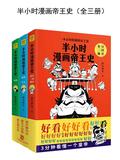
Looking for books similar to *Half-Hour Comics: Chinese History* (five-volume set). Anything along those lines.

Does Anyone Else Love Literary Classics?
I'm recommending twenty-three literary classics to you all.


Any Books That Can Make You Think Faster? (I'm Terrible at Understanding Math 😔)

Books to Help You Keep Up with the Competition, Any Subject
Recommend books that can teach me something. I want to crush my classmates when school starts.
Sign-In Rewards for Cultivation and Followers from the Start
Any Textbooks or Study Guides?
Looking for books like Half-Hour Comics: Chinese History 5. Something like the one above, for example.


Stories with European Settings
Looking for books with a European setting.

Help! I've Been in a Reading Slump for Almost Half a Month. Someone Come to the Rescue!
Reader comments 54
Translated by Google Translate
For more than a thousand years, Japan has been China's most important maritime neighbor. Currently, the two countries not only have close economic exchanges as each other's most important trade and investment partners, but also have many cultural exchanges. Although historical issues still profoundly affect the relations between the two countries. No matter which angle you look at it, understanding Japan and its national character is extremely important for Chinese people. This history of Japan written by Mr. Zhang Hongjie has concise text, clear logic, and thorough analysis. It is a rare book for understanding Japan.
I personally like history, especially modern world history and ancient Chinese history, and I am more sensitive to Japan, but this book also allowed me to see a different Japan. I always thought that Japan... Well... So I didn't know much about it. The only thing I liked about them was that they were mentioned in this book as having a tendency to turn, but I only knew this. [Cover face]
It's clear in depth and easy to understand at a glance! Look at the strengths and weaknesses of other countries in the world, learn experiences and lessons, and discover the advantages and disadvantages through development. It is beneficial to yourself and harmless to the country. I wish the motherland is prosperous and the people are healthy!
Japan's national character cannot be easily summed up. There are superficial expressions of nodding and bending at 90 degrees, and there is also a deep-seated concept of contempt for the other party that is not easily expressed. No matter what views this book brings to you or me, being inclusive is the attitude that Chinese people should adopt!
I have read a lot of Zhang Hongjie's books, and the Chinese history books have a lot of repetitive ideas. This one is very fresh. China and Japan have been entangled in history for too long. It was often said in the past that the Japanese understand China better than the Chinese, but few people reflect on it: Why does no one in China understand Japan better than the Japanese? Brainwashed by the anti-Japanese drama, they only care about hatred, but how many people understand Japan? The most famous book introducing Japan is undoubtedly "The Chrysanthemum and the Sword", but it was not written by a Chinese. This brief history can be said to be quite concise. The brief history should not only be concise but also concise, and the key points should be explained in place. This book answers many of our questions about Japan. It is interesting but not boring, and very readable. I hope more and more people will read this book. To put it another way, even if you hate Japan, don't you still need to understand your enemy? You can't know nothing about your enemy, right? Come on, read this "A Brief History of Japan" written by a layman. Experts will know the ropes, while laymen will watch the fun.
Japanese people become complacent and arrogant when they achieve something, and then feel deeply inferior when they encounter setbacks. The Japanese are still too extreme and absolute.
When I was studying Japanese history in my early years, some classmates ridiculed Japanese history as just a collection of village histories. Although it was very rude, we did take it as a joke at the time. One advantage of Zhang Hongjie's "A Brief Reading of Japanese History" is that the entire writing is not cumbersome and boring, and you can still have a general understanding of Japanese history. The general context of Japanese history. In addition, it has to be said that Japan's historical changes can be seen as the profound impact of ideas and ideologies on individuals and even countries and nations. There were two major reforms in Japan's history that absorbed foreign culture. The first comprehensive "Sinicization" failed and the Meiji Restoration, which was forced to open the country by the "Black Ship Incident", turned around successfully. The reason is the inevitable result of core internal factors such as political system, social system and ideology.
It opened a window for us to understand Japan. It is a very good book.
It is a very good brief history of Japan. It comprehensively explains Japan's Jingtang and Jingtang Dynasties from the perspective of history, culture, economy and psychology. It can learn from the Tang Dynasty and leap from primitive society to feudal society, and learn from Europe and the United States from feudal society to modern society. But it has always retained its core culture and traditions, such as hierarchy, collectivism, bushido spirit, etc. Look at China through Japanese history to better understand the development of Chinese history.
The author himself admits that there are very few primary sources, so it cannot be read entirely as a history book. But the author's interpretation of Japanese history and culture can inspire the Chinese people, which is enough. Although each interpretation is based on so-and-so talking about such-and-such a book, there is a lack of statistical data.