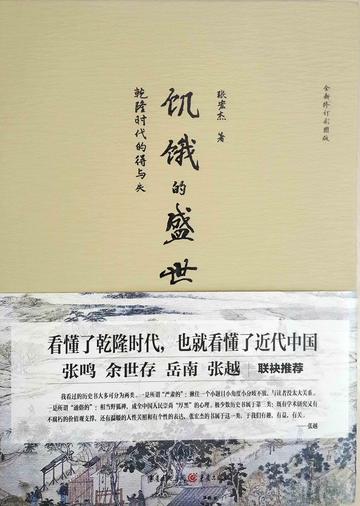
The Hungry Flourishing Age: The Gains and Losses of the Qianlong Era
饥饿的盛世:乾隆时代的得与失
- Status
- Completed
- Length
- 267k Words
- Genre
- Historical
- Updated
- 3y ago
- Source
- Fanqie
Synopsis
More by this author
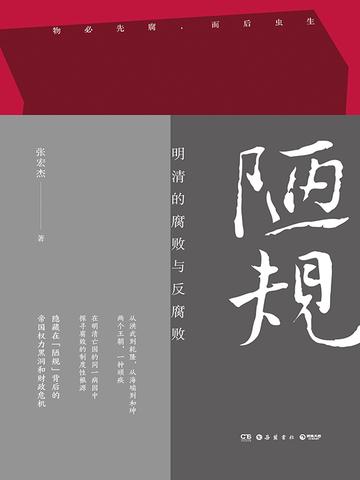 Corrupt Practices: Corruption and Anticorruption in the Ming and Qing Dynasties
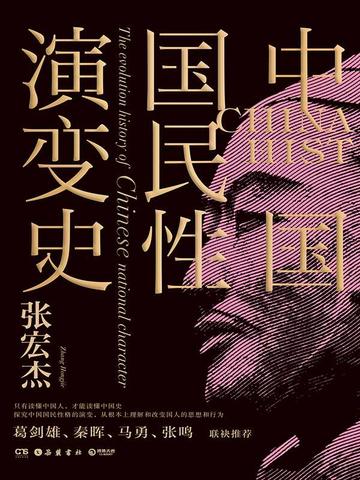 A History of the Evolution of Chinese National Character
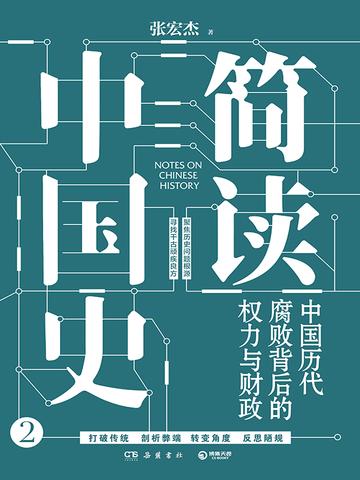 A Concise History of China: Power and Finance Behind Corruption Through the Dynasties
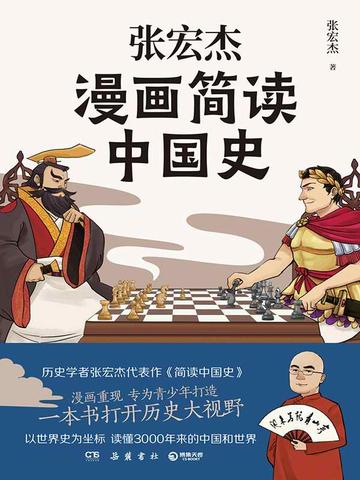 A Quick Comic Guide to Chinese History by Zhang Hongjie
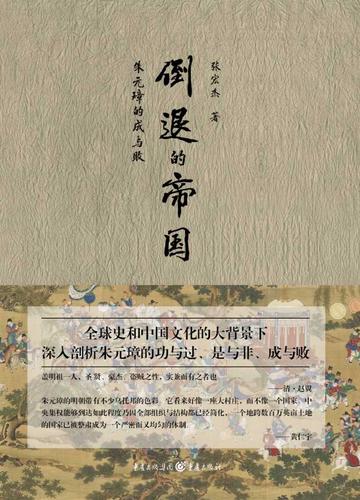 The Empire in Decline: Zhu Yuanzhang's Triumphs and Failures
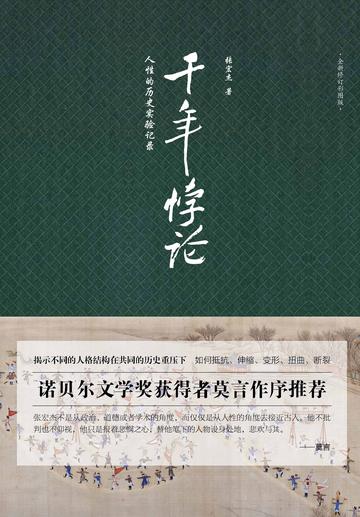 The Millennium Paradox
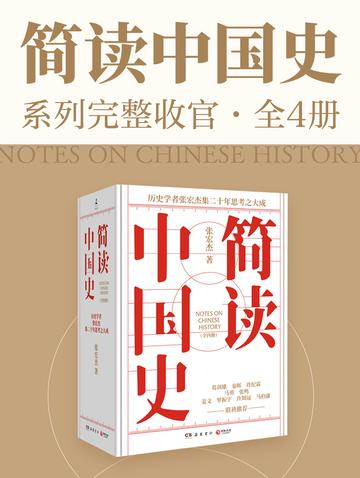 A Simple History of China (4-Volume Set)
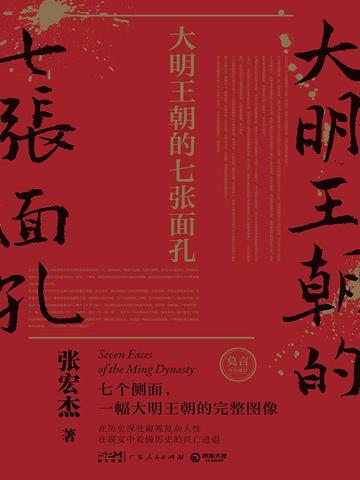 The Seven Faces of the Ming Dynasty
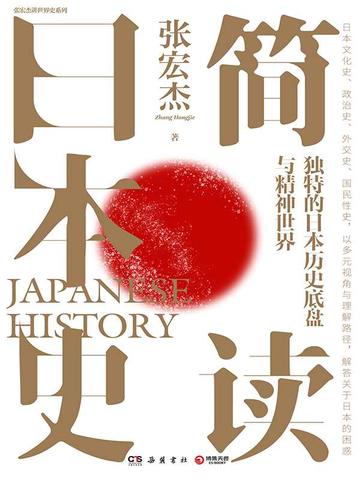 A Simple Guide to Japanese History
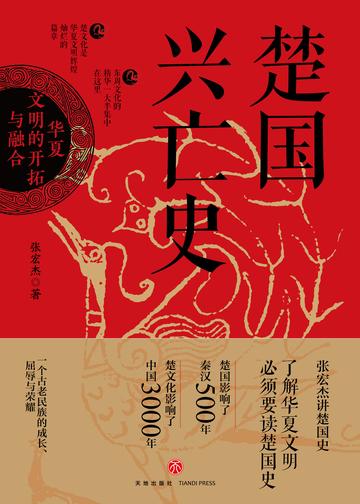 The Rise and Fall of Chu: Pioneering and Assimilating Chinese Civilization
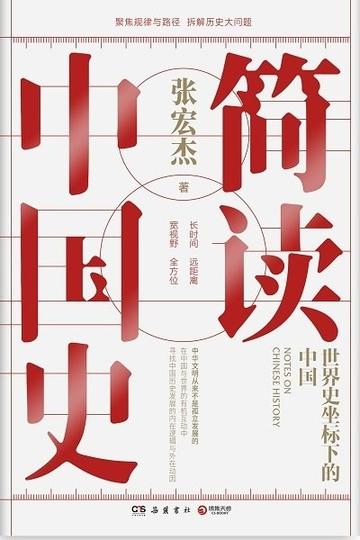 A Brief History of China: China in the Context of World History
In booklists 7

Any Books That Make You Want to Study Like Crazy?
Please help the kids who don't want to study 😭


How Long Does It Take for a New Writer to Make It? I’ve Been Writing for 54 Days
54 days. I finished my first book on day 45: 320,000 words, writing for 8–12 hours a day. I’m now planning my second book, but nobody’s reading the first one anymore. Is it really that bad? Am I just someone with no talent? (sobbing)


Looking for Books Like Hou Weidong's Officialdom Notes

Literature, Philosophy, History 📖


Books That Teach Real Money-Making Skills
I want books like Men, Making Money Is What Really Matters (Two-Volume Set). If you want to improve your ability to make money, these books are worth reading.



Books You Can Read Again and Again
Looking for books similar to *The Emperor's Conquest*. It's endlessly rereadable, and it hits every time. The writing is exquisite and elegant, the plot twists and turns and keeps you on the edge of your seat, the pacing is tight with no dragging, and the scenes are incredibly vivid.
Looking for Book Recommendations. I Can't Handle the Books on My Feed Lately...
Reader comments 54
Translated by Google Translate
When I was reading, I bought this book specifically to read I felt extremely angry while watching it. Qianlong was disliked by most people for no reason. He was very proud of his achievements and thought highly of himself. He used the Han people's system and talents, but did not give them good evaluation and treatment. Although he was generous to the people, he did not allow them to have the right to political expression. When discussing with a friend, I agreed with his point of view, "The closer the feudal era comes to an end, the more brutal and authoritarian the ruling class becomes."
Very good. It writes a true history. It is neither a boast nor a slander. It is not a castle in the air. Qianlong in the ivory tower can never imagine that his hard work did not make the Qing Dynasty strong but fell into the abyss. It is true that Qianlong was the pinnacle of feudal autocracy in the Qing Dynasty, and he also had the strongest control from top to bottom. However, its harsh literary inquisition, strict hierarchical order, and unpredictable governance methods are all exacerbating social conflicts all the time. The untouchables are struggling, natural and man-made disasters, bullying by powerful people have no place to complain, and the emperor will confiscate the family and exterminate the family if they complain about the imperial edict. The ministers lived quietly, made suggestions and made suggestions, caring about the world was the original sin, and the emperor would be executed by the nobles if he was in a bad mood; the royal family lived secretly, followed the rules of ethics, and obeyed the hierarchy conscientiously. Even unintentional transgressions would bring cold-blooded punishment from the emperor. The emperor who loves great achievements only likes dull and obedient people and treacherous ministers who are good at observing people's words and flattering others. This period of time, which lasted for several decades, was enough to change everything and Qingshi died in Qianlong.
The contrasting naming method immediately attracted me. History says that after two generations of emperors, Qianlong developed the Qing Dynasty into an unprecedented prosperous age. However, the suffering of ordinary people in the prosperous age was not described in history books. This book allows you to see the grand situation at a macro level and also look down at the micro world. It is really a very good history book about the Qianlong period. As a feudal emperor, he was extremely successful. As the helmsman of the empire in a situation that has not seen major changes in a thousand years, he has failed extremely. He is a product of history, shaped by past closed historical experiences. Although his application of past experiences is extremely successful, it cannot change the inevitable trend of a closed system towards entropy increase.
It elaborates on various national conditions in the early, middle and late periods of Qianlong and his policy agenda in multiple dimensions, and shows a magnificent prosperous age and its limitations with reasonable evidence. The analysis of Qianlong's character also vividly shows the multi-layered diversity of an emperor's character. This fascinating popular science reading allows us to have a more comprehensive understanding of Qianlong and his prosperous age.
The Kangxi, Yongzong and Qianlong periods are considered to be the peak of social development in China's feudal era. However, ironically, this period was also an important node in the rise of Western civilization. After that, Eastern civilization was left far behind. Through rich historical materials, this book truly reproduces the economic, political and cultural conditions of Chinese society during the prosperous era of Qianlong. Based on multi-angle comparisons between tradition and modernity, East and West, it reveals the institutional roots of China's backwardness in modern times: the so-called prosperous era is just growth on the track of the old system, while Western society has embarked on a new development path through institutional reforms.
The merits and demerits are all laid out, and the purpose and motivation are clear and reasonable. It quotes many historical materials and explains them in vernacular, which is really considerate. This book is indeed a good book to understand the psychological methods of Qianlong's governance and its impact on society. It is worth reading.
Qianlong - Emperor of the Qing Dynasty. This is a historical work that explores the social and economic conditions of China's Qianlong era. Through the combing and analysis of historical materials and documents, the author shows the gap between rich and poor, peasant suffering and social problems behind the prosperous times of the Qianlong era. This book provides in-depth thinking and reflection on history and is of great significance for understanding Chinese history and social changes. After reading this book, you will have a clearer understanding of Qianlong.
Overall, this book is very nice to read, the narrative style is plain and approachable, and the content is well-referenced. This book narrates the life of Qianlong, including his growth experience and governing style, analyzes his character and personal likes and dislikes, reveals the many shortcomings of human rule and feudal rule, and serves as a warning to people.
I bought the physical book and it is quite good. I especially like the passage in it, "Kingship is a malignant tumor... Until society suffocates in its tight embrace." I posted this passage on my pen holder. It's been a long time since I read it in my first year of high school. I'm about to take the college entrance examination this year.
During the Qianlong era, we were the country with the largest population in the world, the richest country in the world, and the most prosperous country in the world. However, from a different perspective, it was also the weakest era. Britain began the industrial revolution and colonization, and Europe began the Renaissance and religious reform. They were developing towards a more civilized modern era, but we were complacent with our achievements, did not want to make progress, closed the country, and thus lagged behind the trend of the times.