Stats
65Reads
5.8Score
11Chapters
5Listens
253kReads · all time
Synopsis
Reader comments
In booklists 4
Nobel Prize for Literature, Mao Dun Literature Prize, Lu Xun Literature Prize and Other Literary Works
I want to read a book similar to "One Sentence is Worth Ten Thousand Sentences: Collector's Edition".
122.1MViews701Books3dUpdated

Worth Reading Literary Works
Keep it for the record and look at it again when you have time.
48.1MViews651Books3dUpdated
Literary Masterpieces, Good-Looking Literary Novels
16MViews419Books6dUpdated

Are There Any... Foreign Masterpieces... Chinese Masterpieces?
2MViews783Books5dUpdated
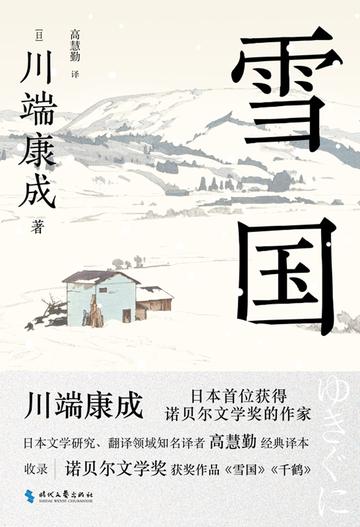
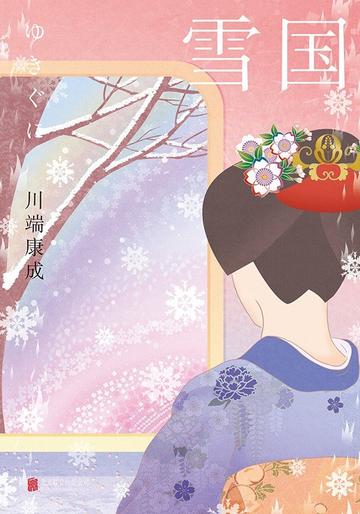
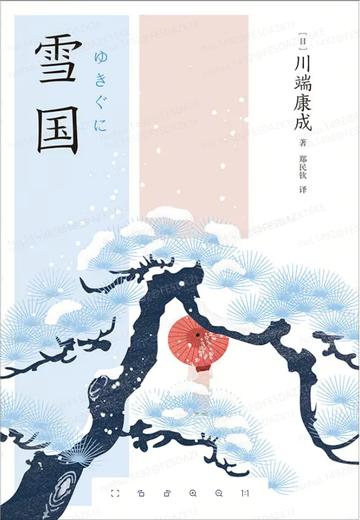
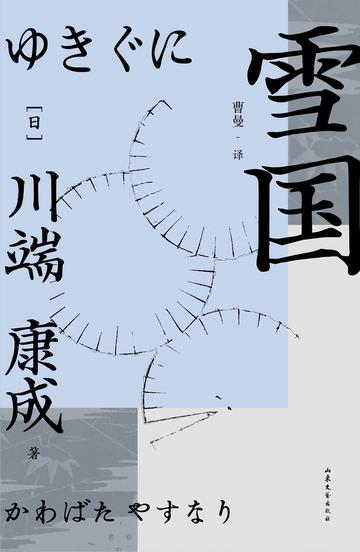
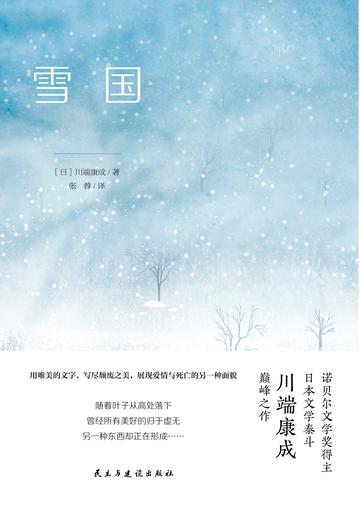
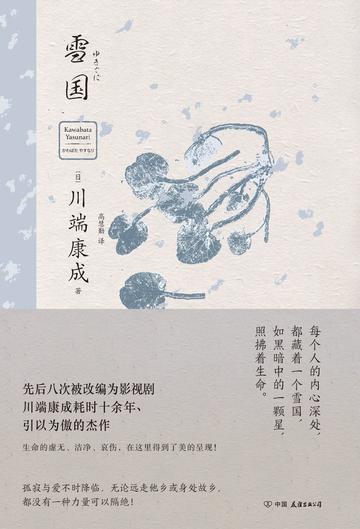
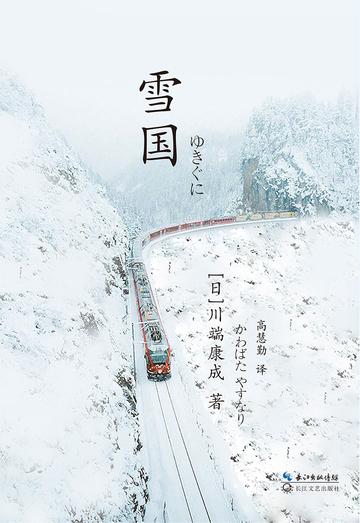
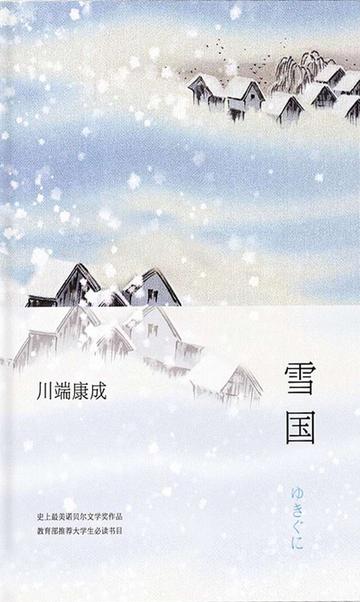
This is a very sad story. When I just opened this novel, I heard the beautiful shouts of Ye Zi in the snow-filled train station. I think it stretched not only Shimamura's ears but also every reader's. It turns out that the visuals of the movie can really be described with words. Under Kawabata Yasunari's highly imaginative writing power, there really is a country of snow! I think the most impressive thing about the novel should be the beautiful snow and the light of the sunset, as well as the singing of the leaves and the coquettishness of the horse. Shimamura came to this snowy country from distant Tokyo alone. From the perspective of a bystander, he saw the completely different fates of the two women. Ju Zi's futility and Ye Zi's sorrow allow readers to experience people's nihilistic yet realistic touch on life, directly touching people's souls from beginning to end, from the inside out. The technique of the novel is particularly superb. Many things are so ready to be revealed, but they are as vague and hazy as holding a pipa to half-cover your face. Shimamura is infatuated with Komako's pure beauty, and also infatuated with Ye Zi's illusory beauty. The entanglement between the three people successfully cuts apart the love and sexual desire between men and women, even if everything is in vain, an illusion, and confusion in the end. I think that in the ocean of literature, there is rarely such a moving torrent that incorporates the vast Milky Way and the vast snowfield into the small life of human beings. In such a small life, we see not only the loneliness and desolation of life, but also the torrent of this "straight style" will also wash away the dust in people's hearts. (Note: When reading this book, it is recommended that during the dialogue between the characters, especially the dialogue between Shimamura and Komako, Japanese must be brought into it, and it should be the kind of Japanese that seems to be audible. It is really beautiful.)
The article can be said to be a perfect description of the scenery, integrating the image, psychology, and surrounding environment of the characters, and describing the image and psychology of Shimamura, wandering and hesitating between likes and dislikes, love and dislike, contradictions and entanglements, guilt and joy. He clearly realized that he was a passer-by, but he was immersed in it and couldn't extricate himself. After many experiences with Ju Zi, he gradually became insurmountable and tried to leave. Then he met Ye Zi in his own fantasy world. In fact, the most beautiful things in the world are the sincerity, innocence, kindness, innocence, romance and cuteness of human nature. You can talk about anything and everything. But in reality, people's so-called growth and experience will naturally change the way they used to be. But what is gone forever is that I still like the young you that I once was.
Often the most precious things are free. People will not remember the person who crossed the mountains and seas to see them, but they will always remember the person they crossed the mountains and seas to see. Happiness around you often appears seemingly inadvertently.
A Nobel Prize-winning classic, a product of the times, it is like a road movie with charming scenery, but at its core is the tragedy of emotional loss.
Ye Zi is the incarnation of Ju Zi's pure soul, Ju Zi is the body, and Ye Zi is the soul. At the same time, Dao Cun's fascination with Ye Zi is his fascination with the pure and clean Ju Zi. "She still became a geisha." Komako finally became a geisha, and her pure soul was gone. Finally, I think the death of the leaves symbolizes the disillusionment of Shimamura's dream and the collapse of his faith. The Snow Country is the utopia in Dao Cun's heart. The death of Ye Zi also implies the end of Utopia in Dao Cun's heart. And why Komako rushed forward to hug Ye Zi, I think this was due to the intervention of the narrator, which allowed Shimamura to finally leave the snow country alone. He had three choices before, one was to leave alone, the other was to be with Ju Zi, and the third was to go to Tokyo with Ye Zi. But the narrator chooses to leave Shimamura alone. In the article, Shimamura comes to the Snow Country three times, which means that Shimamura has three dreams. The first level is the secret love for Ju Zi. The article also describes how he was impressed by Ju Zi's purity when he saw her for the first time. The second level is meeting Ye Zi and Ju Zi on the train and becoming geishas. The narrator shows the purity of the leaves through the description of the sound. But there is a conflict in time, because Shimamura is not aware of Komako's identity change at this time, so it is the narrator's intervention. The third level is the collapse of the dream, the death of Ye Zi, and the madness of Ju Zi (I don't understand here.) The above interpretation comes from Bilibili
The final ending is very poignant. Ye Zi is like Komako before she became a geisha. Ye Zi sticks to her original intention but dies in the end. Juzi compromises with reality but ends up going crazy. They all interpret the word "futility" to the best of their ability. In life, should we stick to our true intentions or bow to reality, or is it all in vain no matter what we do?
Read Snow Country, read Kawabata Yasunari, look at the beauty of material sorrow in his words, and look at the girl's eyes reflected in the glass of the train heading to Snow Country. Many times, one feels that Kawabata Yasunari's writing is suitable for reading on a moving train. The beauty of writing can best be seen among the drifts and fragments. He wrote that dusk is "the scenery of dusk moving behind the mirror", "over the distant mountain tops, the afterglow of sunset still remains faintly", and he wrote that the distance is "the outline of the scenery seen through the car window glass, retreating into the distance, but not disappearing, but has been eclipsed".
The three scenes that impressed me the most after reading the book: peeping at leaves through the window on the train; the death struggle of insects in autumn and winter; and the leaves falling like a galaxy at the end. I happen to be reading Mo Yan's books recently. Through the words of these two top writers, I can also understand the differences between Chinese and Japanese cultures. Although both countries are in the East Asian Confucian cultural circle, the works of Chinese writers are more grand and historical, while the works of Japanese writers are more delicate and graceful, with a poignant and sad style.
I haven't read a book for a long time, maybe because I'm used to reading those thrilling and exciting books, which are so delicate that I need to read them patiently, and I only decided to continue reading after about 1/3 of the way through. In fact, this decision was the right one. The description was so beautiful. Ju Zi's beauty and cleanliness seemed to be right in front of me. The way these people followed their own paths and slowly changed also moved me. The cold beauty of the snow country, but there are hot springs to warm the body. It is good not to have an ending. We knew it was over, but we didn't say goodbye. We also knew that it was probably over.
A kind of silent beauty, loneliness and sadness. The writing is very delicate and the ending is thought-provoking.
Personally, I think the reason why Shimamura likes Komako and Ye Zi is that he created a perfect woman from them who is full of longing for him. However, when he really understands Komako and Ye Zi, the reality of them makes him confused. Teacher Luo Xiang said before that we should love concrete people rather than abstract people. After I finished reading, I realized that Shimamura is really a person who loves abstract people, so his feelings for Komako and Ye Zi will not be fruitful and will only be a bad fate.
Extreme loneliness and extreme splendor
There are so many metaphors to read Shimamura's trip to the Snow Country itself is like a pilgrimage Ye Zi wants Dao Cun to treat Ju Zi well But Juzi said that the fire of jealousy will burn people to death. Finally the leaves were burned to death. Shimamura, Juzi, and Zizi are all obviously the same person. The leaves are obviously not dead yet - if the leaves are dead, then the leaves will not die, but the leaves will still die.
The poignant scenery reveals a small country covered in snow deep in the mountains. The love between Shimamura and Komako is not recognized by the world, or in other words, not by the world in his heart. Shimamura has a wife and children, and Komako is a geisha. Their fixed identities destined them to love each other but not be responsible for each other. This is destined to be a tragic ending. From what I read, Komako's love for Shimamura may be mixed with a little desire for survival. The article mentions Komako's love for survival more than once, but this is only part of it. It is more about Shimamura's conversation with her, which inspired her naive dream of unavailable art, just like Shimamura's fantasy of Western art. This dream was broken by Shimamura himself, so "I will live a good life after you leave this time."; And Shimamura's love for Komako, In the beginning, it was due to the cleanliness of Komako, just like the cleanliness of the snow-capped mountains in early summer. It was different from the beauty of all mountain village geishas. It started out as a good impression as a conversation partner. The moment when it turned into love is not clear. Maybe it was due to the fire of the snow country again and again. In the car, maybe it was Ju Zi's visits during the banquets, or maybe it was the lingering affectionate "I want to go back" time and time again. In short, under the catalysis of the sense of betrayal of his wife, he gradually fell in love with Ju Zi, but nothing happened. From the beginning, I was attracted by the author's scenery description or scene blending technique. There are a lot of scenery descriptions and psychological descriptions in the story. The language is slightly messy, which is probably Komako's mantra after drinking. It is chaotic but reveals emotions. The scenery is cold and desolate, the love is obscure and desolate, and the helplessness and frustration of middle-aged love are vividly displayed. This triggered my thinking. When the love of middle age and the love of teenagers conflict with each other, should I force myself to be responsible for the love of teenagers, or should I boldly pursue love and ignore the chaff? The world has already given the answer, and everyone agrees that it is the former. Of course I agree with this, but Shimamura's entanglement does not only happen to him, it also exists in the hearts of middle-aged people. Perhaps it is best to forget each other in the world.
I like the description of the Snow Country, as it seems to be a place of peace of mind, a "peach blossom land" that can be reached at any time via the Snow Country train if you feel tired after staying in the big city for a long time. I like Ju Zi, who is both distressing and energetic like a sunflower. She is soberly immersed in the ethereal "love" and waits hopelessly. She often shows the cowardice of a person with low self-esteem, the helplessness and sadness of not being able to love, but she still lives a free and hard-working life. Ye Zi seems to be another her. She is innocent and attracted. In fact, what she (Ju Zi) once had is what she (Ju Zi) once had. It will make people feel sorry for her (Ju Zi). Shimamura was attracted by Ye Zi, which also convinced me that substitute literature is real! People only remember things they cannot have.
The first time I read it, I felt nothing, and the second time I read it, I felt sleepless. Are you paralyzing yourself with love? Is it in vain? It is helplessness, humility, and survival. "There are many lovers, and it's easy to live with gains and losses." ——After reading "Snow Country"
"In vain", pale and sad, but at least they have thought about giving it a try. Even though the outcome is doomed, Ye Zi also wanted to return to Tokyo with Shimamura. Ju Zi still said easily that there are still three years left, and they all want to change. The only thing that remains unchanged is the vast snow country.
Shimamura thought he was the person inside the window, and Juzi was outside the window. He looked at Juzi's life through the glass, her struggles, her expectations for beauty and her efforts in life. He looked at that kind of life and wanted to have some intersection, but he knew in his heart that he would not become a Juzi. They were not related at all. Therefore, he was a person outside that world, so he could be calm and indifferent, but that had nothing to do with him. Originally, such people just thought that they were "outsiders" and had nothing to say. This image is clichéd and common, and they are often the ones being criticized. The clever thing about Kawabata Yasunari is that he made Shimamura's subconscious give birth to something different from his own reason, but his reason would restrain it, so that Shimamura became more alive. In his interaction with Ju Zi, he can also show Ju Zi's yearning for beauty and his efforts in life. Although, in the eyes of people like Straw, it may be futile and useless. And until the end, Ju Zi could not escape the predicament, and everything he did was really in vain. In the game of life, no one can escape. But it is precisely because of this that the vitality and vitality she shows are alive in the world of Snow Country. Only then will it show the helplessness of the people at the bottom and the shackles of the world to a greater extent.
One shot to the end, everyone, be careful
Perhaps, life itself is a kind of futility Probably because I looked at her with overly curious eyes, which inevitably made me a little sadder. Go back, go back The life of the leaves is deforming and turning into something else
This book is very characteristic of Kawabata Yasunari's orphan nature. To be honest, there are many parts that I still don't understand very well. For example, I have always doubted whether Ye Zi exists? She feels more like a dream shared by the male protagonist and Ju Zi. The Snow Country as a whole has a utopian and sad beauty. I personally think it is more interesting to read in comparison with Shen Congwen's "Border Town".
In fact, what I see from it may be the futility of the whole book, but this futility may be happening to me.
Those who can't get it are always in turmoil, and those who are favored are confident. The ending of "red rose" emotions is often regrettable.
It's hard to calm down, it's hard to calm down, the fragile, sad and cowardly soul is stored in the middle-aged body, encountering beauty, or in other words, pollution
It has a very sad ending. The whole book is surrounded by a sad and cold atmosphere, probably because it is in the snow country. There are many beautiful sentences, so you will appreciate them carefully! The mysterious Ye Zi has always been attractive to Dao Cun, but Ju Zi, who has changed from shy to enthusiastic and proactive, seems cheap. Dao Cun may only love the person he imagined. I don't quite understand it. Maybe it takes time to get to know this book. Hazy and beautiful~
How should I put it? When I first read this book, I thought it was mainly about Ye Zi. The description of Ye Zi in this book is not particularly extensive. Well, the impression that Ju Zi left on me was that she was not very different from Ye Zi, which left a deeper impression in my mind. It was that she gave me the impression that she particularly wanted to keep this male protagonist, and was a little more indifferent to the fiancé, but he made a blow because She was her fiancé, but when her fiancé was seriously ill, and when her fiancé was about to die, she was always with the male protagonist. When others asked her, she would not go back to see his fiancé, but this male protagonist felt like he was rubbing salt in the wound. How should I put it? I think Juzi and Ye Zi are somewhat similar, not in the portrayal of the characters, but in their experiences. This male protagonist makes me a little disgusted. In Ye Zi's ending, it was both expected and unexpected. There were some hints of it when Ye Zi and the male protagonist took her away. (Also, what can I say about this book? For a high school student like me, I haven't read too many books. I recommend reading it twice more, otherwise there are some things you really can't understand the first time and you can't connect the plot together.)
Shimamura heard Komako's cry. "This kid is crazy, she's crazy!" Juzi screamed wildly, and Shimamura tried to get closer to her, but was pushed aside by a group of men. These men wanted to take the leaves from Juzi's hands and carry them away. When Shimamura stood firm and looked up, the Milky Way seemed to pour into his heart with a crash. The story ended here, but I couldn't calm down for a long time. "Mr. Stationmaster, Mr. Stationmaster!" The girl's words seemed to still be in my ears, so I couldn't help but turn to the beginning and read it again.
"Looking up, the Milky Way seemed to burst into his heart." The beauty of nothingness in the Snow Country was extremely beautiful.
1. Poetic lyricism 2. The blending of Japanese tradition and Western stream of consciousness 3. Use a variety of techniques to create characters
This is the first time I read a literary work on Tomato. I don't read much Japanese literature. I mostly read it when I was bored during my evening studies. I still remember that the first Japanese literary work I read was Osamu Dazai's The Disqualification of the World. Snow Country is a book that vividly depicts the poignancy of Kawabata Yasunari's era.