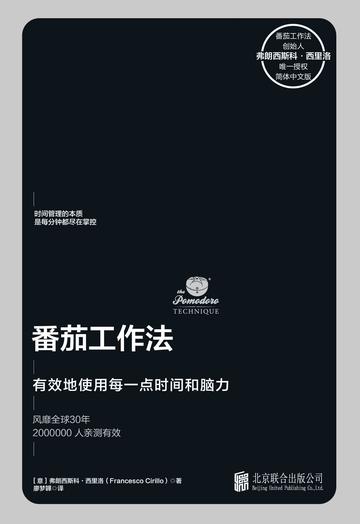
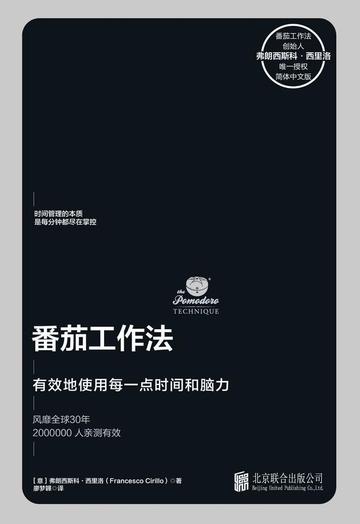
The Pomodoro Technique is a simple and easy time management tool created by Francisco Cirillo in 1992.
Tools required to use the Pomodoro Technique: a Pomodoro timer and three forms.
Rules to follow when using the Pomodoro Technique: First, a Pomodoro time is 30 minutes in total, with 25 minutes of work and 5 minutes of rest; second, a Pomodoro is indivisible; third, after every 4 Pomodoros, stop working and take a longer rest, about 15 to 30 minutes; fourth, after completing a task, cross it out.
The essence of the Pomodoro Technique: 1. Only do one thing at a time and stay focused; 2. Break down the target tasks according to their priority and complete them efficiently; 3. Cross off each item after completing it to increase the sense of accomplishment and avoid giving up halfway; 4. Organize the messy work items and overcome procrastination; 5. Continuously improve your time management skills and make excellence a habit.
The Pomodoro Technique can help us easily improve our time management skills so that the results of each task can meet expectations.
Reader comments
The Pomodoro Technique also talks about things that don't need to be done at this stage, which may be completed tomorrow or the day after tomorrow. That is, things that are not important now but must be done later. We can make a work list, sort them according to priority, detail and heaviness, and arrange them into Pomodoro Time. The reason why we procrastinate and think we are lazy is because things are too difficult. By dividing things like this, the work will become very organized and clear. We can also take a half-hour break every 4 Pomodoros, so that even the most difficult tasks will become easier.
I think the Pomodoro Technique has two major features, one is simplicity and the other is efficiency. Divide time into Pomodoros with a timer, divide simple and trivial things into one Pomodoro, and divide complex things that take several hours to complete into several Pomodoros, and draw a checkmark for each completed task, which reduces the difficulty of things, increases our confidence, and simplifies complex things, thus improving our efficiency. This requires us to make predictions about what we are doing. You have to roughly calculate how much time your work will take, so that you can divide Pomodoro time reasonably.
"As Baudelaire wrote in his poem "The Clock": "Time is a greedy gambler, he never cheats, he always wins every time he gambles! "Any form of competition with time is bound to lose. What should you do if at a certain moment you suddenly find yourself competing against time? Please pause the Pomodoro, take a deep breath, and remember: the next Pomodoro will be smoother."
Time management is becoming an essential skill for contemporary people. In view of the current situation that it is difficult for most people to arrange and use their time effectively, the author of this book proposes the Pomodoro Technique. This method has been verified by people in different jobs in many countries and regions. The Pomodoro Technique well solves several of the crux of the reasons for low time efficiency, including difficulty in focusing, excessive fatigue, and numerous tasks. In the author's opinion, we need to designate a specific period of time to do something, arrange rest time, and do it separately according to the priority of the problem.
Without pictures, the article is not coherent. I hope it will be corrected.
I know about the Pomodoro Technique, and I have read a book similar to this one before, but I didn't read it carefully at the time.
This time I expected to finish it in half an hour, skipped most of the team portion, and ended up taking an hour.
There are not only many details that need to be paid attention to, but also some knowledge that I currently have no system to acquire.
Let's encourage you all.
This book is very practical! The Pomodoro Technique provided by author Francisco Cirillo can really help us improve our time management skills. I especially like the idea mentioned in the book of doing one thing at a time, so that you can stay focused and improve your efficiency. Moreover, the method of breaking down target tasks according to priority is also very good, allowing me to complete the work in a more organized manner. I think this book is not only suitable for working people, but also for new mothers like me. It can help me plan my time better and do my own things while taking care of my baby. The author's experience and methods are really worth a try!
A practical guide for those looking to improve time management and increase productivity. This is a guide to time management and productivity. This book introduces a time management technique called the Pomodoro Technique, which improves work efficiency and concentration by dividing time into periods and focusing attention. The author explains the principles and implementation steps of the Pomodoro Technique in detail, and provides some practical suggestions and techniques. Readers can use the Pomodoro Technique to reasonably arrange work and rest time and improve work efficiency and time utilization.
The Pomodoro Technique is a simple and easy time management tool that only requires a Pomodoro timer and three tables. Rules to follow when using the Pomodoro Technique: First, a Pomodoro time is 30 minutes in total, with 25 minutes of work and 5 minutes of rest; second, a Pomodoro is indivisible; third, after every 4 Pomodoros, stop working and take a longer break, about 15 to 30 minutes; fourth, after completing a task, cross it out. It is of great help to my study!
The new era is an era for dream chasers and an era for young people to achieve their dreams. On the top of the mountain, you can see the rushing river; on the peaks, you can feel the mighty wind. Starlight does not care about those who are on the road, history belongs to those who strive. Following the example of hundreds of generations, we will adapt to today's changes. The farther into the past you can see, the farther into the future you can go. The farther into the past you can see, the farther into the future you can go. Looking up at the sky of history, the feelings of family and country are shining brightly; across the long river of time, the feelings of family and country are endless. The farther into the past you can see, the farther into the future you can go. The farther into the past you can see, the farther into the future you can go.
I feel good. The language of this book is relatively simple and simple, but I can't understand it after the introduction (⊙o⊙)!
Understand the principles and get ready to start using the Pomodoro Technique





The Pomodoro Technique also talks about things that don't need to be done at this stage, which may be completed tomorrow or the day after tomorrow. That is, things that are not important now but must be done later. We can make a work list, sort them according to priority, detail and heaviness, and arrange them into Pomodoro Time. The reason why we procrastinate and think we are lazy is because things are too difficult. By dividing things like this, the work will become very organized and clear. We can also take a half-hour break every 4 Pomodoros, so that even the most difficult tasks will become easier.
I think the Pomodoro Technique has two major features, one is simplicity and the other is efficiency. Divide time into Pomodoros with a timer, divide simple and trivial things into one Pomodoro, and divide complex things that take several hours to complete into several Pomodoros, and draw a checkmark for each completed task, which reduces the difficulty of things, increases our confidence, and simplifies complex things, thus improving our efficiency. This requires us to make predictions about what we are doing. You have to roughly calculate how much time your work will take, so that you can divide Pomodoro time reasonably.
"As Baudelaire wrote in his poem "The Clock": "Time is a greedy gambler, he never cheats, he always wins every time he gambles! "Any form of competition with time is bound to lose. What should you do if at a certain moment you suddenly find yourself competing against time? Please pause the Pomodoro, take a deep breath, and remember: the next Pomodoro will be smoother."
Time management is becoming an essential skill for contemporary people. In view of the current situation that it is difficult for most people to arrange and use their time effectively, the author of this book proposes the Pomodoro Technique. This method has been verified by people in different jobs in many countries and regions. The Pomodoro Technique well solves several of the crux of the reasons for low time efficiency, including difficulty in focusing, excessive fatigue, and numerous tasks. In the author's opinion, we need to designate a specific period of time to do something, arrange rest time, and do it separately according to the priority of the problem.
Without pictures, the article is not coherent. I hope it will be corrected.
I know about the Pomodoro Technique, and I have read a book similar to this one before, but I didn't read it carefully at the time. This time I expected to finish it in half an hour, skipped most of the team portion, and ended up taking an hour. There are not only many details that need to be paid attention to, but also some knowledge that I currently have no system to acquire. Let's encourage you all.
This book is very practical! The Pomodoro Technique provided by author Francisco Cirillo can really help us improve our time management skills. I especially like the idea mentioned in the book of doing one thing at a time, so that you can stay focused and improve your efficiency. Moreover, the method of breaking down target tasks according to priority is also very good, allowing me to complete the work in a more organized manner. I think this book is not only suitable for working people, but also for new mothers like me. It can help me plan my time better and do my own things while taking care of my baby. The author's experience and methods are really worth a try!
A practical guide for those looking to improve time management and increase productivity. This is a guide to time management and productivity. This book introduces a time management technique called the Pomodoro Technique, which improves work efficiency and concentration by dividing time into periods and focusing attention. The author explains the principles and implementation steps of the Pomodoro Technique in detail, and provides some practical suggestions and techniques. Readers can use the Pomodoro Technique to reasonably arrange work and rest time and improve work efficiency and time utilization.
The Pomodoro Technique is a simple and easy time management tool that only requires a Pomodoro timer and three tables. Rules to follow when using the Pomodoro Technique: First, a Pomodoro time is 30 minutes in total, with 25 minutes of work and 5 minutes of rest; second, a Pomodoro is indivisible; third, after every 4 Pomodoros, stop working and take a longer break, about 15 to 30 minutes; fourth, after completing a task, cross it out. It is of great help to my study!
The new era is an era for dream chasers and an era for young people to achieve their dreams. On the top of the mountain, you can see the rushing river; on the peaks, you can feel the mighty wind. Starlight does not care about those who are on the road, history belongs to those who strive. Following the example of hundreds of generations, we will adapt to today's changes. The farther into the past you can see, the farther into the future you can go. The farther into the past you can see, the farther into the future you can go. Looking up at the sky of history, the feelings of family and country are shining brightly; across the long river of time, the feelings of family and country are endless. The farther into the past you can see, the farther into the future you can go. The farther into the past you can see, the farther into the future you can go.
I feel good. The language of this book is relatively simple and simple, but I can't understand it after the introduction (⊙o⊙)!
Understand the principles and get ready to start using the Pomodoro Technique