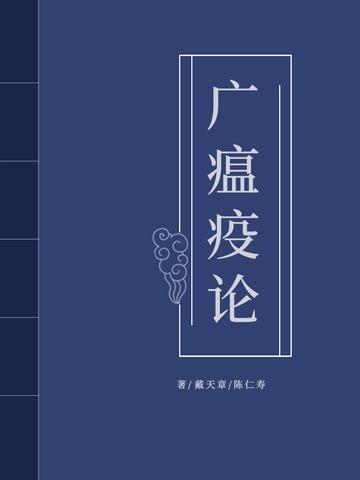
"Guang Plague Theory" was written in the 14th year of Kangxi's reign in the Qing Dynasty (1675), and was written by Dai Tianzhang. This book is based on Wu Youke's "Treatise on Warm Epidemics" with additions, deletions and revisions, and analyzes the differences between plague and typhoid fever. It makes detailed distinctions in the identification of early syndromes, etiology, exposure, transmission of classics, and concurrent syndromes of the two, and discusses the external and internal syndromes of the two respectively. It summarizes the five treatment methods of sweating, lowering, clearing, harmonizing, and tonic, and appends 84 prescriptions for febrile diseases at the end of the volume. It is a thorough, concise, clear, and easy-to-learn and easy-to-remember work on febrile diseases, which can be used as a reference for teachers and students in traditional Chinese medicine schools, self-learners, and clinical physicians.
Reader comments
The distinction between plague and typhoid fever is very detailed, and I couldn't tell them apart before. And I think the attribute of identifying qi mentioned in the book is very interesting. Using the toilet and the corpse qi of the evil place as examples, you can understand it at once. The color recognition attribute is also very helpful. When I see my family members with that "hateful" look on their faces, I know what to do. This is really a good Chinese medicine book, I would recommend it to other sisters!


The distinction between plague and typhoid fever is very detailed, and I couldn't tell them apart before. And I think the attribute of identifying qi mentioned in the book is very interesting. Using the toilet and the corpse qi of the evil place as examples, you can understand it at once. The color recognition attribute is also very helpful. When I see my family members with that "hateful" look on their faces, I know what to do. This is really a good Chinese medicine book, I would recommend it to other sisters!