


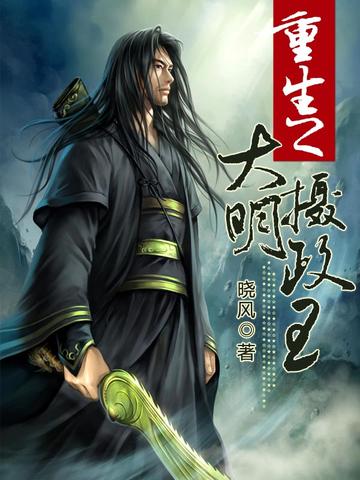
Reborn as the Regent of Great Ming
重生之大明摄政王
- Status
- Completed
- Length
- 2.5M Words
- Genre
- Historical
- Subgenre
- Historical & Ancient
- Updated
- 8y ago
- Source
- Fanqie
Stats
823Chapters
1.2kReads
8.1Score
101Shelves
262Listens
491.5kReads · all time
Tags
Synopsis
More by this author
 The Three Worlds Legion of Super Students
 Heavenly Friendship Circle
 Are You Trying to Gain Connections with Me? My Circle of Friends Are All Gods
 Showdown, I Have 90 Billion!
 Yama Hall
 Invincible Returns, the Innocent School Beauty's Hatred Surges
 Datang: Crazy, Li Shimin Asked Me to Be the Prince
 You're a Lucky Charm! You Got So Rich Just by Grabbing Red Envelopes
 Spiritual Qi Revival: Awakening Kaido of the Beasts from the Start
In booklists 10
High-IQ Historical Alternate-World Novels Without a System, Tang, Song, or Ming Are All Fine
774Books33.4MViews1dUpdated
Late Ming: Rising from the Margins and Creating My Own Future!!!
Please recommend good books about the Late Ming, rising from the bottom to build your own dynasty!
346Books9.7MViews1dUpdated
My Five Favorite Historical Novels
631Books6.9MViews2dUpdated
Any Novels About Transmigrating to the Ming Dynasty?
I've run out of novels to read.
341Books3.8MViews2dUpdated

Looking for Historical, Imaginative, Alternate-History Stories Where the Protagonist Doesn't Become Emperor
Guys, I don't want historical dynasties from Chinese history. I want a fictional dynasty that never existed in history. I read everyone's replies one by one, but they were all about the Tang, Ming, Qin, and so on. That's not what I'm looking for.
358Books2.4MViews4dUpdated
Zhu Yuanzhang Transmigrates as Chongzhen, and Zhu Di Becomes Chongzhen's Son
257Books30MViews5dUpdated
Kill to Level Up, No Doormat Hero, 2,000 Chapters
464Books51MViews7dUpdated
Alternate History, Emperor Tianqi, Bingzhou
49Books841.3kViews12dUpdated

Survival on Deserted Islands or Sky Islands With a System!
90Books411.3kViews21dUpdated
Save Empress Ma in the Ming Dynasty, Execute the Lü Clan, and Kill Zhu Yunwen
249Books32.2MViews26dUpdated
Reader comments 50
Google Translate
A rare masterpiece among novels of the late Ming Dynasty. The layout is reasonable, the logic is clear, the pace is unhurried, and the ending is exciting. The shortcomings are a bit verbose and contain too many private goods.
The plot is compact! It just develops a bit slowly! Those things in the Ming Dynasty were nothing more than Dazi, Donglin, bandits, and eunuchs! This is well written, take a look! And it's completely finished, so you don't have to worry about eunuchs!
Very good. The author understands military affairs and must have checked a lot of historical information. It is not easy to follow history and make it look good.
Using history as a mirror, you can see the rise and fall; using copper as a mirror, you can dress your clothes; using people as a mirror, you can know gains and losses. This book of history is suitable for reading again and again!
The author is knowledgeable, the story layout is reasonable and logical, but the shortcoming is that it is a bit verbose and inserts too many personal opinions, which makes people uninterested.
Reading "The Regent of the Ming Dynasty" is like embarking on a journey of the Ming Dynasty where passion and intrigue are intertwined. In the novel, the feelings of family and country are heroic, the descriptions of family, friendship, and love are delicate and gentle, and the multi-line and multi-perspective narrative is clear. The growth and transformation of the protagonists Lao Li and Wang Dushi impressed me deeply. Lao Li grew from an ignorant prince to a responsible regent, and he was willing to bear the infamy for the dynasty. His transformation showed the demeanor of a king. Wang Dushi is knowledgeable and loyal, and consistently assists Lao Li. He and the protagonist complement each other and grow together. What's even more rare is that they are not perfect "gods". They can also be careless, injured, make mistakes, and become discouraged. They are so real that they seem to be living around us. But there is room for improvement. The money-making settings for inventions and creations in some plots are a bit arbitrary. For example, soap and perfume can easily earn a million taels of silver, which is somewhat divorced from reality. Some readers also reported problems such as a hasty ending, a long-winded plot, and too long foreshadowing. Overall, "The Regent of the Ming Dynasty" is a masterpiece of ancient court intrigue worth reading. While enjoying the wonderful plot, it also gave me a new understanding and thinking about the history of the Ming Dynasty.
The layout is strictly prohibited. The occurrence of events is always accompanied by an explanation of the overall environment. The writing style is good. Even a small soldier is given a personality shape and description, and the story process has its ups and downs. It is a rare and thoughtful masterpiece.
The writing is good, especially the fight against pirates, which is more realistic. I just don't know what the rest of the writing is like. Take your time and read it.
I have read Chapter 90, and I feel pretty good so far, with clear logic and few flaws. Regarding the price issues in the late Ming Dynasty in the first few chapters, there are a lot of scornful comments. Regarding 2,000 kilograms of meat costing 200 silver, many people think the price is too high. In the late Ming Dynasty, 1 amount of silver purchased was equivalent to about 450 yuan in later generations, and 200 pieces of silver was equivalent to about 90,000 yuan. This calculation is basically reasonable. Some people say that grain prices are cheap now, so the actual value of 1 amount of silver is far more than 450, but the price difference between meat and grain in the late Ming Dynasty was much higher than it is now. Some people explain that the last amount of silver was equivalent to about 2,000 yuan in all aspects of commodity prices in later generations. This is pure nonsense. The comprehensive commodity price takes into account house prices, land prices, labor costs, transportation, etc. In the book, the pig's trotters buy grain and meat in the local county, so they only have to consider the price of meat and grain at that time.
The author is familiar with Ming history and celebrities, and has his own views on the historical process. The writing rhythm slowly tells the causes and consequences, and although the ending is rushed, my personal opinions have been clearly explained before, so you just have to stop there. Compared with most time-travel novels, this time-travel novel was tiring to write and difficult to read. No wonder many people complained at the end. The development of the entire article is also the most logical and practical, and it is enjoyable to read.